The best clue to Evans Trucking’s business is not the chrome, the horsepower or even the family name on the door. It is a sentence buried on the equipment page: the company keeps records of when parts fail on different makes and models, then changes those parts before they fail. That is a deeply unromantic sentence. It is also the whole pitch.
A freight buyer does not wake up excited to purchase 1,200 miles of asphalt. The buyer wants a production-line component in another country, a potato load held at temperature, or an excavator delivered without meeting a bridge the hard way. The commodity may be valuable, awkward or late before the truck even arrives. What the customer is really buying is a smaller chance of a bad phone call.
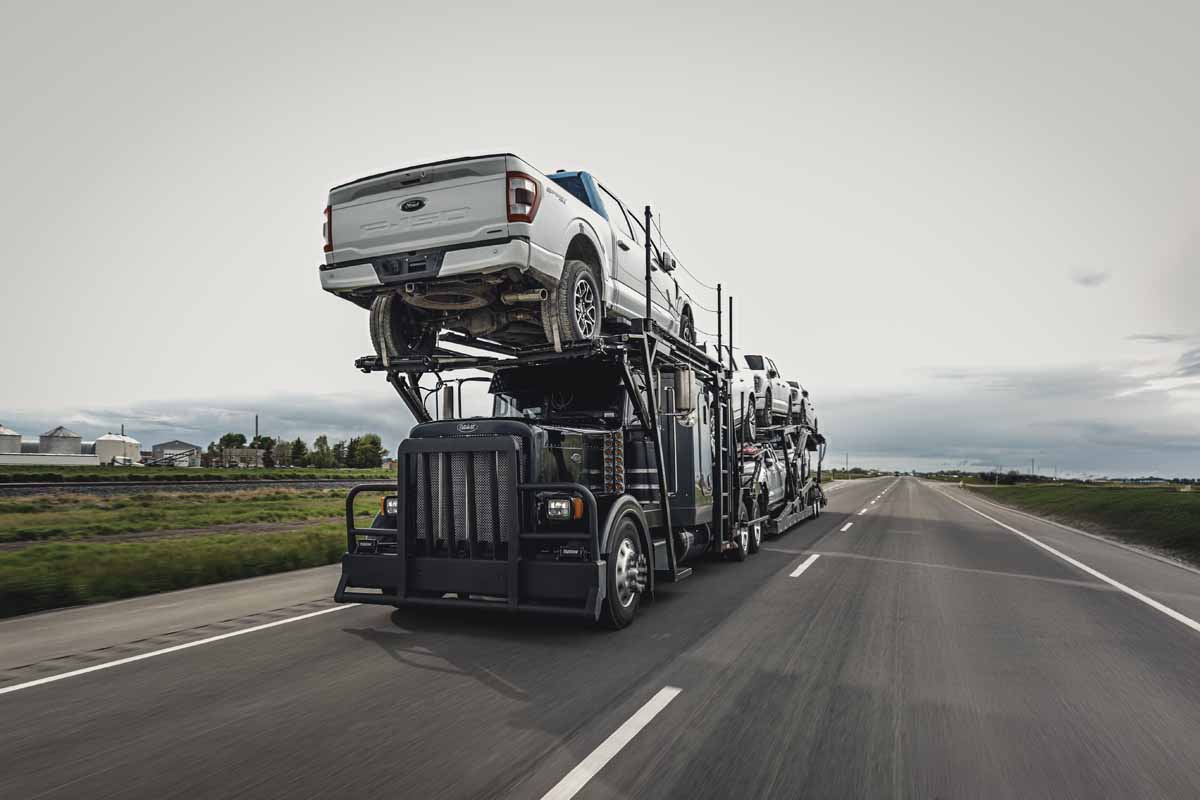
From Coaldale, Alberta, Evans sells that reduction in uncertainty with owned equipment and visible process. The family operation reports more than 100 trucks, over 150 specialized trailers and service across Canada and the United States. Flatdecks carry steel and machinery. Low-profile step decks create extra height clearance. Removable-gooseneck trailers let heavy equipment roll onto a low deck. Car haulers move dealership inventory and specialty vehicles. Refrigerated trailers watch temperature as well as location.
One truck, then the gauntlet
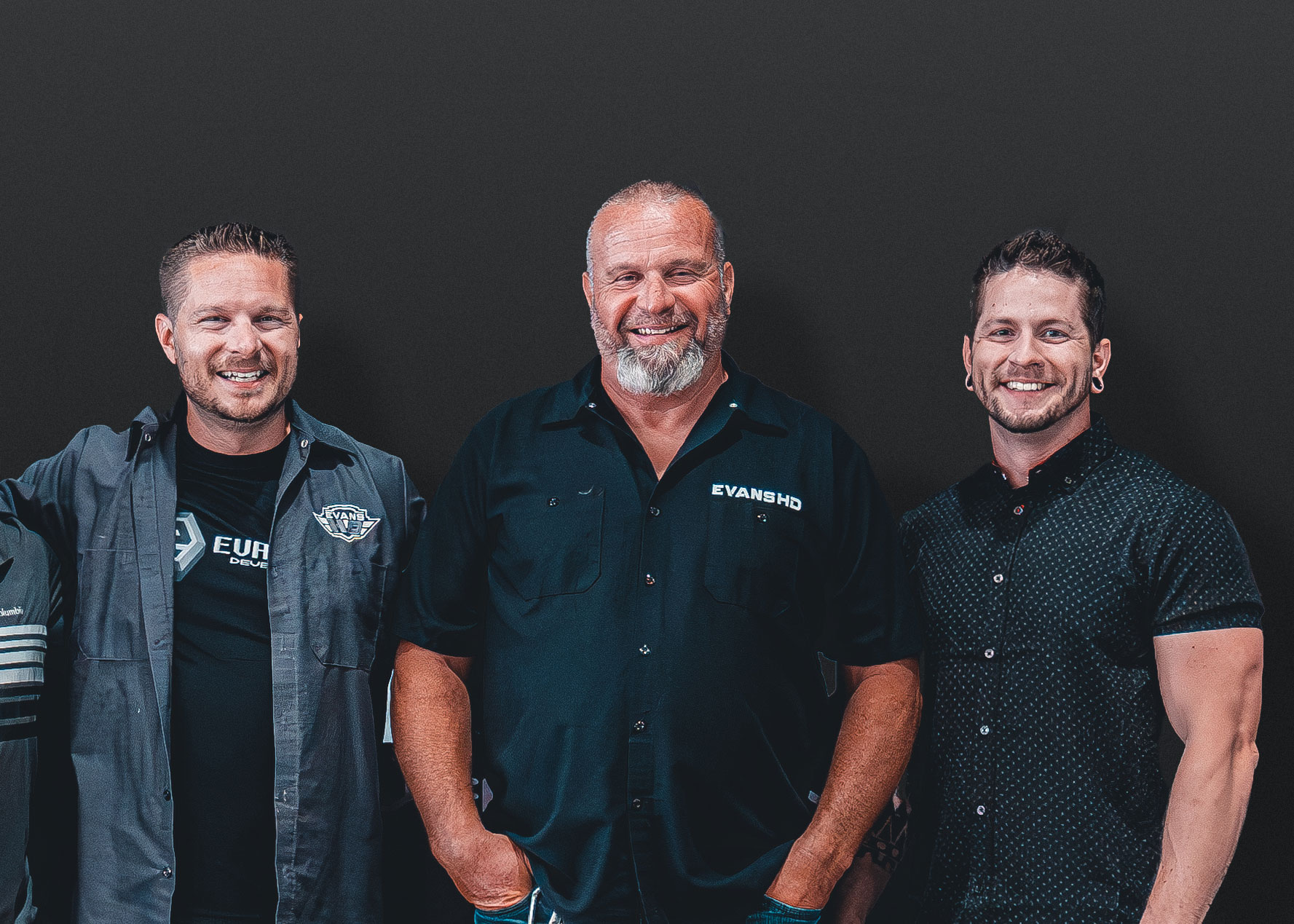
The company traces its beginning to 1995. George Evans moved from auto body work to driving truck, built up a single-truck operation and purchased Evans Trucking from his brother in 2005. His sons Jory and Reese later joined. Jory started at 16 and describes his early years as a gauntlet: dispatch, maintenance, human resources, staffing and training. The education was less business school than every department calling at once.
Today, Jory and Reese lead much of the day-to-day operation alongside George. The company says it has more than 150 employees. Its scale is meaningful, but not national-conglomerate scale. That middle position shapes the sales argument: enough owned equipment to handle a difficult project, close enough to the work that an Evans still has to hear about it.
This is an asset-based model. Evans earns revenue by quoting and executing shipments, with price shaped by commodity, dimensions, weight, timing and route. Full-truckload customers reserve a truck and trailer. Less-than-truckload customers share capacity. Specialized jobs add equipment selection, permits, route surveys or pilot cars. The company also advertises tractor and trailer rentals. It does not publish a rate card because a 48-foot flatdeck of bundled material and an eight-axle heavy-haul move are not the same product with different postage.
“Every load is our reputation.”Evans Trucking’s operating shorthand
The product is the handoff
Evans serves businesses in construction, agriculture, manufacturing, energy and automotive markets. The cargo list is a portrait of physical North America: steel, irrigation systems, drilling equipment, factory components, auction vehicles, produce and potatoes. These customers have two recurring problems. First, the freight may not fit ordinary equipment. Second, every handoff creates another place for information to go missing.
The company’s response is an eight-stage shipment journey. A request becomes a quote and booking. Dispatch connects the shipper, driver and customer. Documentation starts before pickup. The load is secured, tracked and delivered. Signed bills of lading and customs documents follow. Billing closes the loop. None of these steps is novel alone. Their value comes from making the chain legible.
Tracking matters here because “where is my load?” is rarely a casual question. Evans says customers receive updates when a driver is assigned, pickup is confirmed, delivery is scheduled and routes change. The useful word is change. A dashboard that reports a truck’s dot on a map is easy. A dispatcher who explains what a changed route means for a crew waiting to unload is the service.
The repair shop is part of the pitch
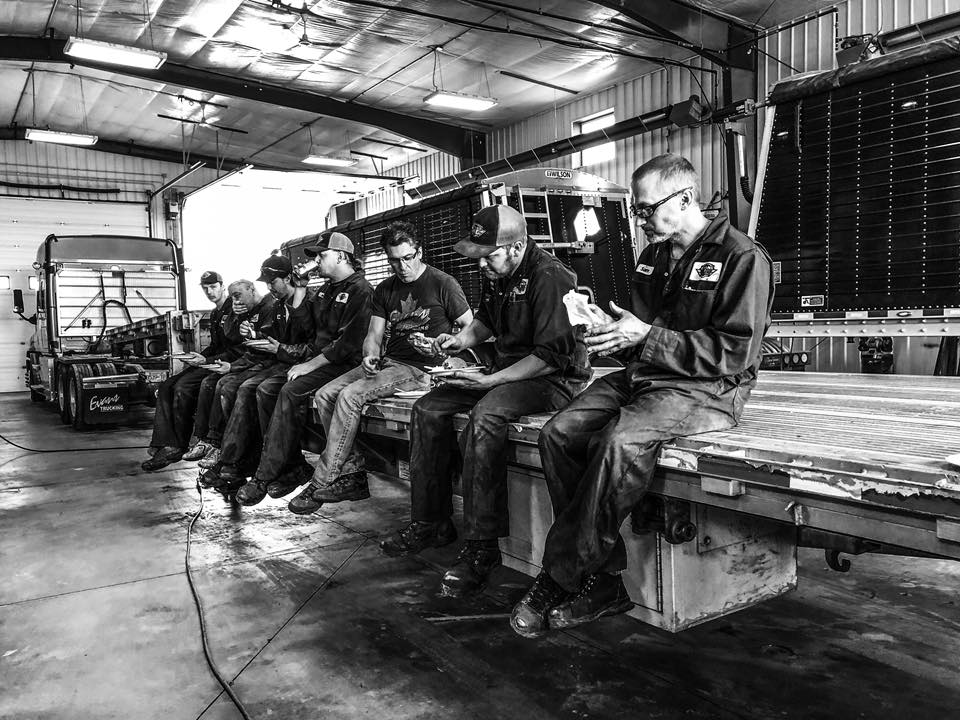
Evans’ most defensible capability may sit off the highway. The family opened a 50,000-square-foot mechanic and repair shop and operates it as Evans HD, servicing its own fleet and outside customers. The trucking company says its equipment is inspected more often than government rules require. Dispatch schedules that work when trucks are already home. Current fleet policy keeps tractors in service for no more than seven years, while maintenance analytics flag components for early replacement.
That is vertical integration with a practical purpose. A carrier can promise punctuality, but the promise gets more credible when its maintenance team sees the failure data and controls the calendar. It also creates feedback between drivers, mechanics and purchasing. Jory’s public equipment reviews are full of details that only matter after thousands of miles: cabinet height, mirror buffeting, axle access, winter grit and whether a bracket stays attached.
What failed first - and what changed their mind
The cleanest example comes from Evans’ review of the 2025 Freightliner Cascadia. An optional aerodynamic package added deflectors between the dual tires and rear wings. The theory was sound: manage airflow, reduce drag, save fuel. The Canadian winter supplied peer review. Mounting brackets broke under ice, wind and grit; loose pieces could damage tires or enter traffic. Evans stopped specifying the package.
The company did not reject aerodynamics. It kept the changes that survived contact with the job, including cab filler pieces, longer cab extenders and quick-release wheel covers. One Cascadia reportedly returned 9.6 Imperial miles per gallon during a month of flatbed work across North America. Evans says wheel covers can save roughly 1 percent at the tractor and another 1 percent at the trailer. On one vehicle, that sounds like sofa-cushion money. Across a fleet, over years, it becomes purchasing policy.
The same field-first logic runs through the trailer fleet. A Landoll travelling-tail trailer lowers to an 11-degree loading angle and reaches docks as high as 62 inches. RGN trailers have pullouts for wide equipment. Low-profile step decks use a 31.5-inch deck to buy clearance for tall cargo. Reefer units continuously log temperature. The feature list is really a list of expensive exceptions that have been made repeatable.
The recruiting engine wears work boots
Specialized equipment is useless without drivers who know how to load it. Evans puts every new driver through orientation covering safety, policy, core values and route planning, then adjusts training for experience levels ranging from newly licensed operators to drivers with more than 20 years on the road. Its public library demonstrates how to throw a strap, untarp a load, slide a trailer axle, secure flatbed freight and chain tires for snow.
This content does three jobs. It gives drivers a preview of standards. It gives customers evidence that “expertise” means something more than a homepage adjective. And it gives the company a recruiting surface beyond a job listing. One driver recounts meeting a stranger at a truck stop who recognized Evans as “the nice looking tarped loads” company. A tidy tarp is a tiny billboard for process.
Culture is also expressed through whom the company supports. Evans names EstherHome, Teen Challenge Canada and anti-trafficking organization Not For Sale among its charitable partners, alongside local youth sports, seasonal fundraisers, disaster relief and help for families. Its stated values are quality, integrity and community. The test, as ever, is whether those nouns survive a late load and a difficult phone call.
The playbook worth stealing
Evans’ advantage is not one invention. Competitors can buy the same tractor. Large carriers can offer broader networks, and brokers can assemble capacity without owning every asset. The distinction is the loop between owned equipment, in-house repair, driver education and customer communication. Each part supplies evidence to the next.
Copy this operating loop
- Turn failure history into a replacement schedule, not a postmortem.
- Expose the service journey so customers know the next handoff.
- Teach the craft publicly. Useful instruction attracts buyers and employees.
- Let field evidence overrule a vendor’s feature sheet.
- Package complexity into a clear promise: the customer gets fewer surprises.
This model is not magic. It works when a carrier has enough recurring utilization to support owned equipment and a serious shop; enough specialization to earn back the cost of trailers, training and permits; and enough route density to avoid hauling air home. It becomes less attractive for sporadic volume, commodity lanes won almost entirely on price, or businesses without the capital and management discipline to keep a fleet productive. Preventive replacement also fails when data is thin or maintenance becomes ritual rather than analysis.
But under the right conditions, Evans demonstrates an old business truth in unusually large machinery: reliability can be designed. The company began with one operator learning the economics of his truck. It scaled by embedding those lessons in dispatch, maintenance, equipment selection and training. The customer sees a clean load and a moving map dot. Behind both is a system built to make the next bad surprise slightly less likely.
The visible product is a truck. The real product is the absence of panic.The Evans Trucking operating thesis, in one line