Evan Goldin’s future wife had come to see him in San Francisco. First, she had to find somewhere to leave the car. She circled his block for roughly half an hour, then called with an understandable objection to the evening’s arrangements: she was never visiting again. His building had empty parking spaces. She could not use them.
For most couples, this would become a complaint about the neighborhood, followed by dinner and perhaps a change of address. Goldin would eventually help build a company around the problem. The empty spaces bothered him because they exposed a peculiar failure: a resource could be physically available and practically inaccessible.
He later recounted the episode with the rueful humor of someone whose interest in parking had acquired personal stakes. Romance, it turned out, depended partly on garage administration. Behind a tedious inconvenience was a question that would follow him through Parkade: how much of a city’s apparent shortage could better organization resolve?
A city interest, before the startup
Goldin’s interest in getting around predates the company. At the University of Pennsylvania, where he studied from 2003 to 2007, he wrote for The Daily Pennsylvanian. His subjects included the workings of Philadelphia, rather than just the workings of campus. A student newspaper gave him somewhere to argue about the city beyond the university gates.
In April 2007, he wrote about SEPTA and the need for regional cooperation and financial planning. That same month, he explored the Reading Viaduct and the possibility of reusing a railway. Another column urged students to get better acquainted with Philadelphia. In January, he had taken issue with Pennsylvania’s fleet of cars for legislators.
The range matters. Long before a parking product gave him a business vocabulary, Goldin was interested in public decisions that shape private routines. A train’s usefulness, the future of disused infrastructure, the habit of looking beyond campus: these are different versions of asking what a city makes possible for its residents.
“We can fix this.”
Evan Goldin
The perk that needed a price
His product career brought him to Zimride as its first product manager, then through the company’s evolution into Lyft. Between 2012 and 2015, he helped its expansion across the country. With Curtis Rogers, he developed Lyft for Work, bringing the service into business transportation. He was working on how other people moved. The office lot offered a closer experiment.
Lyft moved into a Mission District office in 2014 with 53 parking spaces. Free parking attracted drivers, and arriving late meant searching nearby streets. Reserved carpool spaces brought their own uncertainty. Goldin helped introduce monthly paid reservations. The first price, $200, left spaces empty; $150 initially brought supply and demand together.
Parking revenue supported transportation benefits for colleagues who did not lease a space. The scheme drew complaints, required explanation and changed over time. Goldin reported a double-digit drop in the share driving to work. Employees also began sharing their leased spaces informally, sometimes asking for coffee or a trivia answer. The parking lot had developed a small social economy.
Spaces remained empty
Initial balance found
After Lyft, he led product development, design, data and engineering at Chariot Transit, the shuttle operator acquired by Ford Smart Mobility. He left in 2018 to start Parkade. Ben Plowman and Rogers joined him as co-founders. His route into the garage had passed through carpooling, ride-hailing and shuttles, giving the apparently stationary subject a transportation backstory.
Getting drivers through the door
There is another useful episode from his Lyft years. Early demand for rides required a supply of drivers, and getting those drivers approved took too long. The team had to decide whether to buy software for the process or build its own. The less visible machinery behind the app was becoming a constraint on what the app could deliver.
A visit to the startup Cherry showed Goldin what a more efficient onboarding system could look like. Lyft built a custom applicant tracking system, including actions such as starting driving-record checks when an applicant submitted information. The onboarding process fell from 21 days to fewer than seven. The decision treated driver intake as something central enough to deserve purpose-built tools.
That episode helps explain the attraction of parking administration. Both involve an ordinary operational process with consequences beyond its apparent importance. A driver waiting for approval cannot give rides. A space locked behind an unusable arrangement cannot accommodate a visitor. The appeal of software lies in making those handoffs happen when people need them.
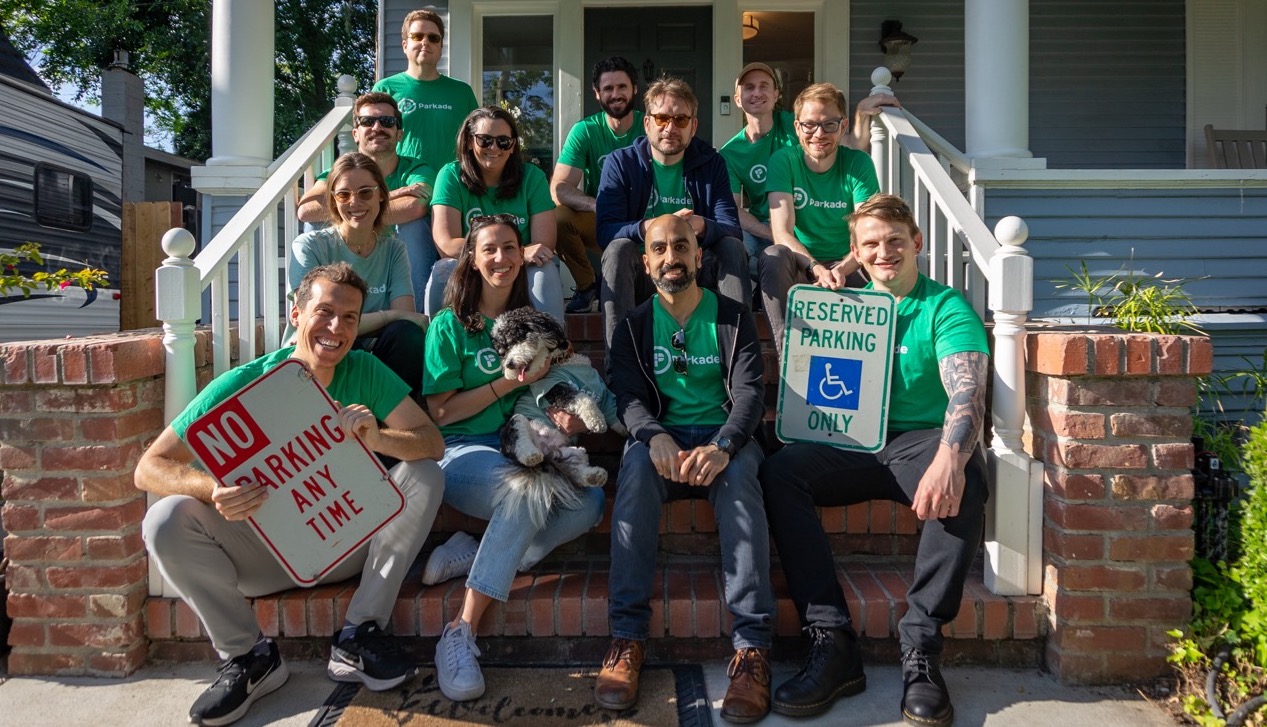
A hometown with less room
Goldin grew up in Palo Alto. In 2016, writing to its council in support of more housing, he remembered friends whose parents worked as mechanics, teachers, construction foremen, writers and retail clerks. The city he described had become increasingly difficult for those households to afford. His objection was grounded in the people who could no longer make the place work.
He connected the problem to a mismatch between jobs and homes. Economic expansion had brought employment; the housing supply had failed to keep up. His argument for greater density was also an argument about continuity. A hometown loses something when familiar professions can no longer supply its neighbors, and when another generation cannot find a way to stay.
This gives his parking interest an emotional scale. The unit of concern is a visit, a commute, a household, a block. Software becomes interesting because a rule about one amenity can influence the cost and feasibility of the building around it. Parking occupies land that a city must decide how to use.
The last thirty minutes
Goldin has also written as a passenger. In a 2019 letter to Caltrain’s board, he explained that he had ridden the railway since childhood and that it helped him and his wife share one car. He wanted faster, more frequent service, better transfers and easier connections by bicycle and other small vehicles.
One example was particularly precise. He had taken Caltrain to Santa Clara, intending to reach San Jose’s airport without a car. The next shuttle was thirty minutes away. He called a Lyft. The journey had exposed a gap between choosing public transport and being able to rely on the complete trip.
There is a family resemblance between that transfer and the inaccessible garage. An option exists, but a missing connection makes it less useful. Goldin’s letter addressed timetables, capacity, fares and station access together. A passenger has to experience all of them as one journey, however many organizations divide responsibility.
His public participation has extended to the street itself. In October 2023, he urged Long Beach to move forward with the Orange Avenue Backbone Bikeway and to prioritize the planned protected lane on Spring Street. He wanted the whole route protected, emphasizing that disconnected improvements would leave people with an incomplete network.
The Long Beach request named two directions: Orange Avenue would supply a north-south backbone, while Spring Street would provide an east-west one. He included pedestrians, scooter riders and wheelchair users in the people the network should serve. The detail gives his advocacy a practical shape. A useful route has to connect to another useful route, and accommodate the people who will travel it.
In August 2024, he supported a mural on San Francisco’s 20th Slow Street. Parkade had chosen its office location partly for the street life and safety the Slow Street offered. He described employees walking, cycling and visiting nearby businesses. The surroundings of a workplace counted as part of the working day.
His support for the mural joined the interests of a resident and a business owner. A cleaner, more active block offered somewhere employees could spend time between tasks, while the proposed artwork promised another reason to enjoy being there. This was a small intervention, measured against a rail network or a housing program. It still belonged to the same everyday question of what streets are for.
Trains, transfers and connected routes.
Permission to use the space already there.
Housing and streets that serve people.
A parking company with an awkward ambition
Parkade gives Goldin a commercial way to work on those questions. In an early housing interview, he described allowing residents to book spaces for different lengths of time and share spaces they were not using. A garage could accommodate changing schedules, rather than assuming every driver needed the same arrangement every day.
The building’s management remained an essential part of the picture. An attractive booking screen would accomplish little if the underlying assignments were wrong or the rules unclear. Goldin’s approach put the less glamorous business of running parking alongside the resident’s experience of using it. There are limits to what charm can achieve when someone else is in your space.
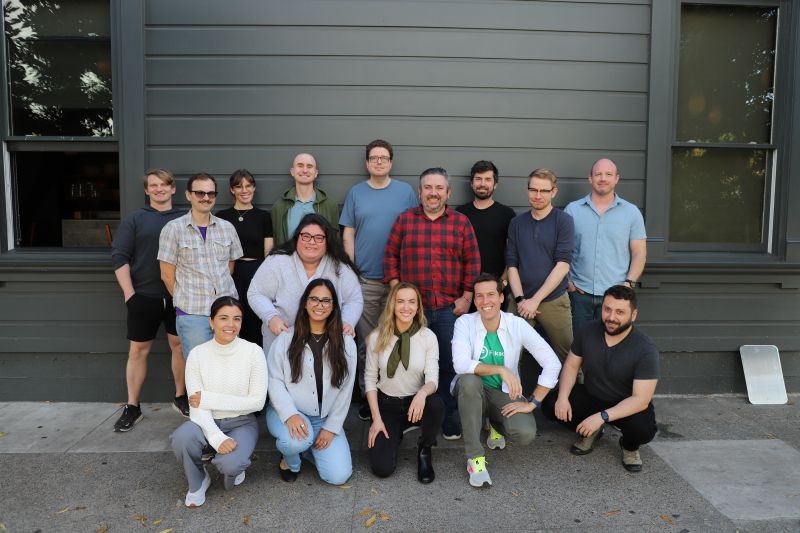
In 2025, Parkade announced a $10 million Series A with Navitas Capital, MassMutual Ventures and 9Yards Capital among its investors. The company reported customers in 23 American states and three other countries. That geographical reach gave a larger audience to an idea Goldin had been testing through very local frustrations.
He also outlined a future in which trusted customers could park across Parkade buildings, including places where they were not tenants. It was an ambition for a network, beyond an individual garage. Making existing spaces easier to use could, in his view, reduce the amount of parking cities need to provide.
Goldin’s story keeps returning to the gap between something being present and someone being able to use it. The train reaches the station. The garage contains a space. The city has jobs. Getting the next part right takes rules, coordination and persistence. He has chosen to spend his working life in that gap, with the occasional parking sign for company.