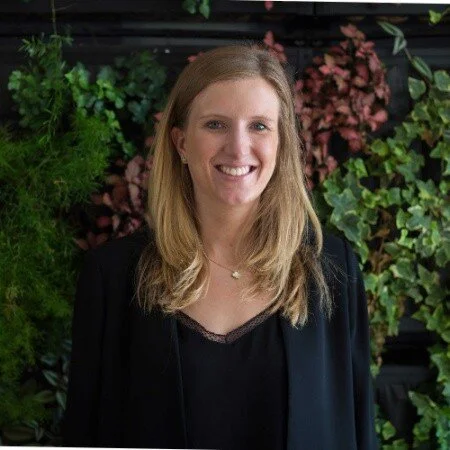
She sold the taste of chocolate, then went to work where an algorithm tries to taste the next bestseller.
The Office of the CEO is a strange address. It has no fixed job description, which is precisely the point. Eugénie Fontugne works there, at Inkitt - the San Francisco startup that believes a large enough pile of reader data can predict which unknown manuscript becomes the next runaway hit. Her title reads Manager, Strategy & Operations. Translated: she is the person who turns a founder's ambition into something a company can actually do on a Tuesday.
Inkitt is not a small bet. It has raised in the neighborhood of $117 million, reached Series C, and built a following through its serialized-fiction app, Galatea. The company's whole thesis is that taste can be measured - that the crowd, watched closely enough, will tell you what it wants before it knows. Fontugne sits close to that thesis and makes the machinery around it run.
What makes her interesting is not the title. It's the route she took to get there. Most operators arrive at a tech company from another tech company. Fontugne arrived from chocolate.
Before the startups, before the AI advising, Fontugne worked at Firmenich - one of the giants of flavor and fragrance - as Business Development Manager for Confectionery and Chocolate in Europe. Her job was to inspire food and beverage companies to make the products people reach for. Not the products people need. The products people want.
That distinction turns out to be the spine of her whole career. Chocolate is not sold on nutrition. It is sold on desire. And a reader-powered publishing platform is not built on literary merit alone - it is built on what readers can't stop scrolling. The same instinct that sells a truffle sells a cliffhanger. Fontugne just changed the product.
At an ESSEC Food Chair event she put the philosophy plainly: as consumers, we have the power to influence what companies make and sell. It is a small sentence with a large idea inside it - that demand is not passive, that the crowd is an author too. Years later, that is more or less Inkitt's business model.
Somewhere in there she also earned a graduate degree in Media and Communications through the London School of Economics - much of it based in Shanghai, at Fudan University. A London diploma, studied from China, by a Swiss-French woman who moonlighted as a food blogger. The plurality was there from the start.
Some people brainstorm. Fontugne walks. A few months before the summer of 2025, wandering around London, she decided there should be a hackathon between Project Europe - the Harry Stebbings-backed initiative to fund young European founders - and Lovable, the AI app-builder everyone in the ecosystem was talking about.
Deciding is easy. Delivering is the operator's art. The event landed in Stockholm: 90 builders, co-hosted with the venture firms 20VC and Creandum, applications arriving in the thousands within hours of announcement. The winning team, GoodOmen - three engineers out of London - shipped two products in twenty hours and walked away with €20,000.
The tell is what she did next. One successful hackathon is a fluke. Fontugne started planning another, this time with ElevenLabs. Operators don't celebrate the launch. They schedule the sequel.
Strategy and operations for a Series C publishing startup betting that data can find the next bestseller before a human editor can.
She sits on the advisory board of the AI firm, lending an operator's eye to a company building at the frontier.
Curated the World Economic Forum hub (2021-2022), set governance, and mentored founders - including refugees - at the SINGA incubator.
Writes about French bakeries, chocolatiers and wine bars around the Bay. The food obsession never left; it just changed cities.
Conceived and ran the Lovable × Project Europe event in Stockholm, with a sequel already brewing.
Business Development for Confectionery and Chocolate - the school where she learned that desire, not need, moves a market.
Postgraduate in Media & Communications, LSE with Fudan University - living in Shanghai, blogging about food on the side.
Business Development Manager, Confectionery & Chocolate, at flavor-and-fragrance house Firmenich.
Curator of the Global Shapers Geneva Hub; mentor at the SINGA incubator for founders with migrant backgrounds.
Outgoing Hub Curator, Geneva - having earlier volunteered with the Montreal hub.
Manager, Strategy & Operations, Office of the CEO at Inkitt in San Francisco; VCG.AI advisor; MerciSF contributor.
Organized the Lovable × Project Europe hackathon in Stockholm - 90 builders, €20,000 prize.
There is a temptation to read a résumé like this as indecision. Read it again. Every stop trades on the same muscle - understanding what a group of people will fall for, and building the thing that meets them there.
Flavor company. Global community. AI publisher. Founder ecosystem. Different rooms, one question: what do people actually want, and how do you deliver it before they ask twice?
The generalist gets underrated in a world obsessed with specialists. But the Office of the CEO doesn't hire specialists. It hires the person who can move between the chocolate aisle and the code review without losing the plot.
Her career runs chocolate to code - she sold confectionery strategy before running operations at an AI publisher.
She earned a London degree largely from Shanghai, at Fudan University.
She still writes about French bakeries and wine bars in the Bay Area for MerciSF - the food obsession simply emigrated.
Swiss-French by background, she has built or joined communities on at least three continents.
One of her hackathons was co-hosted with VC firms 20VC and Creandum - not a bad guest list for a hunch.