A click is a tiny thing with an inflated résumé. It can signal curiosity, confusion, desire, accident or a badly placed thumb. Etology's business begins by refusing to treat every click as equal. The Los Angeles advertising network connects publishers holding specialized inventory with marketers who care about a narrower outcome: did the visitor subscribe, register, buy or otherwise act? In a digital market built to count almost everything, Etology sells the hope that the count contains meaning.
That makes the company a middleman, but not a passive one. On one side are websites with attention to monetize. On the other are advertisers and media buyers trying to acquire customers without pouring money into empty impressions. Etology supplies the marketplace, ad delivery, targeting, reporting and optimization between them. It offers self-service tools for buyers comfortable at the controls and managed help for those who would rather have a specialist watch the gauges.
The company's strongest public identity is in dating, webcam and related performance categories - parts of the web with abundant traffic, unusual formats and their own operating grammar. Etology describes its inventory as premium and conversion-oriented. The distinction matters. The biggest exchanges can offer breathtaking reach; a specialist survives by knowing which placements, geographies, devices and offers belong together.
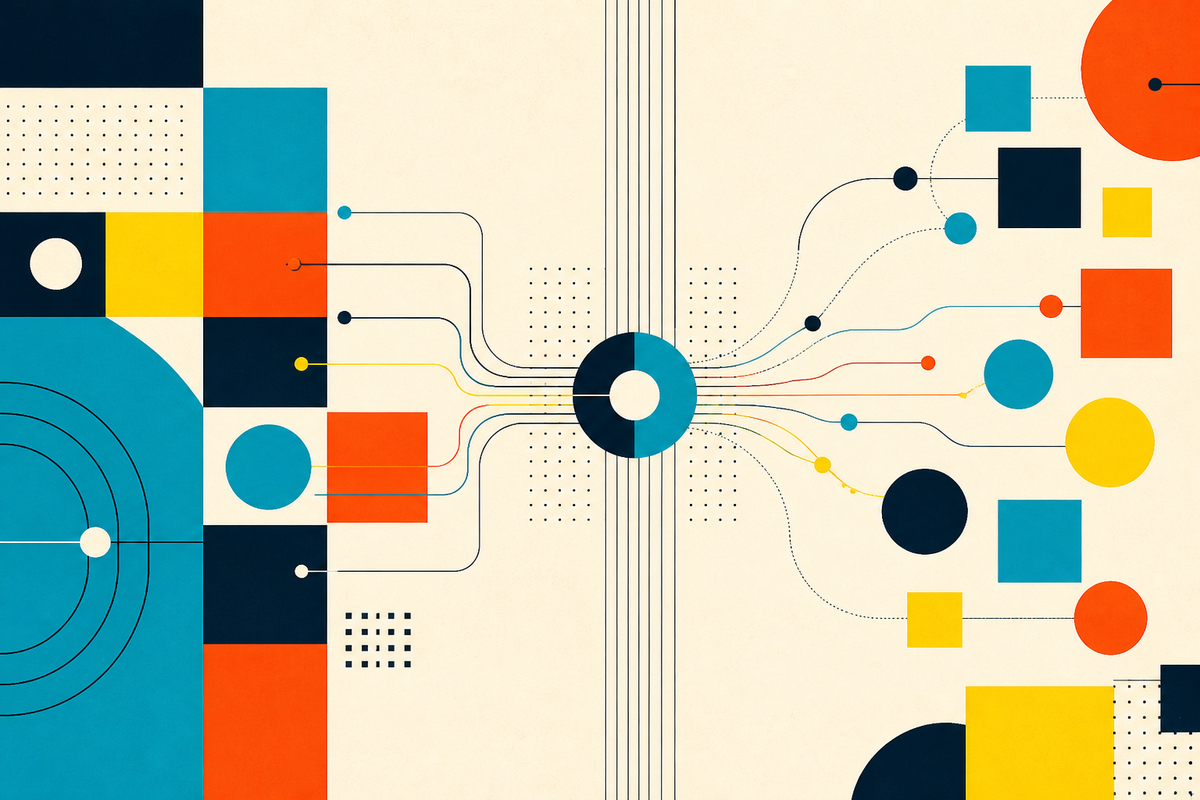
The marketplace in the middle
Etology serves two customers whose interests overlap without perfectly aligning. Publishers want the highest possible return from each ad zone, but they cannot make every page so aggressive that users flee. Advertisers want conversions, but they do not want to pay for visitors who were never plausible customers. Etology's job is to make the trade acceptable to both - then use the data from one campaign to improve the next.
Audience
Inventory
Measure
Optimize
Budgets
Outcomes
For buyers, the platform's public feature set includes real-time bidding, automatic bid controls, granular statistics, creative variations, frequency capping and targeting by factors such as geography and device. Public listings also describe native, push, pop-under, display, email and other formats. The point is not to use all of them. It is to find the combination that puts a relevant offer in front of a receptive person, at a price the campaign can sustain.
For publishers, Etology offers access to advertiser demand, reporting and help tuning placements. A publisher can treat an ad zone as more than a blank rectangle: it has a location, audience, format, rhythm and opportunity cost. Better matching can lift yield without simply adding more clutter. Etology's language repeatedly pairs monetization with user experience, acknowledging the tension instead of pretending it does not exist.
“Bridging that knowledge gap for clients between starting out as a new advertiser and becoming a savvy marketer ... is probably what Etology does best.”
Bako Kaye, Etology, 2022
A company with two birthdays
Etology's public timeline requires a little care. A contemporary 2007 company announcement said Etology was founded in 2005 in Foster City, California. That original exchange let website owners sell ad space directly while advertisers placed text and banner ads on selected sites. Financing databases record a $4 million round in late 2006 involving Mustang Ventures. It was an early version of a now-familiar idea: make advertising inventory browsable, purchasable and measurable through software.
The largest documented early milestone came in December 2007. Etology announced a multi-year, mutually exclusive agreement to power AVN Ads 2.0, replacing AdBrite. The launch described more than 4,000 participating adult-entertainment websites and 1,268 preregistered accounts. It offered content-channel targeting, live support and a publisher revenue share raised from 70 to 75 percent. YouPorn participated in the beta. The deal placed Etology's machinery behind a substantial specialist marketplace at a moment when self-service online advertising was still learning its shape.
2006
AVN Ads launch
in 2007
The present company page on LinkedIn, however, gives 2014 as the founding year and names Los Angeles as headquarters. Founder directories associate that era with Bako Kaye, Etology's CEO and founder, who also founded Datingtraffic.com in 2015. The most responsible reading is that Etology's public record contains an original 2005 exchange and a current network identity dated to 2014. Corporate histories are often tidier in a pitch deck than in the wild.
Why specialization can beat scale
Etology does not need to be the largest ad network to be useful. Its competitive proposition rests on three narrower assets: access to specialized inventory, knowledge accumulated within a vertical and people who help customers use the system. The first gives buyers placements they may not find in a generic pool. The second informs which creative, format or geography deserves a test. The third matters because a dashboard cannot teach judgment merely by displaying more columns.
Members-area traffic illustrates the strategy. This is inventory shown within a gated or logged-in publisher environment, often on dating sites. The audience has already demonstrated some level of intent by entering. That does not guarantee a conversion, but it creates a more specific context than a random page view. Etology packages that context for advertisers, then supplies controls intended to separate productive segments from expensive noise.
Competitors range from immense general-purpose platforms such as Google's display ecosystem to specialist traffic networks and affiliate platforms including ExoClick, TrafficJunky, MaxBounty, AdCombo and CrakRevenue. A buyer chooses among them by inventory, price, geography, format, compliance requirements and support. Etology's answer is quality over bulk: fewer anonymous impressions, more deliberate placement and access to people who know the terrain.
That claim still has to earn its keep campaign by campaign. Independent directory listings vary on details such as offer counts, minimum deposits and payment terms, a reminder that ad-network conditions move and negotiated accounts differ. The durable product is not any single number. It is the loop: launch a controlled test, watch placement-level results, cut weak traffic, adjust bids and creative, then scale the combinations that work.
What a customer can actually do
An advertiser can bring an offer, define its target market, choose formats, set a bid and budget, inspect real-time reporting and optimize toward conversions. A sophisticated buyer can operate the controls directly. A beginner can lean on managed support while learning why frequency, creative variation and traffic source matter. Etology's 2022 self-service announcement framed this education as a core competency, not an afterthought.
A publisher can present inventory, create or tune ad zones, connect to demand and monitor the revenue those placements produce. The platform's value is partly administrative - delivery, tracking and payment infrastructure - and partly commercial, because a network can aggregate buyers a lone publisher might never reach. Etology makes money from that exchange, retaining a margin or share as advertising budgets flow toward publishers.
The best way to use a network like this is experimentally. Start with a defined conversion event and a budget small enough to learn from. Split campaigns by geography, device and placement instead of pouring every visitor into one bucket. Give creative variants enough traffic to reveal a pattern, then stop buying the combinations that miss the target. Publishers can run the same discipline in reverse: compare zones, watch whether aggressive formats damage engagement, and favor the demand that produces sustainable yield. None of this is glamorous. It is closer to tending a garden than flipping a switch - prune, measure, wait and repeat. Etology's software makes those decisions visible; its account team is meant to make them understandable.
The model carries familiar ad-tech risks. Traffic quality must be policed. Advertisers need confidence that reported action is genuine. Publishers need reliable payment and rules that do not change without warning. Users need an experience that remains tolerable, safe and respectful of privacy. Etology's language of traffic quality assurance, reporting and close account management addresses these pressures, though the real test always occurs in operations.
The company's small public footprint is part of the story. LinkedIn lists nine visible employees and places the organization in an 11-to-50-person band. This is not a universal advertising utility. It is a specialist shop occupying a particular stretch of the supply chain, where relationships and category knowledge can compensate for limited scale. In that market, the person answering the phone may be as meaningful as another feature in the interface.
Etology fits within programmatic advertising as a vertical network and marketplace: narrower than a broad exchange, more technical than a traditional agency, and more involved than a simple list of affiliate offers. Its enduring insight is easy to steal. A marketplace becomes defensible when it understands the merchandise better than a generalist does. Here, the merchandise is attention - fleeting, contextual and notoriously difficult to grade.
The web has changed dramatically since Etology's first banners and skyscrapers. The middleman's assignment has not. Find a publisher with attention, find an advertiser with a relevant offer, measure what happens, and make the next match a little less wasteful. Every line on the dashboard is ultimately trying to answer one ordinary question: was that click worth it?