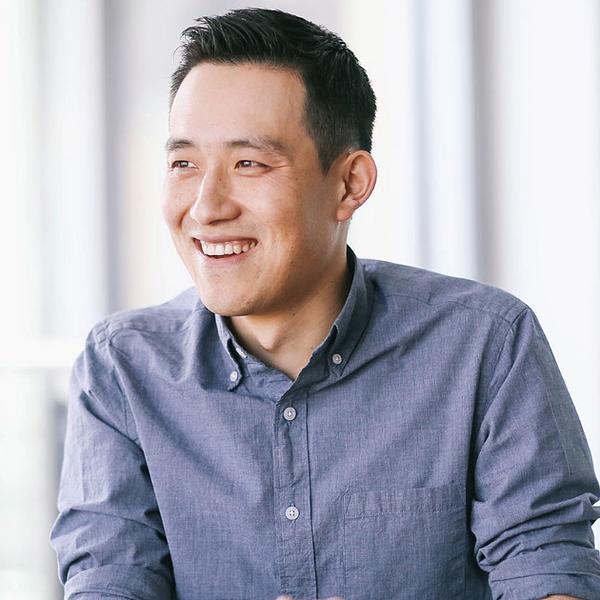
Conviction Before the Numbers Agree
Two years in South Korea with no phone, no investment memos, and no term sheets. That's where Ethan Choi sharpened the instinct that would later make him one of the more reliable growth-stage investors in Silicon Valley. He went there as an LDS missionary. He came back with a different idea about what makes people - and therefore companies - actually work.
Before Korea, Choi was studying Information Systems in Australia. After Korea, he switched to Accounting at Brigham Young University. That pivot from software to numbers turned out to be an unusually good preparation for the job of reading a $50M ARR growth-stage company and figuring out whether the economics will ever actually close. He graduated in 2012 and went straight into investing at Spectrum Equity, where he learned to back companies at a stage when the story was mostly already written - Lynda.com, ExamSoft, Headspace, Lucid Software - businesses with real customers and real revenue but still years from an exit.
The Spectrum years taught him the difference between a company that can survive and a company that can win. From there he moved to Accel, where the game changed. Accel writes checks earlier and holds board seats longer. Choi sat on the board of Klaviyo as it scaled from a fast-growing email and SMS platform for e-commerce brands to a public company trading on the New York Stock Exchange. He backed 1Password when strong passwords were considered a solved problem - and watched it become foundational enterprise security infrastructure. He invested in Pismo, the Brazilian cloud-native payment processing platform, before Visa decided it was worth buying.
Each of those calls shared a common thread: the founding team was moving faster and seeing further than the obvious metrics suggested they should. That pattern crystallized into Choi's now-explicit framework. He used to run diligence that was 80% metrics, 20% founders. He reversed it. Now it's 90% founders, 10% everything else. The explanation he gives is simple and a little brutal: metrics change. Markets shift. The thing that holds when everything else moves is the caliber of the person building. If that person is exceptional, the numbers tend to follow.
In 2024, Vinod Khosla's firm came calling. Khosla Ventures needed someone to lead its Growth Fund - the vehicle that writes the $15M-to-$70M checks into companies that have already demonstrated something real but are still well short of their ceiling. Choi took the job. Since then he has added OpenAI, Ramp, Glean, Vercel, Abridge, Cyberhaven, and ClickHouseDB to the portfolio, among others. The common thread across those bets is not sector or stage - it's a thesis about where software goes next.
The thesis, stated plainly: every company in the next decade will either become AI-native - meaning it rebuilds itself from the ground up with AI woven into how it actually works - or it will be replaced by one that does. Choi is not subtle about this. He has said publicly that entry-level white-collar jobs are already disappearing because he can do the work of a junior associate himself in minutes using AI tools. He has warned that universities are failing their graduates by not producing people who emerge looking like third- or fourth-year professionals from day one. He has predicted that white-collar workers will protest AI loudly and publicly before blue-collar workers do - a counterintuitive call that cuts against the usual automation narrative.
The robotics prediction is perhaps the most specific. In late 2025, Choi went on record calling for robotics to hit its own GPT-3 moment in 2026 - a foundational inflection where one of the leading models demonstrates human-level intelligence applied to the physical world. If he is right, the downstream consequences for manufacturing, logistics, and physical-world AI infrastructure will be significant. If he is wrong, he will have made a clear, falsifiable, public call that he can learn from. Either way, it is not a hedge.
The through-line from South Korea to Sand Hill Road is less exotic than it sounds. Choi spent two years studying how people make decisions under constraint, how communities sustain themselves around shared belief, and how individuals adapt when the environment changes unexpectedly. Those are, it turns out, exactly the skills required to evaluate founders. The mission did not teach him venture capital. It taught him something more useful: how to tell when a person has the specific kind of stubbornness that looks like madness until it looks like a company.