Six o’clock is the place you cannot see. On an analog clock, it sits directly behind you. In military and law-enforcement shorthand, telling someone you have their six means the blind spot is covered. Eric Styles took that plainspoken promise and made it the name of a software company.
The phrase does more work than most corporate mission statements. It tells customers what YourSix is for. It tells channel partners how the company intends to behave. It even describes Styles’s preferred posture as a leader: set the direction, trust capable people, and stay steady when conditions change.
The machinery beneath that promise is technical. YourSix makes Y6OS, a cloud-native platform that brings video surveillance, access control, audio, sensors, analytics, and professional monitoring into one interface. The ambition is to turn a fragmented collection of devices and local servers into something closer to an operating system. A manager can see multiple sites without visiting a security closet. A partner can bring the platform into a customer without learning every corner of the industry first.
Styles’s route to that idea began far from a software dashboard. Born and raised in New York, he enlisted in the U.S. Army at 18 in 1999. He spent six years on active duty, reached staff sergeant, completed two combat tours after September 11, and received the Bronze Star Medal. The habits he now emphasizes - service, calm, clear roles, adapting when a plan meets reality - have an obvious origin.
The second mission
After leaving the Army in 2005, Styles moved into technology sales and advice. He spent more than six years at Digital Planet Communications, then started Comm-Net in 2012. Along the way, he earned a bachelor’s degree in business management and leadership from Capella University. He learned the technology business from the position YourSix would later depend upon: the partner who has to understand a customer, sort through vendors, and put a credible solution on the table.
That experience became a founder’s advantage. Styles has said, simply, “I came from the channel.” When he and technologist Jacob Hengel co-founded YourSix in 2015, they designed both the software and its route to market around that fact. YourSix would sell through partners. It would help those partners learn the physical-security conversation, scope opportunities, and close business. The company’s job was not merely to ship software. It was to make someone else more capable in front of a customer.
“Our growth can be attributed to our partner-driven model.”Eric Styles
This is the part of the story worth stealing. Distribution was not a department attached after the product was finished. It was part of the product definition. A camera feed can be technically elegant and still go nowhere if the person selling it feels exposed. YourSix reduced that exposure. The promise to have a partner’s back matched the promise made to the end customer.
From a security closet to a control plane
Doors
Audio
Sensors
Direct to cloud
Many sites
Partner support
A market hidden in the wiring
Physical security is easy to mistake for a camera business. Styles describes it as an umbrella: surveillance, door access, monitoring, sensors, audio, analytics, and artificial intelligence. Historically, those pieces came with separate hardware, interfaces, vendors, and maintenance cycles. As cameras and controllers joined corporate networks, responsibility began to shift toward the same IT leaders already buying cloud communications and cybersecurity tools.
Styles saw an industry transition that looked familiar. Business phone systems had moved from equipment on site to unified communications delivered as a service. He believed physical security would follow. The larger and more distributed the customer, the clearer the value of standardizing on one cloud-managed system.
One episode from YourSix’s early commercial life captures the difference. A regulated customer suffered a server failure that took its existing video system down across a major site. The incumbent replacement plan stretched toward 30 days. Styles later recounted that YourSix brought roughly 900 cameras onto its platform within 24 hours. The important detail is not speed as spectacle. It is what cloud architecture changes when local hardware becomes the bottleneck.
The market rewarded the approach. YourSix entered the Inc. 5000 at No. 134 in 2020, when it ranked first among private security companies on the list. It returned at No. 208 in 2021, No. 195 in 2022, and No. 2,756 in 2023. Twin Cities Business included Styles in its 2021 TCB 100. The company also appeared on the Vet100 in 2021 and 2022.
In June 2024, YourSix announced a $10.5 million Series A led by Vocap Partners and joined by Eastside Partners. Styles framed the investors as strategic support for expanding market reach and moving customers from on-premise systems to the cloud. The money mattered, but so did the timing: YourSix had already spent years proving that the transition could travel through a partner ecosystem.
Calm, with a competitive streak
Styles’s public manner is controlled rather than theatrical. His company biography calls him calm and deliberate. In a 2025 podcast conversation about hiring and growth, the phrase “sneakily ultra-competitive” surfaced as a description of his temperament. The combination feels more revealing than either word on its own. Competitiveness sets the standard; calm keeps the standard from turning into organizational noise.
His stated leadership method is to set direction, empower leaders, and let expertise operate. “Adapting and overcoming” is the recurring language. The Army influence is visible, but Styles does not treat military experience as a costume for corporate life. In 2025, when he spoke to a room of Minnesota veterans in transition, he said he had rarely shared the full journey outside his family and the relationships he built through Bunker Labs. He focused on entrepreneurship and on physical security as a place where veterans could find purpose.
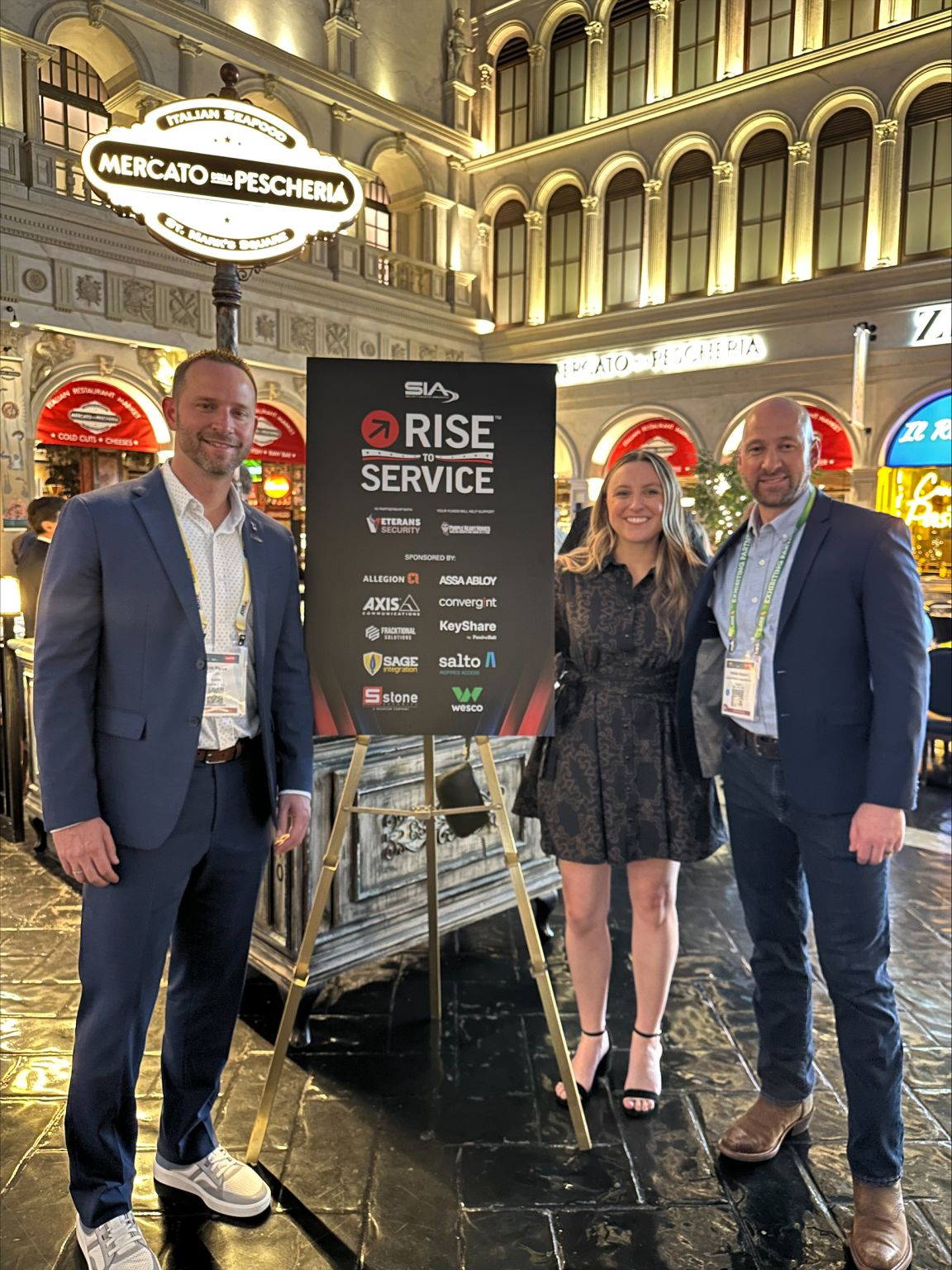
That connection has become part of his industry work. Styles supports the Security Industry Association’s Veterans in Security community. In February 2026, the association named YourSix and Amazon its Members of the Year, citing company participation across committees, events, and professional communities. Styles called the recognition an honor and emphasized standards, best practices, and participation in the industry as a whole.
The useful kind of unity
By 2026, the product vision had widened. Y6OS included access control and proactive device monitoring, then added native environmental and industrial sensors. Temperature, humidity, carbon dioxide, power use, video, doors, and audio could live in the same operational view. At ISC West that spring, Styles argued that artificial intelligence should help organizations act earlier, not merely produce more features for reviewing an incident after it happened.
That observation contains the sharper version of the YourSix thesis. Unification is useful only when it changes a decision. A single pane of glass is decoration if it simply gathers more noise. The value appears when a disconnected camera is noticed before it matters, when an unusual signal is paired with video, or when a manager can understand many sites without stitching together several vendor consoles.
Styles wants YourSix to be known for three things: a powerful cloud platform, a workplace people value, and an experience that partners and customers would choose. It is a balanced aspiration. Product strength without culture makes a brittle company. Culture without customer preference makes a club. Preference without technical substance fades quickly.
Outside work, the clues are domestic and familiar. Styles and his wife of more than 20 years live in Lakeville, Minnesota. They have three daughters. He has spent years coaching youth soccer and follows U.S. Soccer, the Yankees, and the Giants. His official biography also notes that he is a descendant of Wild Bill Hickok, an odd little thread from the American frontier to cloud software.
The soccer field may be the more useful image. A coach cannot play every position. The work is to create a system, make roles clear, prepare people, and then trust them when play moves faster than instruction. Styles’s company operates on a related belief. Devices have roles. Partners have roles. Leaders have roles. The platform should help them work together without making any one of them carry the whole field.
The name is a promise. The platform is the machinery that keeps it.YourSix, in one sentence
A decade after the company began, the original phrase still holds. There is a blind spot behind every organization: the camera nobody knows is offline, the door system in a separate console, the remote site waiting for a server visit, the partner facing a technical question alone. Styles built YourSix around the notion that these gaps can be covered by architecture and by behavior.
The lesson is less about surveillance than coherence. Choose a promise that tells people how the company will act. Build the product to fulfill it. Design distribution around it. Hire and lead in a way that makes the words credible. Then repeat it until three ordinary words become an operating system.