On December 14, 2004, Eric L. Schmidt reached Venice after a bicycle journey that had begun in Beijing. Members of the Italian cycling club Pedale Veneziano joined the final ride. The arrival in San Marco Square required a boat, a pleasingly impractical finish for an expedition on two wheels. After 100 days and 17 countries, even the bicycle had to concede something to local custom.
The journey gave Schmidt a story he would return to years later while building a software company. Along the way, an English-speaking university student had helped translate a conversation with a gathering of strangers, then invited him to dinner and an overnight stay with his family. What stayed with Schmidt was the assistance he had never known to arrange in advance.
Today, as co-founder and CEO of Glue Up, he makes software for organizations whose business is bringing people together. Associations, chambers of commerce and professional societies depend on introductions becoming relationships. His career keeps circling the same question: what helps that happen, and what gets in the way?
7 SeptemberVenice
14 December
A professor suggests Beijing
Schmidt moved to Beijing in 2002 after graduate school at Rensselaer Polytechnic Institute in Troy, New York. A business professor had suggested starting a company there. He held both a bachelor’s and a master’s degree from RPI; he was entering a market in which a fresh qualification could hardly substitute for knowing people. He began learning the second part on arrival.
His early ventures connected sport and education, including basketball and tennis camps with English instruction. He later co-founded the sports equipment business 1 Lacrosse and worked with venture capital and private equity investments. Sports, teaching, investing and software might look like separate career tracks. In his case, they repeatedly put him among people trying to organize something together.
In 2003, he founded China Entrepreneurs. The organization offered business learning and networking to people building companies in China. It supplied a practical answer to an immediate need: entrepreneurs wanted other entrepreneurs to talk to. There was plenty to discuss, from marketing to the peculiarities of an unfamiliar market. A room full of people with useful experience could be a very good place to start.
The trouble begins after the conference
Running those gatherings revealed the less sociable side of the enterprise. Schmidt and fellow founder Olivia Jingshu Ji were organizing large numbers of events. Preparing them, promoting them and retaining useful data demanded repeated work. The introductions were valuable; the administration was consuming the time needed to make more of them.
In 2013, they began developing their own technology. They had looked for a solution and concluded that the available tools did not meet their needs. EventBank grew out of that operating experience. The founding problem was unusually concrete: how could the people who organized a community keep managing it as the events multiplied?
Ji brought her own experience in internet businesses and enterprise software. Their partnership matters to the story because this was a shared frustration before it became a shared product. By 2017, Ji’s work had received recognition from Alibaba’s Global Conference on Women and Entrepreneurship. Schmidt’s company was being built alongside another founder with a record of her own.
Over time, membership management joined event management. The product expanded into the work surrounding a gathering: the contact records, communications, transactions and continuing relationship with members. A conference has a closing session. An association still has work on Monday. The software followed that rather ordinary distinction into a broader business.
“Global citizen and entrepreneurial.”Eric L. Schmidt, describing himself in 2020
A sale starts before the demonstration
Building in Asia shaped how Schmidt thought about customers. He has described a fast-moving environment in which decisions demanded local familiarity and flexibility. Trust could carry more weight in a purchase than the product alone. Communities gave people a way to build that trust before asking one another to do business.
That experience also informed his view of product development. He favors solving problems a founder has experienced, with customers close to the process. It is easy to imagine an event organizer responding to a product demonstration with a fairly stern question: does this save us work next week? Schmidt had spent enough time on the organizing side to appreciate the question.
The company expanded through offices and partnerships. Hong Kong and Singapore offices opened in 2018; a South Korean partnership with TSM followed that October. In February 2019 came a Manila office. The Philippines team would cover sales, marketing, service and support, putting staff closer to the organizations using the software.
The Korean arrangement was particularly practical. TSM brought experience in meetings and association services, while the software was localized for the market. Expansion involved people who understood the local business network. For a founder selling tools for relationships, that was a consistent way to enter a country.
- 2002Moves to Beijing
- 2003Founds China Entrepreneurs
- 2013Develops EventBank with Olivia Ji
- 2020EventBank becomes Glue Up
- 2026Experiments with AI agents in Virginia
When EventBank outgrew its name
In 2020, EventBank became Glue Up. By the November announcement, the platform was operating in more than 50 countries. Schmidt explained that its wider range of features called for a name that reflected the whole product. Events remained part of it, but the company now wanted its identity to include the continuing life of a professional community.
The new name has the modest advantage of being a verb one can understand without a software demonstration. Glue joins things. Here, the things included membership, events, communication and customer records. The naming decision made visible a change already happening inside the product.
The development work that year gives the change substance. Direct messaging allowed members to contact each other. A webinar solution integrated with Zoom. Paygage added a payment option initially offered in the United States. These were different pieces of the same organizational routine: convene people, let them talk, and handle the transactions that keep the organization running.
Other additions included speed networking, training credits and certificates, broader surveys and ways to display information through website widgets. The range makes the founder’s task more demanding. Every useful addition has to fit the working day of the people already using the platform. An all-in-one product can promise convenience; delivering it means making the pieces cooperate.
Who gets invited inside
Schmidt’s writing about hiring returns to that same concern with cooperation. In an essay originally shared in 2017, he described a team of 70 people from 16 countries. Different backgrounds, he argued, supplied different interpretations and approaches to problems. For a company serving customers across countries, this was part of making the product useful.
He also emphasized experience and initiative. He wanted colleagues able to spot a problem beyond the narrow limits of their assigned work, and candidates whose reasons for choosing the job made sense over a longer career. His list was more interested in what people would do together than in the decorative language of a company values poster.
There is a related pattern in his work at AmCham China. Across three years on its Board of Governors, he worked on member engagement and business relationships. He initiated a leadership program for emerging leaders and a breakfast series for chief marketing officers. Earlier, he had established a CEO roundtable through the small and medium enterprise committee. The job titles changed; he kept finding reasons to put people around a table.
New tools, familiar questions
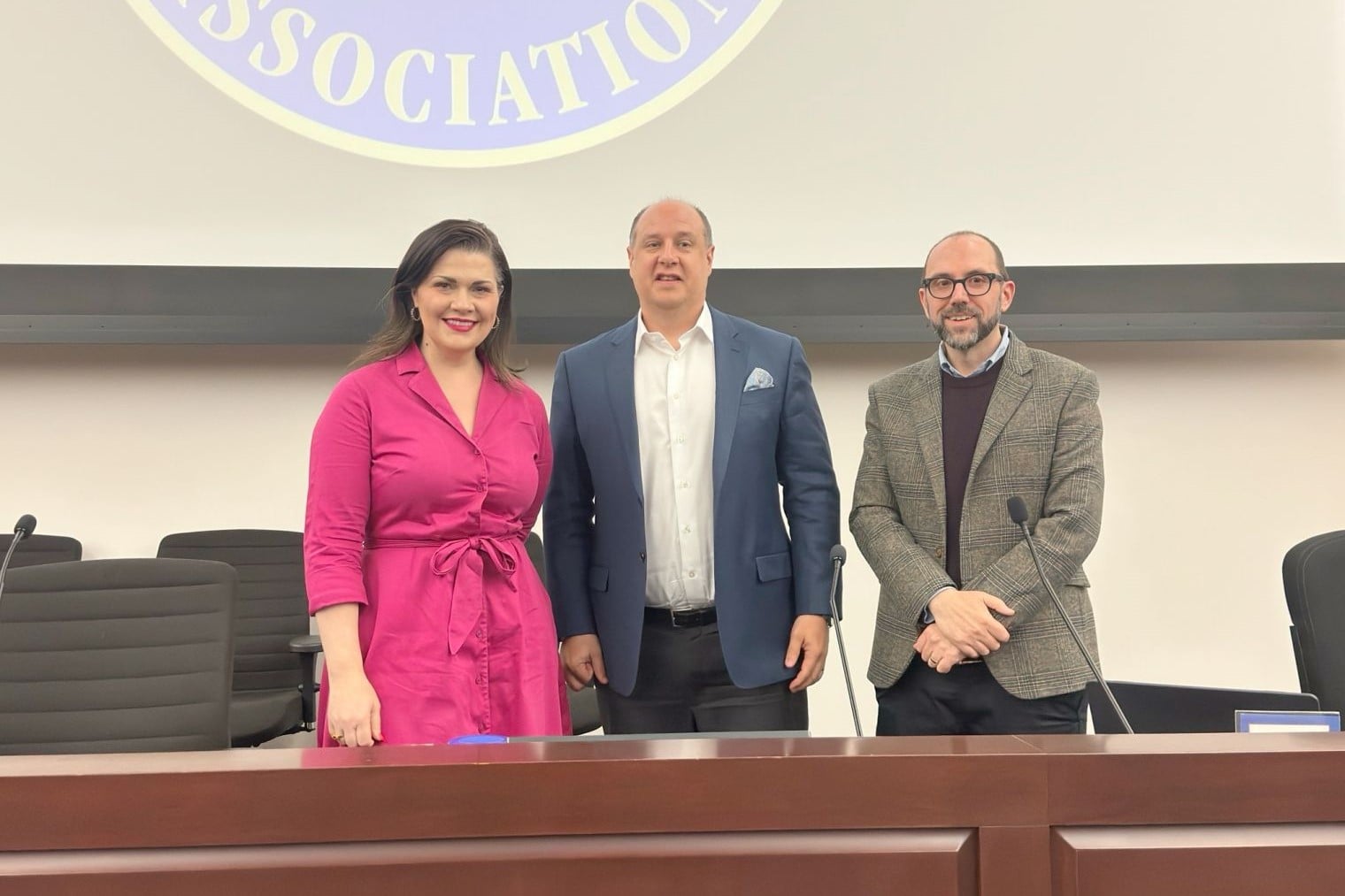
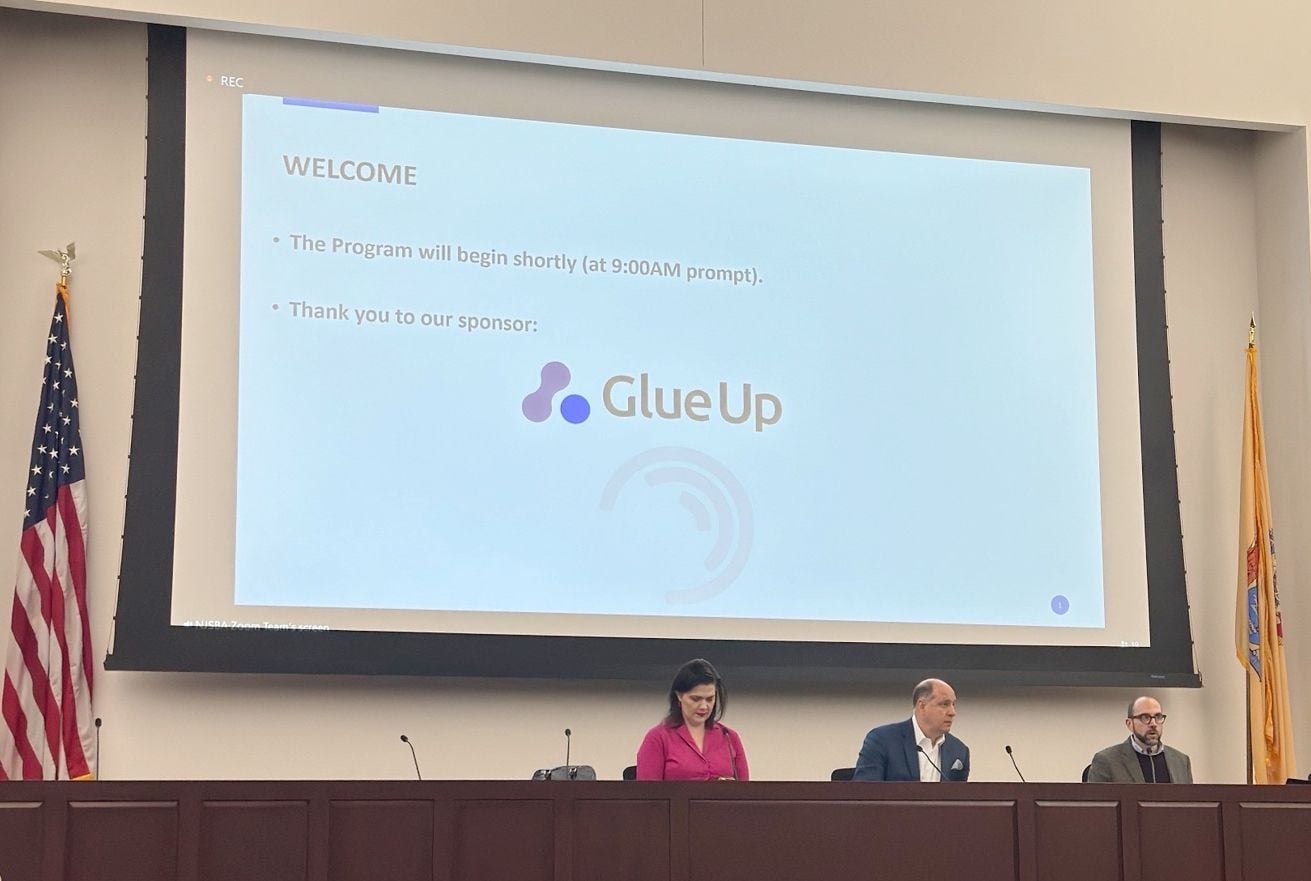
On May 1, 2024, Schmidt appeared as a keynote panelist at the NYSAE AI Summit in New Brunswick, New Jersey. He urged association professionals to learn how to use AI tools as the technology developed. The audience was a natural one for him: people responsible for organizations with members, recurring processes and limited patience for wasted effort.
By February 2026, the experimentation had become more hands-on. To mark 13 years of Glue Up, Schmidt described taking colleagues to a house in Virginia’s Northern Neck for a long weekend of building. They tried OpenClaw, autonomous agents and language models, working on tools intended to reduce manual tasks and improve customers’ experience.
The retreat carried a deliberate ambition to recover an early startup’s willingness to try things. Schmidt wrote about making room for experiments, including failure, after more than a decade in business. The aim was to save staff time and make the product easier to use. Those are aspirations that can eventually be judged by a working calendar and a customer’s experience, which is a useful discipline for an AI project.
The next meeting is closer to home
His community work now also has a Northern Virginia address. Schmidt serves as a director of the Democratic Business Council of Northern Virginia, with a term ending in December 2027. He has coached youth lacrosse and basketball and describes involvement in local organizing and mentoring. The athletic connection from his early businesses has persisted, this time at the sideline.
In 2025, the Northern Virginia Technology Council named him a Tech100 executive honoree. He also joined Mindshare’s 2026 cohort of founders and innovation leaders, whose program began with a gathering at Capital One Arena in February. After years spent convening entrepreneurs, he was once again among a group of them, comparing notes.
The bicycle ride offers an appealing ending because Venice is an actual destination. A software company gives its founder no equivalent square in which to declare the journey complete. Members renew, conferences end, new colleagues arrive, and someone has to arrange the next conversation. Schmidt has made a career out of that continuing work. The next introduction is always still to come.