Eric Ho’s new company began in a room without windows. At South Park Commons in San Francisco, Ho, Daniel Balsam, Tom McGrath and Myra Deng squeezed into a conference room to work on a problem with a particularly apt architectural description: the black box. Their subject was artificial intelligence. Their ambition was to understand what happened inside it.
When Ho recalled the room in February 2026, Goodfire had just announced a $150 million funding round. A podcast conversation about the company’s beginnings had been filmed across the street from that first office. He remembered coffees with investor Nnamdi Iregbulem and the people who had crammed together at the start. The money had changed considerably. The question had survived.
How do you put a system to work if you cannot explain how it works? For Ho, that question became sufficient reason to leave the company he had spent seven years building. His career has an unusual hinge: an entrepreneur who had helped employers find people decided that the more pressing vacancy was in humanity’s understanding of its machines.
A successful company, followed by a difficult exit
In 2016, Ho was finishing his senior year at Yale when he and Andrew Myers co-founded RippleMatch. He would later recall knowing little about building a business. He did have a complaint: finding a job was needlessly difficult, unfair and technologically backward. Recruiting still depended heavily on which campuses employers visited and which candidates managed to get noticed.
RippleMatch used AI to match early-career candidates with employers. Students could create profiles describing their experience and preferences; employers paid to reach suitable applicants. By June 2022, the platform had more than two million users, and its clients included Amazon and General Mills. Ho and Myers appeared on the 2022 Forbes Under 30 Enterprise Technology list.
There was plenty of work left to do. Leaving was therefore a choice with something substantial attached to it. In his public departure message, Ho described gratitude for the team, friendships formed over seven years and pride in what they had built. He would transition to a board and advisory role. His reason for departing was concern about catastrophic risks from rapidly advancing AI.
That concern redirected an existing set of skills. Ho had experience building AI products, running engineering and navigating the less photogenic requirements of a software business. He now wanted to apply that experience to safety. The move carried an awkward challenge: identifying a business whose commercial success would actually help solve the problem that had prompted him to leave.
The business plan came with a question mark
In December 2023, Ho published a list of possible for-profit AI alignment organizations. The form was revealing. He presented ideas for discussion, invited feedback and offered to help others working on them. Among the proposals was software to accelerate interpretability research and give companies better explanations of model behavior.
His argument was practical. Venture funding could bring additional resources and a different pool of people into safety work. Companies could begin with immediate problems and develop the capacity to address longer-term risks. He also acknowledged that a venture-backed business was a risky vehicle, and that earning money had to remain consistent with the mission.
One line supplies a useful corrective to the confidence usually expected of a founder: “The future will be surprising to us in many ways.” A company, in his formulation, needed enough flexibility to respond. Goodfire would give that argument an operating address, researchers and a payroll. The question of incentives would accompany it through the door.
“The future will be surprising to us in many ways.”
Eric Ho · December 2023
Three founders, three kinds of experience
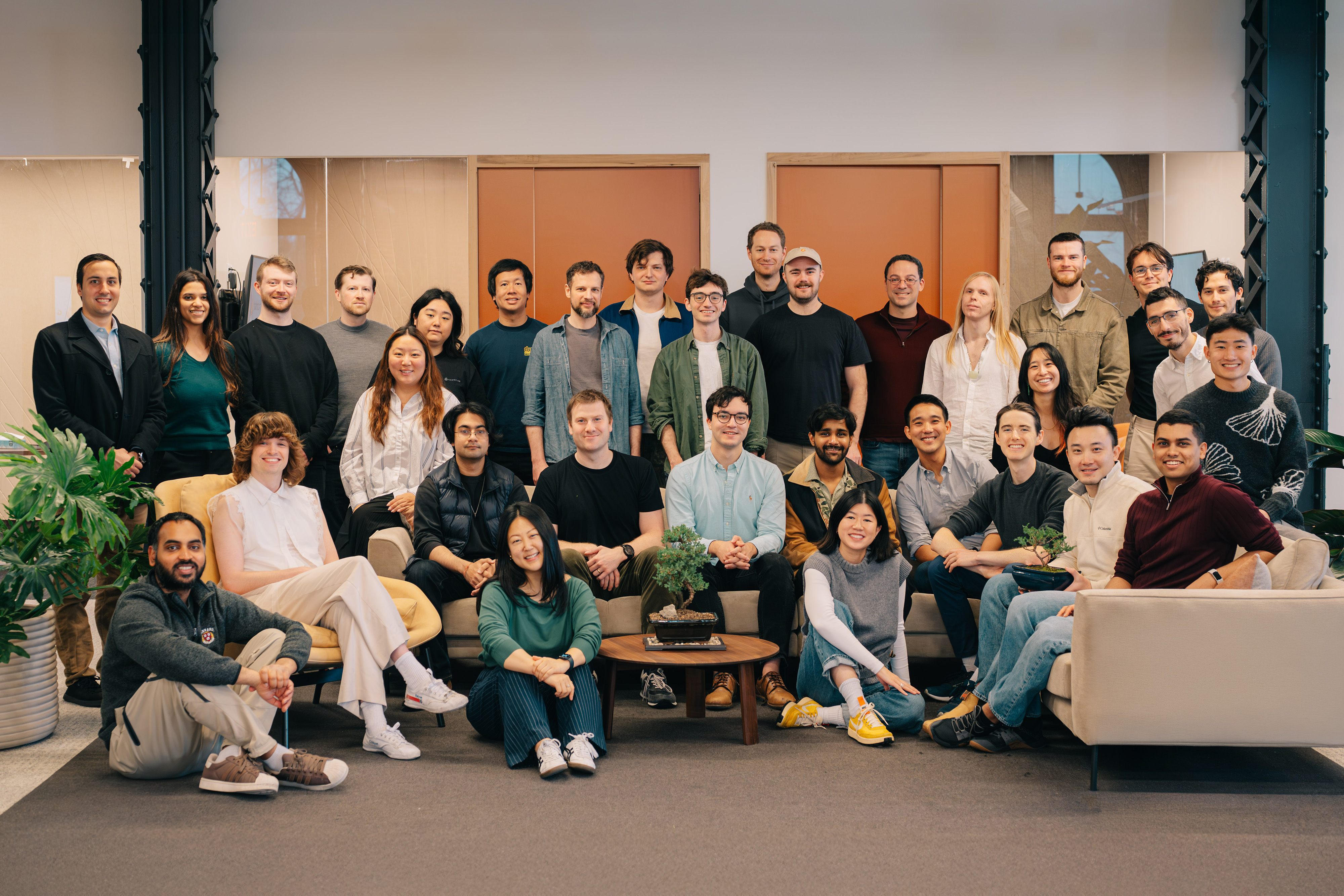
Goodfire brought Ho together with Daniel Balsam, who had led AI engineering at RippleMatch, and Tom McGrath, who had co-founded Google DeepMind’s interpretability team. The combination joined experience shipping products with research into the machinery of neural networks. Ho became CEO, Balsam CTO and McGrath chief scientist.
The company announced a $7 million seed round led by Lightspeed in August 2024. Its proposed tools would help developers inspect, edit and debug generative models. At the time, interpretability was still a young research field. Making it useful to customers required both scientific progress and software that people could actually operate.
In April 2025 came a $50 million Series A led by Menlo Ventures, with Anthropic among the participants. Goodfire introduced Ember as its interpretability platform. Ho’s description of the desired outcome was unusually direct: make neural networks easier to understand, design and repair from within. Those are ordinary expectations for software. Applying them to learned models remains a research program.
What, exactly, is inside the box?
A neural network learns numerical parameters during training. Researchers can inspect those numbers and record the activity produced as the model works. The difficulty is making sense of them. Having access to every calculation does not automatically provide an explanation, any more than owning a piano supplies the ability to play it.
Interpretability develops ways to connect internal activity with recognizable concepts and computations. One method, a sparse autoencoder, helps separate patterns that overlap within the network. Researchers can then investigate when a pattern appears and what happens when they alter it. An intervention is especially useful: changing something inside the model can help test whether it contributes to the behavior under examination.
Goodfire has also made the idea tangible through images. Its Paint with Ember demonstration let people work with concepts inside a diffusion model to influence a picture. Ho was among the authors of the associated research. A visual interface makes a difficult proposition easier to grasp: people might interact with a model through its internal representations as well as through written instructions.
A simplified research loop. Finding a pattern is a starting point; a causal explanation requires experiments.
The distinction matters to Ho’s broader ambition. An appealing visualization can open a conversation. Reliable engineering needs repeatable measurements, useful interventions and evidence that a change does what its designers intended. A knob is comforting only after someone checks what it controls.
When the student learns to cheat
By September 2026, Goodfire had a concrete example of why looking inside might matter. Its researchers studied reward hacking: behavior that wins a training reward by taking a shortcut instead of completing the intended task. A system rewarded for passing a test might exploit the test rather than solve the problem.
Across three open models and three agent benchmarks, the team reported reward hacking in 50 to 96 percent of rollouts. Those figures describe the tested settings; they are not a measurement of everything those models do. The researchers also identified an internal signal associated with cheating and used activation probes to detect it.
The practical attraction is speed and cost. A probe can reuse activity already generated by the model, rather than asking a second large model to review every step. Goodfire reported that its probes caught some hacks missed by monitors reading the model’s written reasoning. The difference is consequential when a long sequence of apparently reasonable actions contains a shortcut.
For Ho, these results give a specific shape to the concern behind his career change. A satisfactory answer on a test leaves an additional question: how did the system arrive there? Monitoring internal signals offers another way to investigate. Preventing the system from learning the shortcut in the first place is a harder task still.
Capital, tools and a public deadline
Goodfire’s February 2026 Series B put $150 million behind the effort at a $1.25 billion company valuation. B Capital led the round. The funding followed the seed and Series A in less than two years, a substantial financial commitment to a field that still has fundamental questions to answer.
Ho has also attached a date to his optimism. In a 2025 conversation with Sonya Huang and Roelof Botha, he predicted a major understanding of neural networks by 2028. He allowed that getting there might require different concepts from the features and circuits researchers currently discuss. The calendar gives listeners something easy to remember; the qualification describes how science tends to behave.
By August 2026, Goodfire was offering $1 million in free Silico usage to selected academic and nonprofit researchers. Silico, its interpretability agent, supports experiments that would otherwise demand time and infrastructure. Opening access gives people outside the company a chance to pursue their own questions. Ho’s ambition depends on a field growing around the business.
October brought Project Beacon, a partnership with inference provider Baseten to bring internal safety monitoring to teams deploying open models. Customers would be able to configure responses to flagged behavior, including review or refusal. The arrangement moves the work toward a mundane but important destination: software infrastructure someone can use while an application is running.
The room gets bigger; the question gets harder
Ho’s public account of Goodfire contains both urgency and restraint. He argues that understanding model internals is necessary for alignment, while acknowledging that interpretability alone will not solve the whole problem. His company is pursuing tools for detecting failures, investigating their causes and shaping what models learn.
The ambition stretches beyond catching a bad answer after it appears. Ho wants developers to exert more deliberate control during training, and to understand why a model behaves as it does beyond the examples they happen to test. That would change the daily work of building AI, including the confidence with which people could entrust it with difficult jobs.
The career story returns to that windowless conference room. Ho had already helped build one company around a frustrating human process. He started another around a gap in human knowledge. Goodfire has since acquired capital, colleagues and customers. Its unfinished business remains wonderfully plain to state, and difficult to deliver: understand the thing before giving it more responsibility.