Most boards can describe the state of the organization. Revenue is up or down. Membership has softened or recovered. A conference exceeded its target; a program missed. Eric Ewald is interested in the question that usually arrives later, if it arrives at all: How is the board itself doing? It sounds almost impolite. The board is the body asking the questions, approving the plans and reviewing everyone else. Turning the lens around can make a comfortable room suddenly alert.
Ewald has worked in association management since 1994. He is now partner and Chief Client Officer at Ewald Consulting, the Minneapolis firm founded in 1982 by former Minnesota legislator Doug Ewald. His public résumé is heavy with the solemn nouns of institutional life: governance, strategy, budgeting, membership, succession and board culture. Yet his advice tends to arrive in plain clothes. Put a short governance check on the agenda. Talk through the results of an assessment. Before joining a board, have coffee with somebody already on it. Give yourself time to learn the room.
This is a career built around preventing drift. A board leaves a retreat energized, its fresh framework bright in everyone’s mind. Six months pass. Agendas crowd with reports. New members arrive. The old habits, having waited patiently, return to their chairs. Ewald’s recent challenge to directors is blunt enough to survive the slide deck: “Are we still governing the way we said we would - and if not, what happened?”
01 / The return tripThe question after the retreat
The notable word is still. Governance is easy to admire in the future tense. A new committee structure, a cleaner distinction between oversight and operations, a promise to devote more time to strategy - all look excellent while the flip charts are still taped to the wall. The test comes later, when urgency begins charging rent. Ewald recommends a recurring pulse check, perhaps ten minutes each quarter, in which directors ask whether roles remain clear, commitments are being honored and important work is slipping.
Ten minutes is almost comically modest. It is also difficult to claim there is no room for it. The habit converts governance from an annual ceremony into routine maintenance. The board does not wait for a crisis, a failed executive relationship or a strategic plan gathering dust. It looks at its own conduct while small corrections are still possible.
“Running efficient and productive meetings is a way to respect the valuable time of volunteer leaders.”Eric Ewald on board meetings
Respect is the useful hinge in that sentence. Volunteers donate attention gathered from careers, families and other obligations. A muddled agenda does more than waste an hour. It spends somebody else’s gift casually. Preparation, pacing and room for real dialogue become matters of stewardship, not clerical tidiness.
02 / The long practiceA 1994 apprenticeship in invisible work
Ewald joined Ewald Consulting in 1994, one year after completing a political science degree at the University of Minnesota. He later returned to the university’s Carlson School of Management for an MBA, concentrating in entrepreneurship and strategic management. The combination fits his eventual territory: institutions as they are designed, and organizations as they actually behave.
By 1999 he had earned the Certified Association Executive designation. He served as chair of the Midwest Society of Association Executives board in 2011-12. His work moved through client leadership as well as counsel. Public records place him in executive roles for associations serving surveyors, communications technology operators and product development professionals. In 2014, during the American Society for Theatre Research’s move to Ewald Consulting, he was named senior adviser to its executive committee and volunteer leaders. Different professions, same recurring plot: people with subject expertise need an operating structure sturdy enough to advance their shared mission.
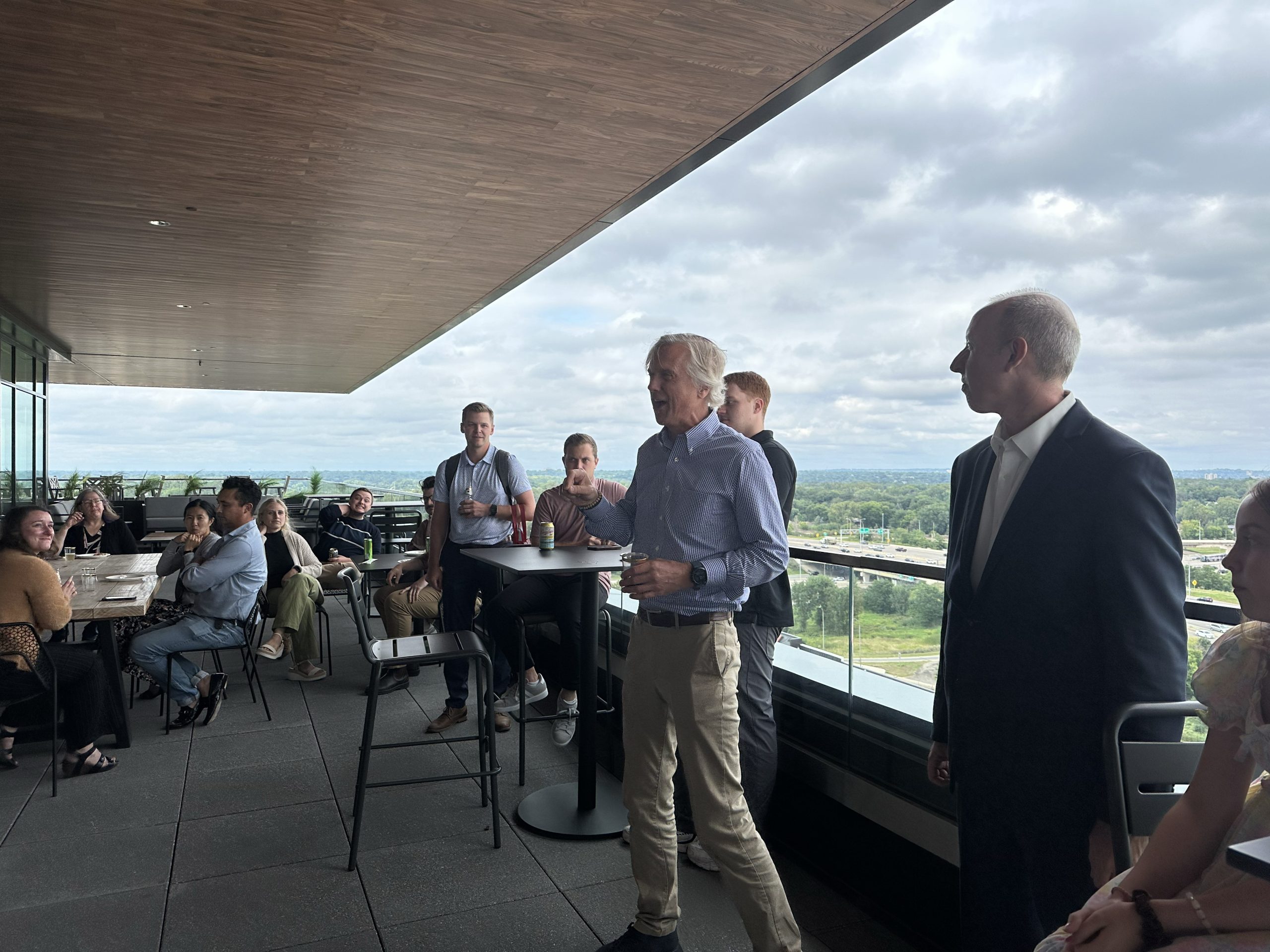
The visible moments in association life are conferences, votes, legislative wins and professional recognition. The supporting work is quieter. Someone reconciles a budget, writes the orientation, tells a committee what authority it has, prepares the decision and follows up afterward. Ewald has stayed near that machinery for more than three decades. The reward is not a single grand reveal. It is watching an institution become capable of keeping a promise.
03 / Inside the roomMore than one hundred versions of “we”
Associations speak in the first-person plural. We believe. We represent. We will. The pronoun conceals a small republic: officers, directors, staff, committees, members, chapters and sometimes allied organizations, each carrying a different idea of what “we” is permitted to mean. Ewald has worked with more than 100 boards to clarify those borders. His BoardSource practice covers culture and dynamics, board roles, CEO-chair coaching, executive transition, strategic planning, succession and collaboration between organizations.
The variety matters because governance advice can become bloodless when separated from actual rooms. A small-budget nonprofit does not possess the staff bench of an international association. A newly combined organization carries histories that cannot be erased by an org chart. A board in executive transition needs a different conversation from one whose chief executive has served for twenty years. Ewald’s listed work ranges from retreats and conference sessions to ongoing coaching and the facilitation of consequential conversations.
He also offers prospective directors advice that borders on matchmaking. An invitation to join a board can be flattering, but first ask whether time, energy and resources are truly available. Then meet a current director for coffee. Learn how the board functions before accepting its title. Once aboard, expect discomfort: Ewald notes that a director may need a year or more to feel settled. Competence in one’s profession does not produce instant fluency in a particular institution.
04 / The revealing numbersWhen the score opens a conversation
In May 2026, Ewald wrote about a discussion he hosted with association chief executives on board development. National research and his own advance survey pointed to a revealing gap: roughly 60 percent of organizations had conducted a board self-assessment at some point, while about 30 percent had done one recently. Even allowing for the approximate figures, the pattern is clear. Many boards know the tool. Far fewer keep it active.
Board self-assessment: known practice, uneven habit
Approximate figures discussed by Ewald after a 2026 conversation with association CEOs.
For Ewald, the questionnaire is only the opening move. The value appears when directors discuss results carefully and respectfully: Are we focused on the right issues? Are we clear about our roles? Are meetings using time well? Are we supporting the chief executive and staff appropriately? The answers can improve performance and culture, but only if the exercise feels constructive rather than punitive. A board cannot shame itself into candor.
His preferred prompts are more alive than a score. To move a board from reports into generative discussion, he has suggested asking: “If you closed the doors tomorrow - who would care, and why?” It is an abrasive little key. It unlocks mission, relevance and constituency in a single turn. It also forces an organization to distinguish the value it claims from the value others would miss.
05 / Knowledge in motionThe distance between knowing and doing
Ewald’s recommended reading offers another clue. His pick for association leaders is The Will to Govern Well, a book organized around knowledge, trust and nimbleness. Those ideas are less like a checklist than a sequence. A board needs information, relationships sturdy enough to interpret it honestly and the ability to move when circumstances change.
His public writing returns to the gap between adopting a concept and developing a habit. Generative governance entered the field’s vocabulary two decades ago, yet reports still swallow agendas and deeper conversation is still squeezed to the edge. Strategy has a similar fate. The document can be approved while the choices it requires remain politely untouched. Ewald’s answer is repetition: put the question on the agenda, revisit the roles, assess again, make the debrief unavoidable.
Joins Ewald Consulting and begins serving trade and professional associations.
Earns the Certified Association Executive designation.
Chairs the Midwest Society of Association Executives board.
Receives BoardSource Certified Governance Trainer certification.
Works as partner and Chief Client Officer after three decades in association management.
06 / Beyond the minutesThe long way up
The official Ewald Consulting biography supplies a handful of details beyond the conference room. Ewald enjoys family time, reading, hiking, mountaineering and skiing. His current company portrait places him on rock beside a field of snow, grinning under a battered cap. It would be too tidy to turn the mountains into a governance parable. Public life contains enough forced metaphors already.
Still, the interests sketch a recognizable temperament. Reading asks for patience with another person’s argument. Hiking rewards steady progress. Mountaineering makes preparation visible very quickly. Ewald’s governance work favors the same ordinary disciplines without pretending they are dramatic: know the route, clarify who carries what, notice when conditions have changed and keep talking.
There is also a trace of the political science student in his taste for foundational questions. In a recent reflection on generative discussion, he recalled John Stuart Mill from his university days and the danger of truths that cease to be actively debated. Boards accumulate their own dead dogmas: old assumptions about members, programs that survive by habit, rules nobody remembers choosing. A useful adviser does not arrive merely to replace them with newer dogmas. He makes the room examine what it thinks it knows.
07 / The work that remainsWhat stays on the agenda
Ewald Consulting now serves state, national and international organizations, while Eric Ewald’s own work remains rooted in the human scale of a board conversation. A chair and chief executive must learn to trust each other without confusing their jobs. A director must speak freely, then support the decision of the whole. A strategic plan must become an operating rhythm. New volunteers must be taught the culture that experienced members carry silently.
These problems do not stay solved. Turnover sees to that. Each class of directors inherits both the institution and the responsibility to understand it. Clarity must be renewed; culture must be explained; trust must be earned by the latest people in the room. The repetition can look tedious until one considers the alternative.
After more than 100 boards and three decades, Ewald’s contribution is a stubborn insistence that governance deserves regular attention before dysfunction makes it urgent. The work begins with respect for time, continues through honest questions and ends, if it ends anywhere, with the next agenda. There are livelier professions. Few are more revealing about the promises people make together, and what it takes to keep them.