Burglars are seldom thanked for an agency’s choice of headquarters. Eric Ayzenberg’s Pasadena story nevertheless owes something to a thoroughly unwelcome visit. His earlier business, Paragon Advertising and Design, was operating on Melrose when thieves emptied the office. Computers disappeared. So did desks and backup drives. Reconstructing work from paper records put the agency behind; a client departed. There are more elegant ways to begin a new chapter. Few are quite so persuasive.
“We got broken into,” Ayzenberg recalled. A former ArtCenter teacher, Dan Wolfe, offered space in Pasadena, and the business moved there in 1991. Two years later, Ayzenberg Group was founded. The distinction matters: the agency carrying his name grew out of a working life already acquainted with disruption. Before the web became its opportunity, an empty office had supplied a rather practical lesson in starting again.
A designer follows the screen
Ayzenberg came to agency ownership through the craft. He worked in New York at ABC, NBC and R/GA, then moved to Los Angeles in 1987 to join Chiat/Day as an art director. ArtCenter identifies him as an advertising graduate from that same year. Television, design and the agency business were part of his vocabulary before social platforms supplied a fresh collection of nouns.
Founding Ayzenberg in 1993 gave him somewhere to put an interest in emerging web technology. The agency developed a website, an extranet and portals for game clients in 1997. Its work would extend across advertising, websites, mobile applications and media, with clients including Electronic Arts, Disney, Microsoft, Sony and Xbox. A designer’s eye was finding increasingly elaborate machinery to work with.
The games business offered a particularly lively assignment. A game contains art, software, characters and stories, then invites its audience to do something with them. Marketing it means dealing with people who have opinions about the world you are selling. They may know its details rather better than the person writing the advertisement. An audience with that much interest is a gift, provided the agency remembers to listen.
The launch that takes a year
By 2009, Ayzenberg was describing a change in the marketing calendar. Publishers were funding programs a full year ahead of a game’s release. An advertising burst around the shipping date could now sit within a much longer relationship with prospective players. People followed the game, anticipated it and arrived at release day already invested in its existence.
At an industry discussion with agency colleague Steve Fowler, the subjects included social networks, shareable entertainment and community building. Representatives from 28 publishers attended that year’s AList summit. The practical question was how to sustain interest over time. A trailer might travel between friends. An application or mini-game might give players something to do while waiting. The campaign had acquired a social life.
“On the day the game ships, there’s actually a huge audience out there, waiting for the game,” Ayzenberg said. For an agency, that changes the workday. You are helping maintain anticipation, making things people can pass along and responding to communities that continue talking between media buys. Patience becomes part of the creative brief. So does the ability to hear an answer.
A soulmate with a spreadsheet
The organization expanded around those tasks. A social media and mobile division arrived in 2007; an original entertainment content group followed in 2010. ION launched in 2011. Then, in January 2012, Ayzenberg acquired The Social Method, a Tustin agency whose capabilities included monitoring and measuring social activity. Co-founder Rebecca Markarian and her staff were to move to Pasadena.
The acquisition brought the social team to more than 35 people and the company to 115 at the time. Those are historical headcounts, but they make the change tangible: understanding social activity required people, tools and a place in the organization. Ayzenberg spoke of connecting that work to purchases. The business was moving from admiring the conversation to asking what it accomplished.
In 2015, ION introduced its Influencer Channel Network, analyzing a roster of more than 400,000 creators to recommend suitable matches for brands. Ayzenberg said the company had invested millions in the integrated platform. The size of the roster made discovery possible; the challenge was choosing a voice whose audience might actually care. A ballroom full of people is useful only if you can make the right introduction.
“there has to be a match”
Eric Ayzenberg, on brands and influence
His preferred title, “Chief Brand Soulmate,” puts a little romance into that business. His explanation of influence is more domestic: imagine researching a television, then accepting the recommendation of a trusted, technically minded friend at a party. The friend changes the decision. It is an everyday scene with expensive consequences for anyone buying media.
Creator partnerships add another obligation. In announcing ION’s 2015 offering, Ayzenberg emphasized respect for the native voices of both creators and brands. That principle makes commercial sense. A creator’s relationship with an audience is part of what the brand hopes to reach. A collaboration that edits away the reason people listen has squandered its own invitation.
The room beneath the agency
There is a pleasingly physical chapter to this career in screens. In May 2017, the agency opened sp[a]ce, a nonprofit gallery on the first floor of its Pasadena headquarters. A former Samy’s Camera store became a place for art. Corsini Stark Architects designed the conversion, and artist Mark Todd curated the inaugural exhibition, For the Good Times.
Ayzenberg collected work by Todd and Esther Pearl Watson. While renovation permits were pending, the artists had used the empty premises to make work and hold gatherings. He noticed the community they attracted. By the time the gallery opened, the building had already demonstrated what people might do when given space and a reason to assemble.
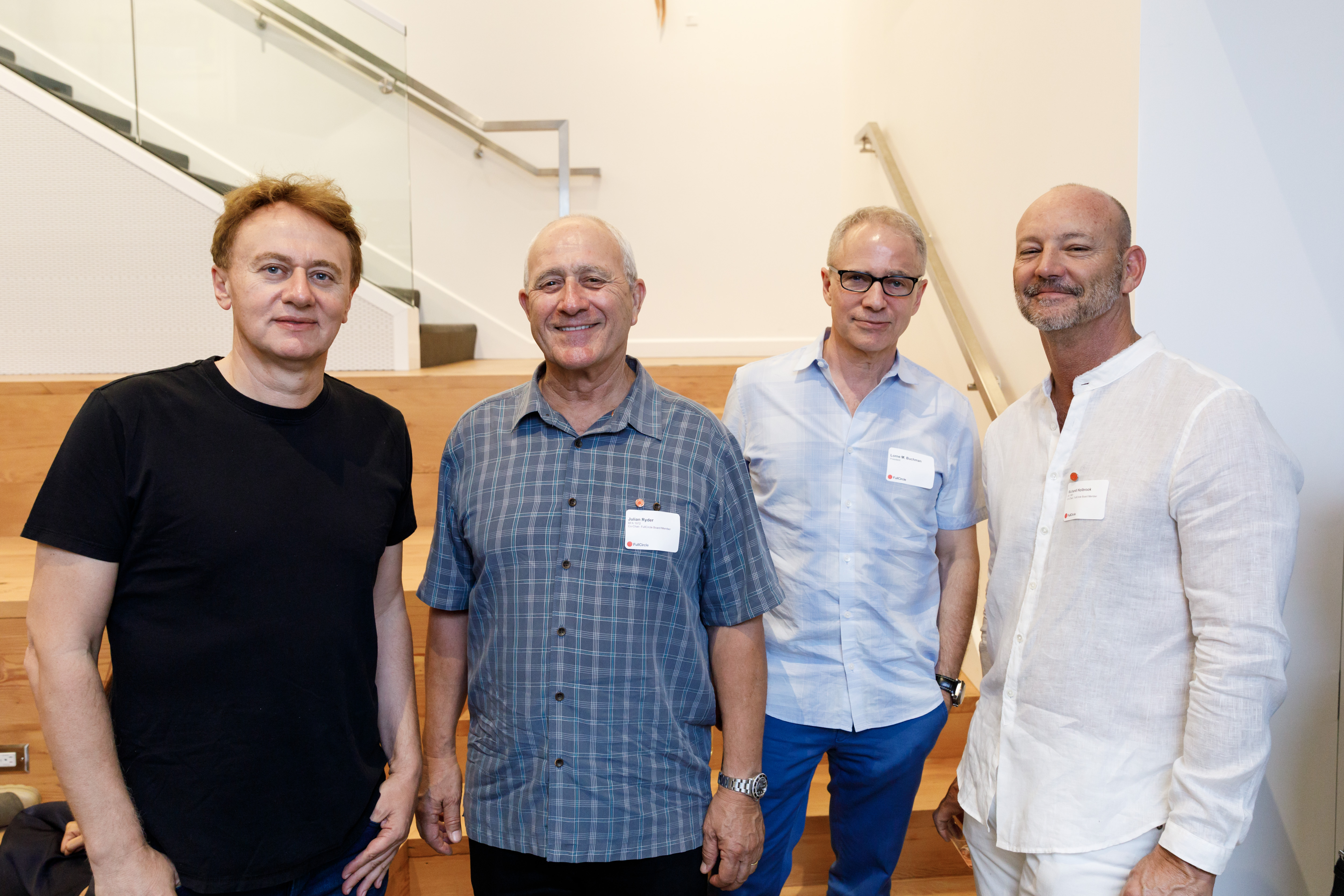
The inaugural show included Tim Biskup, Ramsey Dau and several ArtCenter alumni and faculty. At a FullCircle event that summer, part of the proceeds from sales supported students. For Ayzenberg, an ArtCenter graduate himself, the school connections had become something visitors could walk into. Advertising briefs tend to specify an audience. A gallery also allows the pleasure of discovering who turns up.
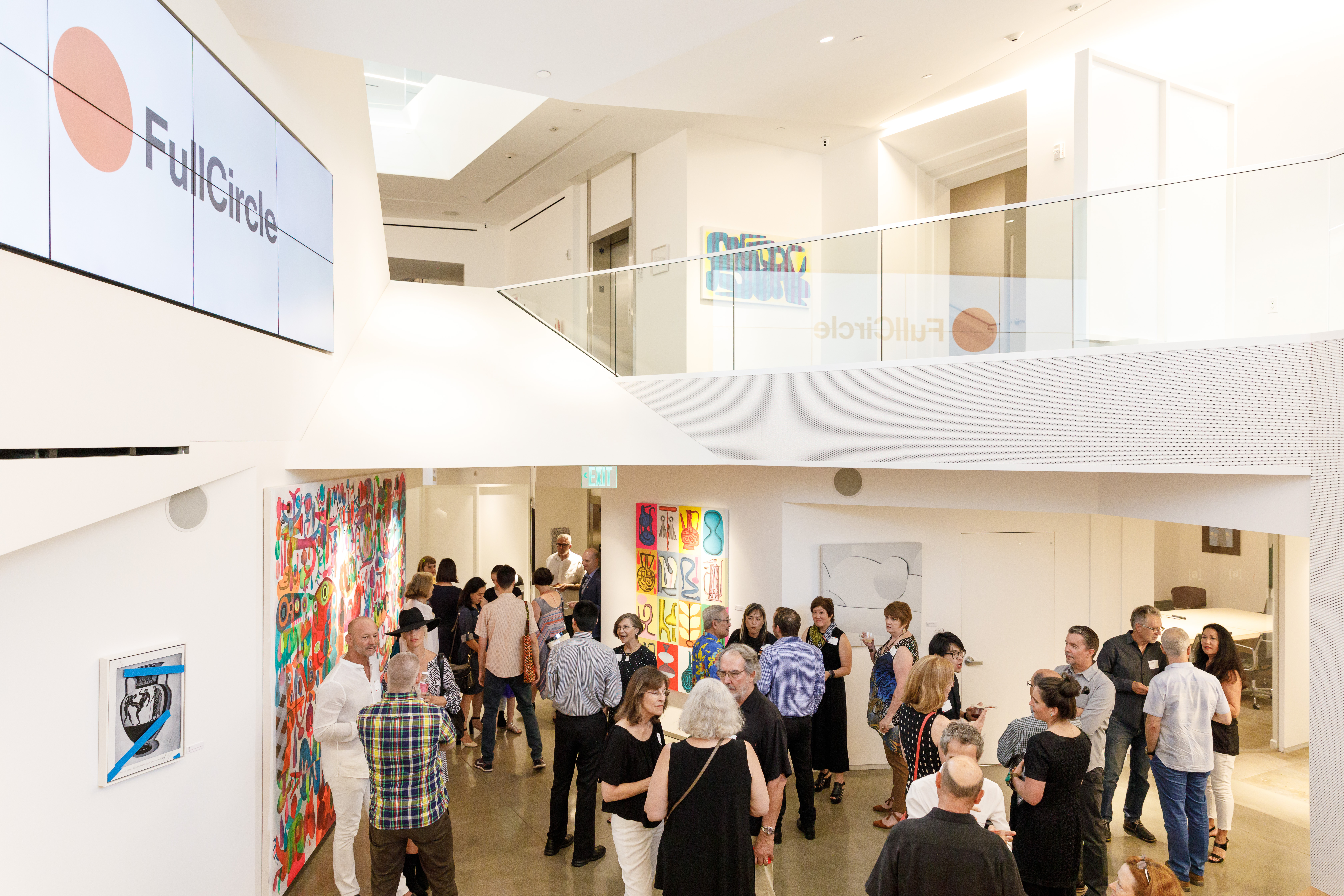
The building had been adapting to the business for years. In 2013, an expansion joined neighboring structures as the agency added video-editing facilities. The architectural story and the professional one run together: new work brings new requirements, and rooms change accordingly. The gallery made another use for the address possible. Clients could come for a campaign; other visitors could come for a painting.
The art director meets the model
Artificial intelligence entered this history before the current rush of conversational tools. The agency’s biography dates its implementation of Soulmates.ai speech processing and influencer matching technology to 2014. Later, its Tools of Influence offering connected psychometric and semantic analysis to the search for suitable creators. The ambition was to make audience knowledge useful to the people deciding what to create.
Ayzenberg’s recurring working sequence is simple enough to fit on a wall: listen, create, share. Listening supplies information. Creative teams make something from it. Sharing brings a response and another opportunity to listen. The loop is tidy on paper, though the people moving through it are entitled to be less convenient. They can misunderstand a campaign, ignore it or enjoy it for reasons nobody anticipated.
The response starts the next conversation.
Writing ahead of CES, Ayzenberg linked AI and data analysis to his ambition for more personalized communication. He also acknowledged the long development behind apparently sudden breakthroughs. His interest in new hardware came with an amusing professional complication: the pleasure of seeing a device could leave him unsure whether he was its buyer or its seller. Curiosity occasionally complicates the job description.
By June 2026, his published argument about synthetic research was concerned with the quality of the model underneath the answer. He distinguished rapid exploration of messages from situations requiring observation of real people. A simulated audience might help narrow choices before fieldwork; actual behavior could still demand actual participants. The tool’s appropriate assignment mattered as much as the speed of its response.
That is a useful qualification from an executive selling audience technology. His case gives synthetic models a role while retaining human research. A polished answer can be easy to read and difficult to justify. For a creative strategist, the task is to understand which decisions the evidence can support. Confidence has a certain charm; it becomes costly when mistaken for knowledge.
Fifteen platforms, one persistent question
In August 2026, Ayzenberg announced that Social Index had expanded its earned media value coverage from ten platforms to fifteen. The additions were Bluesky, Discord, Reddit, Threads and WhatsApp. The announcement also introduced brand-specific modeling for enterprise clients contributing their own performance data. The practical problem was how to value activity in environments that behave differently from a public feed.
Five additions announced August 26, 2026: Bluesky, Discord, Reddit, Threads and WhatsApp.
Ayzenberg explained that the team had waited until it could defend the measurements. That detail sits well beside the earlier chapters. Game communities required a longer calendar. Creator partnerships required a fit. A gallery required attention to artists already gathering in the building. Each situation asked him to understand the people involved before deciding what the agency should do next.
He remains founder and CEO of the company bearing his name, with a career that has moved between design, software, art and the commercial business of attention. The variety is part of the interest. A person can be fascinated by predictive models and still enjoy a room full of paintings. Ayzenberg has made room for both. After the office that was emptied, he has kept finding places to put things.