The room existed. The reservation existed. The permission to pay for it had somehow disappeared. At LINX, a technology integrator sending crews to job sites across the country, employees could arrive at a hotel at night and discover that their credit card authorization was missing. Someone reached for a personal card. Somewhere else, someone opened another spreadsheet.
In Engine’s published customer account, LINX’s finance team was months behind on reconciliation. Project schedules moved; unused hotel nights became expenses. The interesting failure happened between booking a room and getting a worker into it. That gap helps explain Engine, a Denver company whose ambitions have grown considerably larger than its original name, Hotel Engine.
- Book the trip: hotels, flights, rental cars, room blocks and meeting spaces.
- Control the aftermath: policies, approvals, billing and optional cancellation protection.
- Watch the expansion: a corporate card and booking technology sold through other platforms.
01 / The work around the room
Hotel Engine began in 2015 inside Travelers Haven, a corporate housing business founded by Elia Wallen. It helped guests book hotels. In 2018, it became an independent company. Wallen committed to leading it full time in 2020, just as the pandemic made travel an uncomfortable industry in which to place a bet.
Its opening was specific: businesses with people on the road and little machinery for managing them. A contractor needs rooms near a project. A transportation company needs lodging along a route. An operations manager needs to know who booked what, which job should pay, and whether anybody remembered to cancel Thursday.
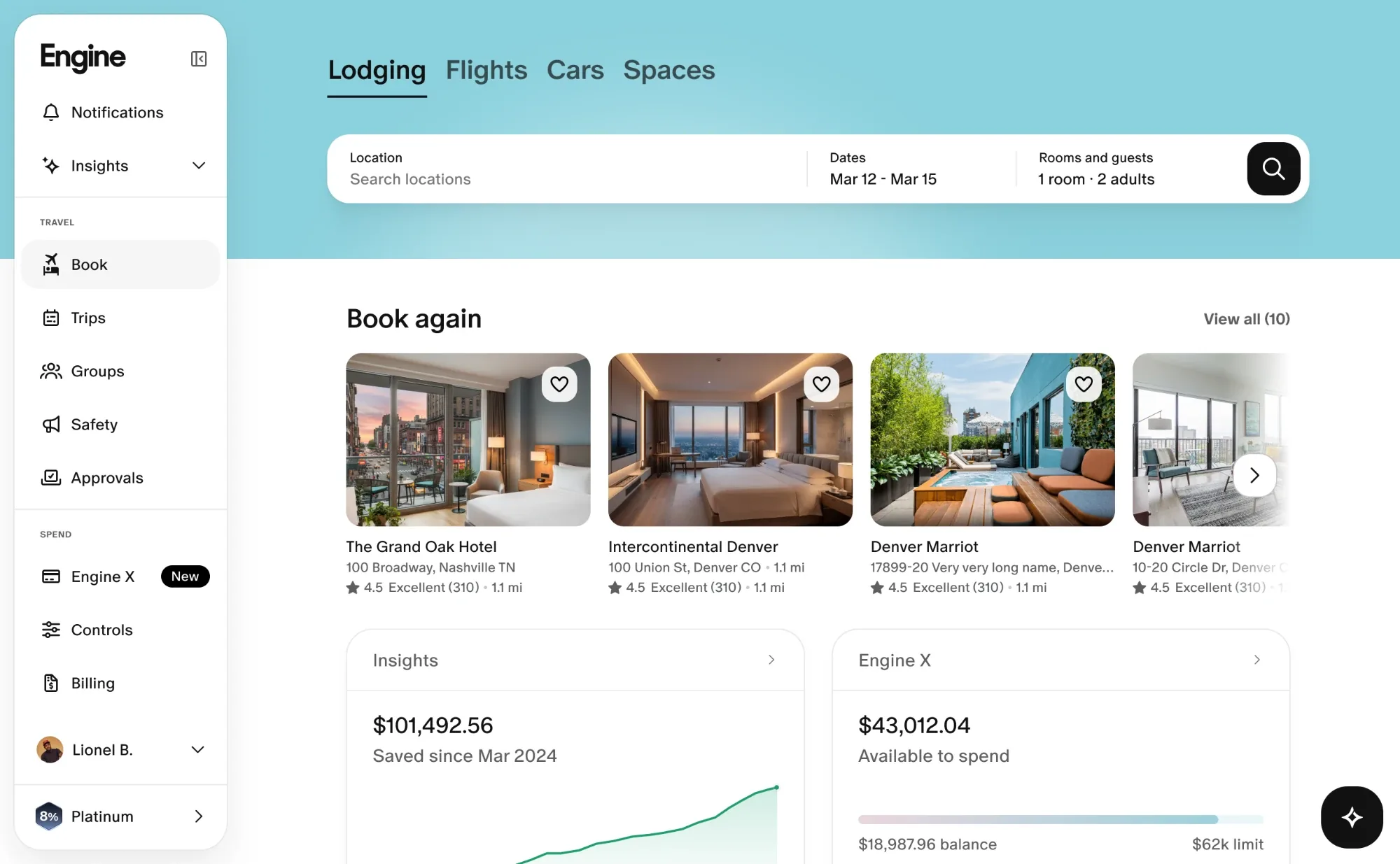
Consumer booking sites make shopping straightforward. Managed corporate travel adds controls and service. Engine occupied the space between them, bringing company rules and consolidated administration into a booking experience smaller businesses could adopt without a membership contract or minimum spend.
02 / Free has a payer
Hotels pay Engine commissions for bringing them bookings. That supports a core platform with no membership or agent-assist fees. A company still pays for travel, of course. Engine’s appeal is that the purchasing department does not need to buy another software subscription before anyone can reserve a bed.
Then come the services around that purchase. Direct Bill, subject to credit approval, lets Engine pay eligible hotels and consolidate the customer’s charges. Travel policies and approvals put decisions before checkout. Project codes give accounting somewhere to put the expense. Groups handles room blocks of nine or more rooms.
The economic proposition is broader than a cheaper nightly rate. In the LINX case, coordinators assigned job numbers when booking and moved costs onto one invoice. Engine reports $1.6 million in travel savings over the preceding twelve months. It is a vendor-published result, useful as an example rather than a promise about everybody else’s budget.
03 / Selling permission to change plans
A discounted room becomes less attractive when the job ends early. Engine’s optional Flex and FlexPro products address that uncertainty. Flex is purchased for individual bookings. FlexPro covers eligible company hotel bookings for $299 a month or $2,999 a year under its published terms.
Or $2,999 annually. Eligible changes until noon on check-in day. Returned value is a one-year travel credit under current terms.
That last detail matters. A travel credit has value for a company booking again next week. It is less useful to a business unlikely to travel again before the credit expires. Eligibility and deadlines also matter. A sensible buyer compares the protection price with expected cancellation losses, then checks the actual reservation terms.
The copyable lesson is operational: calculate the cost of a changed plan alongside the cost of the original plan. Centralize bookings, attach project codes immediately, and decide who approves exceptions before a tired employee reaches the front desk. Those habits remain useful whichever platform a company chooses.
04 / The name gets smaller. The business gets wider.
Engine raised a $16 million Series A in 2019 and a $65 million Series B in 2021. A $140 million Series C led by Permira in September 2024 valued it at $2.1 billion. Those are financing milestones, not a measure of what customers save.
The following month, Hotel Engine became Engine and added flights and rental cars. Customers wanted one place for the trip. The narrower name had become an awkward description of the product.
“Hotel bookings will always be in our DNA, but we’re out to transform the entire travel experience.”Elia Wallen / September 2024
In 2026, the expansion continued with meeting venues through Spaces and a corporate charge card, Engine X. The card has no annual fee and offers spending controls and physical or virtual cards. Its advertised rewards depend on purchase category and terms; applications require credit approval. Booking and paying now sit closer together.
05 / Becoming somebody else’s engine
The more revealing move came through Omni, Engine’s embedded hotel booking infrastructure. A partner can put booking inside its own product rather than send users elsewhere. Trimble integrated it into its commercial location database. The hotel purchase can happen where a driver already works.
In July 2026, Engine acquired Options Travel and the related group-flights product TempoTrip. Wallen described nine months working with the agency before the deal. Seeing agents struggle with disconnected tools helped persuade Engine to build its managed-travel software from inside the operation. The price was undisclosed.
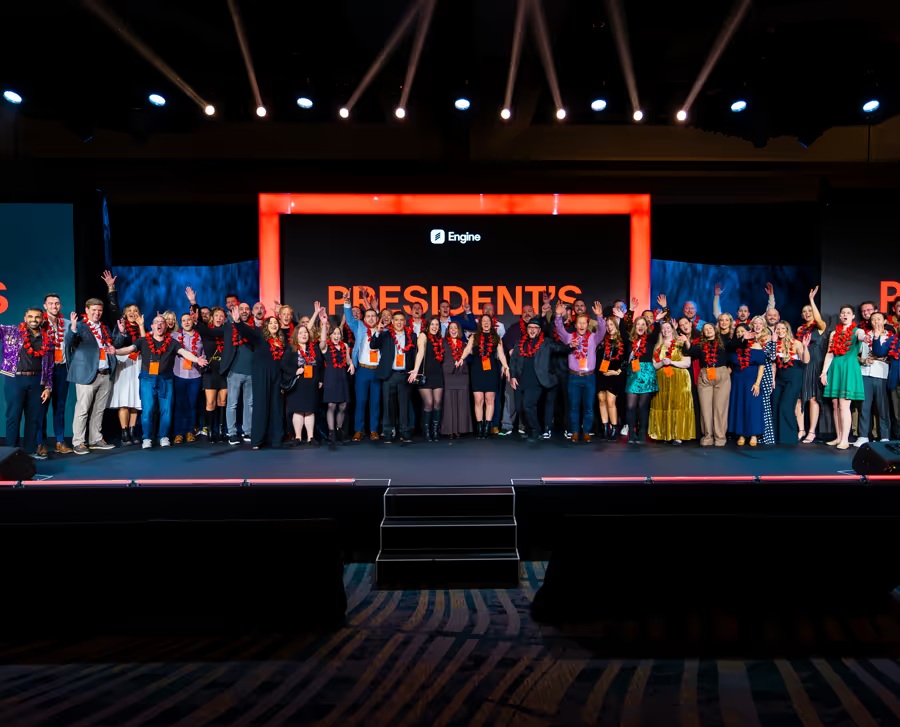
September brought a Navan partnership, with initial capabilities scheduled to roll out that month and more group-booking and modification features to follow. A company operating in the same market could also become a distribution partner. Engine’s booking machinery did not have to remain behind Engine’s own screen.
That is the thread connecting the missing payment form to the API. Both concern the work between a traveler’s request and a usable stay. Engine started by finding rooms. Its larger wager is that businesses will keep paying, directly or indirectly, for somebody to make the handoffs work.