The front rows were cheaper. In the Calcutta cinemas Ellis Jacob remembered from childhood, sitting closer to the screen cost less. Some patrons came in from the summer heat, bought those seats and had a nap. An auditorium could hold 800 to 1,000 people. The establishment was selling a film, certainly. It was also selling somewhere agreeable to be.
Jacob grew up without television at home. Movies sat alongside radio and live events among the available entertainments. He attended an Irish Christian Brothers boys’ school, enjoyed debate and played soccer, cricket and field hockey. The future cinema executive was already familiar with the pleasures of an audience, whether he was addressing one or sitting in it.
Decades later, the question of why people leave home would run through his business decisions. A better cinema in a smaller town. A restaurant attached to games and live entertainment. A film in a language the local audience actually wanted to hear. The details changed; the invitation kept needing work.
A wedding with a long intermission
In 1969, Jacob came to Canada for his sister’s wedding. He stayed. A family occasion became the beginning of his Canadian life, with Montreal providing the first setting. The route that followed was more classroom than red carpet: Dawson College, a commerce degree at McGill, then an MBA at York University’s business school, now Schulich, completed in 1976.
When Schulich honoured him with its Outstanding Executive Leadership alumni award in 2011, Jacob recalled the international mix of students and the breadth of what he learned. Marketing, finance and leadership all figured in his account. That combination would prove useful in a business where the audience buys an evening and the operator must account for every part of it.
His early employers included Ford and Motorola. In a later conversation, he described moving between companies through professional connections, eventually following a colleague into Cineplex Odeon in 1987. His entry into movies came through the workings of a company. The film fan had acquired a financial education before taking responsibility for the auditorium.
Learning the business behind the curtain
At Cineplex Odeon, Jacob’s responsibilities grew through finance and operations. He served as chief financial officer and ultimately chief operating officer during his 1987-to-1998 stretch there. Those are different vantage points on the same enterprise: one asks whether the numbers work, the other whether the places producing them work every day.
After leaving, he worked on integration at Alliance Atlantis Communications. His next venture would draw on that experience of how entertainment companies fit together. In 1999, he co-founded Galaxy Entertainment, a cinema circuit concentrated in midsize Canadian markets. The career had moved from administering an existing business to choosing where a new one should begin.
That choice is the hinge of his story. A smaller city could want the same quality of moviegoing as a larger one. Distance from a major urban market did not make the customer’s evening less valuable. Galaxy’s proposition gave that observation a commercial form: put a modern cinema experience where the existing offer left room for improvement.
- 1987Joins Cineplex Odeon
- 1999Co-founds Galaxy
- 2003Becomes Cineplex CEO
- 2026Moves to Board advisor
The small-town route back to Cineplex
Galaxy developed in markets often served by smaller theatres with older equipment. Its larger, modern locations borrowed the experience associated with major cinema chains. By 2003, the business had grown to 19 theatres. Jacob’s apparent detour from Cineplex had become a company with enough substance to participate in the industry’s next rearrangement.
That year, Galaxy combined with the Canadian Cineplex Odeon business, and Jacob became CEO of Cineplex Galaxy. The operating name would later become Cineplex Entertainment. His experience on both sides of the combination gave the appointment a particular circularity: the executive who had left the earlier company returned with a business he had helped build.
The Famous Players acquisition followed in 2005. It joined familiar Canadian cinema brands under the enlarged company and changed the competitive map. It also came with conditions. The Competition Bureau’s June announcement required theatre sales across several provinces to address local competition concerns. Scale had a price beyond the acquisition cheque: the company had to give up locations as part of the deal.
That qualification belongs beside the growth story. A cinema business serves people in particular places, and competition is experienced locally. A national portfolio may look like one enterprise on paper; for someone buying a ticket, the relevant question is often which theatre they can reach tonight.

When the evening grew bigger than the film
In September 2016, Cineplex opened the first Rec Room at South Edmonton Common. The two-level venue occupied 60,000 square feet. Half its space was devoted to dining and live entertainment, the other half to amusement games and attractions. An evening could now be assembled from several activities without a movie being the necessary centrepiece.
The venture made an existing skill useful in another setting. Cineplex already operated places where people arrived expecting entertainment and bought food along the way. The Rec Room changed the mix and the pace. Customers could play, eat, watch a game or meet friends. The company was giving them another reason to make the trip.
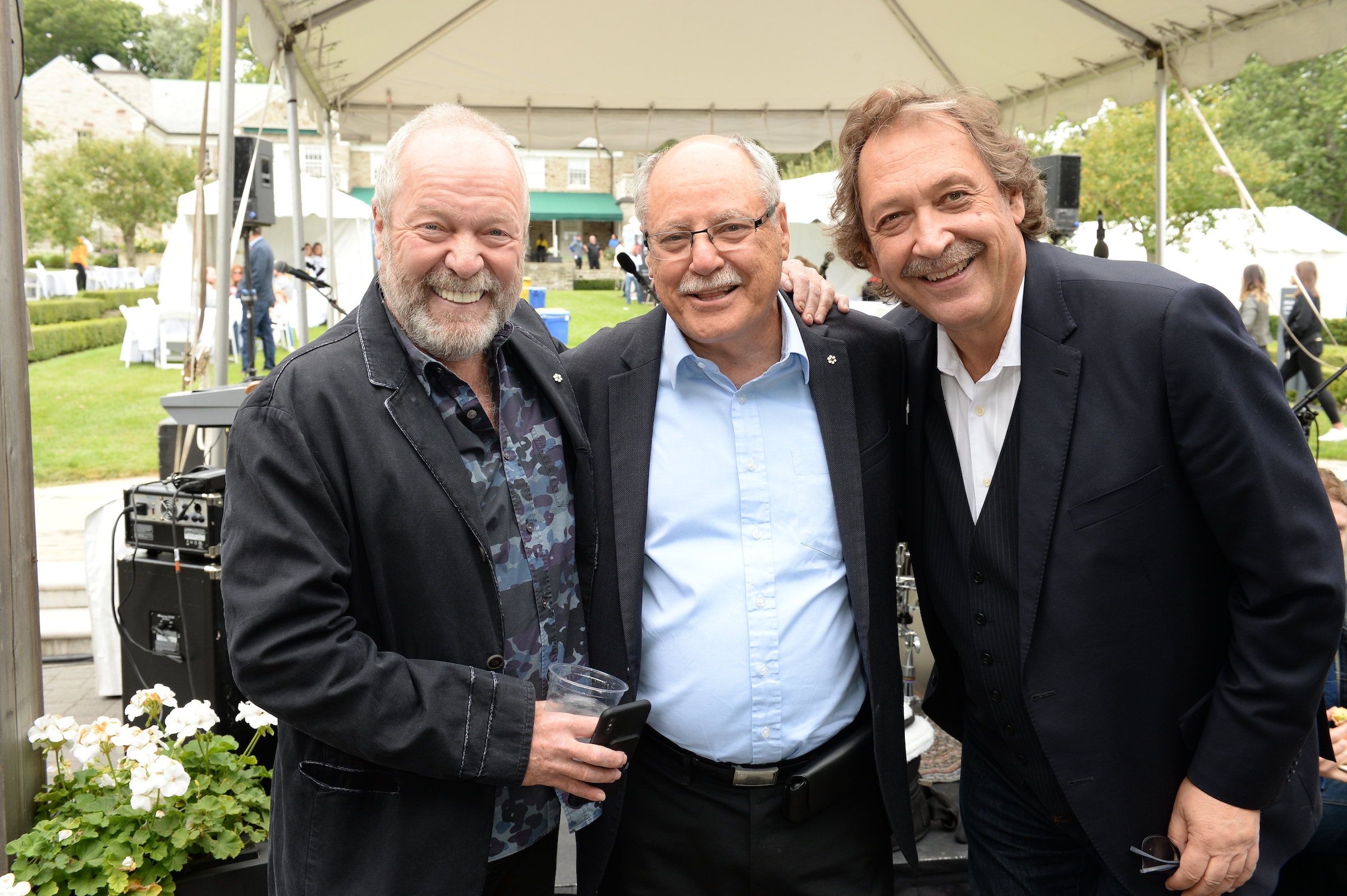
Jacob seems to have taken the games seriously enough to participate. CFO Gord Nelson described a tradition of Jacob challenging the mayor to air hockey at Rec Room openings. Civic ceremony rarely suffers from an excess of puck. The anecdote offers a pleasingly specific picture of an executive testing the product with an opponent who may have expected only a speech.
An invitation in more than one language
The cinema screens themselves offered another way to widen the invitation. In July 2024, Jacob said international films accounted for 13 percent of Cineplex’s box office. He discussed the company’s broader entertainment and media businesses, but that programming figure is especially revealing: a cinema’s audience depends partly on which stories it makes available.
For a Canadian operator, international programming gives different communities more occasions to gather around a film. It also asks the company to pay attention beyond the most obvious Hollywood release calendar. The practical work is choosing titles and screens; the human consequence is that more people can recognize their tastes in the weekly listings.
of Cineplex box office came from international films, Jacob said in 2024.
Jacob’s enthusiasm for the theatre experience also involved its machinery. In 2023, Cineplex and Cinionic announced a multiyear agreement for 800 laser projectors across the circuit. The rollout concerned the quality of the image in the room, an investment in something audiences experience directly even when they never think about the equipment responsible.
The equipment and the programming address separate parts of the same promise. A technically accomplished screening still needs a film someone wants to see. A desired film benefits from a presentation worth the visit. Jacob’s career has repeatedly returned to both sides of that transaction, with the audience making the final decision at the box office.
The competitors at the same table
Jacob also worked on questions that reached beyond Cineplex. He chaired the executive board of the theatre-owners association now called Cinema United from 2018 to 2020. His industry work included the Global Cinema Federation. In a 2018 discussion with fellow executive Rolando Rodriguez, he described cooperation with distributors and shared concerns such as technology and film theft.
There is a limit to what rivals can sensibly do together, and Jacob acknowledged the competitive businesses sitting around the same table. Yet the shared work matters. Exhibitors rely on relationships with distributors and on an audience that continues to value theatrical release. Some problems reach every operator’s door, regardless of the name above it.
His public recognition reflects both company building and wider participation. He was appointed a Member of the Order of Canada in 2010. The citation recognized his contribution to Canadian movie exhibition, including bringing the experience to midsize communities, and his work with the Toronto International Film Festival. In 2025, the Canadian Screen Awards honoured him with the Academy Board of Directors’ Tribute.
“I have spent my entire career believing in the power of moviegoing to bring people together.”
Ellis Jacob · February 2026
The handover, with work still to do
In April 2026, Jacob received Cinema United’s Legend of Cinema Award at CinemaCon in Las Vegas. The honour followed the organization’s 2022 Marquee Award and came during a year already marked for his retirement. Recognition was arriving while the company prepared to pass responsibility to another executive.
The handover took effect on September 23, 2026, when Bill Walker became Cineplex CEO. Jacob became Special Advisor to the Board through December 31. His assignment includes supporting the transition and a review of strategic alternatives. A potential sale is among those alternatives. The announcement made clear that no particular outcome had been decided.
It is an unusually busy way to approach the end of a tenure. The business Jacob led for 23 years is considering its future while drawing on his knowledge of its past. His earlier retirement statement expressed pride in the company and a commitment to helping its team through the change. The advisory role gives that commitment a defined task and an end date.
Across the years, the durable subject has been the evening itself: who it is for, where it happens and what makes it worth arranging. The boy in Calcutta knew a cinema could offer more than the picture on the screen. The executive in Canada spent much of his working life finding ways to bring people through the doors. Even the air-hockey table has its place in that story.