Finding the Higgs boson is an awkward achievement to put near the beginning of a career. It leaves the next item on the to-do list looking a little underdressed. In 2012, Elina Berglund Scherwitzl was part of the CERN collaboration involved in the discovery. She was still in her twenties. The question of what came next had arrived rather sooner than most people might expect.
Her answer eventually involved an apartment in Zurich, a year spent building software, and a business founded with her husband, fellow physicist Raoul Scherwitzl. Natural Cycles began in 2013. The app launched in Sweden in 2014. In between the scientific work and the company that followed lay an unglamorous apprenticeship: learning to make something people could actually use.
The familiar career-change story tends to hurry through this part. A scientist has an idea; a company appears; someone books a conference stage. Berglund’s early responsibilities make a better picture. She worked on the algorithm, coded the app, designed the website and answered customer support emails. A doctorate offered several advantages. An exemption from the inbox was apparently not among them.
The universe was the original plan
Berglund grew up in Malmö, in southern Sweden. At five, a conversation with her father about the solar system helped set her course toward physics. The appeal was wonderfully large: planets, stars, the workings of the universe. Her parents combined science with entrepreneurship, so research and enterprise were both present in her upbringing. For a long time, though, physics held her attention.
She studied engineering physics at Lund, completing her master’s degree in 2008. There was also an exchange year in the United States, at the University of California, Santa Barbara. It was during her American studies that she met Raoul, in a university library. Even their origin story comes with a respectable study environment.
A glimpse of the student survives in Lund’s 2008 course catalogue. Berglund praised the breadth of engineering physics and the way students helped one another with their work. She described a good atmosphere, interesting courses and the occasional pressure of having too much to do. The details are pleasingly ordinary. Before the particle discovery and the chief executive title, there was a student recommending her degree.
Her doctorate at the University of Geneva followed, from 2008 to 2011. Her work within the ATLAS experiment included detector monitoring and measurements involving W and Z particles. These are less convenient dinner-party subjects than a famous discovery, but they locate her training precisely: equipment, measurements, analysis and collaboration. Her later algorithm came from someone accustomed to working through data.
- 2008Master’s degree
Lund - 2011PhD
Geneva - 2012Higgs discovery
CERN - 2014App launch
Sweden
A discovery, then a blank page
On 4 July 2012, CERN’s ATLAS and CMS experiments announced the observation of a new particle consistent with the Higgs boson. The following year, the Nobel Prize in Physics went to François Englert and Peter Higgs for the theoretical work behind it. Berglund’s place in the experimental effort belongs to that collective history. Thousands of people had contributed to the search.
For an individual researcher, a shared discovery can still pose a thoroughly personal question. What work will absorb you after the thing you have been pursuing has been found? Berglund’s eventual answer took her out of the laboratory, while drawing on the habits she had acquired there. She could write code. She could handle statistics. She could investigate a question whose answer was not waiting in a business textbook.
The shift also changed her relationship with the finished work. An experiment depends on specialist contributions that fit into an enormous undertaking. An early app requires somebody to worry about the entire experience, including the screen a stranger sees first. A useful algorithm has to survive its introduction to someone who has never met its creator.
Zurich supplied the setting for this second education. Berglund spent a year working on the algorithm, website and app. Coding from her CERN years gave her a starting point, but building an application was new territory. The distinction matters. Knowing a language and producing a piece of software for other people are different accomplishments; the second involves discovering how many things the first did not teach you.
The customers had to find the door
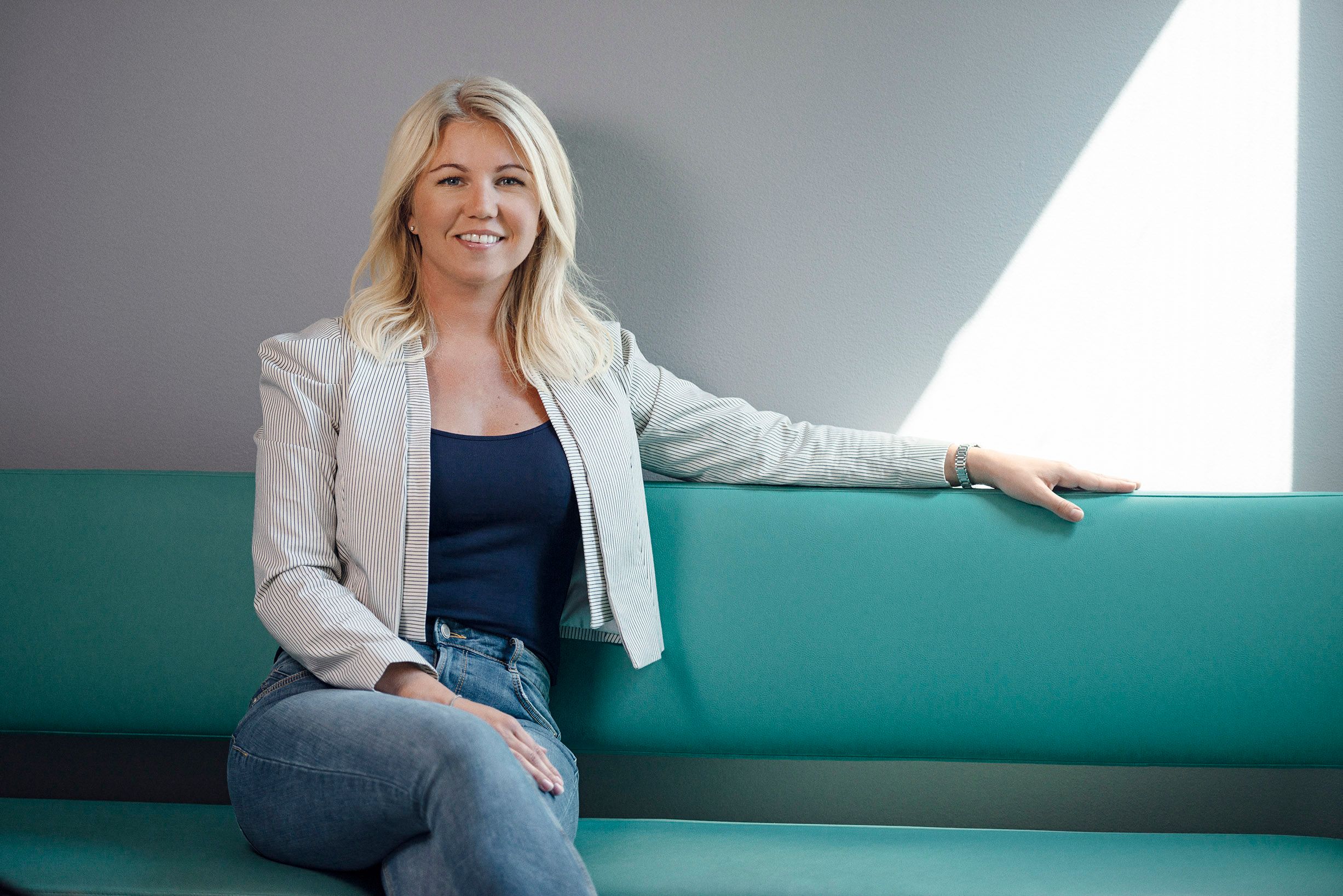
Natural Cycles returned the couple to Sweden for its launch. Berglund and Raoul moved to Stockholm in 2014. The partnership combined a shared scientific background with the less theoretical business of getting a company going. Their earlier connection had begun among library books; now they had a product, a public and an expanding list of decisions to make together.
One early assumption proved expensive in the currency of attention. Berglund believed people would arrive once the app existed. She was persuaded that there was demand. Discoverability, however, required its own work. She later acknowledged the need to invest in marketing. An algorithm can be running perfectly while its intended audience remains entirely unaware of it.
That is a useful complication in a story often reduced to scientific talent. The training travelled, but it did not cover every new responsibility. Selling, explaining and recruiting each demanded a different kind of judgement. Even a founder who understands the product intimately has to learn how to describe it outside the room where it was invented.
The business also kept a connection to the laboratory through people. Former CERN colleagues became part of Natural Cycles’ data science team. A change of industry need not mean beginning with an entirely new circle of collaborators. Sometimes the relationship that matters is having already seen how another person works when the numbers need checking.
The trouble with being able to do everything
In 2018, Berglund described herself as a leader who cared about large decisions and small details alike. She had led a research group at CERN. Management had emerged through the work, rather than through a carefully staged decision to become a manager. Her account of leadership was personal and involved: she paid attention, stayed close to what was happening and found her own approach.
For a young company, that closeness can be practical. The person answering an early customer query may also be able to change the software. There are fewer handovers, fewer explanations lost between departments. But a growing business cannot indefinitely depend on the availability of the same person for every kind of problem.
By 2021, her advice about expansion had become pointed. She cautioned against entering too many markets at once and hiring in a rush after a funding round. Recruitment deserved time. So did keeping the company’s values clear. Her own experience supplied a warning about founders holding on to tasks until they became an obstacle to growth.
The argument fits the shape of her career. First she had to become capable of building the thing. Later she had to build an organisation that could work beyond her individual capacity. A scientist who can write code, design a website and handle support is useful. A company that requires her to keep doing all three has a scheduling problem.
“You can’t scale yourself, only your team and talent.”
Elina Berglund Scherwitzl, 2021
New York, with Stockholm still in the diary
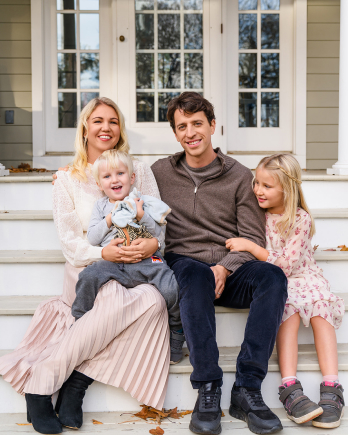
The family moved to New York in 2018. Berglund and Raoul have two children; today, her published biography places the family outside the city. The company continues to connect her American life with Sweden. In August 2026, she was back at the Stockholm office for several concentrated days of meetings, making one of her relatively infrequent visits home.
There is a quieter continuity with CERN as well. Her public professional profile lists service on its Alumni Advisory Board beginning in January 2018. An alumni programme in turn brings researchers together to consider where their careers might lead. Berglund’s route offers one concrete answer, without requiring every scientist to become a founder.
The company’s financial scale has changed considerably since the first app. In May 2024, Natural Cycles announced a $55 million Series C financing led by Lauxera Capital Partners, with participation from Point72 Private Investments and a revolving debt facility from J.P. Morgan. The announcement included investment in commercial growth and product development. Learning to make software had become learning to allocate resources.
Recognition followed on a different calendar. In 2025, Dagens Industri named her Entrepreneur of the Year within its recognition of influential women in business. In 2026, she appeared on Inc.’s Female Founders 500 list and on the announced speaker roster for Slush. The laboratory researcher had become someone invited to explain the business she had built.
A founder who still has homework
Berglund’s own account of leadership includes an admission that sits well beside those honours: self-doubt has required work. She has described the importance of backing her own judgement and remembering the effort she puts into the company and its people. Confidence here sounds like something maintained through practice, rather than an accessory issued with the CEO title.
Her advice also includes acknowledging mistakes and allowing others to do their jobs. There is a particular credibility in that coming from someone whose earliest company role included almost everything. Delegation becomes easier to understand when you have personally experienced the jobs you are handing over. It can still be difficult to leave them in someone else’s hands.
The interesting distance in Berglund’s story runs from a university student who liked collaborative study to a researcher inside a vast experiment, then to an app builder working through unfamiliar tasks. Each stage changes the size of the team and the nature of the questions. None provides a permanent escape from learning the next job.
CERN supplied an unusually dramatic entry on her CV. The years afterward supplied the ordinary tests that make a working life recognisable: a new skill, a mistaken assumption, a colleague to trust, a responsibility to relinquish. Monday arrived after the Higgs discovery. Berglund found plenty to do.
“Always bet on yourself.”
Elina Berglund Scherwitzl, 2020