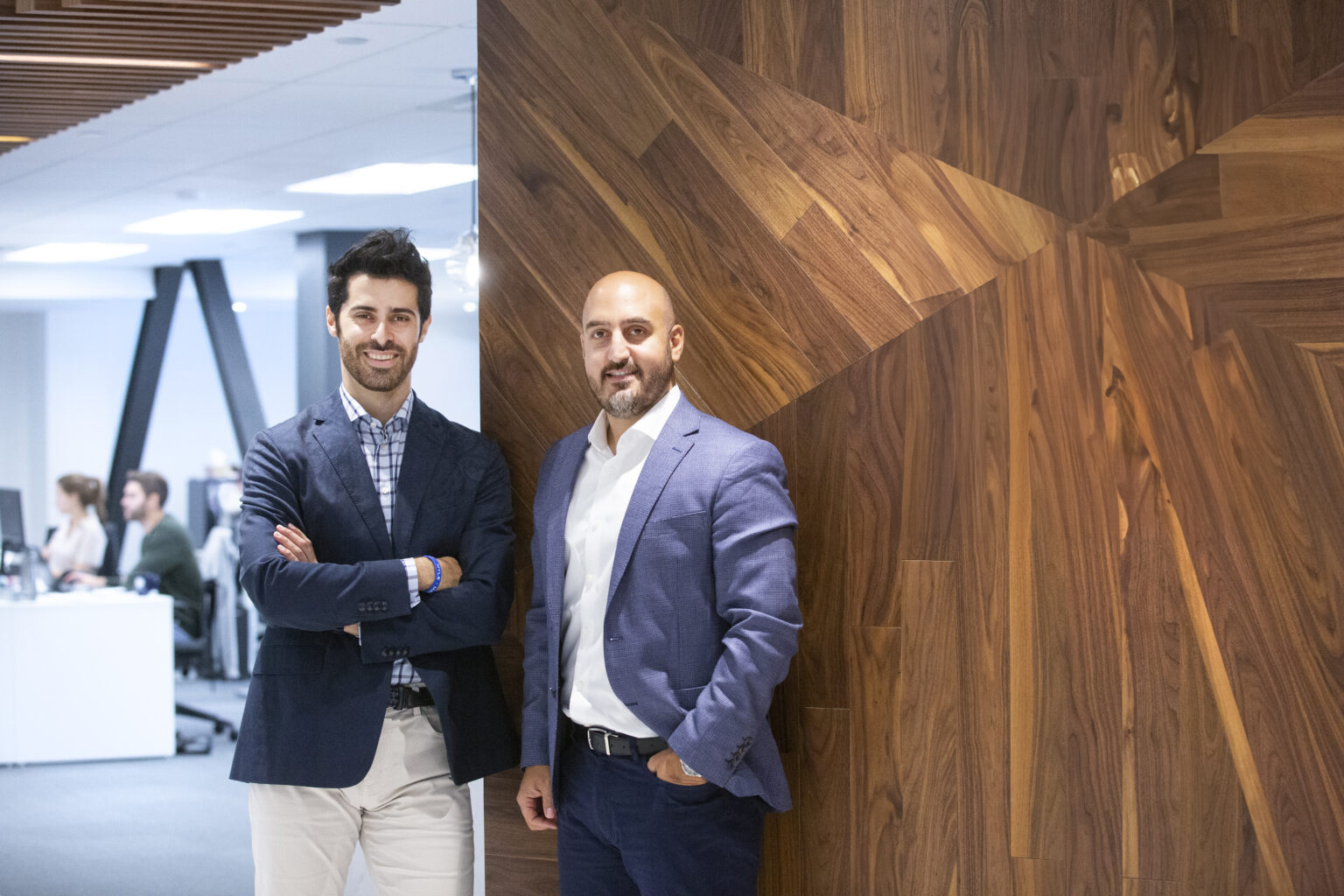
The business began, in part, in a cafeteria. Elias Farah had been working at Bombardier, inside an industry that takes systems seriously. Patrick Issid was working on landing-gear optimization at Héroux-Devtek. Their paths crossed at lunch, where the conversation turned toward a different kind of software business. In 2010, they founded MEDFAR. A cafeteria is an agreeably modest place to put on a company’s family tree. It has fewer ceremonial advantages than a garage, but considerably better access to lunch.
Farah’s contribution to that conversation came from product lifecycle management. At Bombardier, he had seen how information technology could automate business and production processes, and how it could improve the traceability of activities. The appeal was practical: knowing where something stood, seeing how work moved, and giving people a system through which to follow it.
That early experience gives his subsequent career a useful continuity. He moved from aerospace into software entrepreneurship, then into leading a business assembled through development, investment, and acquisitions. The company changed size and geography. The underlying question remained recognizably an engineer’s: how do the parts work together?
Lunch at Bombardier
Farah studied at École Polytechnique de Montréal. His education included undergraduate engineering and a master’s degree; his 2009 thesis concerned the viscoplastic behaviour of a material with a face-centred cubic structure. It is a subject unlikely to produce a jaunty elevator pitch. It does, however, place him firmly in a world of modelling, material behaviour, and careful technical explanation.
At Bombardier, the unit of attention widened from a material to a process. Farah described seeing how software supported automation and traceability. Issid brought another aerospace perspective, developed through work on landing gear. Both had experience with systems in which a detail has consequences elsewhere.
“J’ai vu comment automatiser les processus d’affaires et de production…”
Elias Farah, 2020 interview
“I saw how to automate business and production processes,” Farah recalled. His full remark also concerned tracking activities through information technology. It is a revealingly workmanlike account of inspiration. The interest lies in what a system lets people do, and what it lets them see.
The founders also traced their interest to a Harvard Business Review article about computerization. Reading supplied a prompt; the cafeteria supplied a conversation. Those two beginnings fit comfortably together. Ideas often have several addresses before they have an office.
Three years before the launch
MEDFAR’s founding date is 2010. The launch of MYLE followed in 2013. Put those dates beside each other and the origin story acquires some necessary weight. Three years sit between starting a company and introducing the platform that would become its central product. The calendar leaves room for the less quotable parts of building.
MYLE stands for Make Your Life Easy. For a software product, this is a cheerful name and a rather stern promise. Ease is something the user experiences after other people have done the difficult work. A product can have an appealing acronym from its first day; earning that acronym takes longer.
Farah and Issid’s partnership is a central fact of the enterprise. Company histories can make a chief executive seem like a solitary author. MEDFAR’s begins with two founders, both engineers. Farah became president and CEO. Issid remained a co-founder with a substantial role in the company’s technical and product development.
By the time the business expanded beyond its original market, the partnership had already crossed several different stages: recognizing an opportunity, forming the company, and launching a product. Each is a separate undertaking. Seeing a problem is exhilarating. Keeping two people’s work aligned while a solution is built is a more sustained achievement.
found MEDFAR
launches
in British Columbia
Series C announced
Nineteen angels, then a wider map
In 2015, members of Anges Québec participated in an investment of CAD$695,000 in MEDFAR. Nineteen angels contributed CAD$530,000 of the total. Enzo Blasi led the investment effort within the network. The money supported commercialization, including the prospect of taking the business beyond Quebec.
There is a human scale to nineteen investors. It suggests a collection of individual decisions behind a financing headline. Blasi publicly expressed confidence in the founders’ ability to execute their business project. For Farah and Issid, the investment joined engineering work to another requirement: persuading people that the company could grow.
The map subsequently widened through acquisitions. MEDFAR acquired the Purkinje customer base in 2019, followed by Plexia in British Columbia in 2020. The sequence took the business westward and added an established company to the organization Farah was leading.
Plexia’s announcement to its customers addressed the everyday meaning of that transaction. Its leadership and staff would continue supporting them. The combined businesses would have access to additional resources and technologies. It was a reminder that an acquisition has an audience beyond the people signing it: customers want to know what happens on the following Monday.
In April 2023, MEDFAR announced a CAD$30 million Series C minority investment from Investissement Québec. Walter Capital Partners, CIBC Innovation Banking, and BDC Capital were also part of its wider financial relationships. The stated purpose included North American expansion and further acquisitions.
Those sums belong to the company’s financing history. Their value in Farah’s story is the sequence they reveal: early commercialization support, acquisitions across Canada, and investment intended to support a larger geographical ambition. The chief executive’s job had expanded alongside the map.
The company has to work, too
Building software and building the organization that produces it are connected tasks. A Talkdesk account of MEDFAR’s customer-service operations offers a small, concrete example. Its contact-centre agents moved to working from home within twenty-four hours. Colleagues from other departments received training and could begin answering customer calls after fifteen to twenty minutes.
The details are more interesting than a general claim about agility. Twenty-four hours is a deadline. Fifteen minutes is a training interval. Both make the change tangible. A company devoted to improving other people’s workflows also has to examine its own.
Farah’s public comments repeatedly return to the people doing that work. In June 2020, he accepted Anges Québec’s Company of the Year recognition for MEDFAR at a virtual gala. He thanked the investors for their support and stressed the importance of building a strong team. It was a company award, and he treated it as one.
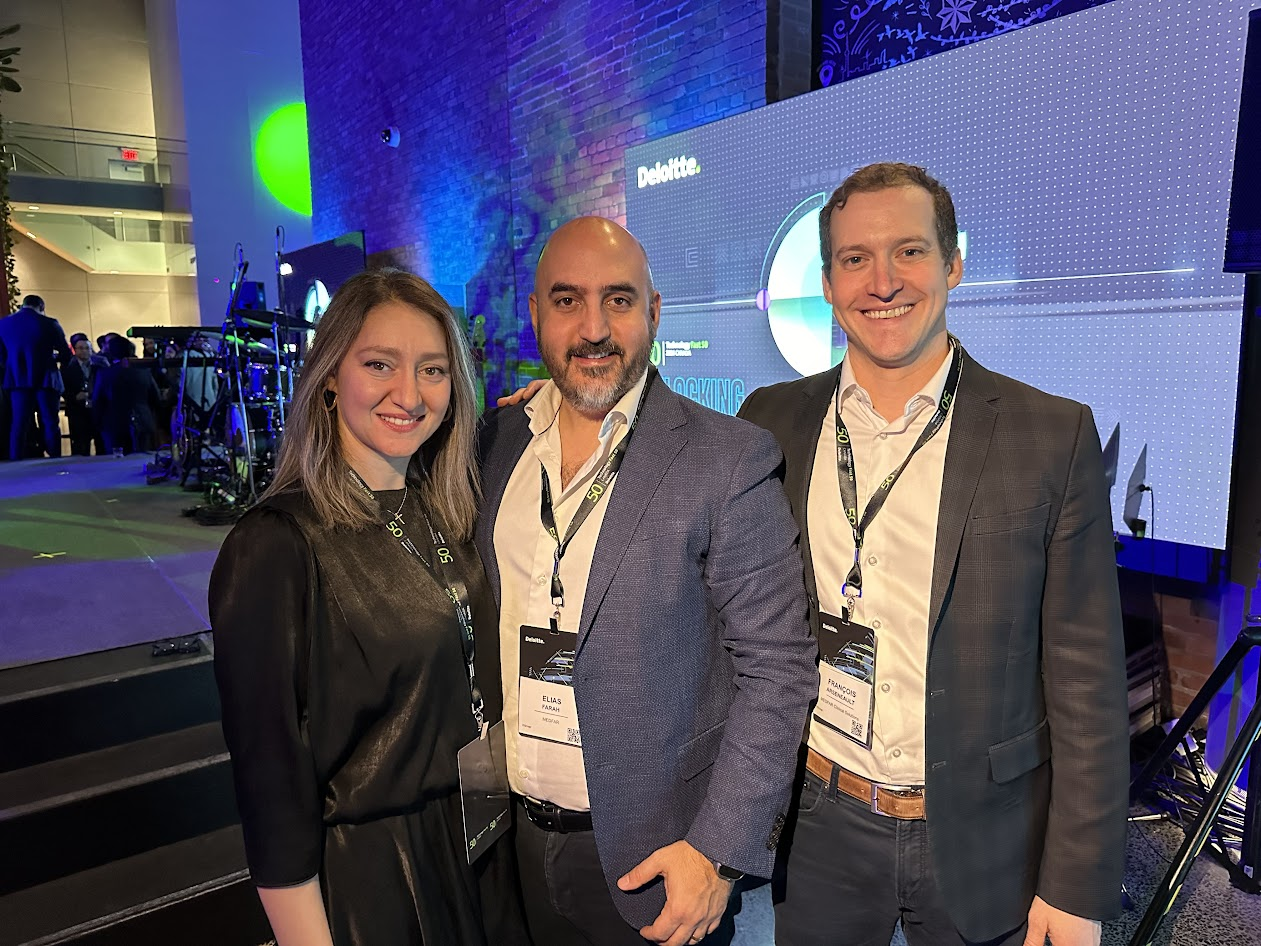
Four years later, another recognition provided a different numerical view. MEDFAR ranked 47th on Canada’s 2024 Deloitte Technology Fast 50 and 271st on the North American Technology Fast 500. The ranking reflected revenue growth of 423% over four years. The measurement has a window; keeping that window attached to the number is part of understanding the achievement.
Revenue growth over four years.
47th in Canada’s Technology Fast 50.
Farah again described the recognition as shared. By November 2024, MEDFAR reported a team of more than 350 people operating from Canada, the United States, India, and Armenia. A founder who once worked through problems with a co-founder was now leading across countries and time zones.
A number with a deadline
The American expansion added another layer. In 2024, MEDFAR reported completing the integration of New York-based COMTRON. That brought established products and capabilities into the business. Farah’s company was increasingly a collection of businesses that needed to function together, with integration becoming part of the founder’s continuing assignment.
The change also reached the company’s appearance. MEDFAR refreshed its brand identity in 2024 under Farah’s guidance. The brief included honouring its engineering roots while reflecting its international expansion and broader product range. A logo cannot perform an integration, but it can signal that the organization behind it has changed.
In March 2025, MEDFAR announced the acquisition of CoeurWay, adding another company and artificial-intelligence technology to its plans. For Farah, the acquisition continued an established business pattern: expanding the offering by bringing outside capabilities into the organization.
He has also taken a seat in the interviewer’s chair. After discussing MEDFAR’s beginnings and growth with Antoine Gagné on the French-language Hypercroissance podcast, he introduced The Lab Entrepreneur in 2025. His conversation with Adam El Hosseiny explored the development of a family-founded business. The founder explaining his own company had become a host asking about someone else’s.
The Hypercroissance appearance offered a dated snapshot of the business: MEDFAR described the conversation in January 2024 as covering growth to $40 million in annual recurring revenue. That figure captures a stage in the company’s development. It also shows how far the discussion had travelled from the initial product idea. Farah was speaking about a recurring-revenue business with international plans, rather than simply describing software he wanted to build.
His public role now includes explaining that direction to different audiences. Investors hear the expansion strategy. Colleagues have to turn it into work. In interviews, the same history becomes a story someone outside the company can follow.
MEDFAR’s published objectives for 2030 include operating on five continents, employing 5,000 people, and reaching an enterprise value of $5 billion. These are destinations on the company’s planning map. The distance still to travel is part of their meaning.
Farah’s story has an appealingly ordinary beginning for such large numbers: technical work, something read, a colleague, a conversation over lunch. Sixteen years after MEDFAR’s founding, the itinerary is much longer. The original partnership remains its first entry. The cafeteria has earned its place in the history, even if the catering budget was never disclosed.