A chiller trips at the University of Houston. There are several possible explanations, and an expensive piece of equipment has stopped doing its job. Ron Gonyea, working with campus electrical systems, examines the recorded waveforms. The disturbance came from upstream, on the utility side. In EIG’s account of the incident, the electrical record supplied the evidence. The suspect machine was downstream of the trouble.
That small act of diagnosis explains Electro Industries/GaugeTech better than a catalogue can. The company makes instruments that measure electricity and software that helps people interpret the measurements. Its territory includes the difference between a large bill and a damaged machine, between using too much power and receiving power that behaves badly.
- Measure: Shark and Nexus meters track consumption and electrical conditions.
- Investigate: recorded disturbances help operators locate trouble.
- Decide: energy software supports forecasts, comparisons, and cost allocation.
A meter with something to say
Samuel Kagan founded the company in 1975. An engineer and inventor, he saw a need for an “affordable, easy-to-use AC power meter system,” as the company’s founder profile puts it. His ambition included communication: a solid-state meter should give engineers information they could use to manage power.
It is a wonderfully practical origin. Electricity is invisible; a number on a panel makes part of it visible. Send that number somewhere useful, preserve its history, and the panel becomes part of an investigation. EIG’s own history records work on Ethernet power monitoring in 1996. The long arc runs from the electrical cabinet to the network.
The important reading is the one that changes what somebody does next.
Two questions inside the same cabinet
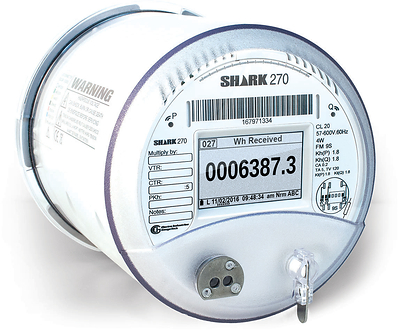
The first question is how much electricity passed through. EIG’s Shark 270 addresses revenue metering: measurements suitable for billing, with compensation for transformer and line losses, time-of-use functions, and communications with supervisory systems. Its optional cellular connection collects meter data and power quality waveforms over the same wireless path.
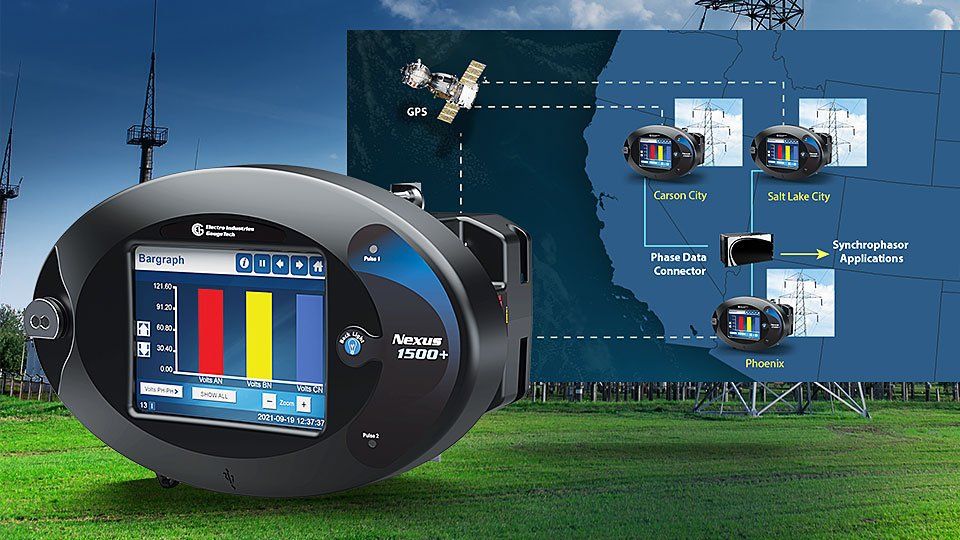
The second question is what the electricity looked like while it passed through. A voltage sag can matter even when a monthly consumption total looks ordinary. Nexus 1500+ combines precision energy measurement with power quality recording and a phasor measurement unit. Synchronized phasor readings help operators observe changing conditions across a power system.
The specifications get demanding because the events can be brief. EIG lists 50 MHz transient capture resolution for Nexus 1500+, alongside IEC 61000-4-30 Class A power quality certification. These are different capabilities from merely adding up kilowatt-hours. Selecting a meter means deciding which events the installation needs to preserve.
The browser is the second half
In May 2020, EIG launched EnergyPQA.com, its cloud energy management platform. It brought usage predictions and power quality analysis into the same service. For a facility operator, that connects two working calendars: planning tomorrow’s demand and investigating yesterday’s interruption.
Other software handles the journey between meter and screen. CommunicatorPQA configures and monitors meters; MeterManagerPQA collects their data. HMIPQA+ supplies supervisory monitoring and integration with third-party equipment. In May 2024, EIG added the DataLink API, allowing EnergyPQA data to leave the platform in JSON format for use in other applications.
- 01MeterCapture the circuit
- 02CollectPreserve the history
- 03AnalyseFind the pattern
- 04ActRepair, shift, verify
The distinction between a reading and a decision matters. At Houston, EIG’s case study describes staff using forecasts to prepare for utility load-shedding requests, then checking how much load was actually removed. The software informed an operational choice and helped verify the result. A dashboard becomes useful when it closes that loop.
The customer list spans different kinds of inconvenience. A shopping centre can allocate consumption to tenants. A hospital needs to investigate disturbances around sensitive loads. A manufacturer wants to connect an interruption with the electrical conditions around it. These users share a need for detail below the level of the utility bill, although their priorities and installations differ.
The price includes getting it right
EIG sells hardware, software, cloud access, and engineering services. Its cloud FAQ describes payment by metered circuit. A multi-building installation therefore involves choices about measurement coverage as well as equipment. Each additional circuit should answer a useful question.
The service schedule makes the less photogenic work visible. It lists weekday onsite commissioning at $3,623 for up to ten metered circuits per day, compared with $1,488 remotely. Travel and other charges can apply; published estimates are not firm quotes. These are service charges, not the price of a complete installed system.
Up to 10 metered circuits per day. Additional charges may apply.
Commissioning means checking wiring, verifying integration, and making the installation behave as intended. EIG also offers training and calibration. This is a business in which a polished interface still depends on the current transformers and connections behind it.
There is also a question of granularity. EIG’s MP200 multipoint system measures multiple circuits, giving operators a way to separate loads that would otherwise appear as one total. That can change a conversation about a building’s consumption into a conversation about particular equipment or departments. The useful unit of analysis may be a circuit rather than a whole property. More detail is valuable when it gives somebody a manageable next step.
A specialist inside a bigger grid business
Schneider Electric’s PowerLogic range and Eaton’s Power Xpert meters offer alternatives in energy and power quality measurement. EIG’s case rests on its focused combination of instruments, analytics, and implementation support. The sensible comparison is installation-specific: recording capability, communications, existing systems, and the people available to maintain them.
Hubbell acquired EIG in May 2023 for approximately $60 million in cash, net of acquired cash and subject to adjustments. It placed the business in Utility Solutions. The fit is straightforward: EIG supplies measurement and analysis for the utilities and large facilities that Hubbell serves.
The limits are equally practical. A meter needs the right location and configuration. A forecast needs useful history. An alarm needs somebody with authority to respond. Buying visibility does not itself reschedule a load or repair a chiller. The lesson worth copying is to connect each measurement to a decision, then check the result. Start with the argument you need to settle.