A drone can finish its flight while the business behind it still has plenty to do. Someone must organize the files, assign the next task, and deliver something the customer can use. The aircraft attracts the attention. The handoff determines whether the operation runs smoothly. Elasticis’s work with a Colorado drone business offers a useful place to start understanding the company.
- The work: custom software and supervised AI workflows for operational businesses.
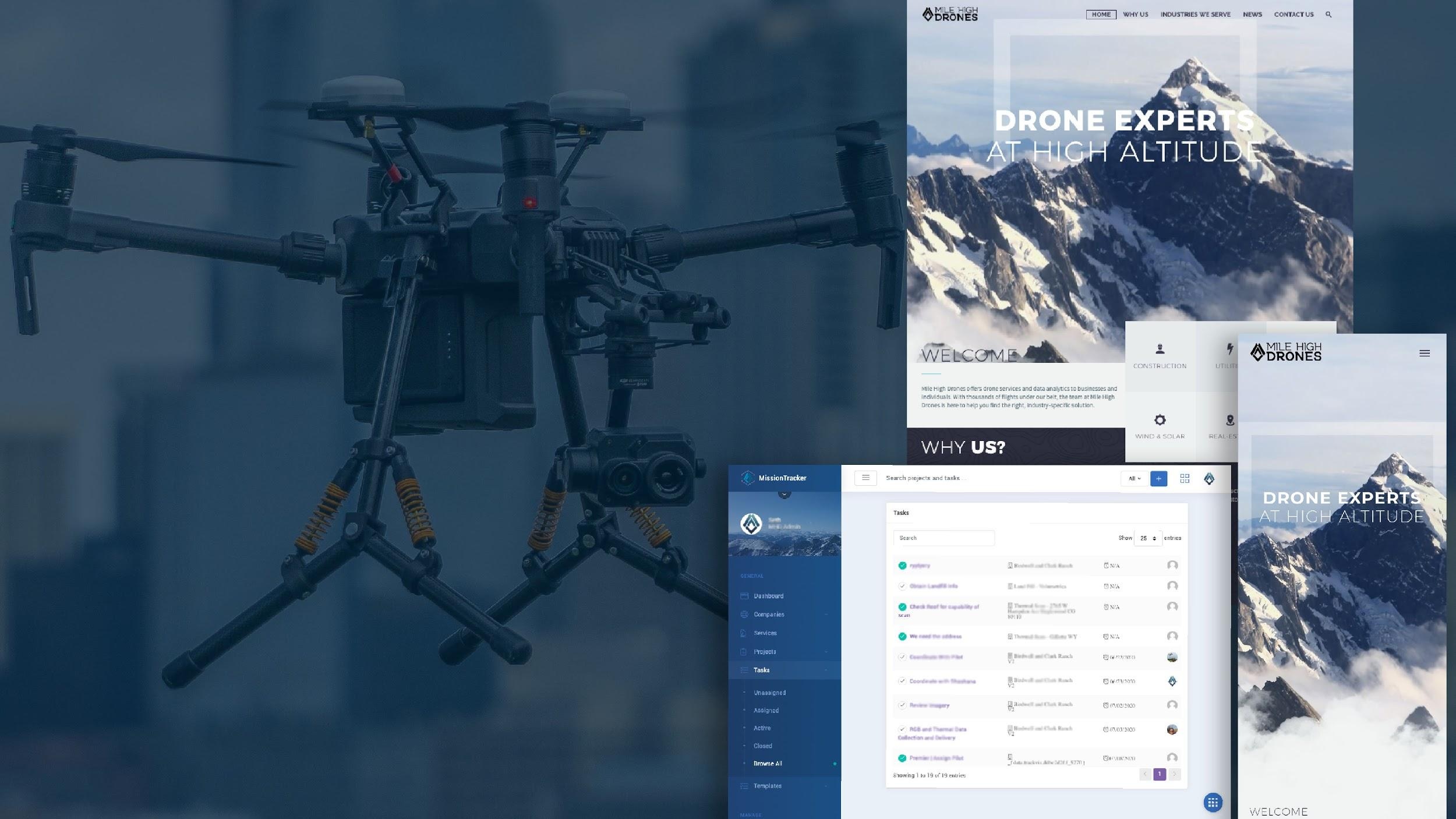
- The early example: Mission Tracker, a portal built for Mile High Drones.
- The buyer’s lesson: define the handoff, the budget, and the person responsible.
01 / AFTER TAKEOFFThe flight ends. The handoff begins.
Mile High Drones hired Elasticis in May 2019. Its Mission Tracker combined pilot task management, cloud uploads, and customer delivery. By August 2020, the client reported spending about $30,000 and becoming more efficient. The reviewer praised the working relationship.
The revealing detail is the collection of verbs: assign, upload, deliver. Each describes a transfer between people or systems. Buying a better camera would address a different problem. This project dealt with what happened around the captured information. Its usefulness depended on understanding the route a job took through the business.
That suggests a practical test for any software proposal. Follow one piece of information from arrival to completion. Where does somebody copy it? Where does it wait? Who checks it? A feature list becomes much easier to judge once those ordinary questions have answers.
The work also asks the customer to participate. Elasticis’s development overview describes regular communication and review of the backlog, the list of work still to be done. That arrangement rewards a buyer who can make decisions. A supplier can write the next release; somebody inside the business must decide whether it solves the right problem.
“They felt like a partner rather than a vendor.”
Mile High Drones customer / August 2020
02 / A MORE SPECIFIC JOBA broad menu gets a narrower job
Elasticis’s older materials offered a sweeping technology menu: web and mobile development, machine learning, blockchain, connected devices, and data science. Its 2020 overview described an iterative development process, with customers involved as a basic working version became successive releases. The promise was software that could adapt as business needs changed.
Today, the company pitches AI implementation to owner-operated construction, field-service, logistics, and dispatch businesses. It offers supervised agents, custom applications, staff workflow automation, and responsible-AI consulting. Quoting tools and dispatch boards feature among its examples. The audience is recognizably operational: people with crews, schedules, and work to move.
The difference in emphasis matters. A technology menu asks a buyer to choose an ingredient. An operational brief starts with the meal that needs cooking. For someone running a service business, the useful conversation concerns a late quote or a missed follow-up. The choice of model comes later.
Elasticis says it runs its own business with named AI agents under human supervision. Ela handles lead qualification; Grace coordinates scheduling. The names make the arrangement approachable. They also invite a serious question: when an agent passes work along, which human is responsible for accepting it?
03 / THE FAMILY CONNECTIONThe customer is also in the family
There is another wrinkle in the drone story. Elasticis now identifies itself as a User Guided, LLC company. User Guided’s portfolio also includes Mile High Drones, alongside digital-twin business Mira Spatial and games business Game Perch. The earlier customer relationship now sits within a shared company portfolio.
That makes the example interesting as an account of operational familiarity. It also changes how a buyer should weigh it. Related businesses can provide close access to real problems; an outside customer brings a different test of commercial fit. Both perspectives are useful when assessing a supplier.

User Guided describes a method of listening, interpreting, prototyping, and learning after launch. Its broader portfolio links physical activity with digital systems. Seen through that lens, drone software and operational AI share a concern: getting a system to make sense to the people using it.
04 / THE PRICE OF TRANSLATIONThe calendar has a vote
A second customer supplies the awkward part. Well Information Technologies commissioned a job-information app, standardizing recorded observations for analysis. Founder Cody Clickner reported roughly $50,000 spent by August 2020. He praised the output but criticized optimistic deadlines. He had considered Elasticis and other firms for three to four months before choosing.
His account captures a familiar tension in custom development. A founder buys technical skill while still learning to describe the product. Every clarification can affect the work required. A sensible contract needs room for that discovery, along with a way to distinguish a correction from an additional request.
The business model follows from this kind of work: scoped development engagements, followed by further work as requirements develop. The current AI offer adds implementation and supervision. For buyers, that makes maintenance, access, and responsibility part of the purchasing decision, alongside the initial build.
A useful budget discussion therefore separates building from running. What counts as a finished release? Which changes need a new estimate? Who handles a broken connection after another service updates? Those questions turn an attractive proposal into something a manager can administer. They are especially relevant when software is expected to act on someone’s behalf.
05 / THE COPYABLE PARTStart with one awkward handoff
Elasticis occupies the space between ready-made software and an internal development team. Its case for custom work is strongest when a consequential workflow needs particular connections or rules. A standard task that an existing tool already handles well gives a buyer less reason to commission something bespoke.
The lesson to borrow is modest. Pick one handoff. Agree what enters, what should emerge, and who reviews exceptions. Budget for a small release and watch people use it. If nobody owns the process, or the necessary systems cannot be connected, adding an agent leaves the underlying problem waiting.
A successful demonstration ends with something impressive on a screen. A useful operational system has to survive the next assignment, the missing field, and the person who needs the answer before lunch. That is where this company’s proposition deserves to be tested: in the work after the flight.