An invention can work beautifully and still leave its inventors with an awkward silence when somebody asks who will buy it. EIT Jumpstarter occupies that silence. Its raw material is the research idea: promising enough to deserve a company, perhaps, but still missing the business case that would justify one.
Take Lightly, a team that emerged from Mendel University in Brno. Its scientific roots lay in chemistry and environmental science. Collaborations with law enforcement helped redirect that expertise toward identifying counterfeit medicines. The interesting development was a change in the problem the scientists chose to solve. A possible customer had given the research a destination.
Jumpstarter gives teams a structured way to make that commercial journey. The European Institute of Innovation and Technology, an EU body, backs the programme. Inventors get training, mentoring, introductions and a competition with a top thematic prize of €10,000. They keep their equity. The assignment is to build a business case strong enough to survive questions from someone outside the laboratory.
A business school before the business
Launched in 2017, Jumpstarter works unusually early. Researchers, students, scientists and other idea-holders can arrive before establishing a company. Their immediate need is often basic: identify a user, distinguish that user from the buyer, work out a business model and test whether the market wants what the technology can do. EIT Food’s programme description explicitly welcomes people who have an idea but no company yet.
The original collaboration grew around sector expertise. A 2019 account identifies EIT Health, EIT RawMaterials and EIT Food as the programme’s developers. That year’s final brought 18 teams from 10 countries to Riga, alongside the Digital Freedom Festival. Health winner iLoF used photonics and artificial intelligence in work on patient screening for Alzheimer’s clinical trials. The subject matter was already some distance from another shopping app.
Jumpstarter’s specialism is commercialising science across several industries. Healthcare founders have EIT Health; materials researchers can draw on EIT RawMaterials. The networks bring knowledge of particular buyers, technical hurdles and routes to market. A scientist working on a new material needs a different conversation from a founder selling a service to hospitals.
There is evidence that this introductory level matters. In EIT’s 2019 account, 72 percent of surveyed groups had received no previous business education. Teams tested models with potential customers and received feedback. That makes the programme closer to an applied business course with a company-building deadline than a conventional investor writing a cheque.
Free admission, a demanding calendar
The financial offer is straightforward at its core: eligible participants pay no programme fee and give up no equity. The 2026 RawMaterials call makes ownership retention explicit. Public funding pays for this early entrepreneurial support; the programme’s beneficiaries are the innovators, while its wider purpose is to help European research become economically useful.
The calendar is less casual. The training offer includes approximately 15 hours of online bootcamp and 40 hours of local, in-person training. Business modelling, pitching and testing assumptions sit alongside mentoring and feedback. Participants are working toward a business plan and incorporation, with selection rounds deciding which teams continue. Attendance is only the beginning of the workload.
Training is free. Prizes are competitive. Your time still goes on the balance sheet.
The March 2026 launch advertised more than €240,000 in financial support across the programme. That headline should not be read as the amount every team receives, or as the operating budget. Travel support and competitive prizes serve different purposes. The current thematic awards are €10,000, €5,000 and €3,000; special awards recognise additional regional and thematic priorities.
Winning also comes with paperwork. The May 2026 terms require prize winners to finalise company registration and supply the relevant document within 15 days of Grand Demo Day, with a limited exceptional extension. A team considering the programme needs room in its calendar for business-building and incorporation, as well as a persuasive pitch.
The customer who changes the plan
Lightly supplies a useful example of what founders can change after encountering a real need. Its Catcher device reads samples using disposable cartridges and matches chemical profiles against a database. The combination gives its research a specific use: helping investigators identify suspect medicines and connect related cases. The programme’s Lightly case study credits early law-enforcement collaboration with the shift in direction.
“The programmes helped us sharpen our value proposition, improve communication with stakeholders, and develop a clear go-to-market strategy.”
Monika Štěpánová
CEO and co-founder, Lightly
For a founder reading that story, the transferable move is to let an identifiable customer problem narrow the technology’s possibilities. “This could be used everywhere” sounds impressive in a presentation. It leaves a young company with a very long sales list and no obvious first call. A specific application gives the team something concrete to test.
Another alumnus, Greece’s MultiBioCrop, is developing a formulation combining fungi and natural nutrients for agriculture. During Jumpstarter, the team produced a business plan, developed its market approach and completed laboratory efficacy trials. It took second place in the 2024 Food category and received €5,000. Two agricultural cooperatives expressed interest in field pilots, according to its published case study.
Those cooperatives matter because interest from a potential user introduces a different kind of evidence. A laboratory result answers a technical question. A field pilot can begin answering practical ones about use, performance and adoption. At the time of the account, MultiBioCrop still had seed fundraising, patents and regulatory work ahead. The business plan gave those next steps an order.
A prize is an opening chapter
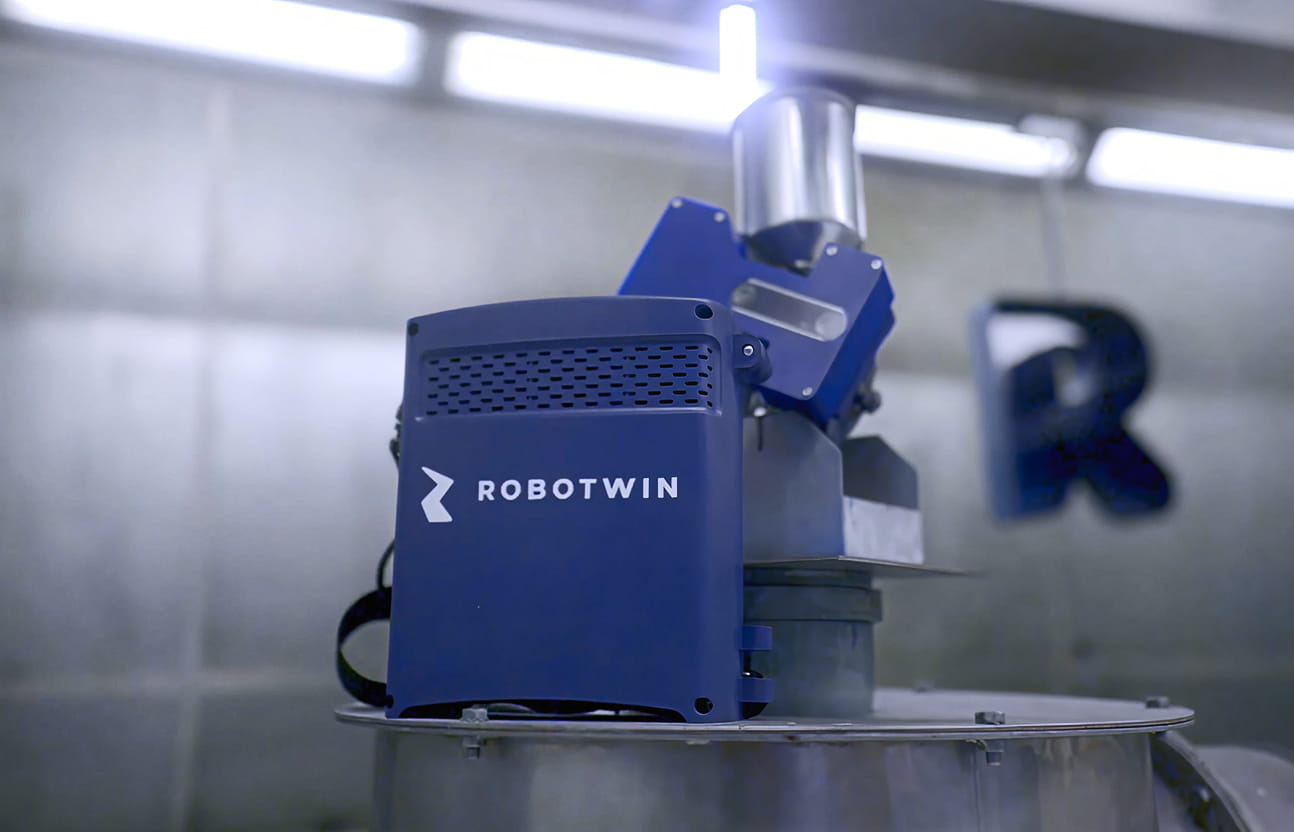
Czech robotics company RoboTwin won Jumpstarter in 2021. In July 2025, the programme reported a €1.25 million pre-seed financing package combining private capital and an EU grant. The money was intended to support its robot-instruction technology and manufacturing-focused AI work. Four years separate the competition win from that announcement. Early support can be useful without making company-building instantaneous.
RoboTwin’s proposition is readily understood on a factory floor: show a movement, record it and generate a robot programme. Its current product site presents applications in painting, coating, grinding and polishing. The commercial problem is the effort involved in programming and adapting industrial robots. That is a more useful sales conversation than a general claim about the future of automation.
Follow-on support has its own route. Jumpstarter Next serves eligible alumni of selected EIT programmes. Its 2025 edition offered a five-month sequence of business assessments, training, targeted mentoring and investor pitch preparation. It received 207 applications from 21 countries, with 10 finalists selected. Lithuania’s BrachyDOSE won; Biopols and Cropler were runners-up.
That separation helps explain the market position. Jumpstarter is an entry point for validating an idea. University incubators and technology-transfer teams offer other early routes; sector accelerators address later requirements. EIT RawMaterials, for example, separately lists an accelerator and support for more mature ventures. The useful choice depends on the business question a team is ready to answer.
Europe is the market; geography is the brief
Jumpstarter’s regional emphasis is part of its purpose. It operates within the EIT Regional Innovation Scheme, aimed at narrowing innovation disparities. Central, Eastern and Southern Europe feature prominently, alongside other eligible countries and territories. In 2026, Xjenza Malta supports a dedicated, sector-agnostic Maltese cohort. Access to the European network is being organised through local and sector relationships.
The programme also changes shape between announcements and delivery. Its Advanced and Green Manufacturing category was cancelled for 2026, with applications redistributed to other categories. Applicants therefore need the current terms, rather than last year’s brochure or an early call announcement, when deciding where their idea belongs.
Demand has grown considerably. The programme’s 2026 intake analysis records 895 applications and 162 selected teams, following 908 applications in 2025. It also reports an uncomfortable gap: among applicants reporting founder gender, 30 percent had a female co-founder; the reported share among selected teams was below 17 percent. The figures identify a selection-stage question without establishing its cause.
Counts describe progression through the 2026 programme, not company survival rates.
By September 1, EIT reported that 81 teams from 23 countries had reached Startup Builder Training. Business plans were due by the end of September, ahead of an October Grand Demo Day. The cohort includes GeoCura, working on construction materials derived from mine tailings, and Aestrion, developing communications infrastructure. The breadth is striking; each team still needs a specific market.
The programme’s March 2026 reporting credited it with helping create more than 150 start-ups and train over 1,500 innovators. It also reported more than 2,600 jobs and over €150 million attracted by young companies. These are cumulative programme-reported outcomes. The investment belongs to the companies’ financing stories; it is not Jumpstarter’s revenue, and it should not become a prediction for the next applicant.
The homework worth borrowing
The practical lesson is to arrange commercial learning as deliberately as technical development. Choose an initial customer. Put the business model into words. Test assumptions with people who might use or purchase the product. Ask a mentor with relevant industry experience to challenge the plan. Write down what has changed before polishing the next pitch.
That approach needs both willingness and the right stage. A team seeking immediate expansion capital may have outgrown introductory validation. A researcher unable to commit time to customers and business planning will struggle to extract the value of the training. And interest in a pilot still leaves the work of delivering it. A competition prize cannot complete that work.
Jumpstarter makes the first commercial questions harder to postpone. Its useful promise is the opportunity to investigate whether an invention deserves a business, with experienced people in the room. The €10,000 is an incentive. Knowing whom to call on Monday morning may be the more consequential result.