The origin of ARNA Genomics sits on the steps of Moscow State University, but it does not begin with a eureka moment. It begins with a friend asking Egor Melnikov a rude and useful question: what did he actually want? Melnikov was an economist with years of company-building behind him. Advertising and production. International logistics. IT integration. Telecom. He knew how to make organizations move. What he wanted, he answered, was to build a company around his father Anatoly’s research into DNA methylation and early cancer detection.
It was 2013. The answer carried family history inside it. Melnikov’s parents had met while studying biology at Moscow State University in the 1970s, then moved to Pushchino, a science town south of Moscow. He and his brother were born there. His childhood circle included the sort of people science towns produce: physicists, mathematicians, programmers and doctors. His closest childhood friend, George Nikitin, would eventually join ARNA as a co-founder.
The father supplied the scientific current. The son became the transformer. Anatoly Melnikov had worked in molecular biology and genetics for decades, including years in the United States. Egor did not pretend to have the same training. His education was in economics. His experience was in forming teams, finding money, setting a direction and keeping the machinery alive long enough for evidence to arrive.
The useful failure of a universal answer
ARNA’s first concept was enormous. The team called it an “onco thermometer”: a test intended to indicate whether an oncological process was present without identifying its location. Its strength was breadth. That was also the product flaw. A general signal left a practical question hanging in the air: what should happen next?
Expert review at the Skolkovo Foundation pushed the team toward specificity. They narrowed the initial product direction to breast cancer. Then reality narrowed it again. Melnikov has explained that an early genetic protocol performed well across several biological subtypes in the team’s work but did not address triple-negative breast cancer as they hoped. The limitation became another design instruction. ARNA developed a separate protein protocol and worked on combining the two approaches.
“We preach the principle of precise action. Half measures are not appropriate here.”Egor Melnikov, 2020 interview
There is a clean founder lesson hiding in this untidy science. Vision is useful at the beginning because it recruits belief. Specificity is useful afterward because it recruits reality. The team’s story is a sequence of ambitions made smaller so they could become testable. Universal signal. Organ-specific direction. One protocol. Then two. A company that refuses to narrow is often protecting its poetry from measurement.
The most expensive kind of patience
Software founders can push a patch before breakfast. Diagnostic founders live by a slower clock. Samples must be collected. Studies designed. Protocols repeated. Regulators satisfied. Intellectual property secured. Each stage consumes money before it earns trust, and each result needs to survive a more skeptical room than the last.
Melnikov described fundraising in biotech as continuous until commercialization, an exit or an IPO. The company began with founder money and early market funding. It appeared at Skolkovo events, demo days and investor competitions. In 2019, ARNA announced first-place finishes at BIOTECHMED and StartUp: Land HealthNet. The wins were not the destination. They were introductions to the people financing the road.
In September 2020, ARNA announced a $3.5 million Series A led by Xploration Capital. Melnikov said the company had raised about $5 million in total at that point, after roughly $1.5 million across the preceding seven years. The timing gave the story a small dose of gallows humor. He called the pandemic period a “nuclear winter of venture investment.” The round still closed.
Money did not resolve the central biotech paradox. Investors want to understand the mechanism before taking the risk. The company needs to protect the mechanism before exposing it. “How to present a project without revealing your know-how?” Melnikov asked in an interview. The solution was not verbal elegance. It was sequencing: demonstrate enough, protect more, then return to the room with a stronger packet of evidence.
A modest office for an immodest plan
A 2021 profile placed Melnikov in two rooms in a Moscow business center: desks, computers, a small CEO office, a water cooler, a kettle and photographs on the walls. It looked clean, ordinary and practical. The setting had none of the cinematic equipment that usually accompanies a “moonshot.” This may be the most honest picture of long-horizon entrepreneurship. Tomorrow’s giant claim sits beside today’s empty tea tin.
During the interview, his phone rang several times. Melnikov declined the business calls. Then he answered his uncle, with whom he was arranging a fishing trip. The detail brings the scale back into focus. The same person talking about patents, laboratories and global diagnostic markets still needs to settle where and when the fish will be inconvenienced.
Melnikov called himself a simple person with big ambitions. The combination is more convincing than either phrase alone. Ambition without ordinary life becomes performance. Ordinary life without ambition would not have survived the years of samples, pitches, pivots and legal filings.
“Maybe you don’t need to be motivated every day.”Egor Melnikov on the uneven rhythm of difficult work
He has argued that founders should respect their internal cycles. Some days rise; others dip. The larger direction matters more than a daily display of zeal. It is a striking admission from a leader whose company biography speaks in the language of mission. He is selling endurance, but not the theatrical kind. No one remains inspirational for ten consecutive years. A person can, however, remain committed.
What can be stolen from the story
First, choose a problem large enough to hold your attention after novelty expires. ARNA is rooted in family, place and unfinished scientific work. Those are powerful anchors. They do not prove the product, but they explain why the founder kept returning to it.
Second, let experts make the dream narrower. The “onco thermometer” was a stirring idea. The more specific breast-cancer direction offered a clearer action. When a protocol met a limitation, the team did not rename the limitation as success. It created another workstream. The pattern is almost embarrassingly plain: question, result, constraint, better question.
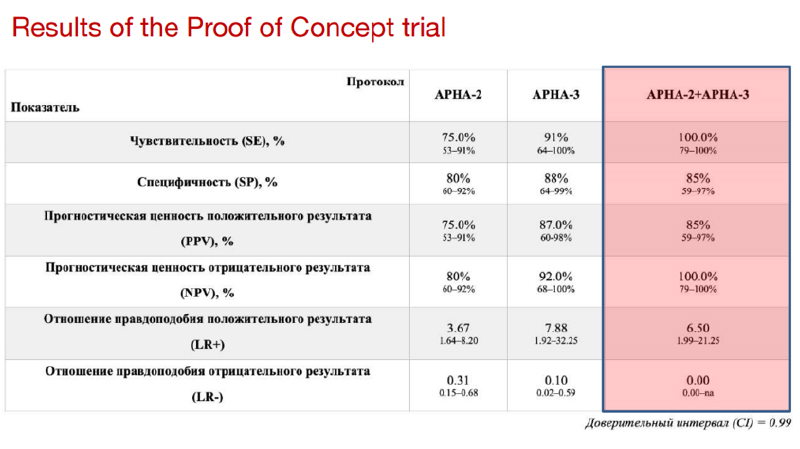
Third, treat fundraising as part of product design. Each ARNA milestone had an audience beyond the laboratory. Competitions created attention. A proof-of-concept study changed investor conversations. The Series A was assigned to larger studies and patent work. A filing made the next disclosure safer. The capital story and the technical story advanced by taking turns.
That sequence also shows the value of a mixed founding team. Anatoly Melnikov brought decades of molecular biology. Nikitin, the childhood friend from Pushchino, became a technical and operating partner. Scientific advisers included molecular geneticist Charles Cantor, who also appears on the later patent application. Egor’s work sat between these domains. He had to make laboratory language legible to investors without flattening it, and make commercial pressure legible to scientists without letting it dictate the result. This is the unphotogenic craft of a deep-tech CEO. The job is less lone genius than careful traffic control. Money, samples, patents, people and time all arrive on different schedules. A missed connection can strand the whole project. Melnikov’s repeated emphasis on exact expertise and the right team makes sense in that light: precision is partly technical, but it is also organizational.
Finally, keep the claims and the evidence in separate drawers. ARNA’s performance figures in public materials are company-reported and tied to defined studies. Patents establish inventions and priority, not clinical effectiveness. Awards create recognition, not regulatory approval. The distinction is not a footnote to a biotech founder’s work. It is the work.
The latest visible chapters are quiet ones. The patent application entered its international publication phase in 2023 and a related U.S. application appeared in 2024. ARNA’s website still lists Melnikov as founder and CEO, describes a multiomics liquid-biopsy focus, and says the project has occupied more than a decade. The grand ambition remains. The public proof advances in increments.
A founder’s life is often narrated backward, after success has made every detour look like fate. Melnikov’s story is more useful while the ending is unwritten. It shows the middle: long, expensive, specific, occasionally interrupted by fishing. He started with a family idea. His real product has been the right to run one more experiment.