The first person to use Lucence's cancer test was not an anonymous subject in a pristine clinical trial. She was the founder's mother. In 2017, a year after oncologist-scientist Min-Han Tan spun the company out of Singapore's A*STAR research system, she was living with metastatic colon cancer. LiquidHALLMARK examined the traces her tumor had shed into her bloodstream and helped her doctors consider treatment options. She died later that year. The test continued.
That origin contains the whole company in miniature: the emotional urgency, the imperfect choices of late-stage cancer and a technology trying to retrieve useful information without asking an ill patient for another piece of tumor. Lucence is now a roughly 100-person precision-health company with laboratories in Singapore and Palo Alto. It sells a growing menu of blood-based tests. Yet its most interesting contribution remains narrow enough to fit on a lab slide: it listens for RNA as well as DNA.
A tumor whispers twice
Most liquid biopsies begin with circulating tumor DNA, or ctDNA: scraps of genetic material released as cancer cells die. A blood draw is easier to obtain than a tissue sample and easier to repeat. But some important rearrangements - the gene fusions that can point to a targeted medicine - are hard to reconstruct from fragmented DNA. Circulating tumor RNA, actively released by living cells, can carry a more direct record of those fusions.
LiquidHALLMARK combines both. Lucence's AmpliMARK system targets selected genomic regions, applies molecular barcodes to distinguish real variants from sequencing errors, and uses next-generation sequencing to look for mutations and fusions. The report can inform therapy selection, clinical-trial matching and later monitoring. It is a prescription test, not a vending machine for genomic certainty.
The clever part is RNA. The valuable part is knowing when that extra signal changes a treatment conversation.
The thing that fails first is often the sample
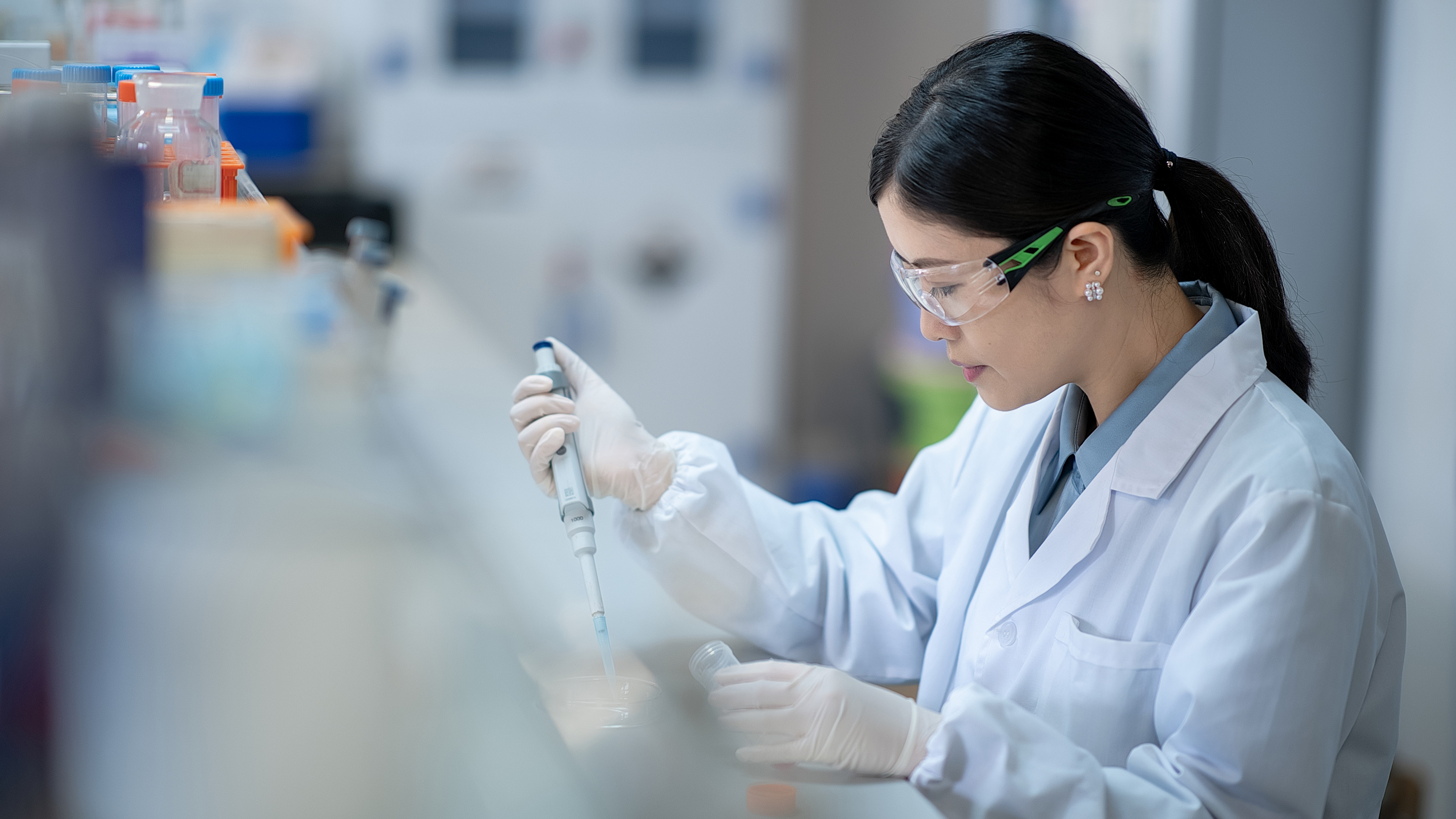
Precision oncology sounds digital, but its first bottleneck can be stubbornly physical. A needle misses. A tumor sits beside something delicate. A preserved tissue block contains too few cancer cells. Lucence notes that roughly one in three non-small-cell lung-cancer cases yields insufficient tissue for comprehensive profiling. When the specimen runs out, the most advanced sequencing machine in the building becomes ornamental.
This is the practical problem Lucence sells against. Blood is not always better than tissue, and it does not erase the need for pathology. It is another route when tissue is risky, inaccessible, exhausted or worth preserving. In Lucence's prospective LIQUIK study of metastatic nonsquamous lung cancer, tissue sequencing could not be performed for 31 of 151 patients. Liquid biopsy found guideline-recommended biomarkers in 15 of those 31.
Then Lucence picked a public fight
Diagnostic companies can publish tidy analytical numbers and avoid the rude question: compared with what? Lucence chose the rude question. The multicenter LIQUIK study compared LiquidHALLMARK with tissue sequencing and Guardant360 CDx, an FDA-approved ctDNA test, in treatment-naive metastatic lung cancer.
The result was encouraging, but not magical. Among 68 patients whose tissue tests confirmed one of nine guideline-recommended biomarkers, Guardant360's DNA assay found the same marker in 45. Lucence's DNA component found 49. Adding Lucence's RNA component raised its count to 52 - 15.6% more than the comparator's 45. Across the entire 151-person cohort, however, Lucence's ctDNA component did not meet the prespecified noninferiority criterion against tissue testing. The study was supported by Lucence. Those qualifications matter as much as the headline.
Choose one measurable weakness in the incumbent, design a prospective comparison around it, and publish the awkward results beside the flattering ones. A platform story becomes credible when a buyer can see the denominator.
Science had to become plumbing
A good assay is still stranded without licenses, reimbursement and distribution. Lucence spent its 2019 US$20 million Series A - led by hospital operator IHH Healthcare, with SGInnovate and returning investors - on laboratories, hiring, commercialization and clinical studies. It built CLIA-licensed, CAP-accredited operations on both sides of the Pacific. In 2023, LiquidHALLMARK gained Medicare coverage for qualifying advanced-cancer patients, making Lucence the first Asian-headquartered company reported to achieve that milestone for a cancer test.
Then came the catalog. In January 2025, Mayo Clinic Laboratories agreed to offer LiquidHALLMARK through its network. This is the unromantic machinery of diagnostics: a physician orders, blood is drawn, the tubes travel, a regulated lab processes them, and a report returns in a median seven business days.
The business model follows that route. Insurers, Medicare, institutions or self-pay patients fund laboratory testing. Eligible US patients can use an assistance program that caps LiquidHALLMARK out-of-pocket cost at $95. Back in 2019, Lucence said its liquid biopsy cost more than $1,000 - still only 10% to 20% of the price of a tissue biopsy. In 2026, its simpler LucenceINSIGHT Core screening panel lists at $495.
A test for treatment becomes a shelf of tests
LiquidHALLMARK profiles solid tumors. A cerebrospinal-fluid version looks for mutations behind brain and leptomeningeal disease. LiquidMARK narrows the panel. LucenceMONITOR tracks recurrence and treatment response. LumiRISK and LumiFOCUS examine inherited cancer risk. The broader bet is LucenceINSIGHT, a multi-cancer screen that looks for DNA, RNA and cancer-associated viral material, then uses machine learning to predict where a signal originated. In the United States it covers up to 12 cancers; international configurations cover up to 50.
That expansion places Lucence against several different competitors at once: Guardant and Foundation Medicine in tumor profiling, GRAIL in multi-cancer screening, Natera in recurrence monitoring, plus hospital labs and tissue sequencing everywhere. Lucence's distinction is not that blood can contain cancer clues. The field agrees on that. It is the insistence that multiple classes of clue belong in the same assay, supported by twin US-Asia laboratories and a product line that follows a patient from risk to treatment.
Lucence's product is a report. Its actual unit of value is a decision that arrives while it can still be used.
The negative space in every blood tube
Cancer does not shed a dependable amount of genetic material on command. Early tumors can be especially quiet. A negative liquid biopsy therefore cannot rule out cancer or guarantee that a relevant mutation is absent. A positive LucenceINSIGHT screen is not a diagnosis; it begins confirmatory imaging and testing. Pregnancy, recent transfusion, recent surgery and some treatment histories may also make screening inappropriate. Availability and panel size differ by country.
This is where the seductive convenience of “one blood draw” meets medicine. The test works best when a clinician has a clear question, the tumor sheds enough material, the laboratory can preserve fragile RNA, and the health system can act on the result. It works less well when a faint signal is mistaken for certainty or when follow-up care is unavailable.
The useful lesson is the boring one
Lucence began with an affecting story, but affecting stories do not earn Medicare codes. The company paired its technical wedge with the dull infrastructure that young biotechs are tempted to treat as somebody else's problem. It funded prospective comparisons. It licensed two laboratories. It found a hospital investor, a government export partner and a large reference-lab channel. It worked on the distance between “can detect” and “can order.”
- Start narrow. Lucence's sharpest claim is not “AI for cancer”; it is that RNA adds fusion evidence to DNA.
- Compare directly. LIQUIK put the assay beside tissue NGS and an FDA-approved competitor.
- Build access with evidence. Medicare coverage and Mayo distribution came after regulated labs and clinical work.
- Name the limits. Screening is not diagnosis, negative is not impossible, and blood does not replace every tissue sample.
In 2025 and 2026, Lucence widened again - into clonal hematopoiesis risk, longevity and a planned biological-age tool informed by a long-running Singapore study. That may become a second act or a distraction; the evidence will decide. For now, the company's best idea remains pleasantly concrete. When the DNA trail goes cold, listen for the molecule that is still talking.