The revealing detail in EFI’s story is a piece of equipment that went away. After The Delta Group installed a Nozomi digital press, the British visual communications business began reducing its dependence on litho-lamination. In EFI’s account, chief operating officer Martin Shipp describes retiring three lamination machines and keeping one. A purchase had changed the route through the factory.
- EFI makes industrial printers, inks, and production software for packaging, graphics, and textiles.
- Its appeal is flexible production with fewer preparation steps and handoffs.
- A September 2026 agreement would combine EFI with Agfa’s digital printing business. Closing remains pending.
That is a useful starting point for understanding a company whose products are usually introduced through print widths and model numbers. The printer matters. So does everything that no longer needs to happen around it: making plates, moving work between processes, waiting for another machine. The commercial question becomes surprisingly simple. What does a finished job actually require?
The machines that disappeared
Delta installed its first Nozomi C18000 in 2018, adapting a press designed for corrugated packaging to point-of-sale production. Printing directly to board helped it remove steps associated with printing sheets and mounting them. The useful innovation was partly a change in sequence. Work that had traveled through several operations could take a shorter path.
“We’re always asking what we can do differently”
Martin Shipp, COO, The Delta Group
Delta’s experience is a customer report published by EFI, rather than a controlled comparison. Still, it supplies a better buying question than maximum speed alone. Count the transfers between processes. Count the materials consumed before a saleable piece appears. A press can look expensive in isolation and look different beside the operations it absorbs.
Three machines retired. One production route reconsidered.
A box, a banner, a bolt of fabric
EFI operates where a digital image becomes a manufactured object. Its customers include packaging converters, sign shops, display producers, and textile manufacturers. These businesses sell the things shoppers touch and walk past: shipping boxes, retail graphics, exhibition fabrics. EFI supplies the equipment behind that output, along with the chemistry and software needed to reproduce it consistently.
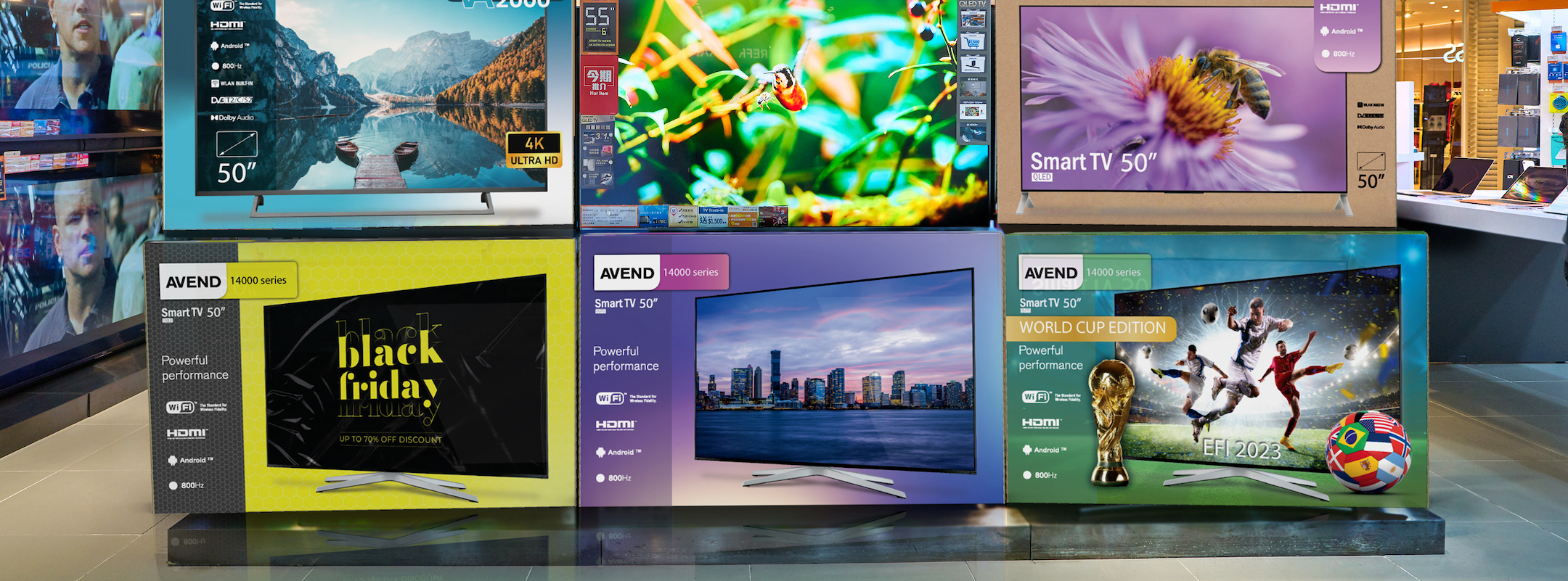
Nozomi handles single-pass industrial printing, including corrugated packaging. VUTEk covers wide-format graphics across roll-fed and hybrid systems. Reggiani serves textile production. Their common problem is variation: a changed design, a seasonal campaign, several versions of the same package. Digital production reduces preparation tied to a fixed image, making those changes easier to accommodate.
The newer products show how specific these problems become. At FESPA in May 2026, EFI introduced the FabriVU 340 i8, an eight-color dye-sublimation printer with inline fixation. Its extra colors address difficult brand-color requirements on polyester graphics. In September, EFI highlighted InSpec AI, which scans printed output for defects during production. These are targeted interventions: matching an orange, fixing a textile image, noticing a flawed print. They show the engineering detail hidden inside the broad promise of productivity. A retail campaign needs those details to survive the trip from artwork to installation.
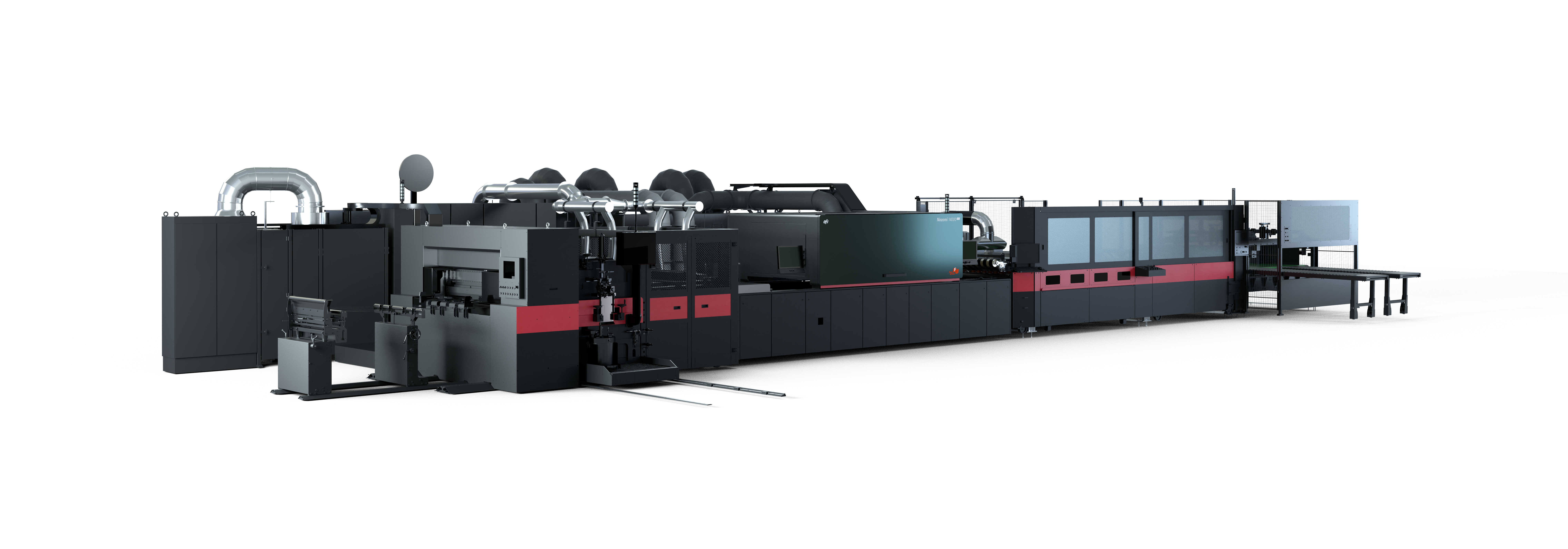
The Nozomi 14000 LED, for instance, prints directly onto corrugated board without printing plates. EFI lists production speeds up to 246 linear feet per minute. Optional colors and white ink broaden the applications. The practical benefit is being able to quote a rush order or a versioned campaign against a production route built for that kind of work.
The first business became a commodity
EFI was founded by Efraim “Efi” Arazi in 1988. Its early breakthrough, the Fiery color server, arrived in 1991. Then the market shifted. EFI’s own history marks 2000 as the point when office controllers became a commodity; Fiery moved toward professional printing. The original opportunity had become less distinctive.
The subsequent acquisitions followed physical production: VUTEk in 2005, Reggiani in 2015. Siris took EFI private in 2019 in a transaction worth approximately $1.7 billion. Later, EFI sold its print productivity software business, and Fiery became independent in 2023. Today’s EFI therefore requires a fresh description; older accounts of its software empire can mislead.
Its chief executive brings an unusually relevant vantage point. Before joining EFI in 2023, Frank Pennisi ran Orora North America, including businesses that used EFI packaging and display equipment. He had seen the supplier from the buyer’s side. EFI’s leadership biography connects his background to manufacturing, quality, and profitable growth.
The bill continues after delivery
EFI’s business extends beyond selling a machine. It sells inks, parts, software, training, and service. The customer is buying an operating system in the everyday factory sense: equipment and consumables that must work together throughout production. Color consistency, maintenance, and available support become recurring commercial concerns.
The implementation timetable makes that tangible. EFI’s Nozomi Success 360° program describes two to six weeks for installation and quality validation, followed by three months of operational, prepress, and color-management support. Making a press productive requires preparation, trained people, and acceptance checks. The delivery truck is an early milestone.
- PrepareArtwork + color
- ProducePress + ink
- FinishConvert + deliver
A buying checklist, not a promise that every finishing step disappears.
The sensible comparison is total cost per sellable job: configured equipment, ink, labor, waste, support, and finishing. HP’s PageWide corrugated systems offer an alternative digital route; established flexographic and lithographic workflows remain relevant too. Material requirements, run lengths, and existing equipment determine which route deserves the work.
A rival becomes part of the plan
EFI applied similar reasoning to its own portfolio. In January 2024, it partnered with Agfa: Agfa gained access to EFI roll-to-roll technology, while EFI added Agfa hybrid capability. In September 2026, the companies agreed to combine EFI with Agfa’s Digital Printing Solutions business, extending that relationship into proposed shared ownership.
A Siris affiliate would own 60% and Agfa 40%, with governance described as an equal partnership. The companies expect closing by the end of 2026, subject to approvals and other conditions. Their roughly €540 million revenue projection concerns the combined businesses on a pro forma 2026 basis. It is a forecast, not EFI’s current standalone turnover.
For a buyer, the lesson travels beyond printing. Test representative jobs. Watch where they wait. Check whether finishing can keep pace and whether demand will keep the equipment occupied. A faster machine earns its place when the whole operation can use what it produces. EFI’s most instructive story begins with three machines that no longer needed to be there.