At McCabe Group, getting a document could mean leaving a construction site to find a fax machine. The company considered mobile fax machines, but these brought their own travelling circus: connections, toner, paper and a need for electricity.
IT manager Nigel Kilford chose eFax Corporate instead. Managers received documents as PDF or TIFF attachments on wireless laptops. In the vendor’s published case study, he said, “The fax is essential to our business.” The machine, apparently, was negotiable. That distinction explains much of eFax’s appeal: change how one person works without demanding that every person they deal with change too.
- Keep fax numbers. Send and receive through software.
- Healthcare tools tackle extraction, routing and integration.
- Subscriptions, page limits and add-ons shape the bill.
01 /A telephone number with better habits
eFax sells cloud faxing. Customers send and receive documents through email, a browser, mobile apps or connections embedded in other software. A person sending to an old fax machine can still reach it. Someone using that machine can still send to an eFax number. The service keeps the familiar addressing system while moving the customer’s end into software.
The practical benefits are pleasingly unglamorous. Documents become accessible away from the office. Staff can search stored faxes, sign documents electronically and manage them without feeding a printer. Corporate customers get administration and integration tools. In healthcare, law, insurance and banking, these small changes matter because the documents already belong to established processes. Replacing the entire process is a much bigger sale.
The McCabe example offers a useful buying lesson. Identify the journey a document forces a person to make. Then see whether software can remove that journey. Kilford added six lines during the trial.
“The fax is essential to our business.”
Nigel Kilford / McCabe Group
02 /The hardware business met the internet
There is an earlier version of this story inside eFax’s own history. JetFax, the company behind the original eFax.com service, was co-founded by Rudy Prince and Lon Radin. It developed fax technology for office equipment. In 1999, Prince told the Almanac that sales of an HP LaserJet product had fallen short of expectations. The company needed another route to growth.
The idea was free fax-to-email: give people telephone numbers, receive their faxes on servers and forward them electronically. Premium services and advertising could follow. The hardware disappointment came before the internet opportunity.
JFAX agreed to acquire eFax.com in 2000, in a share transaction then valued at about $23.4 million. The business eventually became part of the cloud operation spun out as Consensus Cloud Solutions in October 2021. Consensus remains the publicly traded parent. Today’s eFax combines that fax heritage with a broader collection of document and healthcare software.
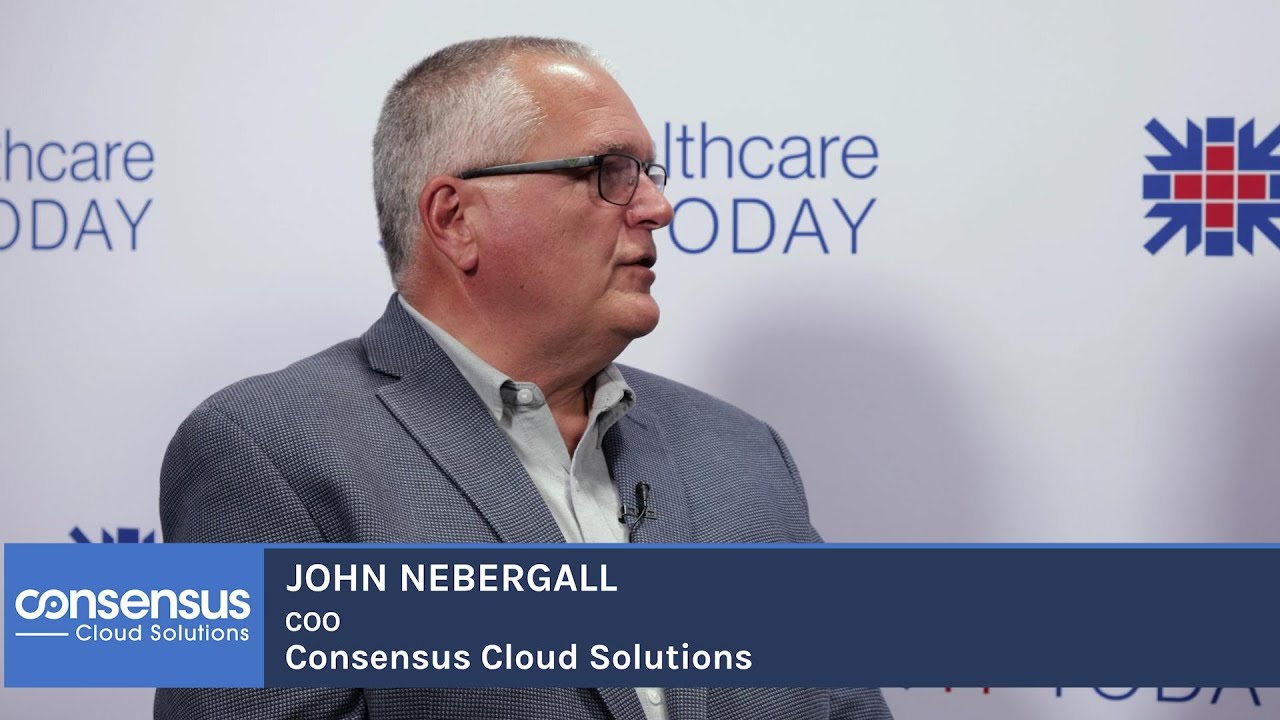 ▶ Watch interview
03 /Delivered is only halfway there
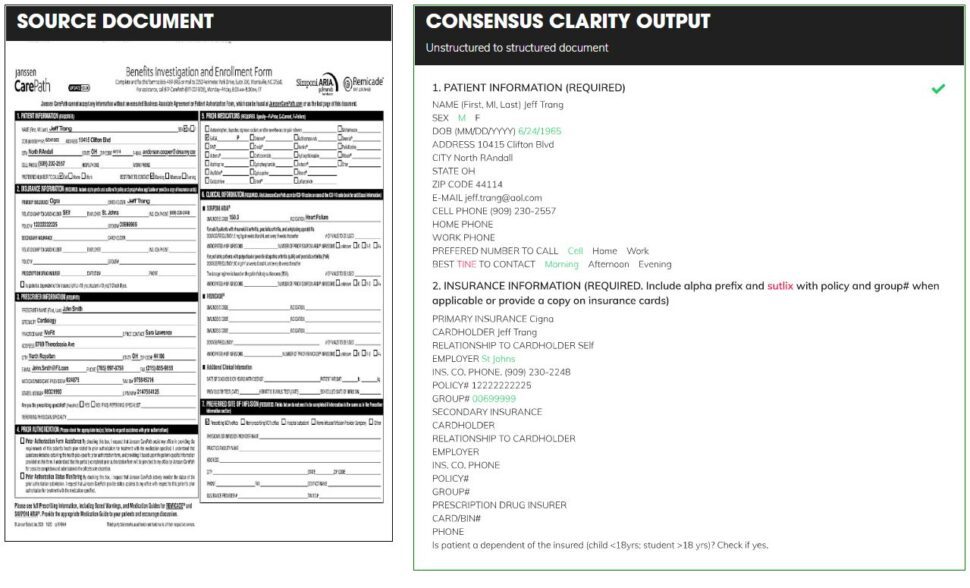
A digital fax can arrive instantly and still create a queue. An image of a referral contains information a person understands, but an electronic health record needs information in the right fields. Somebody must read, classify and enter it. Removing paper leaves that work sitting there, wearing a slightly different outfit.
eFax Clarity addresses this second bottleneck. It uses optical character recognition, natural language processing and AI to extract information from faxes, scans and PDFs, classify documents and produce structured data. The company describes support for healthcare formats including HL7 and FHIR. Its exception-management portal lets staff review extraction problems. That last detail matters: automation still needs somewhere for uncertainty to go.
eFax Unite brings fax and Direct Secure Messaging into a common healthcare interface. Conductor connects applications and handles data mapping and transformation. Jsign covers electronic signatures. The products handle successive jobs: receive, understand, move and sign.
The company announced its unified eFax portfolio in November 2025. A May 2026 Unite release made the branding visible in that product while preserving existing workflows. The shift is telling. A brand associated with sending pages is being asked to sell what happens after the pages arrive.
04 /The meter keeps running
The business model is subscription plus usage. Customers pay for continuing access, with page allowances and additional charges. On the pricing page reviewed in October 2026, Personal included 200 monthly pages and one user; Business included 500 pages and five users. Listed overages were ten cents and seven cents per page respectively. Corporate pricing was customized.
For a Business customer, 100 US pages beyond the allowance would therefore add $7, before other applicable charges. Extra users were listed at $10 monthly and extra lines at $5. A buying decision needs the expected page volume, destinations and staffing pattern, rather than a headline subscription price alone.
The larger company’s direction is visible in its results. Consensus reported $91.4 million of second-quarter 2026 revenue, up 4.1% from a year earlier. Corporate revenue grew 9.3%; small-office and home-office revenue fell 4.7%. Those are parent-company figures across its portfolio. They show why enterprise workflows deserve attention even while the smaller accounts remain part of the business.
Bar lengths show magnitude; signs show direction.
05 /Sell the bridge where people already work
eFax’s distribution follows the same logic as its product. NextGen Fax Manager integrates eFax Corporate into NextGen’s healthcare software. Verizon One Talk customers can access it through that partnership. A Salesforce connector brings fax into an existing business application. Each arrangement reduces the distance between a document and the software people already use.
Online fax itself is available elsewhere, including RingCentral. eFax’s particular proposition combines fax infrastructure, enterprise administration and healthcare data processing. The comparison should follow the job: occasional document sending calls for different economics from a hospital integrating incoming referrals with its records.
The fit also has limits. A workflow in which everyone already exchanges structured records may gain little from another fax subscription. Cloud access depends on connectivity. Sensitive information requires the appropriate agreement and configuration; eFax lists a business associate agreement with its Business and Corporate offerings. Extraction quality needs checking against real documents, with people assigned to exceptions.
The transferable idea is modest and useful. Keep the interface the outside world recognizes. Remove a costly step behind it. Then look for the next step still consuming somebody’s afternoon. At McCabe, that started with a trip to a machine. In healthcare, it can start with a person retyping what the machine delivered.