Ed Brandman once went to work at KKR wearing a tie decorated with his daughter’s portrait. It was a birthday gift from Kyra. Father and daughter shared the occasion, and he had made a tradition of putting it on. The chief information officer of a private equity firm had, in effect, made room for a family tradition in the office wardrobe.
“I just can’t disappoint her,” he said. His desk offered further evidence that institutional finance need not extinguish a personality: juggling balls for visitors to try, and M&M’s within reach. Colleagues gathered there for a laugh. The machinery of a financial institution was his responsibility; solemnity was evidently optional.
Years later, another family member would supply a rather more demanding suggestion. His son Matthew thought generative AI could change how people worked. Brandman had retired from KKR in 2018. He had national parks to visit. Matthew proposed a return to building things. The resulting company, ToltIQ, would put father and son back among the documents, questions and deadlines of private markets.
A long apprenticeship in other people’s problems
Brandman’s route to that conversation ran through trading floors, technology leadership and an earlier business of his own. He studied political science at Rutgers. At J.P. Morgan, where he began his career, he worked on equity trading technology. At Robertson Stephens, he took on the intertwined responsibilities of chief information officer, electronic trading and operations.
Those jobs placed him close to the people using the systems. A trading desk gives technology a practical examination: can the people doing the work actually use it? That question runs through his later accounts of building software. Institutional knowledge arrives through conversations as well as specifications, and he remembers the colleagues who made time for both.
He co-founded Renaissance Trading Technologies, producing software for Nasdaq market makers, then worked at OMT Partners and PwC. In August 2007 he joined KKR as CIO. The appointment put global technology and information strategy in his hands as the firm expanded. His work there would stretch across eleven years, ending in 2018.
He also served on the boards of Ipreo and Artivest. The career supplied several views of the same commercial world: building a product, advising an institution, operating inside one and sitting on a board. By the time AI offered a new set of tools, he had spent years watching the work those tools would need to serve.
- 2007Joins KKR as CIO
- 2018Retires from KKR
- 2023Starts DiligentIQ
- 2026ToltIQ partners with PwC
The son who reopened the data room
Matthew, now known professionally as Matt Brandman, brought a different kind of experience. His career included application security at Blackstone and Compass, followed by leadership of security and IT at Duolingo. He became ToltIQ’s co-founder and chief innovation officer. The family connection came with a relevant technical résumé.
In Ed’s account, the invitation arrived after one of his national park road trips. Matt offered to put in nights and weekends if his father would explore the opportunity. They started experimenting with former KKR colleagues. Due diligence became the target: a familiar activity whose central reading assignment had survived generations of technological change.
A deal team receives financial statements, contracts, presentations and other records. Someone has to work out how they fit together. Documents may disagree. An amendment may qualify a clause that looked straightforward two folders earlier. The presentation has a story to tell; the underlying paperwork may be less cooperative.
For Brandman, this was a recognisable problem with a new possible treatment. The early company was called DiligentIQ. In his update looking back on 2023, he described a released platform, capital raised and ten firms trying it in pilots. He credited Matthew’s nudge for bringing him out of retirement. The account conveyed the untidy business of trying, learning and changing the product alongside customers.
He also described himself as “an optimist at my core.” Starting another company after retirement is one fairly expensive way of testing that proposition.
Why a financial document needs its footnotes
Brandman’s public discussion of AI keeps returning to the shape of documents. A table is connected to the text around it. A graph contains relationships that a list of numbers may lose. The apparently minor detail can be the one that changes an interpretation. His attention goes to how software preserves those connections.
In 2024, he described the team’s work on charts and graphs: examining visual structures, using vision models and developing ways to make those structures useful in document analysis. The examples were pleasingly ordinary. Pie charts, bars, lines and shaded areas each presented different problems. Finance produces a remarkable quantity of meaning in small print and competing shades of blue.
His discussions of prompting were similarly practical. The wording and order of a question could affect the answer. Extracting information required a different approach from comparing results. He wrote about reading research, following specialist blogs and experimenting daily. The executive with decades of experience was publicly describing the habits of a student.
That willingness to keep learning matters because the product depends on changing models. ToltIQ works with multiple providers. Brandman’s view is that the business should stay adaptable as capabilities improve. A product built around a particular model’s limitations may need reworking when those limitations move.
For the investor, the consequence is more immediate: an answer needs an inspectable trail. ToltIQ links findings back to the underlying material. Brandman argues that the person reviewing a financial claim should be able to reach the relevant page and check it. A polished paragraph becomes useful when someone can interrogate its evidence.
“We don’t price on a per-user basis.”
Ed Brandman, on ToltIQ’s business model
Even the pricing reflects his interest in the work itself. He describes tiers tied to annual deal volume, with usage central to the bill. The number of people logging in is only one part of the economics. The documents, questions and analysis consume resources. A small team can be very busy indeed.
The address book is part of the architecture
Brandman’s view of company building has a distinctly social component. In a public reflection on his early career, he recalled formal training that put colleagues from different groups together, and the time available to learn from people elsewhere in a firm. Those relationships, he said, became the foundation for subsequent ventures and roles.
He singled out a practice of using Fridays for deeper networking conversations. This was deliberate time to get to know people, rather than another meeting squeezed between other meetings. For someone selling software into institutions, a relationship can carry knowledge that a product demonstration never quite elicits.
When he returned to entrepreneurship, he set out three priorities: people he knew and trusted, a team prepared to partner directly with clients, and room for engineers to explore. His stated design initially dispensed with a separate sales organisation. Customer relationships belonged close to the people shaping the product.
The financing also brought familiar expertise. In February 2025, the business announced up to $12 million in a two-tranche Series A led by FINTOP Capital and JAM FINTOP. The qualification matters: an announced ceiling across two tranches is a particular financing structure. It should be read with the same care Brandman asks investors to bring to their documents.
His earlier professional relationships extend into advisory work, too. Investcorp named him to the strategic advisory board of its Strategic Capital Group. The accumulated career continues to provide people who understand both the industry and the problems he wants to solve.
A fifth gait, and a dog in the passenger seat
The company’s unusual name comes from a performance review at KKR. His boss invoked the tölt, an additional gait of Icelandic horses, as a way of asking Brandman to find another gear. The image stayed with him. Years later it supplied ToltIQ with a name and an equestrian explanation for what is, at heart, a document business.
Outside work, he builds Lionel train sets, skis and takes photographs. His national park trips have a regular companion: Sadie, a Belgian Malinois. In September 2025, he reported having visited 27 parks toward a goal of 50. He preferred the off-season and extended road journeys, with hikes of around ten miles or less.
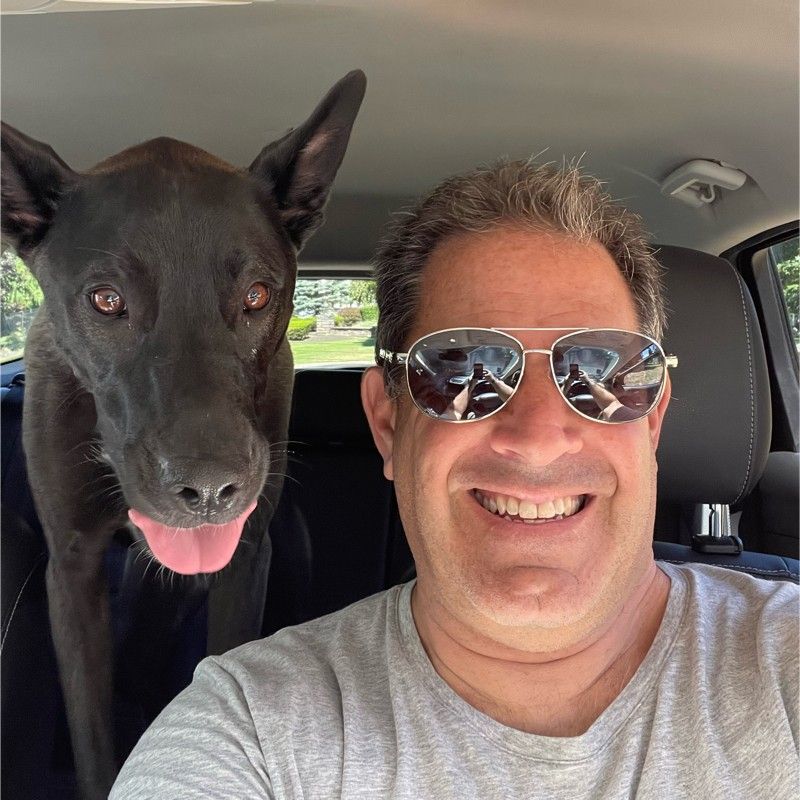
These interests give the career some welcome scale. A model railway offers a system small enough to build with your hands. A national park supplies the opposite experience. Both sit comfortably alongside his appetite for understanding how complicated things fit together, though neither requires an investment committee memorandum.
The old workplace comes back into view
In June 2026, PwC and ToltIQ announced a strategic relationship. PwC became the company’s exclusive professional services advisor under the agreement. For Brandman, whose career had included a managing director role at PwC before KKR, the announcement brought a former workplace into the next chapter.
The scale had changed since the early pilots. PwC reported that more than 4,000 of its Deals practitioners had used ToltIQ across more than 5,000 deals, with over two million documents processed. Those figures describe platform use inside a particular organisation. They give a concrete sense of how far the original experiment had travelled.
Later that month, ToltIQ announced a PitchBook integration for users holding an individual PitchBook licence. It put external market information alongside deal materials. By October, Brandman was writing about the different questions corporate acquirers and private equity buyers bring to the same data room. His subject remained the work around the documents.
The birthday tie, the family invitation and the return to a former employer belong in the same portrait. Brandman’s career has repeatedly advanced through people who made a demand, offered a conversation or suggested a problem worth solving. Retirement interrupted that pattern for a while. Then his son called, and there was another pile of paperwork waiting.