Richard Dukas was supposed to become a lawyer. He had the acceptance letter. What he also had, during his senior year at the University of Maryland, was a front-row education in the way news could bend public opinion during Israel’s first war in Lebanon. Law promised arguments inside a courtroom. Media appeared to move the room itself. Dukas deferred law school and became the first employee at a small public-relations agency. Two decades later, at 40, he started his own.
That fork in the road explains more about Dukas Linden Public Relations than the usual agency language about “narratives” and “share of voice.” DLPR does not sell a software product or a clever distribution hack. It sells judgment at the point where expertise meets attention. Its clients know asset allocation, ETFs, capital markets, blockchain, regulation and litigation. The agency’s job is to make that knowledge useful to reporters, investors, customers and employees before the news cycle moves on.
The sentence under the sentence
The firm began in New York in 2002, founded by Richard and Gail Katz Dukas. Richard had spent 13 years across agencies including Ruder Finn and Morgen-Walke, followed by an in-house role at a $9 billion technology asset manager. He had learned both dialects: how financial people think and how the press decides what matters.
The customer problem is not simply “we need publicity.” A wealth manager may be mistaken for a narrower business than it has become. A fintech launch may sound identical to six competitors. A CEO may have four plausible answers to a difficult question and only one that survives television. DLPR builds the sentence under all those sentences - the positioning that tells each audience why this company, this expert or this announcement deserves attention now.


The first thing that failed was management
One of Dukas’s clearest memories from agency life is painfully small. Proud to have reached his first anniversary at a firm, he mentioned it to a senior partner. “That’s nothing,” came the reply. “Talk to me on your second anniversary!” The campaign had not failed. The management model had. When Dukas built his own shop, he decided respect could be operational rather than ornamental.
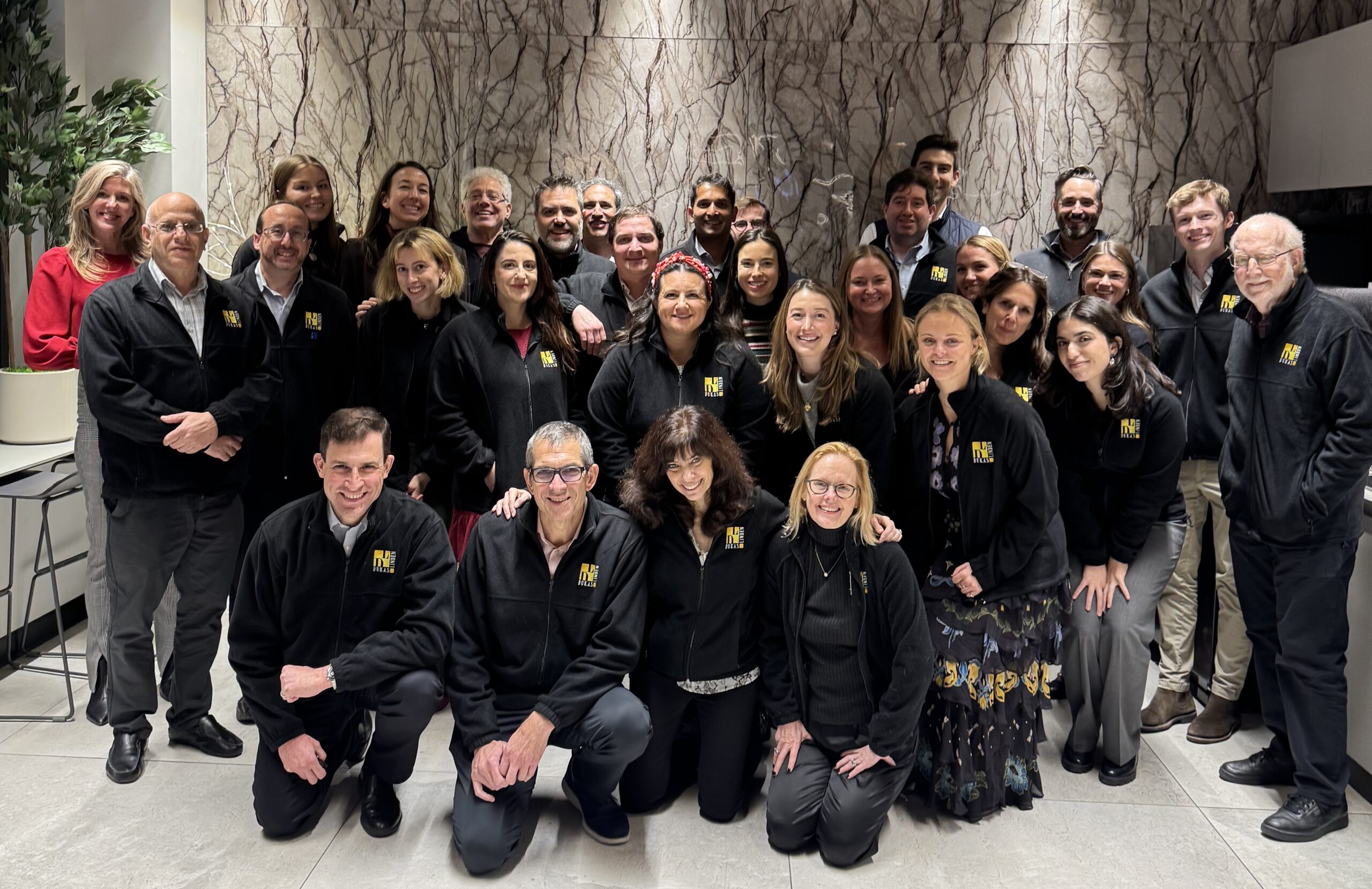
By 2025, the result was visible in tenure. DLPR’s four-person executive management team had spent an average of 13 years at the agency. Five more executives averaged roughly a decade, and another five about seven years. For a client, this is not an HR footnote. Long tenure preserves the memory of what a spokesperson promised last year, which reporter dislikes inflated claims and how a crisis team behaves at 6 a.m.
“We’re firm about never lying to or trying to spin a journalist.”Richard Dukas, on the line the agency will not cross
A contact list is not a strategy
Media relationships remain the center of the business. DLPR says its broadcast team speaks with producers and on-air talent several times a day, and it reported more than 1,100 national and international broadcast appearances for clients in 2022. But shrinking newsrooms and a noisier market changed the brief. Clients needed more than introductions. They needed executives coached, arguments stress-tested, social channels coordinated and reputations defended when events refused to follow the communications plan.
One specialist core, seven adjacent jobs
The difference from a generalist agency is pattern recognition. DLPR lives inside a relatively narrow set of markets: asset and wealth management, banking and capital markets, fintech and B2B technology, crypto, consulting, accounting and law. Its public roster has included ARK Invest, Neuberger Berman, Raymond James, Citizens and Evercore. The expertise reduces translation time. The senior-led team structure reduces handoffs. Neither guarantees coverage, but both improve the odds that a pitch arrives with an actual point.
The $10 million hinge
The expansion was measurable. When Dukas PR became Dukas Linden Public Relations in 2015, the 22-person firm projected $5 million in revenue. O’Dwyer’s recorded about $6.3 million in 2019 fee income and $9.819 million in 2024 net fees. DLPR then reported a record $10 million in 2025 client billings and more than 2,150 top-tier national placements.
Not a strict revenue series. It is the public outline of a firm that roughly doubled its disclosed scale over a decade.
What changed their mind about being “just” a media-relations shop was not a loss of faith in the press. It was pressure from the market. Newsrooms contracted. Election coverage swallowed oxygen. Clients faced volatile policy, succession questions and digital reputational threats. DLPR kept earned media at the center and wrapped it in services that could carry the same narrative through owned content, social posts, transactions, conferences and crises. Old-fashioned credibility became the hub of a more modern wheel.
The crowded ETF starting gun
The model met a clean test when U.S. regulators approved spot Bitcoin ETFs in 2024. Several DLPR clients launched funds at once, alongside firms with vastly larger megaphones, including BlackRock. A weak agency response would have been one launch template with the logos changed. DLPR assigned dedicated teams and built differentiated strategies for each client, reducing conflicts while giving reporters distinct reasons to care.
That is the practical thing to copy. Specialization is not a claim on an About page. It is the ability to see meaningful differences when everyone else sees a category. Neuberger Berman needed to be understood as more than a wealth manager. ARK Invest needed innovation leadership without letting misconceptions harden. Raymond James Investment Management needed a rebrand carried through media, executive positioning and thought leadership. The work begins by refusing to make three different clients sound like the same press release.
- Choose a narrow market where misunderstanding is expensive.
- Turn subject expertise into a clear, timely point of view.
- Give competing clients separate teams and genuinely separate stories.
- Measure useful outcomes, but never promise control over independent media.
The narrow edge cuts both ways
DLPR’s method works best when a business is complex, its buyers are sophisticated and its executives have real expertise to share. It also asks something of the client: access to senior people, fast responses, tolerance for hard questions and enough substance to sustain a point of view. It is a poor fit for anyone seeking guaranteed praise, partisan provocation or a communications team willing to “spin” a reporter. Dukas has said the firm will walk away when values do not align.
Strong conditions
Complex offer, credible experts, patient reputation building, fast access and a story that changes with the news.
Weak conditions
No differentiated view, unavailable leaders, guaranteed-coverage demands or a product that cannot survive basic scrutiny.
Then the map got bigger
In May 2026, four months after announcing its first $10 million year, DLPR was acquired by Infinite. The price stayed private. The strategic exchange was public: Infinite gained a deep financial-services practice; DLPR gained a broader bench in crisis, litigation, reputation and creative work, plus reach across the United States and London. Richard Dukas shifted to senior advisor, while Seth Linden took a leadership role within the combined platform.
The deal is an answer to a tension every specialist eventually meets. Narrowness creates authority, but clients do not keep their problems inside neat practice boundaries. A bank’s reputational issue can become a litigation issue; a U.S. asset manager can need London support by lunchtime. Joining Infinite let DLPR widen the map without pretending its accumulated financial fluency could be recreated overnight.
There is no trick here, which is precisely the point. Dukas Linden built a durable firm from a set of slow advantages: know the subject, respect the people doing the work, earn trust before you need it and tell complicated truths in sentences that can survive contact with the public. The technology around communication will keep changing. Human attention remains stubbornly human.