In the spring of 2020, asking a patient which medicines they took became a risk of its own. At Covenant HealthCare in Michigan, the usual face-to-face medication-history interview brought pharmacy staff into rooms where coronavirus exposure was a concern. The hospital needed the information. It also needed fewer people at the bedside.
- The job: help prescriptions survive the journey from clinical decision to patient follow-through.
- The method: put medication history, coverage information and assistance inside existing workflows.
- The business: sell software directly and through electronic health record partners.
- The useful lesson: inspect the handoff where everybody assumes somebody else has finished the work.
The interview that became a risk
Covenant already had DrFirst’s MedHx and SmartSig inside its Epic electronic health record. Staff had used those tools to fill gaps after patient interviews. During the pandemic, they changed the sequence, relying on the technology to assemble and organize medication history without the usual face-to-face component. The company’s customer case study reports 89.2% fewer medication-history errors and estimates $6.7 million in annual savings from avoided errors. Those are customer results and modeled savings, rather than a promise for every hospital.
“We are spending less time reconciling medication histories manually while improving patient safety and outcomes.”Rebecca Sulfridge, Pharm.D. · Covenant HealthCare
The revealing change was procedural. The hospital used software it already had to reorganize a task that had suddenly become hazardous. DrFirst’s broader proposition makes sense through that lens: a useful clinical instruction can lose its value somewhere between the people who need to act on it.
A security engineer meets a medication list
James F. Chen founded DrFirst in 2000. His previous business, V-ONE, made virtual private networking software. His biography records five US patents on internet security products, an electrical engineering degree and a master’s in computer science. It is an apt background for a company whose work depends on moving sensitive information between organizations.

DrFirst began with e-prescribing and expanded into the information surrounding it. Chen now serves as executive chairman. Laizer Kornwasser became CEO in July 2025, succeeding Cameron Deemer, who moved to vice chair. The company’s stated mission is improving health through intelligent medication management.
A medication record presents a wonderfully unromantic computing problem. Instructions may arrive as free text; details may be missing; the receiving system needs separate, usable fields. DrFirst says its clinical-grade AI has worked on this since 2015, using natural language processing and machine learning developed with doctors and pharmacists. It translates instructions and infers missing details when safe to do so. The expertise is in medication data and clinical workflow, with human professionals still responsible for care.
There is a business hiding in that translation. A hospital can receive information electronically and still pay someone to retype it. The connection exists; the clerical work survives. DrFirst aims to make the arriving information useful enough to reduce that second job.
The medicine has four more appointments
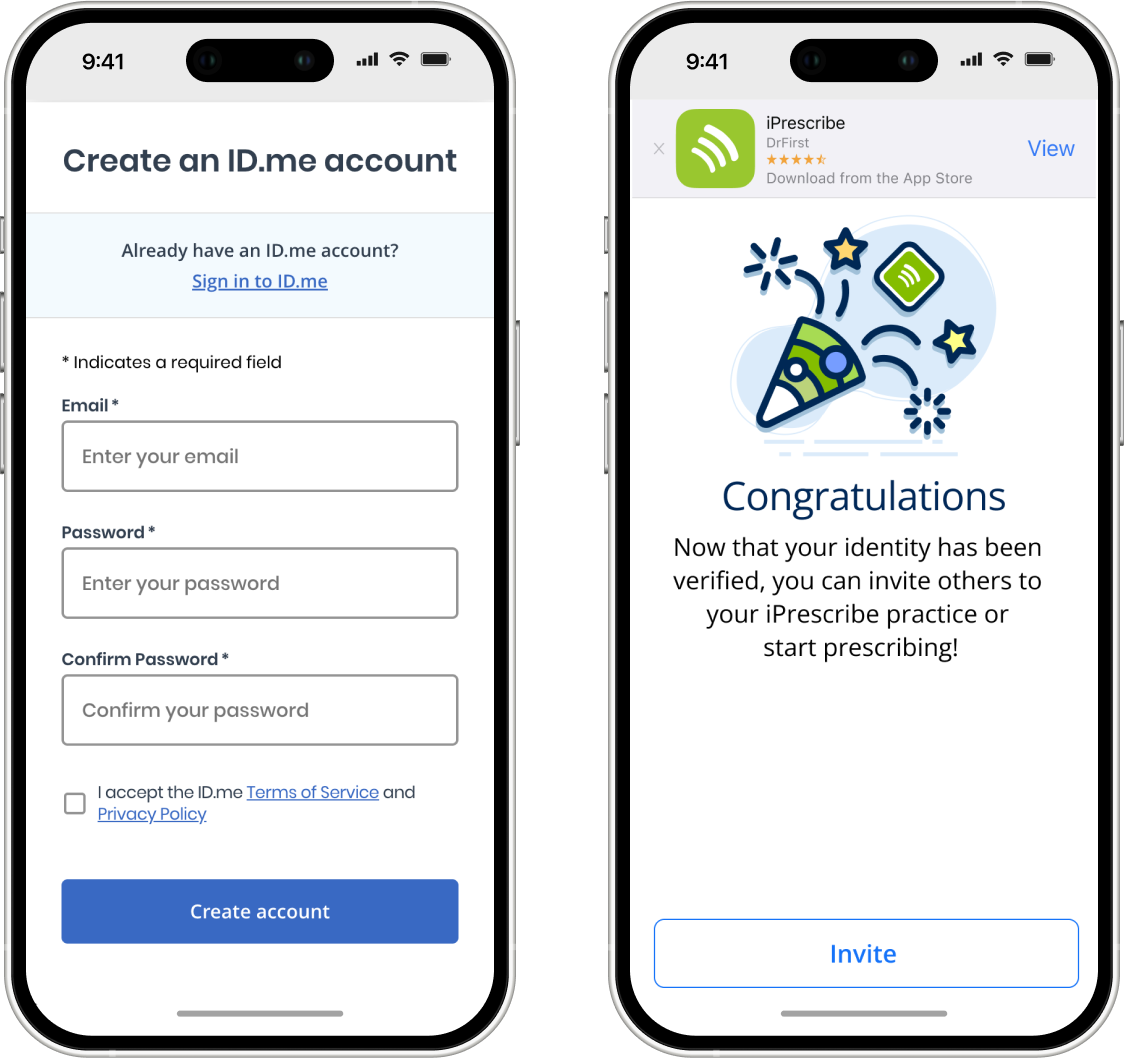
Rcopia is DrFirst’s flagship prescribing platform. EPCS Gold supports electronic controlled-substance prescribing. The mobile iPrescribe app gives clinicians another way to send and manage prescriptions. Across these tools, medication history, clinical alerts and benefit information help the prescriber make a decision before a pharmacy has to call back.
- 01KnowMedication history
MedHx + SmartSig - 02CheckBenefits and cost
myBenefitCheck - 03ClearPrior authorization
Unified ePA - 04CollectPatient follow-through
RxInform
Illustrative workflow. The steps can overlap; each tool addresses a different handoff.
MedHx assembles medication history from sources including Surescripts, pharmacies, payers and health information exchanges. DrFirst describes access to 12 months of history. That helps clinicians reconstruct a list, particularly when a patient cannot remember it. A pharmacy fill record remains evidence of a fill; it cannot certify what someone swallowed yesterday.
Then comes the price. Real-time benefit checks bring patient-specific costs, covered alternatives and authorization requirements into prescribing. A cost conversation during the visit gives the clinician and patient a chance to act before an expensive prescription becomes an abandoned one.
RxInform handles the awkward silence after the visit. Through the Elation Health integration announced in June 2026, patients receive a secure text linking to pharmacy information, savings, educational material and pickup reminders. The physician’s work triggers the message without requiring another step. Medicine has enough paperwork without making encouragement a separate assignment.

DrFirst released a redesigned RxInform in March 2026, reporting 30% more patient interactions in phased testing against its previous version. That is a product-engagement measure. The more consequential question is whether patients obtain their medicine.
A PLOS Digital Health study published in December 2025 examined 1,276 heart-failure patients at Magnolia Regional Health Center. Patients who interacted with the SMS nudges had 19% higher odds of filling prescriptions and 6% lower odds of 30-day readmission than those who did not interact. Odds are not percentage-point changes. This was a retrospective, single-center study involving DrFirst researchers, so it establishes an association rather than proving that the messages caused the difference. That distinction keeps a promising result useful.
A small subscription, a very large network
The most legible part of the business model is iPrescribe’s public pricing. As checked on October 1, 2026, Mobile costs $30 per license per month, billed annually; Practice costs $50. That works out to $360 or $600 a year before taxes and optional additions. Practice adds desktop access, practice controls, analytics and prior-authorization automation. Enterprise pricing is custom and lists a one-time integration fee.
A hospital purchases a different proposition: integration, data access and changes to clinical work. The subscription price of an individual app tells us little about that institution’s full implementation cost. Buyers should calculate the work required to connect systems, train staff and verify incoming information alongside the software charge.
Distribution matters here. DrFirst sells tools that can stand alone or sit inside other vendors’ systems. Its About page describes use in more than 2,000 hospitals in the US and Canada. An EHR vendor can become a route to clinicians rather than an organization that must be displaced.
DoseSpot is another supplier of integrated e-prescribing. Native EHR tools and separate authorization or messaging products also compete for parts of the job. DrFirst’s distinguishing proposition is the breadth of connected medication tasks. Whether that breadth is valuable depends on the buyer’s existing systems, data coverage and actual interruptions.
Investors financed the expansion. A May 2021 announcement documents $50 million from Sixth Street Growth, following $35 million from Sixth Street and $50 million from Goldman Sachs Growth in 2020: $135 million across that period. In April 2024, DrFirst acquired substantially all Myndshft assets, extending its authorization capabilities into medical benefits, where specialty treatments can encounter a different insurance process.
The form is filled. The verdict is still pending.
In August 2026, DrFirst announced unified pharmacy and medical prior authorization. Its one-month pilot covered 150,000 authorizations. The company reported that AI populated 63% of pharmacy benefit manager question sets without clinician edits, with a median 49 seconds from opening to submitting. The workflow presents the answers for staff or clinician review.
Question sets populated without clinician edits.
This measures form completion, not insurer approval.
The distinction matters to anyone buying automation. A well-filled form can still be denied. Incomplete clinical context can still require a person’s answer. The reported pilot improvement above 90% came when clinicians answered a qualitative question where relevant information was absent from the chart.
Another 2026 project moved Humana’s medication recommendations into the prescribing workflow through NewRx Insights. The partners reported a nearly 20% clinician response rate versus 7-9% for fax outreach, and more than 70,000 redundant faxes eliminated. Clinicians could accept, modify or decline a recommendation and return their reasoning. The interface made disagreement useful information.
Borrow the handoff
For a clinical team, the practical starting point is one recurring interruption: missing directions, pharmacy callbacks, authorization rework or prescriptions left uncollected. Measure it, choose the relevant tool and check whether the work actually falls. For a software builder, the transferable idea is placement: offer the information at the point where someone can make the next decision.
The conditions are ordinary and demanding. Medication-history tools need relevant data sources and careful verification. Benefit tools need the patient’s coverage. Authorization tools need clinical context. Messaging needs a reachable patient and an experience they will use. None of those conditions disappears because the interface is elegant.
DrFirst calls its interconnected healthcare world the Healthiverse. The name has a little cape attached to it. The work underneath is decidedly earthly: help the right information arrive in a form the next person can use. A prescription is a small instruction with a long itinerary. DrFirst has made that itinerary its business.