In November 2011, Doug Yaeger had an invitation to stay. His retirement as Laclede’s chief executive was approaching, but the board wanted him to finish the remaining year of his term as a director. There was a perfectly respectable next chapter available: leave the executive office, keep a seat at the table. Yaeger chose to leave both.
The distinction matters. A chief executive’s departure can leave a company with two centers of gravity: the person newly responsible for decisions and the predecessor still sitting nearby. Yaeger’s decision removed that particular complication. On February 1, 2012, he would become the retired chairman and chief executive of The Laclede Group. The adjective would apply to both jobs.
His explanation was brief. He expressed confidence in the leadership team and the company’s prospects. William E. Nasser, the lead director, said the board would have preferred him to remain, while respecting his choice. A transition was being arranged without the departing executive insisting on an extended supporting role.
For an executive whose work involved the movement of gas through connected systems, this was an unusually visible handoff. Responsibility would move too. The career that led to it had begun far from the chairmanship, in the departments where a pipeline company’s commercial promises meet its practical constraints.
THE SUCCESSION CLOCK · JANUARY 2011“We have 12 months”
Doug Yaeger, on finding Laclede’s next leader
An education on both sides of the pipe
Yaeger’s working history reaches back to July 1971. During most of the following nineteen years, he worked at Mississippi River Transmission Corporation, an interstate natural gas pipeline serving the greater St. Louis area. His assignments covered rates, regulatory affairs, gas supply, sales, marketing and accounting. That is a substantial tour of the machinery behind the machinery.
Each department sees the same business from a different angle. Sales concerns itself with customers; accounting with what transactions mean in the books; gas supply with obtaining the product; regulatory affairs with the rules governing service. The variety in Yaeger’s early assignments helps explain the breadth of the responsibilities he later held. His route toward general management ran through several of its constituent parts.
His formal education proceeded alongside that working history. He earned his bachelor’s degree at Miami University in Ohio in 1971 and an MBA at Saint Louis University in 1976. In May 1992, he completed Harvard Business School’s Advanced Management Program. The Harvard program was executive education, distinct from the two degrees.
By 1988 he was executive vice president of Mississippi River Transmission. His experience also included an executive vice presidency at Arkla Energy Marketing in 1990. The combination placed him in both pipeline transportation and energy marketing before he moved into the utility that would define the next phase of his career.
Nine years from planning to the top job
He joined Laclede in 1990 as vice president of planning. The move brought a pipeline executive into a company buying and distributing natural gas. His knowledge of the upstream business now sat inside the organization responsible for delivering service to customers. The change of employer preserved a connection to the same regional energy system.
The promotions followed in a sequence that reads like an expanding map of accountability. In 1992 came operations, gas supply and technical services as a senior vice president. In 1995 came the executive vice presidency for operations and marketing. In 1997 he became president and chief operating officer and joined Laclede’s board.
January 1999 brought the chief executive and chairman roles. The interval from his arrival in planning to those appointments was nine years. It followed nearly twenty years in pipelines. The apparent speed of the final ascent therefore rested on a much longer period of industry work.
Planning, operations, marketing, then responsibility for the whole enterprise: the progression gives the story its shape. There is no need to invent a youthful revelation about natural gas. The professional record supplies something more useful: repeated exposure to the business, followed by progressively larger decisions. A succession of department names becomes a history of what an executive was asked to understand.
A utility with a second business to manage
Laclede changed during Yaeger’s leadership. The business became a holding company with a regulated utility at its center and nonregulated activities alongside it. Laclede Energy Resources, the natural gas marketer, expanded its customer base, revenues and earnings. The company also bought, operated and eventually sold SM&P Utility Resources, which located and marked underground facilities.
Those businesses involved different kinds of judgment. Utility service calls for sustained attention to operating costs, infrastructure and the terms under which customers receive service. A marketing business also confronts the movement of prices and the availability of supply. Combining them puts more than one commercial rhythm inside the same corporate accounts.
By January 2011, Laclede could point to six consecutive years of record earnings. That achievement gives substance to the description of Yaeger as a company builder, though his career was that of an operator rather than a founder. He inherited an established utility and helped change the organization around it.
The distinction is useful in a business culture fond of origin stories. An existing company has customers, obligations and habits before a new chief executive arrives. Any expansion takes place alongside those inherited responsibilities. Yaeger’s record belongs to that less theatrical category of leadership: making a longstanding enterprise work while altering what it can do.
Record earnings reported by Laclede ahead of Yaeger’s retirement announcement in January 2011.
The quarter that complicates the victory lap
A row of record annual results can make a tenure look smoother than it felt in individual quarters. Laclede’s fiscal 2010 results offer a useful interruption. In the first quarter, the regulated gas utility reported net income of $21.1 million, up from $16.2 million a year earlier. Meanwhile, additional pipeline infrastructure was changing the pricing conditions faced by the marketing business.
Yaeger described a long-term approach to the nonregulated businesses alongside continued investment in the regulated utility. The pairing was deliberate in his public explanation: the company’s familiar foundation remained important while its other activities developed. He was discussing two businesses exposed to different pressures, rather than presenting growth as an automatic consequence of adding more activity.
The second quarter made the difficulty clearer. Group net income fell to $28 million from $30.8 million a year earlier. Laclede Energy Resources increased sales volumes, yet lower margins hurt earnings. More gas sold did not produce more profit. The arithmetic has a useful habit of interrupting an attractive corporate narrative.
By the first quarter of fiscal 2011, the utility reported $21.5 million in net income. A rate increase effective the previous September and lower operating costs helped its performance. These are the unglamorous details underneath the leadership title: collections, expense management, approved rates. A chief executive can announce the result in a sentence; producing it requires many people to get such details right.
Group net income, fiscal second quarter
The city beyond the customer account
Yaeger was a St. Louis native from Webster Groves. His civic work placed him in the same region his utility served. In January 2009, he became board chair of United Way of Greater St. Louis after nine years chairing its campaign representative recruitment committee. Before the prominent title came the recurring task of finding people to do the work.
The company’s participation included a downtown benefit barbecue and an appearance in the 2008 Battle of the Corporate Bands. Corporate citizenship, apparently, could accommodate both a committee and an amplifier. Those were Laclede activities; they do not establish that its chief executive personally took the microphone.
His other civic responsibilities included serving as treasurer of the Municipal Theatre Association of St. Louis and secretary of the Science Center’s board of commissioners. He had also been president of Civic Progress. These positions connect a utility career to the cultural and organizational life of a city.
The common thread is institutional work: recruiting participants, handling responsibilities and helping established organizations continue. Read alongside his business career, the civic appointments suggest a public life organized around boards and committees, with their particular mixture of authority, cooperation and follow-through.
The next table, and the final handoff
The Laclede succession unfolded over a year. Yaeger announced his retirement plans in January 2011. In June, the company named Suzanne Sitherwood as his successor, with a September start as president before taking over as chief executive the following February. She brought extensive natural gas utility experience from AGL Resources.
At Laclede’s January 26, 2012 shareholder meeting, Yaeger presided over the business one more time. The board named Nasser to succeed him as group chairman and appointed Sitherwood as group chief executive. The responsibilities Yaeger had combined would pass to two people. The farewell involved the ordinary company business of elections and a dividend declaration.
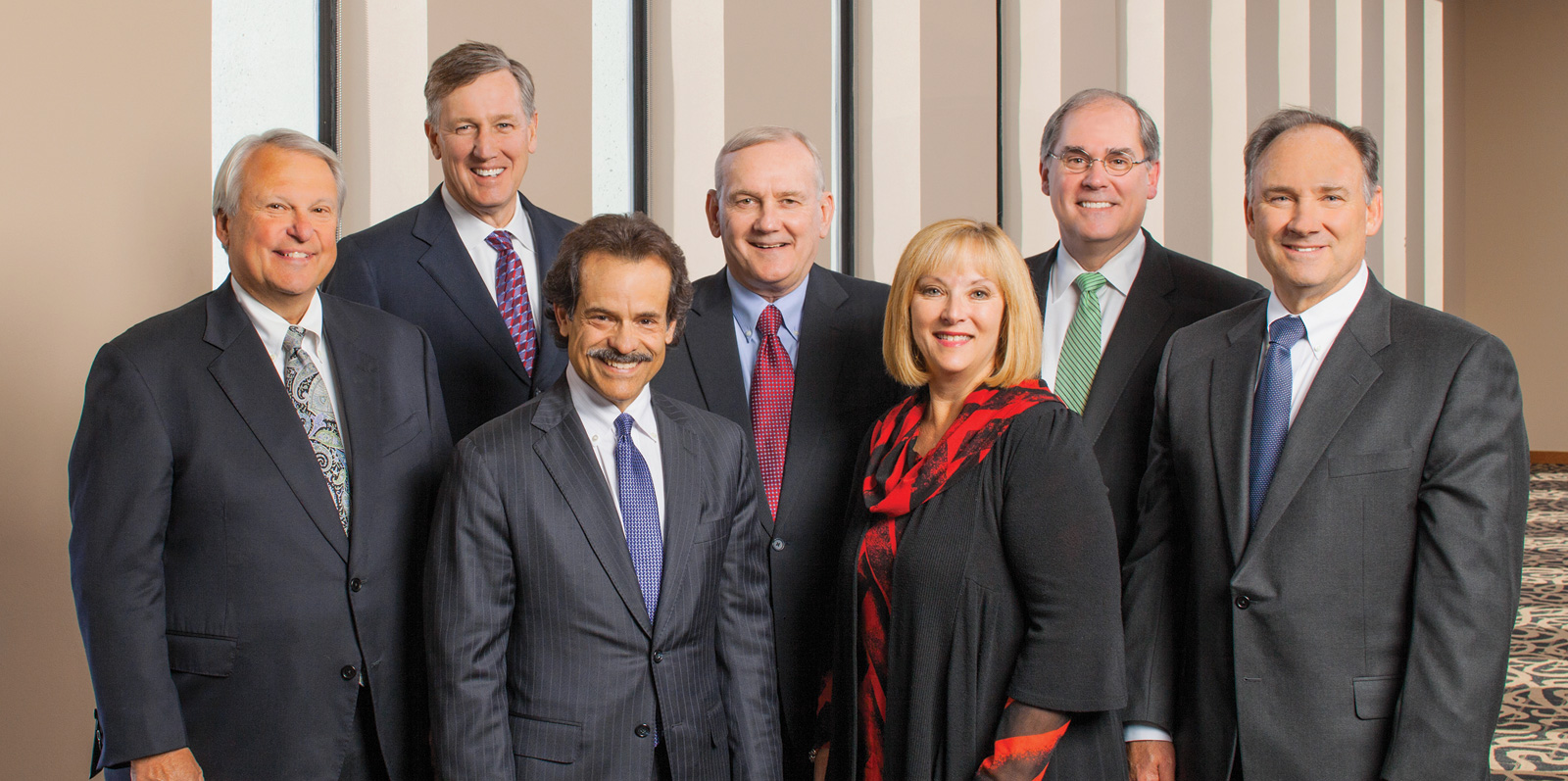
Retirement from Laclede did not end his industry involvement. He joined the board of ONE Gas in 2014, as the natural gas distribution business separated from ONEOK. The new board brought together executives with backgrounds in energy, finance, communications and other businesses. Yaeger’s contribution was grounded in his years running a gas utility.
In 2024, he chaired the executive compensation committee and served on the audit, corporate governance and executive committees. On May 23 that year, he and fellow director Robert B. Evans retired under ONE Gas’s director retirement policy, closing a decade of board service.
The two departures give his career an instructive symmetry. In 2012 he chose to relinquish an additional year at Laclede; in 2024 his ONE Gas service reached its scheduled end. Between them lay ten years in which operating experience became boardroom experience. The lasting subject is continuity: how a company uses what an executive knows, and how it makes room for the people who follow.