In 2015, Donny Deutsch found a particularly direct way to deal with his public image: he made himself the joke. His new USA Network comedy, Donny!, starred an advertising executive turned television personality called Donny Deutsch. The fictional Donny could offer advice on camera and make a mess of life off it. The real Donny had volunteered for the arrangement. An exclamation point did the remaining publicity work.
“I play a more idiotic version of myself,” he said. There was a practical advertising idea inside the self-mockery. If viewers already thought they knew the loud, confident fellow from television, the comedy could begin with that impression. He had spent years helping clients become recognizable. Now his own recognizability supplied the raw material.
It is a useful place to enter his story, because the temptation with Deutsch is to start with the money. His agency sale was certainly consequential. But the more revealing question is what he kept choosing afterward: another show, another conversation, another chance to put a point of view in front of an audience.
An agency already in the family
Deutsch grew up in Hollis Hills, Queens. His father, David, founded David Deutsch Associates in 1969. The younger Deutsch attended Wharton at the University of Pennsylvania, then worked as an account executive at Ogilvy. His later account of that first job was cheerfully unheroic: he had been young, distracted, and insufficiently serious about the work.
In 1983, he joined his father’s firm. This was an opportunity with a family connection attached, and he has readily acknowledged it. There is no need to improve the biography by inventing a locked door. The door was open. The question was what he would bring through it.
An early answer came from a regional car account. He recalled winning the New York, New Jersey and Connecticut Pontiac dealers’ business, a television assignment that felt substantial to the small agency. National fame was still some distance away. First came the less glamorous business of getting someone to entrust a budget to the firm.
His father handed him control in 1989, and the agency became Deutsch Inc. The change kept the surname while removing the first name. A family business had acquired a more expansive signature. Under his leadership, its client list would include Mitsubishi, Revlon, Coors, Monster, and Old Navy. The surname had to work for quite a variety of customers.
A place at the table
One of the agency’s enduring pieces of work involved two men and some furniture. In IKEA’s 1994 commercial Dining Room, a gay couple shopped for a table. Their exchange belonged to the familiar domestic world of taste, commitment, and deciding what would look right at home. The agency let the relationship be explicit.
The spot is recognized as a landmark in American television advertising for its open portrayal of a gay couple. Its force came partly from how little ceremony the scene required. People who lived together needed furniture. A retailer could acknowledge that without making them deliver a speech.
Some viewers objected. Conservative groups threatened boycotts, and an IKEA store in Hicksville, New York, received a bomb threat. IKEA defended the campaign as consistent with its intention to address different kinds of consumers. An ordinary purchase had exposed the distance between who appeared in advertising and who actually went shopping.
The credit belongs to an agency team and a willing client. Patrick O’Neill was among the creatives behind the commercial; Val DiFebo later participated in a retrospective discussion of its making. Keeping those names in the picture matters. A prominent executive can become the convenient face of work made by a roomful of people.
Deutsch’s broader political connection also came through the agency. It worked on Bill Clinton’s 1992 presidential campaign. He described its contribution as production, with campaign strategy handled by the political consultants. That distinction gives the achievement its proper shape: advertising expertise brought into a campaign, with a particular job to do.
“Why Not Me?”
Donny Deutsch’s recurring career question
The surname goes on air
Interpublic acquired Deutsch Inc. in 2000. By then, the company had become a substantial agency with national clients. Its work had earned repeated Agency of the Year recognition from Advertising Age and Adweek. Selling changed the ownership; it also gave Deutsch room to consider a different kind of working day.
He had already appeared on television as an advertising commentator. Those bookings offered a useful audition: explain the subject, make a point, and remain interesting when the conversation moved. A client pitch has a decision maker across the table. Television adds people on the other side of a camera who can leave whenever they please.
The Big Idea with Donny Deutsch ran on CNBC from 2004 to 2008. Entrepreneurs and their ambitions became a central part of his television identity. The premise suited an executive who liked the possibility that an idea could become a business, and who was comfortable discussing that possibility in public.
Books extended the conversation. Often Wrong, Never in Doubt, written with Peter Knobler, appeared in 2005. The Big Idea, written with Catherine Whitney, followed in 2008. The first title practically arrives with its own raised eyebrow. Certainty is excellent at getting a meeting started; the word “wrong” at least leaves room for what might happen during it.
In a 2008 reflection on the agency, Deutsch emphasized the culture that could continue as people changed. It was an interesting point from someone so closely identified with a business bearing his name. He described pride in a team carrying the company onward. A sale makes the difference between the individual and the institution rather concrete.
Please laugh at the host
With Donny!, he tried a format that required more than an opinion delivered from a studio chair. The comedy used what he called a soft-scripted method: start with written material, improvise, then write again from the improvisation. His television manner became something other performers could play against.
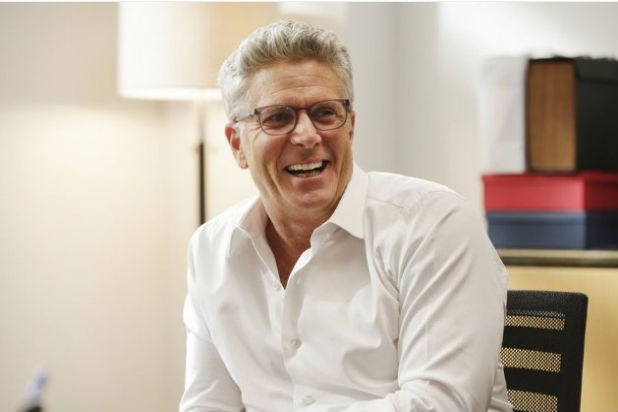
The show also made his original trade unusually visible. He broke the fourth wall to sell real products in paid advertisements. Product placement generally hopes to look at home in a scene. Here the salesman stepped forward and acknowledged the transaction. One imagines the commercial break appreciating the company.
Christie Brinkley appeared as herself in an episode involving a date with the fictional host. Comparisons with Larry David’s self-portrayal were inevitable, and Deutsch acknowledged them without claiming the same standing. His own experiment lasted one season. USA did not renew it for a second.
That outcome belongs in the story alongside the agency success. Changing industries means accepting other people’s measures of whether a project should continue. An executive can approve a concept; he cannot approve an audience into existence. Even a familiar face has to find the right setting.
Thirteen Saturdays, then another microphone
In 2019, Saturday Night Politics with Donny Deutsch gave him an MSNBC interview program. Its guests included politicians and other public figures. The show ran for thirteen episodes before ending that summer. His appearances on programs such as Morning Joe continued beyond it.
The distinction between a recurring guest and a host is easy to miss when the same person keeps appearing on the screen. A guest can supply a sharp observation within somebody else’s format. A host carries the hour. Deutsch has occupied both positions, with a television record containing durable relationships and short-lived programs.
On Brand with Donny Deutsch, which began in 2021, gives the conversation a different container. Its premise is stated plainly: “Everything is a brand.” Companies, public figures, institutions, and movements all enter the discussion through the reputations they build and the impressions they leave.
Across the formats: a speaker, an audience, and an idea competing for attention.
The feed combines interviews with shorter Brands of the Week conversations alongside Lou Pellegrino. In 2026, its listings included discussions with broadcaster Mike Breen and former prosecutor Andrew Weissman. A July 2026 Morning Joe episode also featured his Brand Up, Brand Down segment. The branding vocabulary has followed him well beyond the client presentation.
As a way of looking at public life, that vocabulary has obvious attractions and limits. A reputation can shape whether people listen. It cannot settle whether a claim is true or a policy is sound. The useful tension in his premise lies there: image matters enormously, while the person behind it remains worth questioning.
A New Yorker, still keeping score
For a less managed glimpse of Deutsch, consider his sports loyalties. In a 2003 interview, he named the Knicks as his favorite team growing up and Joe Namath as his favorite player. He liked The Sopranos, preferred Letterman, and named a local Italian restaurant, Primola, as a favored New York haunt.
He also said he could live without gadgets and was not much of an internet user. Place those answers beside a later career distributed through podcast apps and YouTube, and the passage of time does some gentle comic work. Public personalities adapt to new machinery, even when the machinery was never the original attraction.
His career now contains several versions of the same name: the son joining an established firm, the agency chief, the business interviewer, the comic character, the political commentator. The connections are visible without pretending every move was planned. He kept taking work that involved conversation, judgment, and the possibility of being noticed.
Back in that comedy, the audience was invited to laugh at Donny Deutsch. For an advertising executive, it was a fairly exposed position. It also gave the audience a reason to keep watching. After years spent thinking about what would make somebody pay attention, he was willing to let the answer be his own foolishness. The salesman had finally supplied himself as the demonstration.