A biology student can ask a computer to help write a model. The more awkward question arrives afterward: what, exactly, has the computer helped them say? In Donghoon Lee’s work, that question belongs to the researcher. His tools give people a way to build and run biological systems in software. They also give those people something to inspect, question and defend. The scientist remains on the premises.
Lee is a co-founder and co-CEO of Omphalos Lifesciences, and a co-developer of L++, its biological modeling language. His responsibilities include product, partnerships and operations. In 2026, they also included teaching: a seven-week McMaster University internship, followed by a modeling workshop in Korea. The tools were computational. The obligation to make sense of the results was wonderfully old-fashioned.
That combination is the thread through his career. He trained in experimental biology, moved into bioinformatics and now helps build software for describing biological systems. Alongside the company, he advises a nonprofit, mentors emerging researchers and works on science policy. A language for cells is one part of the undertaking. Finding people who can use it thoughtfully is another.
The cell, before the code
At the University of Toronto, Lee completed an honours undergraduate degree in Cell and Systems Biology, then a doctorate in the same discipline. His academic training ran from 2005 to 2015. Postdoctoral appointments followed at Johns Hopkins and UT Southwestern, before an instructor appointment in bioinformatics. His research record places the start of his Omphalos CEO employment in September 2024.
There is a small, useful clue to the earlier scientific work in a 2014 commentary he co-authored with Tony J. C. Harris. Its subject was the coordination of the cytoskeleton and endocytosis during membrane growth in the early fruit-fly embryo. Even the title refuses to pretend that a cell’s behavior can be understood by looking at only one component.
The paper concerned connected mechanisms: internal structures, membrane organization and the processes that move material through a cell. It is a much narrower subject than a virtual organism. Yet it offers a concrete example of the kind of experimental biology in Lee’s background. Before the language development and company responsibilities came work on how biological parts act together.
The move into computational development changes what a researcher can build around those questions. A model requires an explicit account of relationships that an ordinary description can leave comfortably vague. Which mechanism is included? Which boundary matters? What happens over time? Software has a tiresome but useful habit of asking for details before agreeing to do anything.
A language needs someone to speak it
At Omphalos, Lee works alongside Daehwan Kim, the company’s founder and L++ lead architect. Kim’s background is computational; Lee brings training in cell and systems biology as well as programming experience. The division of responsibilities is practical: Lee leads product, partnerships and operations while contributing to the language itself.
The company was incorporated in May 2021 and has U.S. operations in Dallas, with a Korean research subsidiary. Its current software offering connects L++, a simulation engine and a research platform called LIFABRICA. The platform gives researchers a conversational way to work with models. L++ supplies the biological language beneath that interaction.
These names describe different pieces of the work. A language provides a way to specify a system. An interface provides a way to approach it. A model still needs biological content and scrutiny. In this setting, a pleasant conversation with software is the beginning of a research workflow, with considerable checking still to come.
Lee has described his aim as making biology programmable. The verb carries a great deal of weight. Building a language is one task. Making it usable requires people, examples, revision and a way for biological expertise to enter the process. His teaching projects put that requirement in view.
“Biology will become programmable. We are working to make that real.”
Donghoon Lee
Seven weeks without an answer key
From May 6 to June 17, 2026, Omphalos hosted McMaster biology students through a course-linked internship. Lee served as industry partner and instructor. The pilot involved 12 participants and seven weekly sessions. Students arrived with little or no coding background, a useful test of any tool intended to make computational work accessible to biologists.
The students used an AI-assisted L++ workflow to build models they could run as simulations. They collaborated on GitHub and presented their work to an industry review panel. The program therefore included several kinds of explanation: expressing biology in code, making the work accessible to teammates and explaining the finished decisions to reviewers.
The distinction between getting help and handing over responsibility mattered. In feedback Lee shared, students described inspecting outputs, questioning assumptions, interpreting simulations and revising mechanisms. The scientific argument remained theirs to make. Having software available to implement a decision did not remove the need to decide whether it was a sensible one.
A model can be made to run and still require a difficult conversation. What does its output represent? Which assumptions made that result possible? What would justify changing them? Those questions are part of using the tool, and they give the classroom a different rhythm from an assignment with a tidy answer waiting at the back.
The internship also gave Omphalos a chance to learn from its users. The company described it as an opportunity to evaluate the technology and understand how students used it. That creates a useful two-way exchange: the instructor teaches a workflow, while the learners expose what that workflow asks of someone encountering it for the first time.
Eighteen people, one shared problem
The Korea workshop followed from July 8 to August 10, 2026. Lee led the program with participants from KRIBB, Yonsei University College of Pharmacy and InSiliCox. Eighteen people from four institutions formed five interdisciplinary teams. Their task moved beyond learning a syntax: they had to turn separately built models into larger systems.
Each participant constructed a multiscale kinetic model in L++. The teams then combined individual work. That sequence makes collaboration part of the modeling exercise itself. A colleague’s contribution has to fit with yours, which means that boundaries, parameters and the meaning of the component need enough clarity to travel between people.
Participants used AI to research mechanisms, implement models, debug code and analyze simulation results. They also defined model boundaries, documented where parameters came from and designed controls. The last three activities deserve space beside the more conspicuous software tasks. They help explain what a model claims and how a researcher intends to examine that claim.
The institutional connection had a documented precursor. In March 2026, Omphalos signed a memorandum of understanding with FuriosaAI, KRIBB’s Korea Preclinical Evaluation Center, Yonsei University and InSiliCox. The agreement supported collaboration around the platform’s model library and the Life Modeling Workshop. A partnership announcement acquired a practical follow-up in a teaching program.
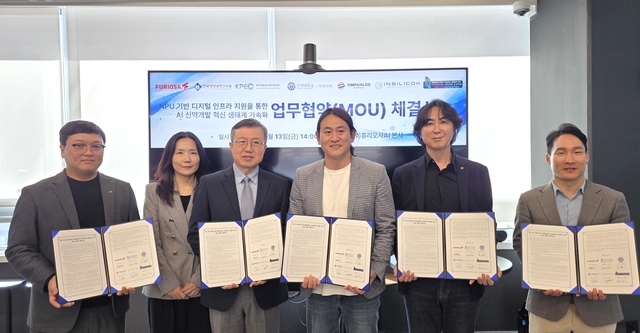
This is an especially concrete part of Lee’s job. Product development and partnerships can sound like adjacent items on an executive biography. In a workshop, they meet. There is a tool to use, a group with varied experience and a piece of work that must become intelligible across institutional lines. The agenda becomes a model someone else can inspect.
The work between the meetings
Lee’s activities beyond Omphalos include an advisory role at The Human Puzzle. The nonprofit brings scientific, technical, entrepreneurial and institutional perspectives together around the movement from discovery to implementation. His title there is Translational Science Advisor. It is another setting in which an idea has to be understood by people with different responsibilities.
He has also moderated conversations about research and entrepreneurship. An October 2025 event announcement placed him in a discussion of why people become entrepreneurs, how early exposure shapes innovators and what collaboration involves. In November, McMaster listed him among founders invited to speak with undergraduate science students about research, innovation and entrepreneurship.
His mentoring work adds a smaller scale. Through the Life Sciences Career Development Syndicate, his publicly described role includes practical guidance, feedback and helping a mentee think through career choices. At the Canadian Science Policy Centre, he co-chairs the Innovation Strategy Committee. The responsibilities range from one person’s next step to coordination across sectors.
The researcher stays in the room
In February 2026, Omphalos was named a Hello Tomorrow Deep Tech Pioneer. Lee used the announcement to discuss the company’s modeling language and simulation infrastructure. Recognition provides a date for the company record. The teaching projects provide a closer view of how he is trying to make that infrastructure useful.
The two workshops leave a specific picture: students and researchers building models, asking what their assumptions allow and working toward results they can explain. Lee’s passage from experimental biology into company leadership gives that work a personal continuity. He helps make the tools. He also helps people learn what using them requires. The computer can assist with the construction; the researcher still has a case to make.