The cleanest clue to Donald Polite’s working style may be buried in an old basketball ledger. From 1986 through 1990, he appeared in 108 games for Northwestern. He started some, came off the bench in others, rebounded, passed and scored 341 points. The numbers describe a forward who stayed in the rotation for four years. They also hint at a habit that outlasted the uniform: understand the assignment, prepare for it and contribute to the possession.
Polite, now chief marketing officer at SKYGEN, still speaks in the grammar of teams. In a 2025 conversation about the transfer from sport to business, he emphasized preparation, mental toughness, communication and perseverance. His compact daily ambition was even more revealing: “I just want to win the day.” The phrase does not promise a championship before lunch. It asks what can be advanced now, by the people in the room, with the obstacles actually in front of them.
The internship that chose the career
His route into marketing began with discovering what he did not want. During a college summer internship in sales, Polite noticed that the repeated rejection built into selling did not suit him. Yet the machinery beside sales fascinated him: field marketers shaping the message, corporate teams defining the value proposition, people finding language for a customer’s problem. He liked communication and connection. He liked the strategic question beneath the pitch.
A later internship took him closer to food marketing, and after business school his career entered consumer goods. In one early assignment, he worked on the North American renewal of an established instant-coffee brand as younger drinkers, coffee shops and new grocery competitors rearranged the category. The response began with research: awareness, perception, product format and flavor. It continued into refreshed packaging, new products and retail placement. Decades later, before recounting the project on a podcast, Polite wandered the coffee aisle to see what had survived. The marketer had become his own field researcher, looking at the shelf instead of his memory.
“Everything starts with the customer.”Donald Polite
That sentence could sound ceremonial in less practiced hands. Polite makes it operational. He has described marketing myopia as his chief professional irritation: a company likes its campaign, its sales program or its service design, yet neglects the sanity check from the customer’s chair. His remedy is empathy made specific. What situation is the customer in? What pain are they trying to remove? Does this program make sense from where they sit?
A passport stamped by industries
After consumer goods came a run through some of the most recognizable entertainment businesses in America. At Disney Consumer Products, Polite managed franchises connected to boys’ properties and ESPN. At NBCUniversal, he worked in home-entertainment catalog marketing. Warner Bros. brought leadership assignments in partner brands, sales planning and communication, with relationships that included professional sports leagues. In 2014 he organized and moderated a Warner Bros. speaker-series discussion at the intersection of sports and technology, a neat meeting of his first arena and his new one.
The move to Johnson Controls replaced movies and retail shelves with building infrastructure. It also delivered one of his hardest assignments. Following a major divestiture and then the combination with Tyco, the company needed a coherent architecture for the merged brand. Polite was part of the team responsible for the marketing integration. Names, divisions and product relationships had to be reconsidered. Then came the physical world: websites, collateral, uniforms, conference displays and service trucks. He has described roughly a year of day-one preparation followed by another year of phased transition.
The difficulty was not merely scale. People become attached to the products and names they helped build. A rational chart can still feel personal to the people living inside it. Polite’s account stresses cross-functional work and customer research, not a closed-room decree. He also co-led work connected to Johnson Controls’ partnership with the Pro Football Hall of Fame Village, a project framed as a sports-and-entertainment “smart city.” Once again, the thread ran between technology and a playing field.
Sixty percent signal, forty percent story
Polite joined Milwaukee-area SKYGEN in July 2019 as vice president of customer success, an unusual but logical doorway for a marketer committed to listening. He later became chief marketing officer. The company sells technology and administrative services for dental and vision benefits, a B2B setting with long sales cycles and several decision-makers. One product can need to persuade a technology leader, a finance executive, an operations team and the people responsible for an insurance plan. A single glossy claim is unlikely to survive that committee.
His public discussions of the SKYGEN work return to alignment. Marketing and sales need shared definitions for a promising lead, shared measures and a clean handoff. Product and client teams need to feed what they know back into the message. A digital-first strategy must address distinct buyer concerns without turning the company into five inconsistent narrators.
The 60–40 customer-insight balance
The numbers locate the pattern. Open questions and follow-up conversations explain why it exists.
On the 2025 Getting to Aha! podcast, Polite gave that listening discipline a ratio: 60 percent quantitative evidence and 40 percent qualitative input. Annual deep-dive surveys can establish a baseline. Feedback at individual touchpoints can catch trouble in motion. Open-ended questions provide the material that a score compresses away. Most importantly, the company must close the loop and tell customers what their participation changed. Otherwise a survey is simply a polite extraction.
The formula suits a former player turned brand operator. Statistics matter. So does film. So does the teammate who saw the angle unavailable from your spot on the floor. Polite asks marketers to be analytically strong and creative, but he adds a third quality: intellectual curiosity. Go deeper. Ask the next question. Learn what motivates the person behind the segment label.
“As a marketer, as a product development person, as a salesperson - you’re at your best when you’re showing empathy.”Donald Polite
Permission to miss
For a leader with an athlete’s affection for winning, Polite’s advice about failure is pleasantly inconvenient. Looking back, he has said he would have been less afraid to fail and would have failed more. More failure, in his telling, would have meant more ideas offered, more experiments attempted and more ownership taken.
His instruction to colleagues is crisp: “When in doubt, do.” Ambiguity leaves unclaimed work everywhere. Pick something up. Bring a point of view. Stand behind it. If it fails, learn. He pairs that freedom with an important condition: leaders must create an environment where curiosity, individual initiative and fast failure are genuinely allowed. A slogan cannot protect an employee from a culture that punishes every miss.
There is some basketball wisdom here too. A player who fears every missed shot will soon stop taking open ones. A useful coach corrects the decision, the preparation or the mechanics, then sends the player back into the game. Polite’s version for marketing preserves accountability while refusing paralysis.
The work outside the title
Milwaukee provides the civic half of Polite’s record. He joined the Silver Spring Neighborhood Center board in 2020 and later became chair. The organization has served the city’s northwest side since 1958 through education, employment and neighborhood programs. When announcing his chairmanship, Polite thanked his predecessor before describing the center’s mission and inviting others into it. The order felt characteristic: team, purpose, participation.
His board service has also included the Milwaukee Public Library Foundation and the Chicago-based Juice Hoops Foundation, which uses basketball and community programming to support neurodiverse young people. Since 2017, he has served as a guest lecturer at Marquette University’s business school. These are not stray lines assembled for a biography. They form another kind of career, one measured in meetings attended, introductions made and younger people encouraged.
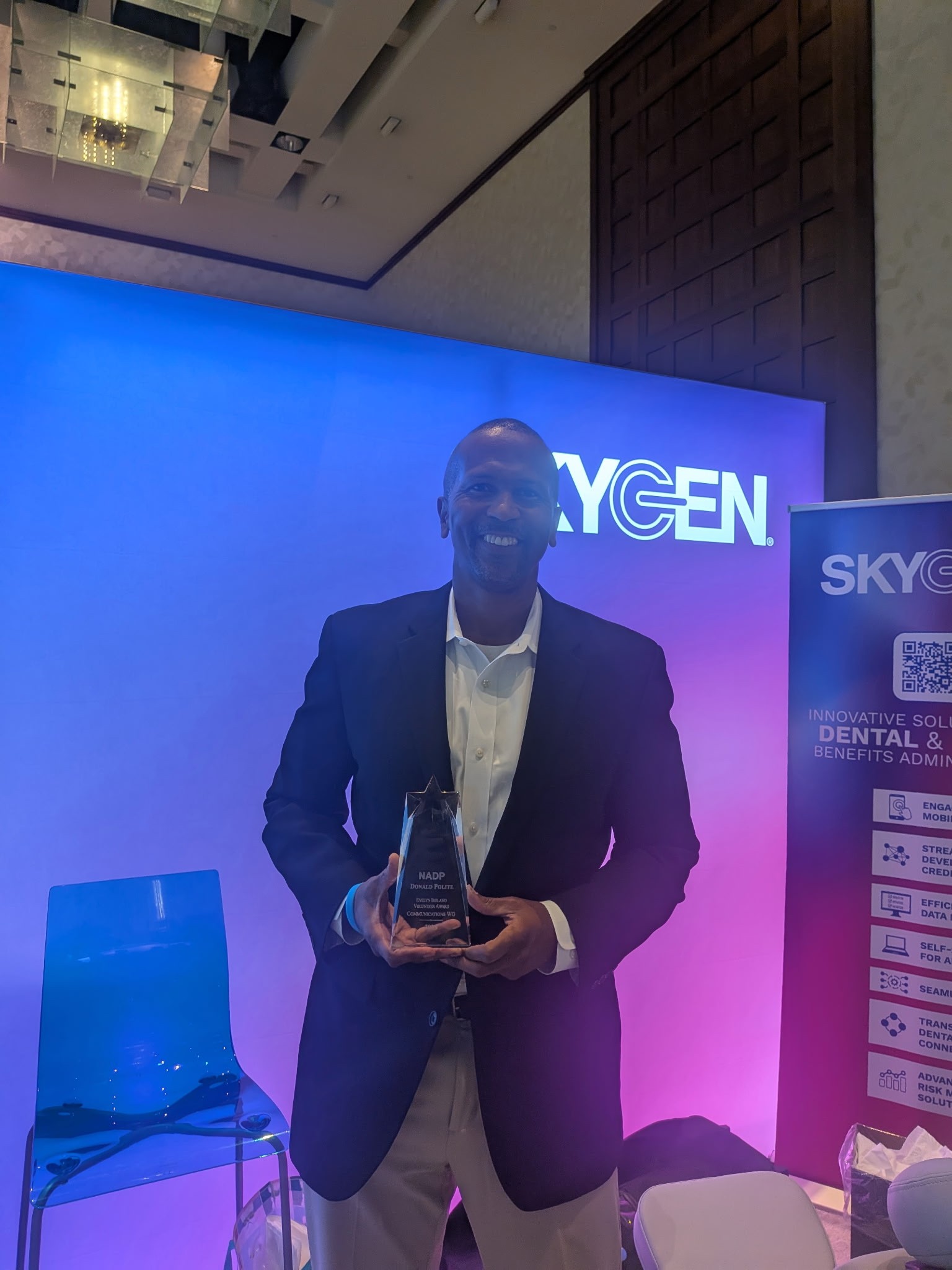
The National Association of Dental Plans honored Polite with its Evelyn Ireland Volunteer Award in 2022 for Membership Workgroup service. In 2025, he received it again, this time after several years with the Communications Workgroup. He helped shape thought-leadership materials and led a subgroup behind a public-awareness campaign. His response focused on the people around him: “I’m learning from them every day.”
That may be the most consistent line in the whole story. The college forward who found his role. The intern who learned from the neighboring department. The brand manager who returned to the grocery aisle. The executive asking sales, product and customers to compare notes. The board chair thanking the chair before him. Polite’s career has moved through glamorous brands and stubbornly technical systems, yet its central move is modest: pay attention to other people, then help the group act on what it heard.
Marketing often rewards the person nearest the microphone. Polite’s work argues for something quieter before the speech: listening well enough that the organization deserves to say anything at all. Then the clock starts, the ambiguity arrives, and the old instruction returns. Win the day. When in doubt, do. Keep moving the ball.