On a Friday night in 1984, Don Tyson walked into a poultry plant and spoke to the people working on the line. Among them was a young Donnie King. Tyson had just bought the operation. He could have inspected machinery, questioned managers, and departed with the satisfaction of a purchaser checking the plumbing. King remembered something smaller: the attention paid to him.
Four decades later, with his own run as chief executive nearing its end, King returned to that encounter. The visitor had made an ordinary worker feel consequential. For someone who would eventually lead Tyson Foods, it was an early demonstration of how authority feels from the receiving end. A factory acquisition had supplied him with a lesson that survived a great many management presentations.
Donald “Donnie” King became Tyson’s president and CEO in June 2021. He handed the job to Jeff Schomburger effective October 4, 2026, remaining on the board. Between those dates came difficult markets, plant closures, investments in automation, and a substantial recovery in the chicken business. Yet the scene on the production floor offers a useful place to begin. King had worked where a corporate decision becomes somebody’s shift.
The education before the corner office
His industry career began in 1982 at Valmac Industries, which Tyson acquired in 1984. In Pine Bluff, Arkansas, he worked as an hourly employee on the chicken plant’s production floor. That distinction matters to the chronology. The familiar shorthand that he joined Tyson in 1982 compresses an acquisition into a hiring date. His entry into the business preceded the Tyson name on his employer.
King earned a bachelor’s degree in business management from the University of Arkansas at Monticello. Alongside that formal qualification, his career accumulated a practical vocabulary: plant management, complex management, supply chains, prepared foods. These jobs move a person through different kinds of responsibility. An instruction that looks simple at headquarters must survive delivery schedules, equipment, inventories, and the people expected to make it happen.
Eventually he oversaw North American operations, with responsibilities across poultry, beef, pork, and prepared foods. The breadth is easy to lose in a title. These are distinct businesses with different inputs and market pressures. Knowing one does not automatically confer mastery of the others. King’s route to the top passed through several of them, giving him experience beyond the chicken operation where he started.
- 1982Hourly production work at Valmac
- 1984Valmac joins Tyson Foods
- 2019Returns to lead international business
- 2021Becomes president and CEO
- 2026CEO handover; continues as a director
The company veteran who came back
There was a departure along the way. King left in 2017, then returned in January 2019 to lead the international business. A tidy corporate biography can make a long career resemble an uninterrupted escalator. His included a trip out of the building. The return brought responsibility for overseas operations, international growth strategy, and the business models needed to support that expansion.
The timing put him into the integration of Keystone Foods, acquired in 2018. Tyson was expanding its international network, including operations in Asia. Noel White, then chief executive, put King in charge of a business whose growth depended on customers and production far beyond Arkansas. The assignment widened the geography of a career that had begun with the immediate, physical demands of a single plant.
By September 2020, King was again leading poultry. In February 2021 he became chief operating officer. Four months later, the board named him president and CEO, succeeding Dean Banks. His appointment took effect immediately. There was little room between receiving the title and carrying its consequences. Chairman John H. Tyson emphasized King’s familiarity with the company’s business and culture when announcing the choice.
King’s own opening message stressed execution, innovation, customers, and the experience of employees. It was an operator’s list, full of things that require repeated attention. He had reached the position from which he could influence the whole company. The challenge was that the whole company contained a great many moving parts, each quite capable of refusing to cooperate with the plan.
When chicken became an operating problem
The CEO years supplied an unforgiving test of that experience. Fiscal 2023 was difficult across Tyson’s core meat businesses. Its chicken segment recorded a reported operating loss of $770 million. A business built to move food at enormous scale can produce enormous disappointment when costs, production, and demand cease to line up. Familiarity with the machinery does not make the arithmetic more forgiving.
King changed the poultry leadership, appointing Wes Morris to run the group in January 2023. The subsequent work involved matching production more closely to demand, improving plant performance, and managing inventory. The account of the recovery is useful precisely because its ingredients sound so unglamorous. Forecasting and order fulfillment rarely receive the affectionate attention given to a new consumer brand. They can still determine whether the brand makes money.
There were painful decisions alongside those improvements. Tyson closed or sold plant locations and cut corporate jobs during the period. For a company embedded in smaller communities, a plant decision travels beyond the company accounts. An improvement in the production network can arrive in a town as the loss of a dependable employer. King’s history on the floor makes that tension more visible; it does not resolve it.
Two years, one very different result
In fiscal 2024, the chicken segment returned to reported operating income of $988 million. Lower feed costs helped, as did operating changes. King described the improvement in terms of execution, while acknowledging the contribution of market conditions. The distinction is important: a chief executive can influence factory performance and planning, but cannot politely instruct commodity markets to behave. A recovery deserves scrutiny of both.
A $300 million answer in Virginia
One tangible expression of King’s approach opened in Danville, Virginia, in November 2023. Tyson invested $300 million in a 325,000-square-foot plant for fully cooked poultry products. Its announced production capacity was approximately four million pounds a week. This was a substantial physical commitment during a period when the company was also closing facilities. The business was changing where and how it made its food.
Inside, automated case packing and robotic palletizing brought technology into the routine business of getting products ready for shipment. Tyson also partnered with Danville Community College on maintenance training. A more automated plant still needs people who understand how its equipment works. The machines may be new; the demand for practical competence would have been recognizable to someone who began his career on a production floor.
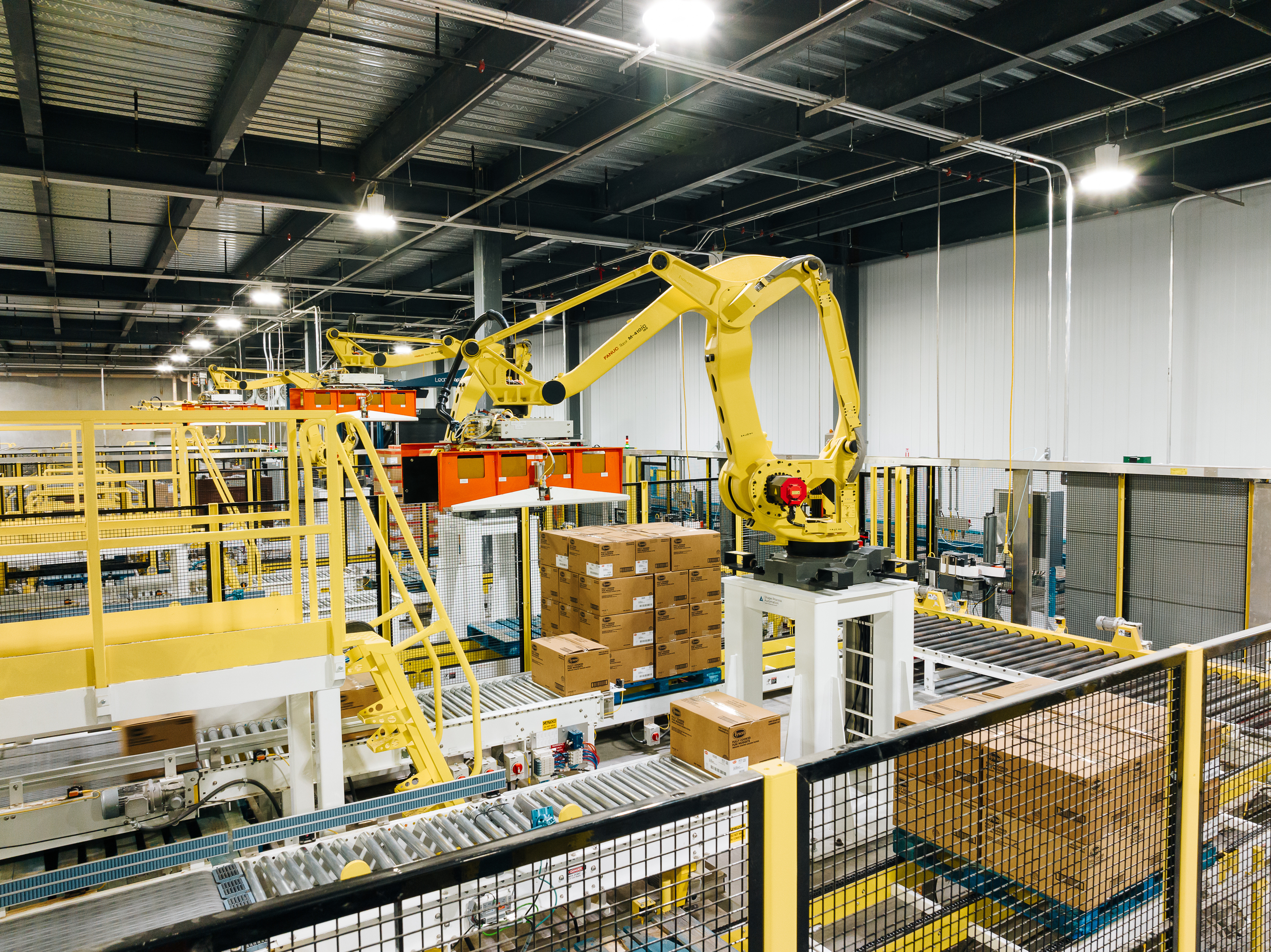
Danville gives a concrete meaning to King’s repeated interest in operational excellence. The phrase can become so abstract that it sounds like the name of a committee. Here it meant buildings, packing lines, maintenance skills, and capacity. It also meant making a judgment about which facilities could serve the future. That judgment carried both an investment case and consequences for employees elsewhere.
The cafeteria as a management choice
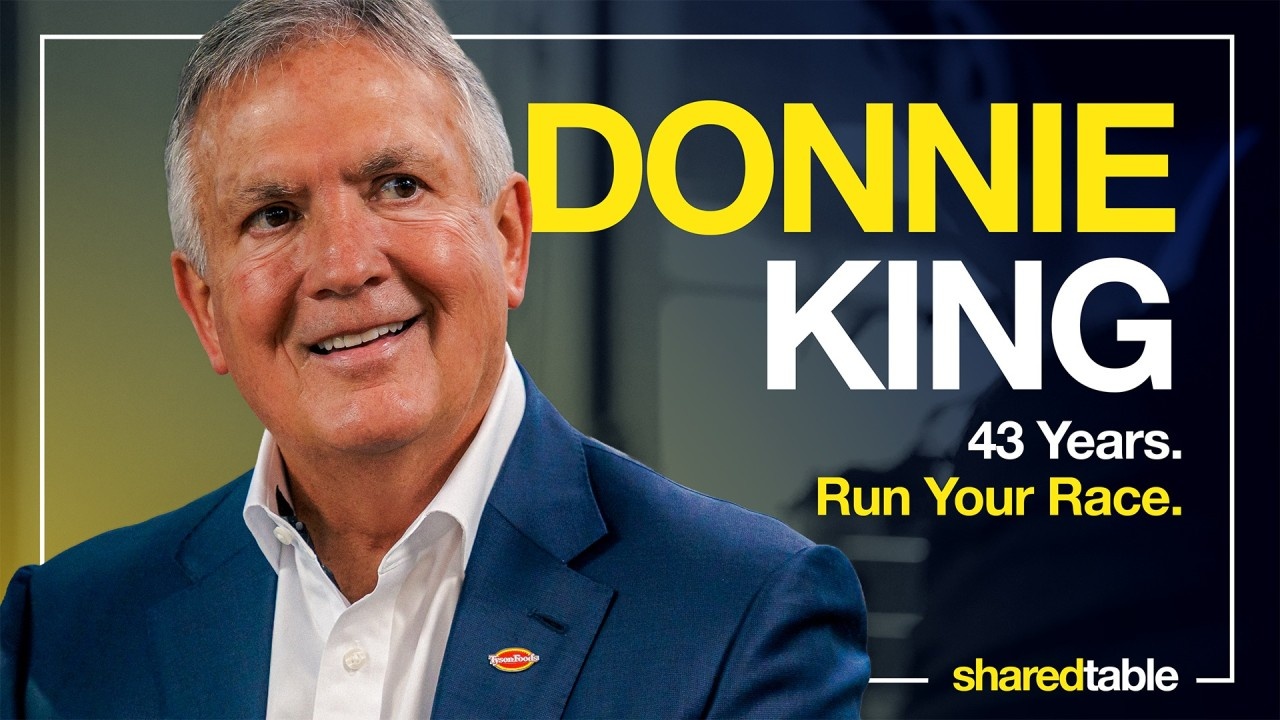
Near the end of his CEO tenure, King sat down with Elanco chief executive Jeff Simmons for the Shared Table interview. Simmons described a leader who continued to eat in the Tyson cafeteria most days. Against the scale of a global food company, lunch seems a modest management instrument. It does, however, put a leader somewhere employees can encounter him without booking a formal presentation.
The habit fits the memory of Don Tyson arriving on that Friday night. Both involve deciding where a senior person spends time and who gets access to it. They are small actions with an obvious limitation: friendliness cannot substitute for sound decisions. Their value lies in keeping the people affected by those decisions within ordinary conversation. An organization chart offers a less interesting lunch companion.
“I am most excited about the fact that [the chicken rebound] is driven by execution and action.”
Donnie King, discussing the 2024 recovery
His public account of work repeatedly returns to employees and feeding people. In 2022, addressing the House Agriculture Committee, he used his own hourly beginnings to describe the possibility of building a career inside Tyson. He was speaking for an employer and defending its role in the economy, but the personal example was concrete. He had occupied both ends of the hierarchy he was discussing.
Keeping a seat, giving up the title
The final change came with a long handover rather than an immediate departure. Tyson announced Schomburger’s appointment in May 2026, with a transition beginning in July and the CEO succession effective in October. Schomburger brought a lengthy Procter & Gamble career and a decade on Tyson’s board. King retained his directorship, a position shareholders had first elected him to in February 2022.
That arrangement preserves his operating experience while transferring executive authority. His CEO tenure belongs to a longer working life that included plant jobs, leadership across meat categories, a departure, and a return. The career resists being reduced to either a promotion story or a turnaround chart. Both are present, along with decisions whose effects were felt differently by investors, customers, employees, and towns.
What remains most revealing is the detail King carried from 1984. After all the titles and financial results, he could still recall what it felt like when an important visitor took time for an unknown worker. He eventually inherited the ability to make those visits himself. The distance between the office and the floor was part of his job to manage, every day.
 Watch the conversation ↗
Follow the conversation
More on King’s career, the company he led, and the decisions behind the numbers.