Donal Daly had spent decades helping businesses answer difficult questions. Then his fifteen-year-old son asked one across the dinner table: “Will the planet still be ok when I am your age?” It was 2018. Daly was fifty-nine. The question carried them forward to 2062, a date well beyond the next sales forecast. He recalls being floored because he could not give the boy an honest answer he wanted to give.
For a software founder, an unanswered question can become an invitation to work. For a father, this particular one had a different weight. Daly began asking what he could contribute. His eventual response was Future Planet, a business built around helping companies turn sustainability intentions into decisions and action. The distance from enterprise sales software to climate work looks considerable. In his career, there is a thread that makes the journey easier to follow: find knowledge people need, give it a usable structure, and help them act on it.
Before AI returned to fashion
Daly graduated in electrical engineering from University College Cork. His first job put him on the team building the Aughinish Alumina plant near Limerick. It was a substantial engineering project, but electrical engineering itself did not much excite him after college. The growing availability of computers, and the early possibilities of artificial intelligence, did. He was drawn to applications that could carry expertise into a business and help it work differently.
That choice tells us something about the kind of engineer he became. The attraction lay in what a machine could help a person accomplish. A system was interesting because it could make a complicated task more manageable. The industrial plant was his first professional setting; software gave him a way to put that interest into a business of his own.
His first company began in 1986. It used heuristics and pattern matching to deliver financial advice. With few suitable AI tools available, the team built its own engine. Applying human expertise at scale was already the premise. Daly sold the company in 1997. He remembers the long stretch when AI ceased to be fashionable, while its principles continued to inform the products he built. Fashion, in software as in clothes, can leave perfectly serviceable things at the back of the cupboard.
He is uneasy with the label serial entrepreneur. In his account, each company began with a problem he cared about and a particular combination of timing, market conditions and opportunity. That is a less glamorous explanation than an incurable appetite for founding things. It is also more useful: it gives each venture a reason to exist beyond supplying the founder with another business card.
The buyer has a business of their own
By 2005, Daly and co-founder Áine Denn were building Altify. Its proposition joined sales methodology to software, helping people navigate complex enterprise deals. The company grew into an international operation, with offices spanning Ireland, the United States and the United Kingdom. The work was concerned with the decisions inside a sale: understanding a customer, developing an account, and making a plan that could survive contact with the real buying process.
Enterprise selling supplies ample opportunities for elaborate language. A buyer can be a prospect, a lead, an opportunity or a rectangle in a presentation. Daly's approach kept returning to the business behind those labels. What needed to improve for that customer? How would the proposed purchase help? A seller who could answer those questions had something more durable to offer than a well-rehearsed description of features.
In a conversation with sales author Jill Konrath, he described a test that asks sellers to consider whether they would purchase their own proposed solution from the customer's position. A sale that fails that test creates trouble even when it closes. He also challenged the habit of treating revenue growth or lower costs as sufficient customer understanding. Such aims are common enough to tell a seller very little about a particular business.
His coaching questions deliberately interrupt confidence. Ask a seller to name the most likely reason a deal would fail, and an overlooked risk may appear. That approach gives thinking a place in the workflow. It also makes sales management more demanding: counting activity is straightforward; helping someone examine an assumption takes attention. Daly's software work made a commercial proposition out of supporting that attention.
“Thinking is very cheap, but if you don't think, it's really expensive.”Donal Daly
He had made a similar argument in his 2016 essay on sales credibility. A seller arriving unprepared and asking a buyer to explain the business from scratch spends trust before earning it. The homework belongs to the seller. So does the effort to understand competing priorities among the people involved in a purchase. From that perspective, account planning is a form of courtesy with commercial consequences.
A founder learns to leave the room
On February 1, 2017, Anthony Reynolds became Altify's CEO and Daly moved to executive chairman. Daly later described the transition as emotionally difficult. He cared about the employees, customers and company he had helped build. Staying involved while letting another person run it required restraint, a skill rarely advertised in a founder's job description.
His practical rule was to redirect decisions to the CEO. Being available could easily become being in the way. Two years later, on February 1, 2019, he moved to chairman and left day-to-day operations to Reynolds and the leadership team. He credited Reynolds for the partnership and for building on the company's culture. Around the same time, Daly announced 6 Rockets Software and gave himself the title Chief Rocket Launcher. A change of job need not require a surrender of dad jokes.
Cash consideration paid by Upland Software for Altify.
Upland Software acquired Altify in October 2019. The transaction closed on October 4 and was announced on October 7. Upland described Altify as a Salesforce-native system for opportunity and account management, with guided selling at its core. It paid $84 million in cash at closing.
That figure gives the story a clear business milestone. The buyer expected roughly $24 million in annual revenue from the acquisition, including about $22 million recurring. Those were Upland's expectations at the time of the deal. They describe a business with continuing customer relationships, the sort of relationships Daly had spent years encouraging sellers to build. The acquisition also sits after his leadership handover, rather than marking the moment he first loosened his grip on operations.
The next problem had a longer deadline
In October 2020, Daly was already writing about sustainability and supporting the Sustainable Academy. He asked people to help identify priorities for business learning. His concern was practical: companies could want to make environmentally sensitive decisions and still struggle to know where to begin. Education belonged near the start of the work.
This was recognisable territory for someone who had spent years putting knowledge into software. An aspiration has to pass through people, budgets and decisions before it becomes an outcome. His argument placed sustainability inside the business, alongside commercial performance. It required leaders to learn enough to make choices, then give those choices a structure that people could use.
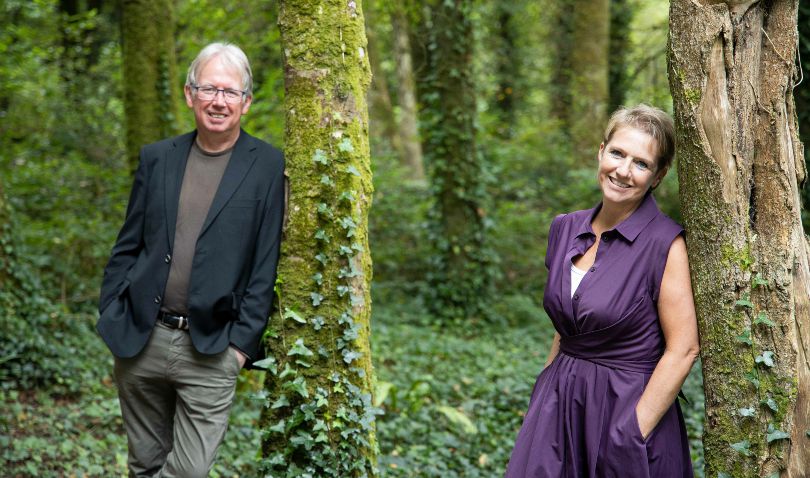
Future Planet launched in October 2021, co-founded with sustainable procurement and supply-chain specialist Ingrid De Doncker. Daly brought software experience; De Doncker brought knowledge of how organisations buy and how their supply chains operate. Their shared work turned a broad environmental ambition into questions a company could address through its own operations, suppliers, products and services.
They organised the approach around three areas: Live Better, Buy Better and Design Better. The first concerns practices within the business. The second concerns suppliers and procurement. The third concerns what a company offers its customers, including how it designs products and avoids waste. The structure gives people familiar business activities to examine, making a large subject easier to discuss without pretending the work is small.
Live Better
Practices inside the business.
Buy Better
Procurement and supply chains.
Design Better
Products, services and circularity.
Daly's account of his early ventures adds a useful counterweight to the language of purpose. At first, he was preoccupied with paying employees and bills. Money later gave him room to take a longer view. He also argued that his contribution was strongest in solving problems, rather than handling every operational task. By 2021, the domain had changed, but he still described his businesses as ways to structure knowledge and simplify difficult work.
There was room for humour in the new undertaking. In a 2022 interview, he admitted that golf had its attractions. He also expressed little attachment to ownership of the ideas, and an interest in partnerships that could help the business scale. The work mattered more than preserving a solitary founder's claim on it. That attitude fits a venture whose success depends on other organisations changing what they do.
Writing is part of the engineering
Daly published Expert Systems Introduced in 1988. Nearly three decades later, Tomorrow | Today examined artificial and augmented intelligence for knowledge workers. Its 2016 announcement attracted endorsements from people including Mark Roberge, Ray Wang and Nick Mehta. Daly was writing about how machines could support people in sales, marketing and customer service well before the current flood of conversational AI products.
His books also include Account Planning in Salesforce and Digital Sales Transformation in a Customer First World. He describes writing as a way to formulate thoughts and reduce complex subjects to principles people can apply. His publication page brings books together with research studies and shorter practical guides. The format changes with the task: an account-planning reference, a study of buyer behaviour, a guide to preparing a sales call.
That habit continued in DalyPlanet, his weekly LinkedIn digest of climate, ESG and sustainability stories. It is a fitting name for someone who has already put rockets on his business stationery. The digest gives his readers a recurring place to encounter developments in a subject that can otherwise feel scattered. Thinking in public has remained part of the work.
Knowledge needs somewhere to go
September 2026 brought another organisational change. Future Planet and the Institute of Sustainability Studies came together under the Future Planet name. Niall Collins leads the combined business as CEO; Daly is executive chairman. De Doncker is chief innovation and research officer, and Colum Kenny is COO. The combination brings education alongside the platform's work on strategy, emissions, ESG data, reporting and transition planning.
Read across Daly's career, the logic is familiar. Training supplies knowledge; systems help people use it repeatedly. At Altify, that connection supported enterprise sellers. At Future Planet, it supports people trying to carry sustainability into daily business decisions. His son's question still reaches further than any company's planning cycle. Daly has responded by working on the choices that businesses can make now, with the tools he has spent a career learning to build.