Dolly Parton learned the essential trick early: an ordinary object could hold an extraordinary amount of life. Her first song was about a doll made from a corncob. She was about five and could not yet write, so her mother took down the words. That small domestic scene contains the method that carried Parton for seven decades. Look closely. Find the feeling. Give it a tune sturdy enough to travel.
The materials remained close at hand: a patched coat, a red-haired bank teller, a difficult goodbye, the grind of an office day. Parton wrote in plain language, which is harder than it looks. Her songs rarely asked listeners to solve them. They asked listeners to recognize themselves. The stories had front doors.
She left home. The place came with her.
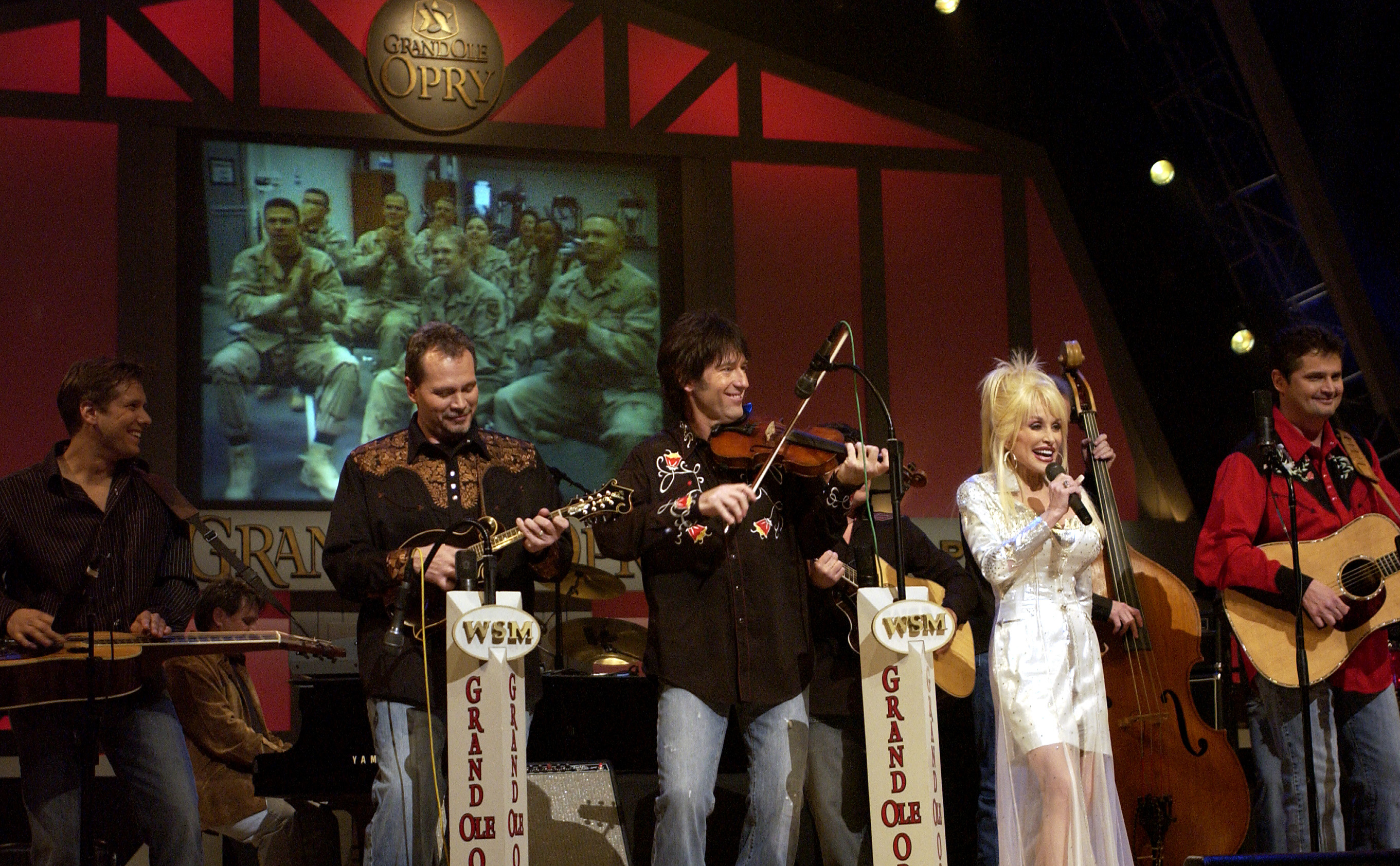
She was born in 1946 in Locust Ridge, Tennessee, the fourth of twelve children in a one-room cabin. Music in the Parton house served as entertainment, worship, oral history and a way to make a crowded room larger. By ten, she was singing on local radio and television. At thirteen, she appeared at the Grand Ole Opry. The day after graduating from Sevier County High School in 1964, she moved to Nashville.
Leaving did not require erasure. The Smoky Mountains remained the moral geography of her work. A song such as “Coat of Many Colors” turns poverty into a complicated inheritance: scarcity is real, humiliation stings, love makes an object rich, and none of those truths cancels the others. Parton did not decorate hardship or trade it for pity. She found its particulars.
Her first national platform arrived in 1967, when she joined The Porter Wagoner Show. The pairing produced hit duets and introduced her to a broad television audience. It also created a problem familiar to talented people inside someone else’s machine: the better she became, the more necessary leaving became. In 1974 she ended the partnership. Her explanation arrived as “I Will Always Love You,” a graceful song with a firm boundary.
Before television made her face familiar, Nashville had already found a use for her pen. Bill Phillips recorded “Put It Off Until Tomorrow,” which Parton wrote with her uncle Bill Owens, and took it into the country Top 10 in 1966. Parton sang harmony on the record. It was a revealing entrance: the voice was present, the name was still emerging, and the composition created the opportunity. Her debut album followed in 1967, but songwriting remained the dependable center. Performance could be judged by a night’s crowd or a season’s fashion. A well-made song could leave the room, find another voice and begin earning a second life.
She knew the song was the leverage.
The farewell song reached No. 1 on the country chart in 1974. A new recording did it again in 1982. Between those successes came a proposal: Elvis Presley wanted to record it, but his manager, Colonel Tom Parker, expected a share of the publishing. Parton declined. She adored Presley and cried over the decision, but the copyright stayed hers. When Whitney Houston’s recording became a global phenomenon in 1992, the wisdom of that refusal acquired a very large royalty statement.
The episode is often repeated as a business parable, and rightly so. Its sharper lesson is about accurate self-knowledge. Parton placed the song above proximity to a more famous performer. She could be warm without being vague, generous without giving away the engine.
That judgment helped her cross formats without dissolving into them. “Here You Come Again” opened pop radio. 9 to 5 opened Hollywood, while her fingernails supplied the title song’s typewriter rhythm. Steel Magnolias gave her a role that fit her comic timing and emotional directness. Trio, with Emmylou Harris and Linda Ronstadt, made close harmony feel like a summit meeting. Bluegrass records later returned her to mountain sounds with new authority.
The joke entered the room first.
Parton’s public image was extravagant and precisely managed: towering hair, fitted clothes, color visible from the cheap seats. She joked about it before anyone else could, borrowing the look, she said, from a glamorous woman she had seen around town as a child. The humor invited people to underestimate her. They rarely got a second chance.
Behind the spectacle was an operator. She helped form Sandollar Productions, launched Dolly Records, extended her name into products and entertainment, and in 1986 partnered with Herschend Family Entertainment to reopen a Pigeon Forge park as Dollywood. It was branding with a zip code. Instead of treating East Tennessee as the place success had rescued her from, she made it the place where success should compound.
Dollywood did more than sell an atmosphere. It created jobs, drew visitors and let Appalachia narrate itself. Parton’s commercial instinct welcomed sentiment. She understood that memory could be economically productive without becoming counterfeit. The result grew into a regional institution with substance beyond a celebrity souvenir.
Her audience could not read yet.
In 1995, Parton began the Imagination Library in her home county. The program honored her father, who had not learned to read or write. Its mechanism was almost comically simple: enroll a child, then mail one age-appropriate book each month from birth to age five. No stadium, speech or glittering costume was required. The important scene happened when a package arrived with the child’s name on it.
Simplicity made the idea repeatable. Local partners funded and administered programs in their communities while the central organization handled the book selection and mailing system. The library spread across the United States and then beyond it. By 2018 it had delivered 100 million books. It passed 200 million in 2022. Her official biography now puts the total above 300 million.
One book at a time becomes a very large library
The program reveals Parton’s particular form of generosity. It was personal, because it began with her father. It was practical, because a book arrived rather than an aspiration. It was theatrical in the smallest possible way: every month, a child received mail. Fame got the envelope opened; repetition built the habit.
She made consistency roomy.
Parton’s recognizable self left ample room for motion. She moved from country duets to pop, movies, bluegrass, Broadway writing and, after her 2022 induction into the Rock & Roll Hall of Fame, a rock album. Rockstar set a career high for first-week album sales. The genres changed while the authorial voice held steady.
Her connections formed a map of popular culture: Wagoner at the beginning; Harris and Ronstadt in harmony; Kenny Rogers on “Islands in the Stream”; Jane Fonda and Lily Tomlin in 9 to 5; Whitney Houston carrying a Parton melody around the planet; Miley Cyrus, her goddaughter, joining the family line to a new generation. Parton collaborated widely without becoming generic. She brought a complete person to the duet.
Awards accumulated: the Country Music Hall of Fame, Songwriters Hall of Fame, a Kennedy Center Honor, the National Medal of Arts, the Recording Academy’s Lifetime Achievement Award and the Rock & Roll Hall of Fame. Still, the plainest description remained accurate. She was a songwriter. Songs were how she left, thanked, negotiated, remembered, joked and returned home.
The late career never settled into a museum pose. At Glastonbury in 2014, a vast festival crowd sang along with work written decades before many of them were born. Her 2023 halftime performance at a Dallas Cowboys game turned a familiar costume and three familiar songs into fresh internet spectacle. The secret was less reinvention than renewal. Parton understood which pieces could change and which should stay legible: new stage, same wit; new collaborators, same melodic directness; a larger audience, the same East Tennessee vowels.
The delivery continues beyond the final verse.
Parton died in Nashville on August 25, 2026, at eighty. The announcement brought the expected flood of songs, bright clothes and personal memories. It also exposed the unusual amount of her work built to continue without her daily presence.
Her team said she had prepared a roadmap for future releases. DOLLY: A True Original Musical, written around her life and songs, is scheduled to begin Broadway previews in December. The Imagination Library continues its monthly route. Dollywood opens its gates. A song she protected half a century ago waits for the next singer.
There is a temptation to summarize Parton as a collection of contrasts: mountain and Hollywood, glamour and discipline, softness and steel. She was more coherent than that framing allows. The rhinestones attracted attention. The jokes created ease. The songs carried experience. Ownership preserved options. Business brought money home. Philanthropy gave the fame a useful destination. Each part served the next.
A corncob doll was once enough to start the process. Notice the small thing. Give it language. Let it travel. Then, if fortune follows, build a road back.