The revealing detail in Diwa Learning’s digital strategy is a server. Alongside its cloud-based Genyo e-Learning platform, the Philippine publisher offers GenyoiXL, a version for schools with limited internet connectivity. It is an unglamorous distinction with a useful implication: a lesson should survive the conditions in which somebody actually has to teach it. For a company that began with science magazines, the distance between a printed page and a local server is smaller than it looks. Both carry the lesson to the learner.
- Diwa supplies Philippine schools with textbooks, magazines, learning software, and assessment tools.
- Its pitch combines ready-made subject content with training and implementation support.
- Print, downloadable books, and server-based delivery give schools different routes into digital learning.
A science magazine gets a second life
Diwa began in 1983. Founder Saturnino G. Belen built the business around educational publishing, acquiring the rights to Bato Balani for Science and Technology, a high-school science magazine. A counterpart for younger readers, Salaguinto, joined the list. These supplemental magazines gave the publisher a foothold in the ordinary business of making lessons interesting.
The formats changed gradually. Diwa’s anniversary history records science-magazine CD-ROMs in 1999, followed over the years by online resources, digital editions, and interactive textbooks. There was even a seven-inch Android device, the YoPad, introduced for its thirtieth anniversary. More recently, Diwa SPARK added augmented-reality content to junior-high Bato Balani. The magazine became a place from which a student could enter another medium.
The teacher’s missing hours
Consider what a school buys when it chooses a learning platform. There is the software. Then someone has to find the material, check its suitability, organize the lesson, and decide how to assess it. A blank digital classroom leaves a considerable amount of work on the teacher’s desk.
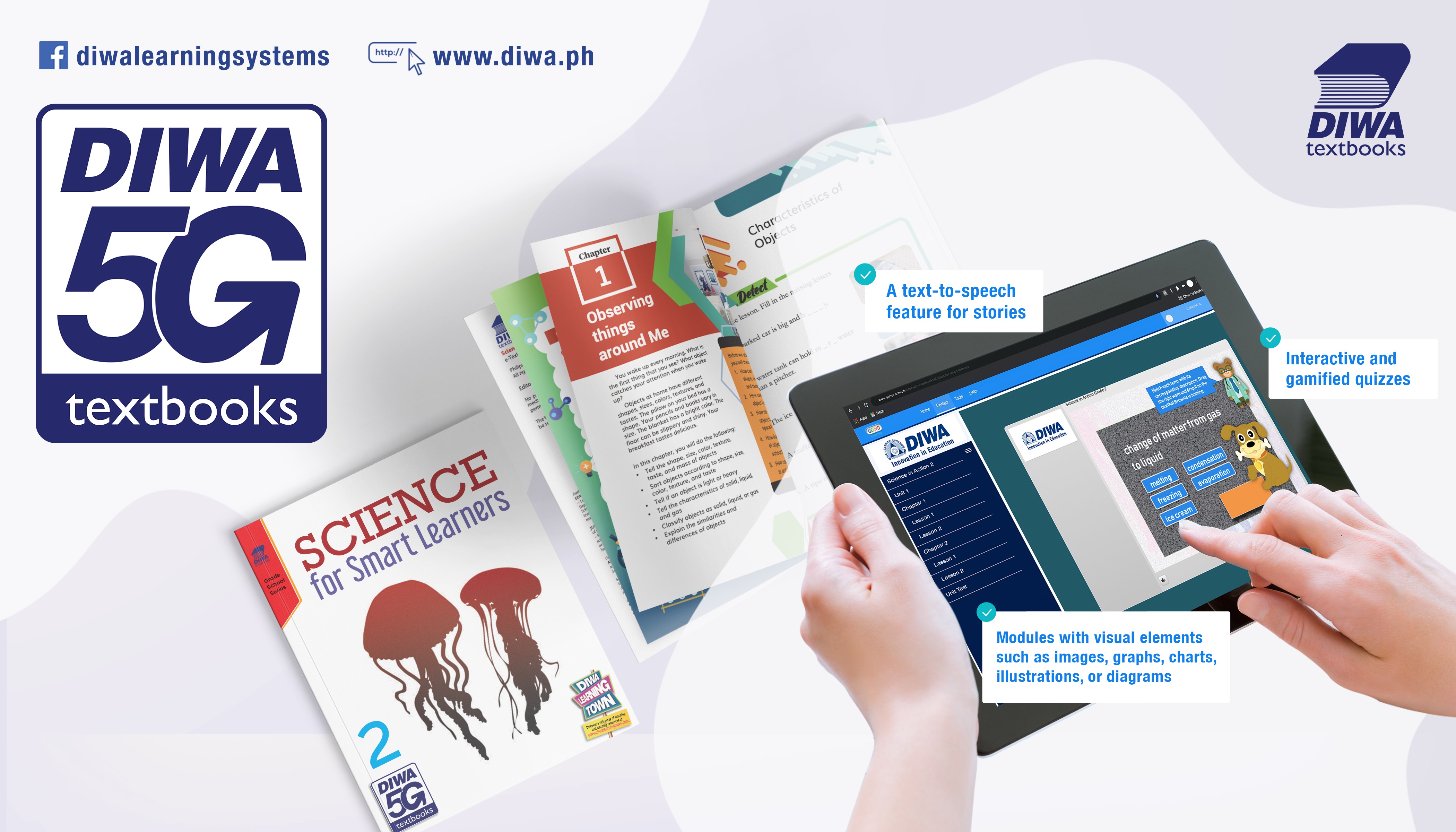
Diwa fills that space with several connected products. Its 5G textbooks combine printed books with electronic and interactive editions. Downloadable eBooks support offline viewing; teacher manuals and competency matrices help connect material to curriculum requirements. Supplemental Educational Magazines add short articles and activities, with digital copies included for schools subscribing to the corresponding print editions.
Genyo supplies curriculum-based content across English, Science, Mathematics, Filipino, and Araling Panlipunan. Diwa Learning Town provides supplementary resources. University Press of First Asia supplies the editorial expertise: writers, editors, publication developers, and education specialists. The useful unit here is a teachable lesson, with a route from preparation to practice.
Teacher training supports the whole sequence.
A classroom has more than one door
Genyo’s delivery options expose the practical side of this arrangement. The cloud version serves connected users. GenyoiXL serves schools with limited connectivity through a school-based server. Those are different deployment choices, and the distinction matters when a school plans what students can do on campus and at home.
In its July 2020 partnership announcement, Montessori Academy of Valenzuela described concrete uses: students could access prepared lessons, take tests, submit projects, play educational games, and read teacher messages. Virtual classes used a third-party conferencing application. That last detail is helpful. It shows a school assembling a working routine from complementary tools. For administrators, the sensible demonstration is a complete school day, including the awkward transitions between applications.
Make the quiz talk back
Checkbox, Diwa’s assessment portal, closes another gap. Its question bank follows units and lessons in Diwa textbooks. Teachers can use ready-made activities, monitor performance, and create drills around topics that students still find difficult. Learners get gamified practice and leaderboards.
The appeal is easy to understand: the quiz produces information the teacher can use for the next lesson. Competition adds an incentive, although a ranking is only one view of a child’s progress. A school choosing the product should examine the feedback and remediation workflow alongside the game mechanics. A brightly decorated score still needs someone to interpret it.
The practice came before the emergency
When COVID-19 closed classrooms, Diwa’s existing school relationships acquired a different significance. In a March 2021 account published by Diwa, Saint Louis College basic-education vice principal Florence Sobremonte described how earlier Genyo use helped her school adjust to remote instruction.
“Our established practices of Genyo usage prepared us to adjust and adapt easily to the new normal.”
Florence Sobremonte, Saint Louis College, in Diwa’s March 2021 account
This is a customer’s account, rather than a controlled comparison of learning outcomes. Still, it identifies a plausible mechanism: familiarity. Teachers already had routines to draw on. Diwa also opened Learning Town resources beyond its partner schools in 2020 and moved its teacher-development seminar series online. The disruption changed access and delivery; years of publishing and school support supplied material to work with.
The buyer is a school. The work is daily.
Diwa operates through school relationships, sales representatives, educational-resource sales, and digital subscriptions. It belongs to the First Asia Venture Capital group. Its position in the market sits between the educational publisher and the learning-platform supplier: content, delivery, assessment, and implementation are available together.
The bundle also shapes the buying decision. Compare the relevant books, content coverage, training, support, devices, and connectivity as one school-level budget. Free digital magazine access accompanies the matching print subscription, but that specific inclusion should not be mistaken for a free software package. Schools considering alternatives can compare other publishers and learning platforms against the same teaching tasks.
What a school can borrow
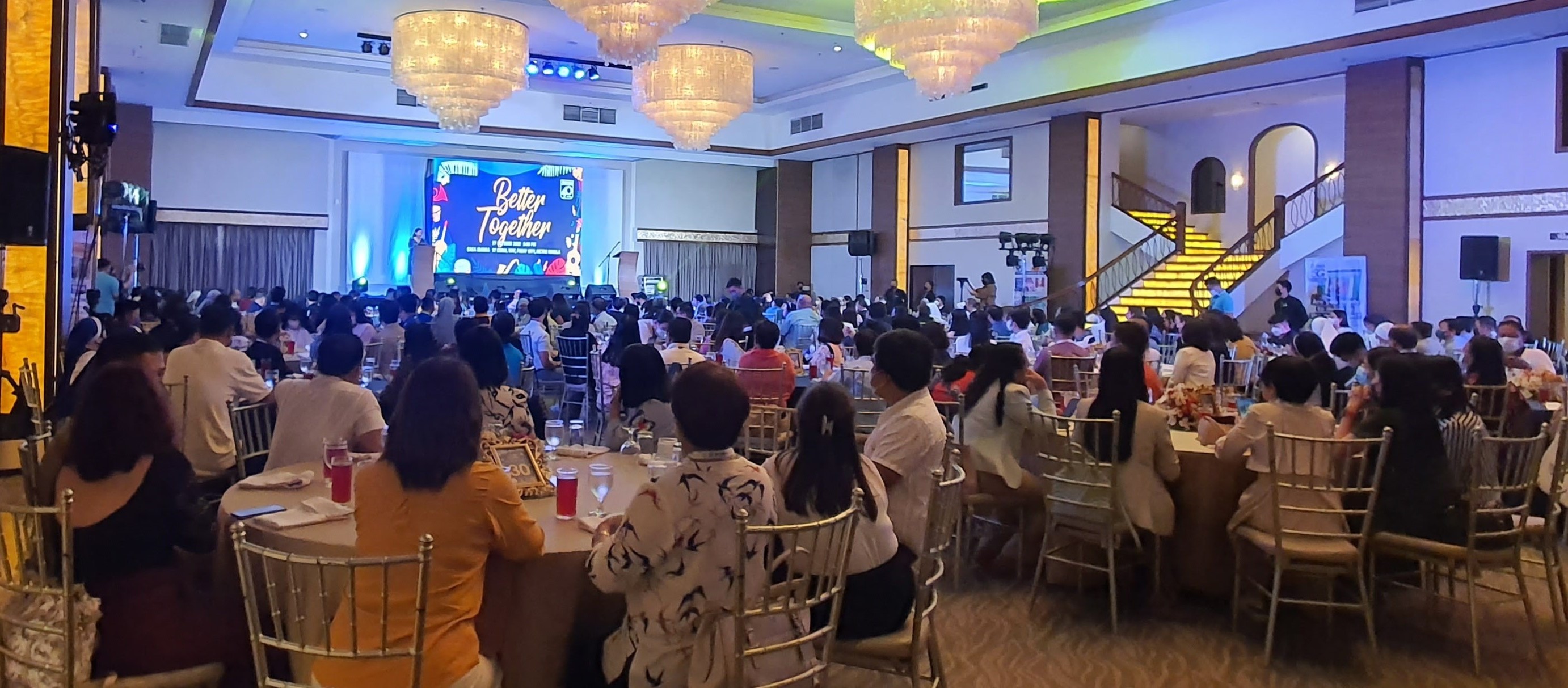
The teacher-support thread continues. Diwa’s current resource page offers a 2026-2027 product catalog. In September 2026, Diwa and Bato Balani Foundation held teacher-appreciation dinners alongside the CEAP convention in Cebu. Its school-year 2024-2025 Kiwi Challenge partnership with Education New Zealand took Grade 12 students into business-idea development.
There is a practical idea to copy: choose one lesson, map its content, delivery, assessment, and support, then test it under the school’s actual conditions. Device access and training time belong in that trial. A server on campus cannot supply a child’s home connection. A textbook cannot interpret every wrong answer. Diwa’s interesting proposition is how much of the surrounding work it puts within the school’s reach.