There is a funny problem inside the contemporary art world. Its institutions make things expressly designed to be looked at, argued over and remembered. Yet when those same institutions arrive on social media, many begin behaving like a nervous uncle at a teenage party. They borrow a meme. They try a dance. They count the likes. Then they wonder why nobody remembers who posted it.
Digital Counsel was built around the suspicion that this is not a content problem. It is a category error. A museum, art fair or foundation should not imitate the loudest account in the feed. It should understand what it believes, publish from that belief and become a destination in its own right.
The New York agency calls its work “Advertising by Artists.” That sounds like a slogan printed on a Lower East Side tote bag. It is also a tidy description of the business. Founder Marcella Zimmermann has assembled a practice spanning digital strategy, editorial, social media, paid advertising, branding, web development and experiential campaigns. Its clients include Hyundai Artlab, Rockefeller Center, The Armory Show, Crystal Bridges Museum of American Art, the Art Dealers Association of America and Harmony Korine’s EDGLRD.
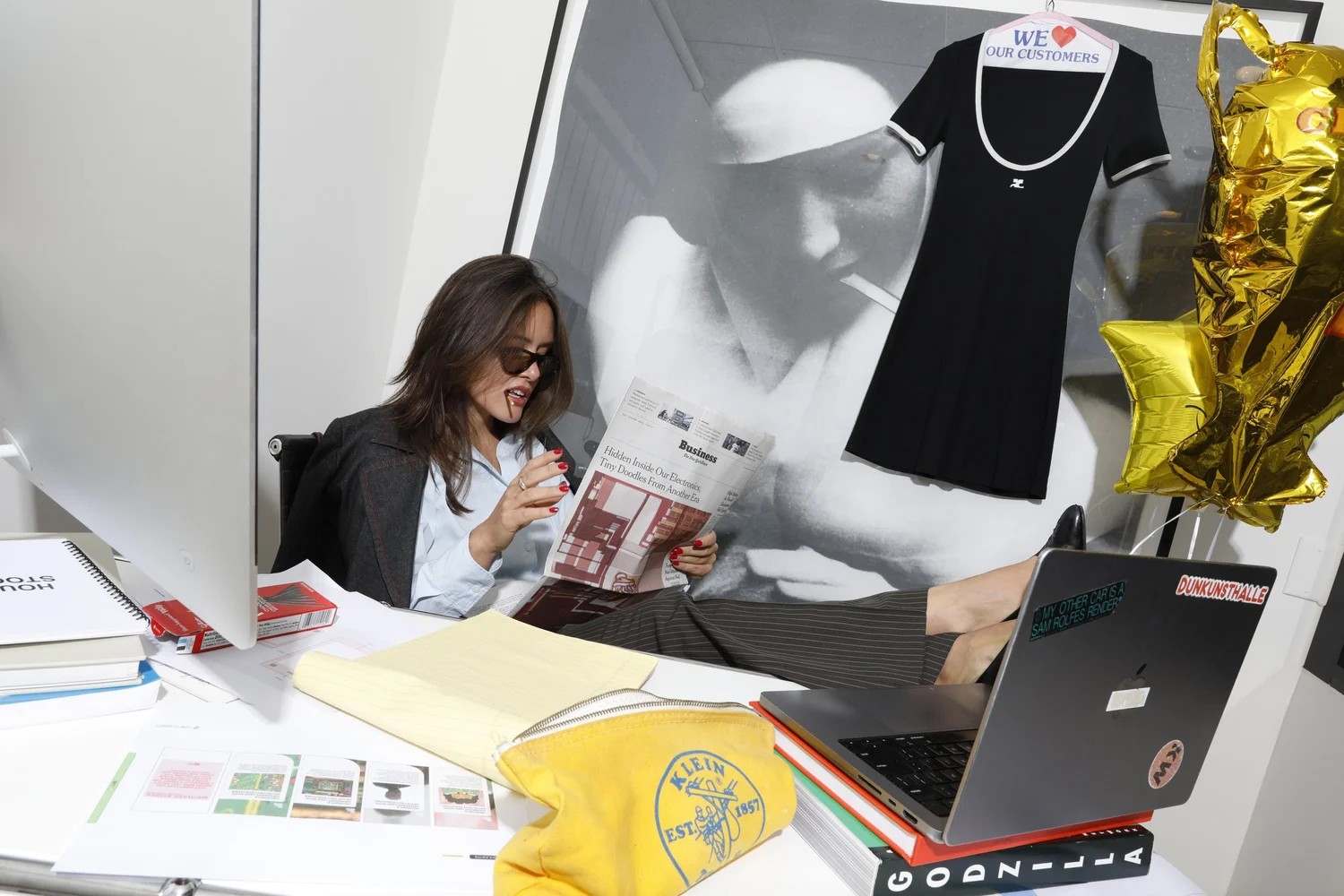
The first thing to fail was the old definition of publicity
Zimmermann learned communications when the gatekeepers had names and office phones. Her training included pitching stories, seating galas with sticky notes, managing red carpets and placing items in Page Six. She helped start Cultural Counsel in 2015 and spent nearly a decade inside the machinery of art-world PR. But the thing she most wanted to do was not simply persuade an editor to notice an artist. It was to build the experience around the artist.
That distinction became more useful as traditional media lost its monopoly on attention. The first thing that failed was not publicity itself; it was the comforting idea that a good press hit completed the job. Platforms and algorithms became gatekeepers too. Institutions now needed to explain themselves directly, repeatedly and in formats no arts publicist had been trained to make.
“The real gatekeepers now are the platforms and algorithms, not editors.”Marcella Zimmermann
Digital Counsel opened in 2022 as the first official affiliate of Cultural Counsel. The arrangement makes strategic sense. Cultural Counsel handles the traditional communications repertoire - media strategy, thought leadership, partnerships and events. Digital Counsel works the owned-and-paid side: the feed, the website, the campaign, the audience and the systems underneath them. One firm earns attention; the other gives that attention somewhere coherent to land.
A campaign begins like a wall label
The agency’s most useful idea is almost aggressively unglamorous: before making content, write down the thesis. What is the idea? Who is meant to care? What context makes it legible? Digital Counsel approaches those questions as a curator might approach exhibition wall text. Only after the core message holds up does the team translate it into a Reel, a TikTok, a website, a board report or an ad.
The campaign, before it becomes content
This sounds obvious until one looks at the average campaign, where a press release, an Instagram caption and a landing page appear to have been written by three neighboring governments. Digital Counsel sells integration: cultural fluency from artists and editors, distribution knowledge from media specialists, and implementation from designers and engineers. The client is buying fewer seams.
The Armory Show offers the clearest public result. Digital Counsel combined paid media, Reels, influencer campaigns and editorial grid posts to expand the fair’s existing identity. The agency reports ten million impressions, thousands of new followers and the greatest volume of content the fair had produced. The point is not that a famous fair became popular. It is that performance marketing did not require the fair to start talking like a protein-powder brand.
The range extends in both directions. For smaller organizations, the Social Strategy Starter Kit packages language, resources and a rollout plan so a modest nonprofit can work with the discipline of a large brand. At the other end, Digital Counsel helped Hyundai Artlab shape editorial programming around international art partnerships, and handled art direction and digital strategy for Rhizome World, a month-long celebration of software art in New York.
A follower count cannot tell you who followed
Zimmermann’s sharpest criticism of digital marketing is aimed at its easiest numbers. A view records exposure. A like records a twitch. Neither necessarily records meaning. Digital Counsel pays closer attention to saves and shares: one means the work was useful enough to keep; the other means it became part of somebody else’s expression.
Then comes the charmingly manual part. The agency audits new followers, clicking through accounts and mapping who has arrived. Is it a bot? A curator? A critic? An artist? A peer foundation in the same city? The dashboard says “one.” The human reading tells you whether that one matters.
“A save means something was valuable enough to hold onto; a share means it became part of someone else’s self-expression.”Marcella Zimmermann
This is where Digital Counsel separates itself from a generalist growth agency. In culture, ten relevant people may matter more than ten thousand indifferent ones. The work requires knowing the difference between a curator and a collector, between institutional authority and internet fame, and between a joke that opens a door and one that makes the institution look desperate.
Steal the method, not the aesthetic
A reader does not need an art-world address to borrow the underlying practice. Start with one governing idea. Translate it without changing its meaning. Measure evidence of commitment rather than easy applause. Finally, inspect the audience as people, not as a rising line.
A four-question copybook
- Can the campaign’s thesis fit in one plain sentence?
- Would the intended audience recognize itself in that sentence?
- Does the idea survive every format, from a board memo to a short video?
- Are people keeping, sharing or returning to the work?
There are limits. This approach rewards clients with a real point of view, access to their subject and enough patience to publish consistently. It will frustrate organizations seeking instant scale, anonymous content volume or the cheapest possible execution. Taste is not a substitute for distribution, as Zimmermann learned when she had to master paid media and analytics. Distribution is not a substitute for taste either. The offer depends on both.
That is also why “Advertising by Artists” lands. It is not an argument that artists possess magical marketing instincts. It is an argument for putting interpretation back into advertising. The cultural institution already has the raw material: ideas, people, objects, arguments and histories. Digital Counsel’s job is to make those materials travel without sanding away the reasons they mattered.
The gallery really is competing with the Kardashians, streaming television and a bottomless supply of synthetic cat videos. It should not try to beat them at being louder. It can be more specific, more coherent and more worth returning to. On the internet, consistency is not the opposite of creativity. It is how a point of view becomes recognizable.