Profile / Founder & Engineer
Diane Yu
She already had the exit most founders chase. Then she picked the mortgage industry - and started building again.
Co-Founder & CEO, Tidalwave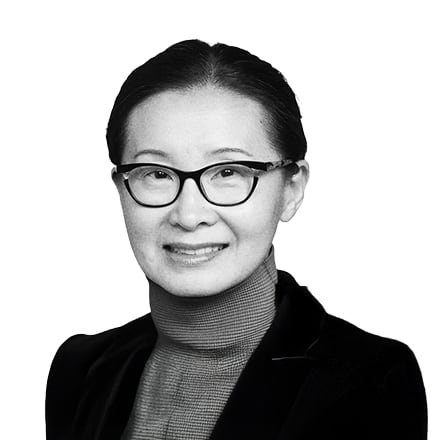
Diane Yu — Tidalwave
She already had the exit most founders chase. Then she picked the mortgage industry - and started building again.
Co-Founder & CEO, Tidalwave
Diane Yu runs Tidalwave, a New York company betting that the mortgage - a product most people touch only a handful of times in their lives - can be made faster, cheaper, and more transparent by artificial intelligence that shows its work. Its flagship platform, SOLO, sits at the point of sale, where borrowers apply and loan officers assemble files. It reads documents, verifies income and assets in real time, and handles the repetitive checks that have long kept mortgage origination stuck in a manual loop.
The pitch is deliberately unglamorous. Mortgage technology does not trend. But Yu, who has spent a career inside advertising and lending platforms, sees the same pattern she has chased before: a large, entrenched market running on old plumbing, waiting for someone willing to rebuild it. In November 2025 investors agreed, putting $22 million into a Series A led by Permanent Capital, with a check from D.R. Horton, the largest homebuilder in the country, and follow-on money from Engineering Capital. Weeks later, Tidalwave landed on the 2026 CB Insights AI 100, chosen from more than 40,000 companies.
What Yu keeps coming back to is fairness. In her telling, a loan decision has always carried a quiet element of human bias, and it has almost never been legible to the person on the other side of it. Her answer is what the company calls white-box AI - systems designed to be inspected rather than trusted blindly.
There's always been human bias at play when it comes to getting a loan, and an approval has never been transparent to the end consumer. We want to change that.Diane Yu
Tidalwave's early integrations - real-time income and asset verification through Fannie Mae, Freddie Mac, Argyle and Plaid - are what let the company make its speed argument. Lenders using the platform report shorter processing timelines and lower cost per file. The bars below reflect figures the company and its lending partners have cited publicly.
These are vendor-reported metrics, not audited industry averages. But the direction is the point: shave time and manual touches out of a process that has historically taken weeks.
Yu's path did not start in mortgages. It started in code. As a young engineer she made a promise to her father to leave China and see what she could build abroad, arriving in the United States for graduate school with a plan to eventually return home and start something of her own. The plan changed. The building did not.
She spent close to nine years at DoubleClick, the ad-serving pioneer, moving through roughly eleven different teams and rising to vice president of engineering. Each move, she has said, was less about the title than about learning a new part of the machine. In 2007 she co-founded FreeWheel as its chief technology officer, building a business-to-business platform that helped major media companies monetize video. FreeWheel counted early web giants among its customers and was acquired by Comcast in 2014 for roughly $375 million.
Most founders would have taken the exit and gone. Yu stayed about seven years, serving as CTO of Comcast Advertising and doing the unglamorous work of merging five acquired companies into one platform. Then, in 2021, she stepped into mortgages for the first time as CTO of the digital lender Better - a short but formative stint where she saw up close how much of the origination process was still stitched together by hand. Two years later she co-founded Tidalwave to fix it.
Don't be afraid of jumping out of your comfortable zone. Enjoy the learning experience.Diane Yu
The mortgage business is enormous and, by the standards of modern software, remarkably analog. A single loan can involve dozens of documents, multiple verifications, and a chain of hand-offs between borrower, loan officer, processor, and underwriter. For decades that complexity has been treated as a cost of doing business. Yu's argument is that most of it is now automatable - not the judgment calls, but the fetching, checking, and re-checking that eat the days between application and approval.
Her framing avoids the usual fear about automation erasing jobs. In her public comments she has been careful to describe the technology as removing repetitive load from loan officers rather than removing the officers themselves. The pitch to lenders is efficiency and consistency; the pitch to borrowers is speed and a decision they can actually understand. That dual message - equity for consumers, control for lenders - is the through-line of nearly everything she says about the company.
It also explains the shape of Tidalwave's cap table. Bringing in D.R. Horton, the country's largest homebuilder, is not a typical fintech move. It ties the platform to the moment a home is sold, where a faster, cleaner mortgage directly helps close the deal. And leading the round with Permanent Capital, alongside a follow-on from Engineering Capital, gave Yu backers with patience for an industry that changes slowly. Loyalty, again: several of the people writing checks and building the product have worked with her across previous companies and previous decades.
We can effectively reshape the mortgage industry on the back of our super-strong AI engine.Diane Yu
I always view myself as how much I learn.
We seek to create an AI-based game changer in a stagnating industry - something that puts the lender at the forefront and in control.
We knew there had to be a better solution to the challenges of the mortgage industry - a tech solution creating consistency and ease for lenders and consumers.
If you build a learning environment, that keeps the individual, keeps the team motivated.
Yu keeps working with colleagues and investors from decades back, choosing co-founders by trust rather than pure opportunity. Tidalwave's founding team is largely former FreeWheel and Better hands.
Across her teams she has championed a share of women engineers unusually high for the field, and has been recognized on Cablefax's Most Powerful Women and Most Influential Minorities lists.
The product's name points at its design goal: let a borrower move through a mortgage application largely on their own, with AI handling the paperwork behind the scenes.
Since 2022 she has served on the board of Magnite (Nasdaq: MGNI), a public ad-tech company - a foot still planted in the industry where she made her name.
The nation's largest homebuilder is both an investor in and a partner of Tidalwave, a signal that the platform is meant to sit close to where homes actually get sold.
She left China as a young engineer on a promise to explore opportunities abroad, planning to return and start a company. She built companies instead - just not where she expected.
"Reshape the mortgage industry on the back of a super-strong AI engine" - and, in Tidalwave's own framing, capture roughly four percent of the U.S. mortgage market along the way.
Sources: citybiz, HousingWire, Fortune, BusinessWire, Alejandro Cremades, Crunchbase, Tidalwave.