Devin Daly once made a revealing comparison between a vacation and a car-dealer convention. The convention won. In 2017, looking ahead to the National Automobile Dealers Association gathering in New Orleans, he explained that a few days away from work made him restless. At NADA he could get business done, eat well, go to parties and catch up with friends. It was a holiday with the inconvenience of idleness thoughtfully removed.
“NADA is better than any vacation I’ve been on,” he wrote. His enthusiasm extended to the previous show’s inconvenient layout: walking between buildings in San Francisco meant enjoying January sunshine after a New York winter. A complaint had become a small pleasure.
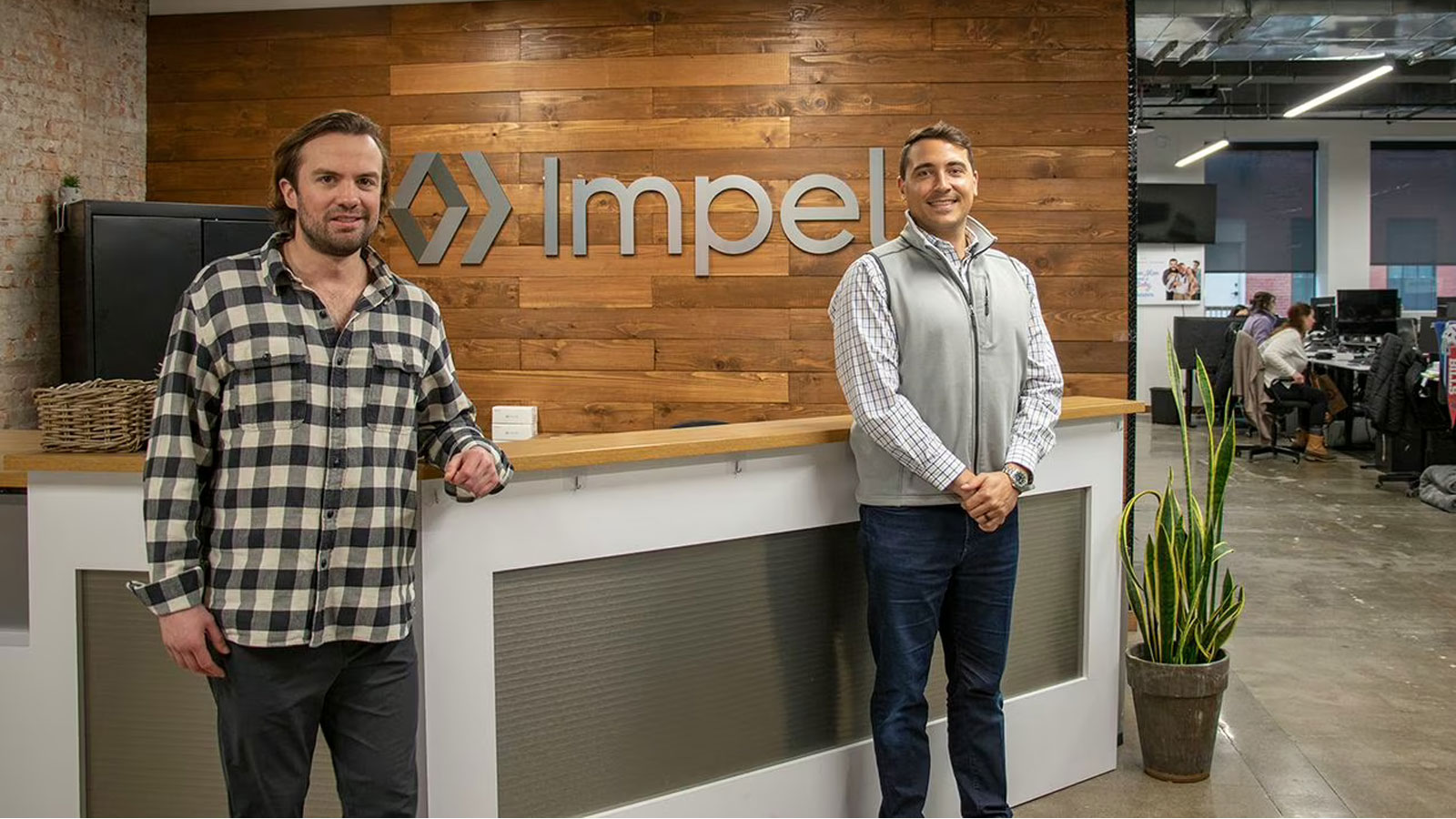
That is a useful introduction to the co-founder and CEO of Impel. His public story contains financing rounds, acquisitions and artificial intelligence. It also contains someone who likes being where his customers are. Before dealers became the people he looked forward to seeing every year, they gave his young business a reason to change direction.
01 / The first useful detourThe shoe finds a parking space
The early demonstration involved a three-dimensional shoe spinning on an iPad. Daly and co-founder Michael Quigley brought it to StartFast, the Syracuse accelerator, in 2013. Their company was called Glyphr, and fashion retailing was the initial target. A shopper could examine a product from different angles without picking it up.
James Shomar, an early investor, liked the demonstration but wondered whether they had found a market. Tablet magazines offered the next opening. Renamed SwipeToSpin, the company won work with Popular Science and Bloomberg Pursuits. Publishing had customers and recognizable names. Growth, however, was slow.
Then Daly tried a car dealer. The sale was relatively easy. He asked the board to let him run more experiments. Dealers continued buying while other prospects kept discussing possibilities. The founders changed their focus, and the business became SpinCar.
A shoe and a car have rather different storage requirements. On a screen, both present the same problem: the buyer would like a better look. The consequential discovery was a group of customers prepared to pay for that look.
02 / The arithmetic underneathA banker’s eye for a working business
Daly came to entrepreneurship with experience in technology investment banking and private equity. His education includes Saint Joseph’s University. The financial background appears plainly in how he talks about company building: a promising technology needs an industry problem, a team capable of solving it and a credible route to profitability.
There is no decision that is strategically right but financially wrong!
Devin Daly / 2024
The exclamation mark suits someone whose idea of relaxation involved an exhibit hall. It also puts a limit on the romance of invention. An interesting product still needs a business that can support it.
Syracuse supplied part of that support. The company grew through the Tech Garden incubator. In January 2023, Impel secured a $104 million growth investment led by Silversmith Capital Partners, with participation from Wavecrest Growth Partners. Product expansion and acquisitions were explicit uses for the money. The little sales experiment now had considerable resources behind it.
- SpinCarInteractive merchandising enters automotive.
- Pulsar AIAcquisition adds conversational AI.
- ImpelA broader name; CarLabs.ai joins later that year.
- OutsellCustomer data and automated outreach join the platform.
03 / After the handshakeThe conversation after the sale
SpinCar’s name described a particularly visible thing its software did. By March 2022, when the company became Impel, that description had grown restrictive. It had acquired Pulsar AI in 2021, moving further into conversations with shoppers. CarLabs.ai, acquired in November 2022, added capabilities for automotive service operations. A rotating vehicle image could begin an encounter. There was plenty to do afterward.
Daly’s attention turned repeatedly to that afterward. In 2023, he argued that dealers were leaving value in the service department by failing to stay in touch with buyers. A sale creates a relationship with years of potential maintenance and future purchases attached. Yet staff must handle the customers already in front of them while finding time to contact the ones who have gone home.
His proposed answer was practical: use customer records and service history to identify who needs attention, then automate the outreach, questions and appointment booking. Remembering thousands of owners individually is a substantial administrative job. Customers experience the result as something smaller and more personal: somebody remembered their car.
04 / The human complicationThe people have to let it work
Software enters a workplace already full of habits. Daly has described employee resistance that stalled AI installations and sometimes led customers to cancel. People needed to understand what the system would do, how it would fit their work and when they could step in.
Impel responded with onboarding and change-management work, integration into existing processes, dealer-controlled rules and the ability for staff to take over an AI conversation. Those are revealing product decisions. They recognize that an employee’s willingness to use a system is part of whether it works.
Daly has also cautioned against treating general-purpose AI as if it already understands a dealership. A fluent answer can still get the business details wrong. He has advocated industry-specific training, connections to dealership systems and controls around what the software says. For someone selling conversation, accuracy is an unavoidable part of the product. A helpful tone does little good if the customer receives the wrong information about the place they plan to visit.
The company’s own history has a less formal vocabulary for continuity. Employee anniversaries have been called “Spiniversaries,” preserving a little of the old name. Celebrating two five-year employees in 2021, Daly recalled the early Tech Garden desks, packed so tightly that their chairs touched. It is a more tangible measure of a startup’s beginnings than a financing total. Before there was room to expand the platform, there was barely room to roll back from a desk.
In September 2026, Impel’s commercial leadership was still making the same adoption argument: managers, frontline employees and executives all need a plan for working with AI. Buying the tool leaves an organization with decisions about handoffs, training and incentives.
05 / A larger responsibilityBuying the next conversation
The Outsell acquisition brought that expanding remit into focus. Announced in July 2024, the deal involved more than $100 million in cash consideration plus Impel equity. Outsell brought customer engagement software, predictive capabilities and a history of automotive customer data stretching back two decades. Founder Mike Wethington would join Impel’s board.
For Daly, the attraction included the ability to connect automated outreach with an actual response. A marketing system can decide when to contact someone. Conversational software can deal with what the person says next. Combining the two promised a more continuous relationship across departments.
Cash consideration, plus Impel equity.
Announced July 9, 2024.He also understood the danger in accumulating products. Discussing industry consolidation that September, Daly described dealers’ frustration with vendors that buy businesses and never properly integrate them. His criticism set a test for his own company. A combined portfolio has to feel coherent to the people paying for it.
By November, he said the teams were integrated and early product combinations were delivering results. That year brought personal recognition too: an EY Entrepreneur Of The Year New York finalist place and an Automotive News All-Star designation for digital retail. The recognitions sat beside a less ceremonial obligation: making the enlarged business useful.
06 / The expanding conversationA showroom with a longer memory
Daly’s later description of an AI operating system gives the acquisitions a common purpose. He wants connected agents to coordinate research, purchase, service and ownership under dealership rules, with people overseeing the work. The same customer should not have to begin again with every department.
The distribution widened in 2026. In February, Impel and TrueCar announced a multi-year partnership covering TrueCar’s network of 11,500 dealers and 250 membership organizations. September brought Hyundai certification that made Impel Chat AI available to more than 830 U.S. Hyundai dealers. The announcements describe access and availability; each dealership still has implementation work to do.
Inside Impel, employees were adapting too. By September, the company was using AI roleplay built from recorded dealer conversations to help customer-facing staff practice before speaking to clients. The company reported that getting comfortable with a new product now took an average of one month, compared with three to six previously. Growth had created another familiar problem: people needed time to learn the tools they were expected to discuss.
07 / A connection close to homeAnother classroom, close to home
Daly’s interests now reach into education. He co-founded ForEDU with Vinny Lobdell and is a founding investor and board member. The company builds AI tools for educators. In September 2026, it became Le Moyne College athletics’ first jersey patch partner.
ForEDU develops its tools alongside educators, with an emphasis on letting schools customize them to their needs. The setting differs from a dealership, but the implementation question is familiar: how does new software fit the people already doing the work? Daly has entered another field where professional relationships and daily routines will shape what the technology becomes.
For Daly, Le Moyne is a family connection: his wife Angela, his sister and his father are graduates. The college also has a history with Impel, which emerged from StartFast, once based in its business school. Impel has hired dozens of alumni and supplied a judge at every Dolphin Tank entrepreneurship competition, as part of its relationship with the college.
There is a pleasing continuity here. An accelerator once helped two founders work out who wanted their product. Years later, one of those founders is involved with another education business, while his automotive company stays connected to students testing ideas of their own.
The scale has changed. The problem of finding useful work for an idea remains. Daly’s career began to take its automotive shape when a car dealer bought an unfamiliar piece of software and he paid attention. A spinning shoe had found an unexpected customer. He kept the customer, changed the business and eventually found plenty of reasons to enjoy the convention.
Keep the conversation going
- Explore ImpelCompany ↗
- Devin Daly on LinkedInFollow ↗
- Talking AI and Outsell with Car Dealership GuyYouTube ↗
- Daly discusses the acquisition with WSYRYouTube ↗
- The growth conversation with ASOTUWatch ↗
- Why Daly looked forward to NADA in 2017His words ↗
- The early account of a shoe, an iPad and a pivotRead ↗
- ForEDU’s connection to Le MoyneNews ↗