A fastener has little interest in a founder’s education. It has to fit, arrive and do its job. Devang Shah’s business lives in the considerable territory between that simple requirement and the effort an enterprise can spend fulfilling it. Bulk MRO, which he co-founded with his identical twin, Gaurang, takes responsibility for industrial purchases whose paperwork can enjoy a much longer career than the thing being purchased.
Before this, Shah traded credit derivatives at Deutsche Bank and Citigroup on Wall Street. Now his company deals with the physical world of products, suppliers and deliveries. The change of scenery is considerable. The question of how a transaction reaches completion provides a useful thread through the two careers.
A trader returns to the physical world
The brothers grew up in Mumbai, studied at the Asheville School in North Carolina and went on to the University of Pennsylvania. Both earned dual degrees across Wharton and engineering. Devang attended Wharton between 2000 and 2004. Gaurang’s subsequent work took him to McKinsey’s New York office; Devang’s took him into trading.
Those are recognizable credentials, though credentials are rather better at opening doors than unloading trucks. The brothers’ later work brought them into industrial projects in India, including the family business, Gruppe Littlesilver. There they encountered the difficulty of coordinating everyday purchases across a scattered supplier base.
Their working partnership in technology and distribution dates to 2007. Bulk MRO followed in 2015. By then, they had already spent years building businesses together. The twin connection gives the biography an immediate point of interest; the duration of the working relationship gives it substance. Shared childhood and shared execution are different forms of familiarity.
Shah is based in Mumbai. His company’s operations extend beyond India. That combination suits the history: an education and early career in the United States, followed by a business rooted in industrial buying and increasingly engaged in international trade. The geographical movement is clear without turning it into a fable about returning home.
The customer had already written the brief
Bulk MRO entered Y Combinator’s Winter 2017 batch. Its business addressed an awkward commercial arrangement: large enterprises with elaborate purchasing requirements buying from many small suppliers. The company offered to give those buyers one place to procure their industrial requirements.
The range ran from fasteners to gas analyzers. Its early enterprise customers included Ingersoll Rand, Exxon, Reliance Industries, Tata Group and Unilever. Those were customers in 2017, a snapshot of the business at the time. More revealing than the list was the reason the company existed: customers had asked for the service.
There is a pleasing economy to that beginning. An industrial customer already knows what an unreliable supplier costs in time and attention. A founder does not have to persuade that customer to acquire a new problem. The work is to become a credible answer to an existing one.
“We supply any product of any brand as one supplier.”
Devang Shah · October 2019
The phrase makes the proposition easy to understand. It also sets a demanding brief for the operator. A single relationship on the customer’s side requires many relationships behind it. Someone still has to find the goods, check the requirements, arrange the movement and deal with the documents. The simplicity appears at one end because work is accepted at the other.
- 01RequirementsWhat is needed?
- 02SourcingWho can supply it?
- 03FulfillmentHow will it arrive?
- 04PaymentOn what terms?
Conceptual workflow · each step carries its own coordination
The distance between an order and a delivery
Today, the company describes procurement arrangements including vendor-managed inventory and annual rate contracts. These are ways to organize an ongoing requirement, beyond the individual act of placing an order. For Shah’s business, the relationship can continue through repeated demand, supplier coordination and inventory decisions.
Its fulfillment offering covers warehousing, cross-border logistics and last-mile delivery. Freight forwarding, customs documentation and compliance sit within that stated scope. Such services help explain why industrial commerce resists the tidy charm of a buy button. The button is an excellent beginning. It is a poor substitute for a shipment.
For an executive running this sort of company, breadth brings a particular obligation: the handoffs have to work. A purchasing decision creates consequences for logistics. A delivery date creates consequences for inventory. When services are sold together, the customer has a reasonable expectation that the people providing them will speak to one another.
The company’s technology offering connects those practical tasks with information. Bulk Source covers sourcing; Bulk Track covers shipment visibility. Tailored catalogs, purchase-order visibility and an application integrated with SAP B1 Hana form part of its stated approach. The useful measure of such software is what a buyer can see and do while an order is still in motion.
This helps make Shah’s work legible. The products matter, but so does the continuity of the transaction. The purchasing team needs to know what it ordered. The delivery team needs to know where it goes. The finance team needs information it can reconcile. A business serving all three has plenty of opportunity to be useful.
An invoice has a timetable, too
Shah’s earlier trading career becomes an interesting point of comparison when payment enters the picture. Bulk MRO offers financing alongside supply services. Its financing page describes credit terms for buyers and immediate payment for suppliers, intended to address the different demands each side places on cash flow.
A supplier and a buyer can agree on the goods while wanting money to move on different dates. The commercial relationship has to accommodate that interval. It is reasonable to read a connection here with Shah’s financial background, although the connection is an interpretation of his career, rather than a statement of his private motivations.
In July 2020, Bulk MRO announced up to Rs 25 crore in debt financing led by Stride Ventures, with a bank participating in the arrangement. At that point, its supply-chain finance offering was described as Bulk Udhaar. The funding belongs to a specific stage of the company’s history, as it was building services around the transaction as well as supplying the goods.
The combination gives his career an unusual texture. Wall Street trading and industrial procurement have different vocabulary, surroundings and daily demands. Both require attention to counterparties and obligations. In the business Shah helped establish, the object ordered, the journey it takes and the terms on which it is paid for all sit within the commercial brief.
2015Bulk MRO founded
2017YC Winter batch
2026Railway cooperation MoU
Room for the team
One of Shah’s more memorable accounts of the early business concerns office space. In 2019, he recalled four office moves in four years. Some of the rooms were so small that a full turnout, including colleagues working in the field, left people standing. The furniture had failed to keep pace with attendance.
He associated that experience with frugality and respect among colleagues. It is a useful personal detail because it comes with a setting and a practical inconvenience. The lesson grew out of people working close together, with limited room, rather than arriving fully polished as a corporate value.
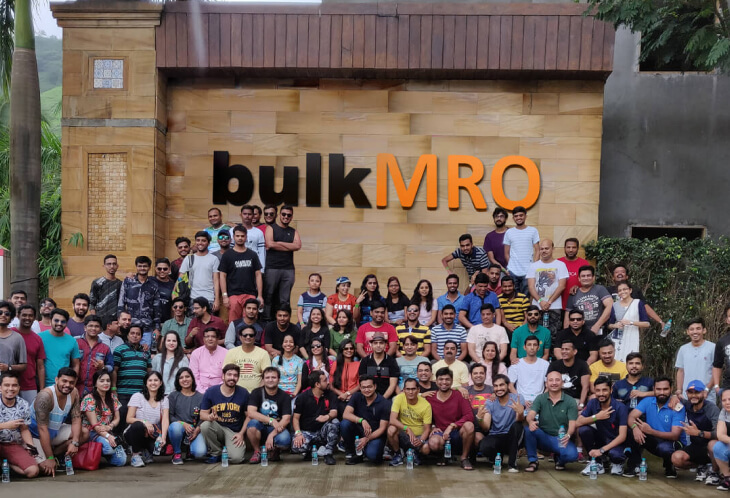
The recollection also brings the story back to work shared with other people. Founder biographies tend to accumulate institutions, job titles and funding events. An overcrowded office introduces the colleagues who had to navigate the same room. It is a smaller scene, and a more human one.
By 2019, the company had been selected for Tech30. Recognition supplies a date for the public chronology. Shah’s office story supplies an image to remember alongside it: an enterprise expanding while its early rooms were still making everyone rather well acquainted.
A handshake points toward the railway
In September 2026, Shah appeared in a different setting: an agreement signing at Innoprom.India. As Bulk MRO’s CEO, he signed a memorandum of understanding with Natsproektstroy, represented by Dmitry Bolotsky. The proposed cooperation concerns exploring the localization of railway signaling manufacturing in India.
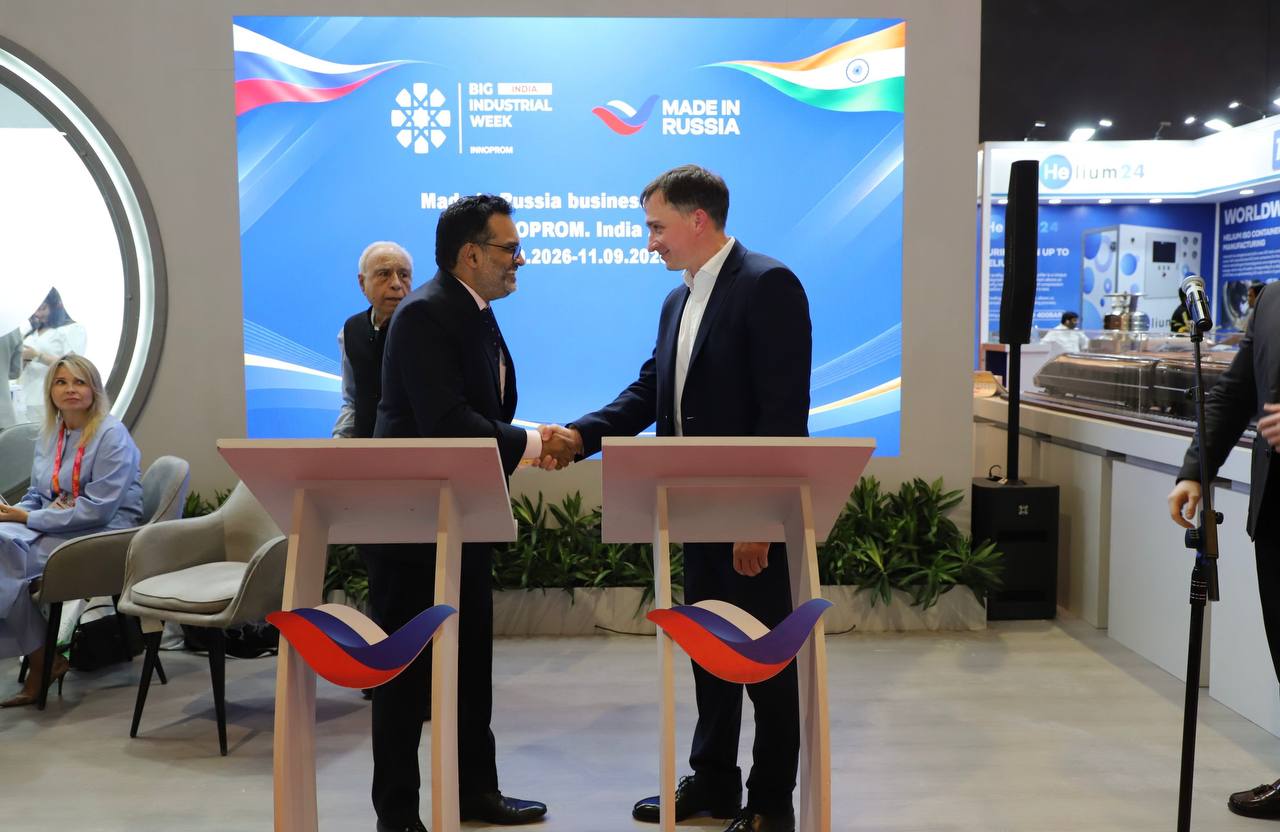
The operative word is “explore.” The agreement establishes an intended direction for cooperation. It leaves the manufacturing outcome to subsequent work. Keeping that distinction intact makes the development more interesting: it shows the territory Shah is pursuing without prematurely writing the result.
The setting also fits a business whose stated remit now includes turnkey project execution as well as sourcing and fulfillment. That service extends from planning and procurement into installation, implementation and maintenance. The scope reaches toward the functioning project, where coordinating many contributors becomes part of the assignment.
Across these chapters, Shah’s career comes into focus through what has to happen between an agreement and its completion. Credit, industrial supplies, international deliveries and proposed manufacturing cooperation each bring different obligations. His business has grown around accepting more of the surrounding work. The fastener, meanwhile, retains its admirably limited ambitions. It would simply like to arrive.