The mountain is finished. The T-shirt is not. In Design Musketeer’s portfolio, a white tee carries a sunset, dark pines and a pair of pale peaks. It is an easy image to understand: a little wilderness for somebody’s wardrobe. Getting that image into an online shop, however, involves another set of jobs. The artwork needs the right dimensions. The product needs a mockup. Somebody must prepare the listing. A good graphic can spend a surprisingly unproductive afternoon sitting in a folder.
Design Musketeer LLC sells help with that sequence. The creative agency serves print-on-demand sellers and other e-commerce businesses, combining merchandise design with the assets and operational work that surround it. Its appeal is especially clear for a merchant whose next launch depends on a steady stream of usable files. The company offers to take responsibility for more of the distance between an idea and an item a shopper can actually see.
A catalog has an appetite
Print-on-demand is a useful entry point into this business because the work repeats. One approved shirt does not supply the next collection, the next audience or the next advertisement. Design Musketeer’s service starts with a seller’s niche and goals, moves through research and artwork, then gives the customer a review stage before delivery or upload. The merchant remains involved in approval; the agency takes on production.
The deliverables extend beyond shirts. Product mockups show shoppers how artwork looks on merchandise, while advertising assets carry it into campaigns. The company says it can upload approved designs into Shopify, Etsy or a print provider, with names, tags and prices following the customer’s instructions. That last detail is revealing. A store-ready asset has both a visual identity and administrative baggage.
For an owner, the practical attraction is fewer unfinished handoffs. The same request can connect a niche idea to an image and then to a listing. Buyers still need to agree on the package: the company markets several POD offers with different allowances. But the organizing idea is easy to grasp. Creative work becomes more useful when somebody also handles the steps required to put it in circulation.
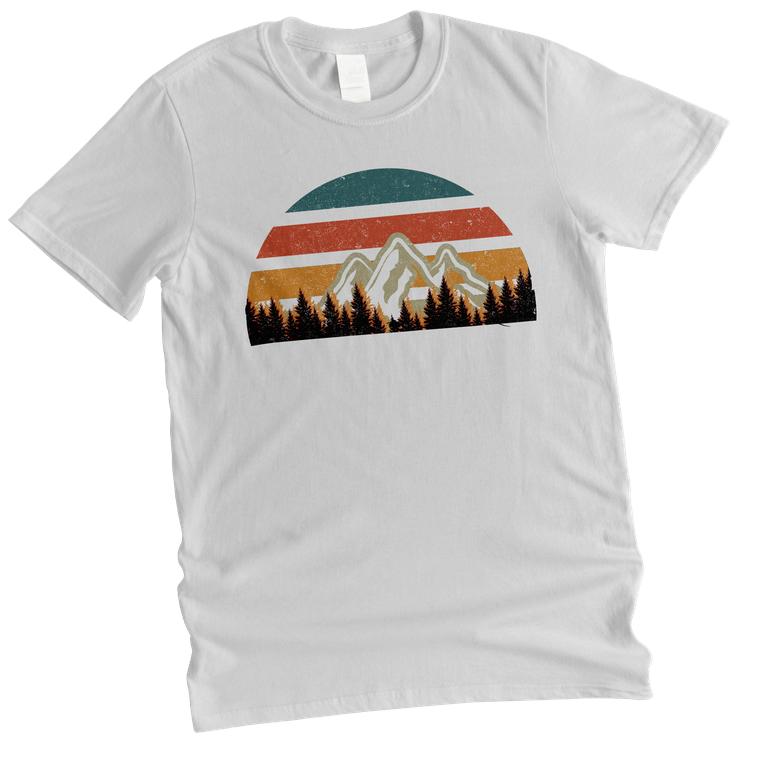
The customer is tired of repeating the brief
The agency’s customer list points toward working online businesses. Its published testimonials include ShineOn founder Eric Toz, Trey Lewellen and WeScale co-founders Chris Heckman and Megan Haines. These are company-selected endorsements, but their emphasis is instructive: repeat work, communication, deadlines and the ability to produce several kinds of creative material. The company says it has served more than 400 e-commerce brands.
Heckman’s account identifies an early frustration in his own buying process: finding reliable designers. “Freelance platforms like Upwork and Fiverr were inconsistent and time-consuming,” he says in a testimonial published by the agency. He credits Design Musketeer with delivering ad creatives, product designs, email graphics and website visuals more consistently. His explanation for changing providers is operational as much as aesthetic.
“Freelance platforms like Upwork and Fiverr were inconsistent and time-consuming.”
Chris Heckman · WeScale co-founder
Company-published testimonial
The Creative Partner service is built around that complaint. A recurring team works across formats, with requests collected in a queue and communication through Slack or Teams. An in-house team offers another route to continuity; freelancers and project agencies offer others. Design Musketeer’s particular proposition is to buy several creative disciplines through one ongoing relationship. The customer pays for capacity and for fewer introductions.
Unlimited requests, finite hours
The subscription menu makes the model concrete. At the time of review, the general creative plans list $1,499 a month for 70 hours, $2,499 for 140 hours and $4,999 for 245 hours. Advertised turnaround targets run from 72 hours on Essential to 24 hours on Ultimate. The company also sells separate POD packages and custom work, so these prices describe one part of the menu.
Published prices observed September 10, 2026. Separate POD and project offers have their own scope.
“Unlimited” describes the requests a customer can place in the queue, rather than an infinite amount of completed labor. That makes utilization the important calculation. A company with regular campaigns can keep a creative team occupied; a company with one urgent request and three quiet weeks may buy capacity it does not use. The first two hourly tiers do not carry unused hours into the next month.
Turnaround also has conditions. The service usage policy ties same-day or 24-hour work to small, uncomplicated tasks with complete instructions and assets. Research-heavy assignments and changing directions take longer. A new brand system cannot reasonably be treated like an ad resize. For a buyer, separating those requests before they enter the queue is a small administrative habit with a large effect on expectations.
The logo has to survive the sewing machine
Embroidery digitizing is one of the more revealing services in the catalog. A logo on a screen is a set of shapes and colors. A logo on a cap requires instructions for thread moving through fabric. Design Musketeer describes rebuilding artwork into stitch files, setting direction, density, underlay and other production details for the garment and machine. It accepts ordinary artwork files but delivers formats such as DST and PES.
The specificity matters. Its cap service accounts for a curved crown; its raised lettering work accounts for foam. Small text and detailed marks require decisions about what can remain legible at the requested size. The company offers edits and asks customers to specify the machine, placement and hoop size. These are practical production questions that a general request to “make the logo smaller” leaves unanswered.
Embroidery shops, uniform suppliers and apparel brands sit alongside online sellers in this part of its audience. The common problem is a design that must work somewhere outside a presentation. A useful brief therefore includes the destination: which garment, which placement, which production requirements. Readers can borrow that discipline for other formats, too. Start with where the asset must end up, then work backward.
A product can pose before it exists
The 3D visualization service approaches another production constraint: getting product imagery before a physical sample is available. Design Musketeer offers modeling, still renders, animation, interactive views and assets prepared for augmented reality. A model can be reused to generate additional angles, colors or settings. For a brand planning several product variants, that changes how it can commission a family of images.
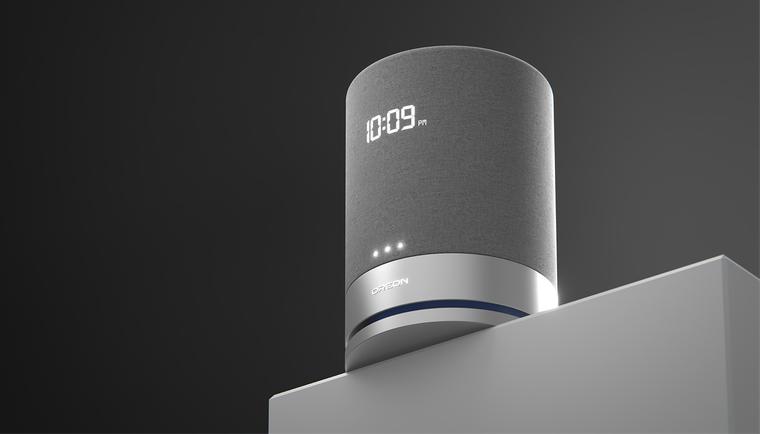
Its OREON portfolio piece presents a cylindrical voice-assistant device on an angular pedestal, with restrained lighting and a small digital display. It illustrates a different visual vocabulary from the mountain shirt, yet both pieces help a viewer understand a product at a glance. The relevant purchase from the agency is the visualization and its supporting assets.
Reuse is the commercial attraction, rather than a guarantee that rendering will suit every job. A model still needs accurate product information and review. A seller deciding between photography and 3D should consider the views required, how often the product changes and what buyers need to inspect. The agency’s offer gives that seller another production option, particularly before manufacturing has supplied something to photograph.
One identity, many small appearances
Branding adds the rules that keep all these outputs related. Design Musketeer’s identity work includes positioning, messaging, a logo suite, colors, typography and usage guidelines. Packaging, print collateral and campaign assets then apply those choices. The distinction is useful for a growing shop: commissioning a logo is a discrete purchase; maintaining a recognizable appearance is recurring work.
The company quotes focused identity projects from about $2,000, rising to $10,000 or more for broader applications, with scope established through discovery. Its process puts strategy and direction before design development. For customers, that order creates a place to settle disagreements about audience and positioning before they appear as endless arguments over colors.
Store development and automation sit beside the visual services. The e-commerce offer covers Shopify, WooCommerce and custom builds, plus conversion work and maintenance. The AI service describes integrations, agents and assisted content production. These are offered services, with outcomes dependent on the assignment. The shared ambition is to keep creative assets and business processes moving through the tools a merchant already uses.
- 01Brief
- 02Design
- 03Approve
- 04Upload
Approval is a distinct step. Automation follows the customer’s instructions.
Give the queue something worth making
The most transferable lesson in Design Musketeer’s model is to define a finished job generously. If the business needs a live listing, the brief should cover the listing. If it needs an embroidered cap, the brief should specify the cap. Making those destinations explicit lets the customer assess whether the purchased service actually removes work from the business.
The model also asks something of its buyer. Someone must choose priorities, provide product information and review drafts. A subscription is less compelling when demand is sporadic or a project needs prolonged exploration before anyone can describe the deliverable. Clear recurring work gives the arrangement its purpose. The mountain on the shirt may be the eye-catching part. The business value arrives when the shirt is ready for the shop.
Explore the work
See the company website, portfolio, current packages and company blog.
Follow LinkedIn, X, Instagram, Facebook, Behance or Dribbble.