Dennis Kirwan gave an AI system an assignment few chief executives would put on the company calendar: explain how a competitor could beat his business. The target was Dymic Digital, the marketing agency he co-founded. He asked for an attack plan built from public information. The machine came back with notes.
Publishing was inconsistent. Claims needed more outside validation. The website lagged behind the business. Kirwan then reversed the exercise, turning the same scrutiny on a competitor. The uncomfortable part was recognizing shortcomings his agency advised clients to fix. He described the problem with admirable economy: “We were operating ahead of our own proof.”
There is something pleasingly awkward about a marketer commissioning his own opposition research. Most corporate self-portraits have flattering lighting. This one arrived carrying a red pen. It also supplied a useful introduction to Kirwan: a salesman who has repeatedly had to reconsider what, exactly, he was selling.
A backpack full of working capital
His earliest account of commerce involves a school soda machine. At ten, he says, he compared its dollar price with the cost of a case at the grocery store. His mother financed the inventory. He carried cold cans in his backpack and sold them for half the machine’s price. His account puts his morning earnings at the equivalent of his friends’ weekly allowance.
The appeal of the story is its scale. No pitch deck, no addressable-market slide, just cans, a bag and a price someone would pay. A child had spotted the distance between wholesale and retail. His competitive advantage had shoulder straps.
Kirwan was born in Sacramento and moved to Southern California during high school. He recalls living with his grandmother, starting work at fifteen and a half, and learning to save. His route through education involved part-time study alongside full-time work. Those details put some weight behind the soda story: earning money became a practical responsibility early.
The title went backward before it went forward
A job at Lexus led to a connection with a customer working in venture capital. Kirwan moved into sales and startup fundraising, eventually operating his own venture business. After the financial downturn, he entered an internet marketing agency at the bottom, making calls. He advanced into sales management and international business development.
A career can sound wonderfully orderly once the job titles have been arranged in a column. Changing from business owner to telemarketer is less tidy while it is happening. Kirwan’s account makes room for that reversal. The ability to begin again appears more useful here than the ability to make a résumé look inevitable.
He dates his entry into marketing to 2010. By 2013, he was building Dymic. The new agency’s premise addressed a recognizable annoyance: businesses buying different pieces of marketing from different vendors, then having to make the pieces work together. Bringing those jobs under one roof was an attractive proposition. It also meant building the rooms.
The customer who financed the furniture
An early national franchise account helped pay for Dymic’s expansion. The agency added capabilities around the opportunity. Then the client left, exposing how much of the business depended on one relationship. Money saved from the engagement gave the founders breathing room. Kirwan considered returning to employment; the woman who later became his wife encouraged him to continue.
That is a more revealing founding scene than the ceremonial launch. A large customer can make a young agency feel several years older. It supplies revenue, urgency and a reason to hire. Its departure leaves the founder with a rather different question: how much of the apparent business belonged to the customer?
Dymic responded by broadening its customer base across industries and regions and developing its sales operation. Kirwan later recalled his future wife’s encouragement in their wedding vows. Corporate strategy rarely makes it into a wedding ceremony. In this case, the decision to keep going had become part of the couple’s history.
A big account can finance expansion.
Several relationships make the business less dependent on its next decision.
The audience that failed to shop
By 2018, Kirwan had another expensive story to tell. His agency hired an influencer to promote a video for a young company. The account appeared to have the right audience, tens of thousands of followers and hundreds of likes. The influencer posted as agreed. Product movement failed to follow.
The subsequent investigation, he wrote, found that much of the apparent following consisted of bots. The agency developed a vetting process that looked beyond the headline number to the people behind it, the quality of engagement and evidence of genuine activity.
It is an unusually useful admission for someone paid to understand online attention. The visible signs of popularity had survived a cursory check. The commercial test was less forgiving. A follower count can look splendid in a presentation while being entirely unavailable to buy anything.
Kirwan still supported influencer marketing when the audience and business fit. His response was to inspect the mechanism more carefully. That distinction matters in a career spent around new tools: an expensive mistake need not settle the question of whether the underlying medium works.
Keep the shop window lit
His 2022 writing returned to the question of what businesses do when money gets tight. He argued against reflexively reducing marketing during a downturn, drawing on his experience around several economic contractions. Cutting the activity intended to bring in customers, he reasoned, can deepen the very revenue problem prompting the cut.
The argument carries a vendor’s interest; he runs an agency. It also sits alongside the earlier story of a founder weighing a return to a salary. His public advice asks business owners to distinguish an expense that can wait from the work that keeps future customers arriving.
There is no glamorous version of that calculation. It requires deciding what earns its place in a budget, then continuing to check. The former soda seller has moved into more complicated markets, but the question of whether anyone actually buys remains stubbornly familiar.
Three questions before the first frame
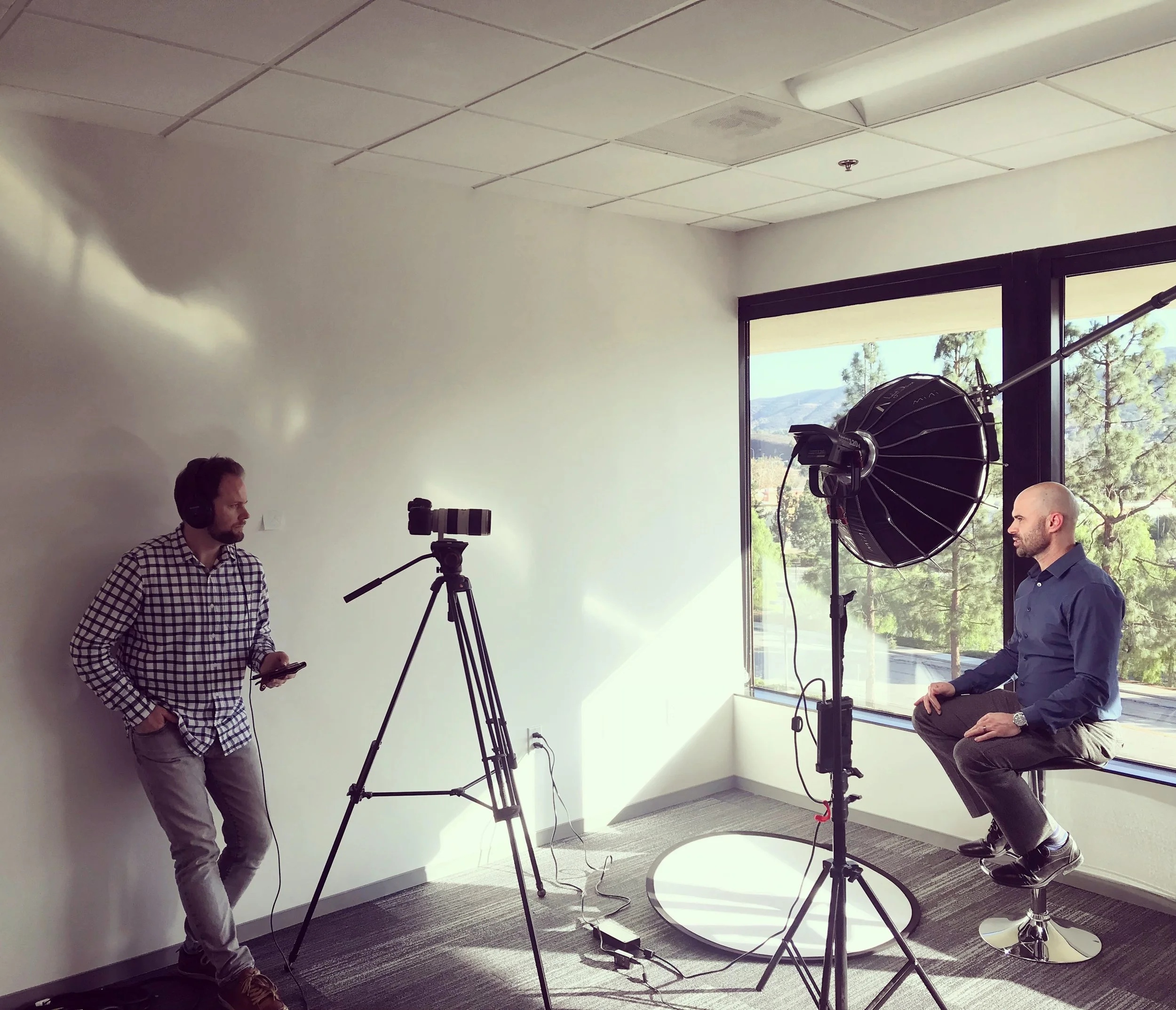
As a Telly Awards judge, Kirwan describes video through the viewer’s first encounter with a brand. His criteria combine an idea, its execution and its effect on the audience. He pays attention to pacing, editing, sound and the relationship between the story and the screen carrying it.
“Why this brand? Why now? And how do we make the audience feel it fast?”
Dennis Kirwan, on his creative starting point
Those are his three recurring creative questions. They leave little room for a film that takes thirty seconds to establish why anyone should care. His work spans organizations as different as international schools in Japan and defense training in New Zealand, making a single house style a poor substitute for understanding the audience.
He describes an interest in how stories affect decisions. That is a useful link between his sales background and his creative responsibilities. A film may be beautifully made, but he wants to know what happens on the other side of the screen.
When the shortlist arrives before the visit
In 2026, his writing concentrated on buyers encountering a company through AI answers, social feeds and other people’s recommendations before visiting its website. In February, he laid out a distribution approach built around ideas that could survive being lifted into a post, screenshot or private message. An article needed to carry its central point beyond its own page.
He proposed giving one idea several usable forms: a short text post, a presentation people could save and a brief video. The underlying concern was recognizable from his video work. A busy person should be able to understand the point without first agreeing to a long expedition.
Kirwan’s February 2026 distribution framework, illustrated.
His March argument turned toward scrutiny. He proposed asking AI to construct an adversarial memo from a company’s public record, then repeating the exercise for a competitor. His published method treats the output as a test of that record. Repeated patterns deserve investigation; one confident machine answer does not establish the truth.
By May, he was discussing whether a company repeatedly entered the group of businesses an AI assistant suggested. His emphasis was on specific, consistent evidence across professional profiles, websites and outside coverage. He recommended testing variations of buyer questions across systems, rather than treating a single flattering answer as a victory.
This is his argument about a changing market, and his agency is selling services within it. Read together, the essays show where he is placing his attention: the information a buyer can encounter before the sales conversation begins, and the evidence available to support it.
The pitch has to survive inspection
His 2026 operational commentary makes that emphasis concrete. In February, he described reorganizing around AI visibility, with original research, expert perspectives and verifiable brand facts among the materials clients needed. In March, he described a positioning engagement that clarified a company’s category and proof points, with execution connected to pipeline quality and close rates.
By July, he was urging agencies to examine where prospective demand escaped before a sales team received a lead. It is a broader assignment than delivering a campaign. It asks the agency to understand how people find, assess and eventually approach a business. It also gives the client a fair question to ask: can you show where your work changed that process?
Kirwan has directed the same question inward. In a recent account of working on website content with CMO Kurt D’Amato, he described finding contradictions in an AI-written explanation of AI’s limitations. The prose sounded convincing. Closer reading showed the argument disagreeing with itself. They tested it with another model and challenged the original answer.
The episode belongs beside the influencer with the artificial audience. Polished appearances can pass inspection when everyone is in a hurry. Kirwan’s response, at least in the stories he chooses to tell publicly, is to slow down and examine what supports them.
The child carrying cans could count the stock and the coins. His present business deals in reputation, attention and increasingly automated recommendations, where the evidence is harder to inspect. He still has to make a proposition hold up when someone looks closely. This time, he has invited the competitor to look first.
Follow the conversation
Interviews, writing and places to find Kirwan.
- Dymic Digital
- Dennis Kirwan’s personal website
- Forbes Agency Council profile
- Video and creativity: Telly Awards interview
- Finding That Next Gear: interview and audio
- Watch the interview on YouTube
- His 2018 account of influencer vetting
- His argument about marketing during a downturn
- The 2026 thought-leadership playbook
- The public-footprint stress test
- AI discovery and consideration sets
- His account of auditing Dymic
- His July 2026 agency commentary
- His March 2026 positioning commentary
- His February 2026 AI visibility commentary
- Twitter / X ↗