At Levi’s Eureka Lab in San Francisco, a printer malfunctioned. A graphic emerged with only its white base layer intact. Tremaine Emory liked the ghostly effect. As MR Magazine reported when the first Levi’s x Denim Tears capsule appeared in 2020, that accident helped determine the white treatment of a cotton wreath. A machine had failed at reproduction. The designer saw something worth keeping.
The story in three stitches
- Denim Tears sells familiar clothes with specific stories about Black history.
- Its cotton wreath links the garment’s material to the people whose labor shaped America.
- Collaborations, a public library and museum exhibitions carry the idea into different rooms.
The resulting symbol is easy to spot across a street. Understanding it takes longer. Cotton is both the substance of the garment and a reference to the enslaved people who cultivated it. The design asks the wearer to hold those facts together. That tension gives Denim Tears its subject, its distinction and, sometimes, its controversy.
01 / A familiar object, an unfamiliar question
Emory founded Denim Tears in 2019. Its wardrobe is recognizable: jeans, hoodies, sweatpants, tees, jackets, headwear and bags. The unfamiliar part is the editorial agenda. Collections explore African Diaspora narratives through products people can wear to school, a concert or the corner store. Clothing becomes a delivery system for ideas that might otherwise remain inside a gallery.
The Metropolitan Museum of Art describes the Levi’s collaboration through Emory’s family connections to enslavement and sharecropping in rural Georgia. It also connects his red, black and green palette to Liberty Rock in Jamaica, Queens, where he grew up. The references have addresses and ancestors. They give the designer something more precise to work with than a seasonal mood.
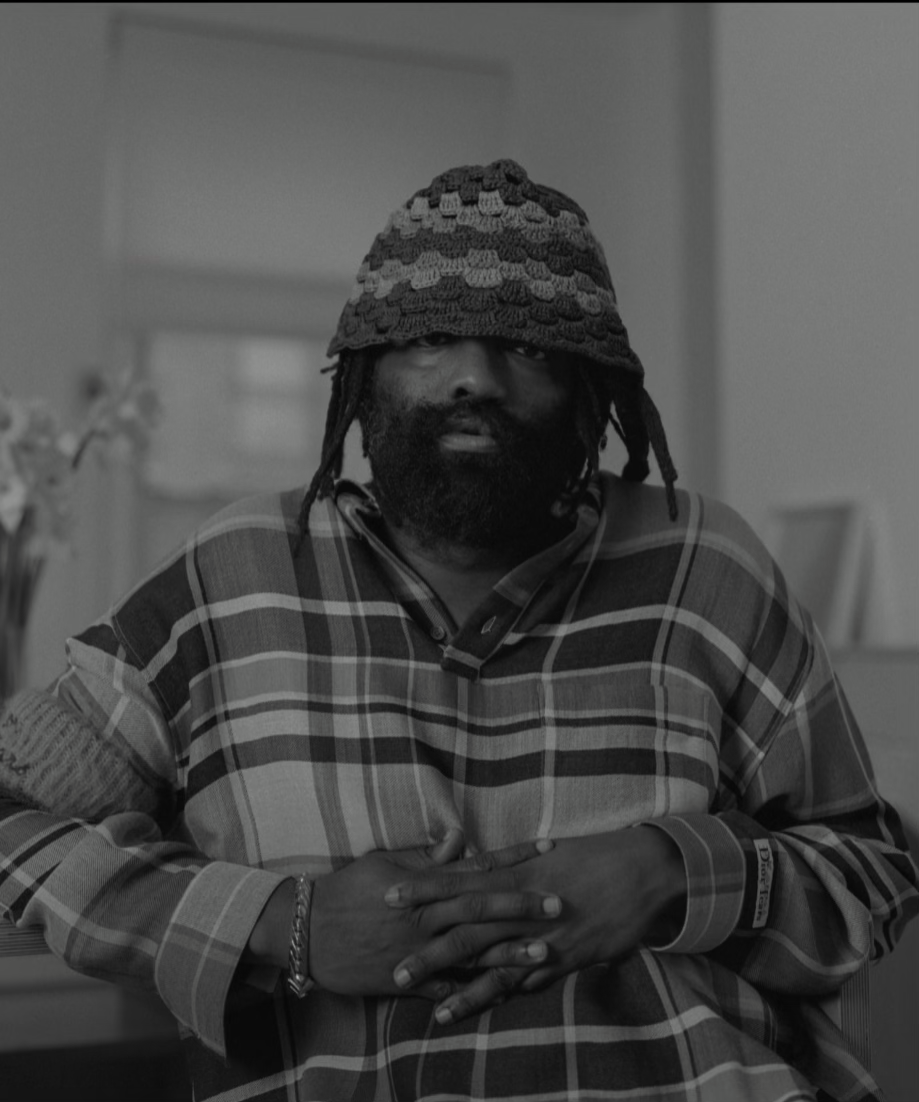
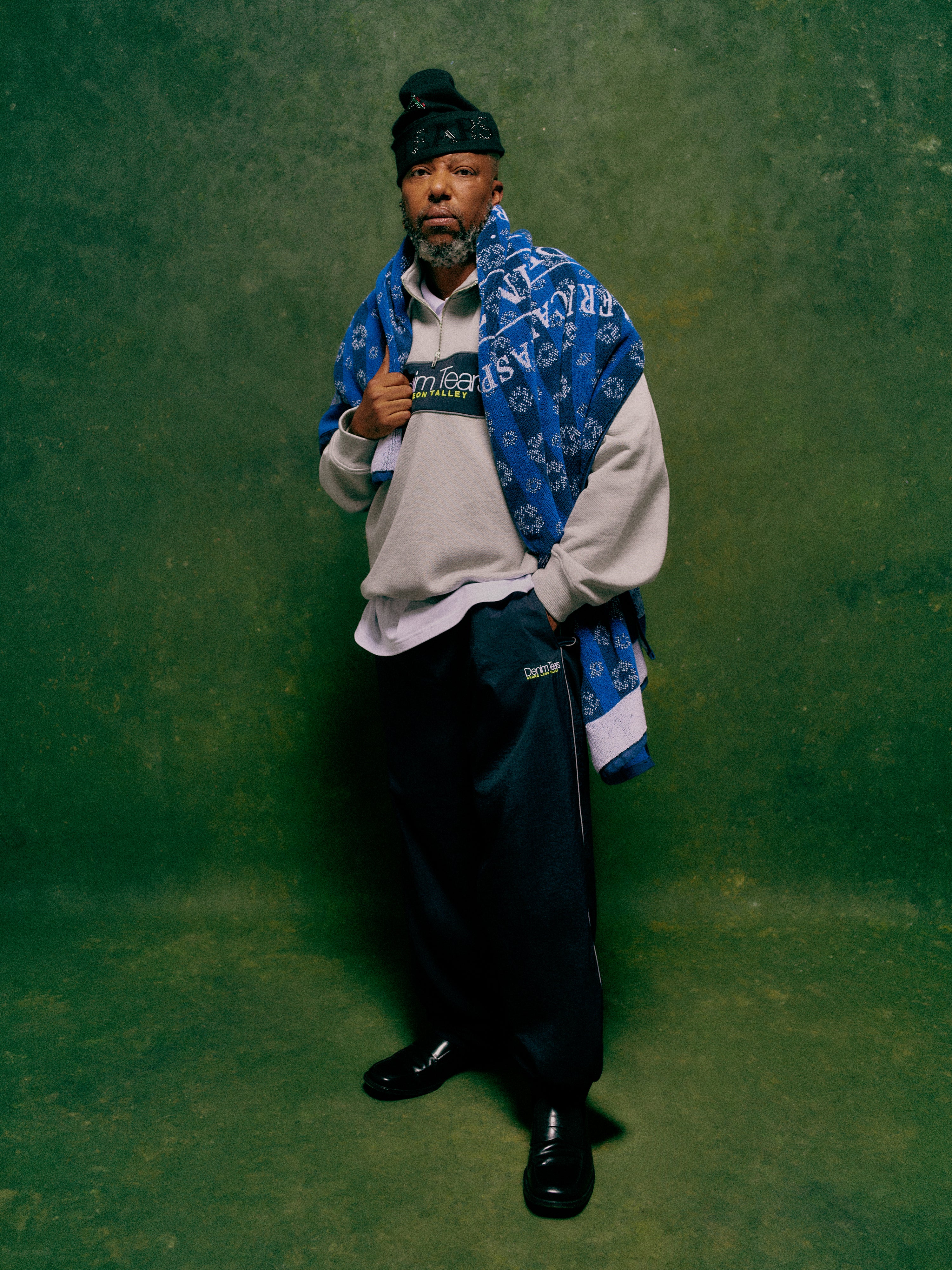
For customers, the proposition combines a wearable silhouette, a recognizable graphic and an association with those stories. Someone can arrive through fashion and become curious about history. Someone else can begin with the history and want the clothes. Neither route requires the customer to have studied art criticism.
02 / Borrow the jean. Own the meaning.
The early Levi’s capsule used the company’s Authorized Vintage program: 501 jeans, trucker jackets and a patchwork hat, printed with wreaths. That choice supplied a familiar American object before Emory asked anyone to reconsider its meaning. In April 2021, the relationship became an announced two-year partnership. A recognizable product gave a new label a practical place to begin.
Collaborations remain part of the business. Denim Tears’ own catalog names Stüssy, Our Legacy, Levi’s and Corteiz among its collaborators. These relationships also complicate a tidy competitive chart. A shopper might choose between two labels on Saturday; those labels might share a collection the following Friday. In streetwear, competitors can be collaborators and distribution partners.
How the idea travels
the history→02Design
the garment→03Wear it
in public
An editorial reading of the company’s approach.
By December 2025, Emory wanted more control over the denim itself. Hypebeast documented the launch of the first full in-house line on December 12. GQ reported that the move would let the company change products more readily. It was an expansion of capability after years of collaboration, with no announcement that future Levi’s work was over.
03 / The cash register has company
The company earns money by selling physical goods online, through its own retail spaces and through selected stockists. At the time of research, its website listed a Flag Tee at $50, a Cotton Wreath running cap at $68 and a Stüssy Tears varsity jacket at $500. Those are retail examples, before any applicable shipping or taxes. Buyers pay for apparel and its design; the historical argument travels with the purchase.
In a 2024 IDEA GENERATION interview, Emory described reinvesting proceeds from early sales into subsequent products. His instruction was compact:
“Always invest in your brand.”Tremaine Emory · IDEA GENERATION, 2024
The Business of Fashion reported annual sales in the tens of millions of dollars in July 2025. Its resale figures require a separate mental drawer: StockX sales grew 290 percent in 2024, while products traded at an average 31 percent premium in the first half of 2025. Those numbers describe secondary-market activity. They establish neither Denim Tears’ revenue growth nor its profit margins.
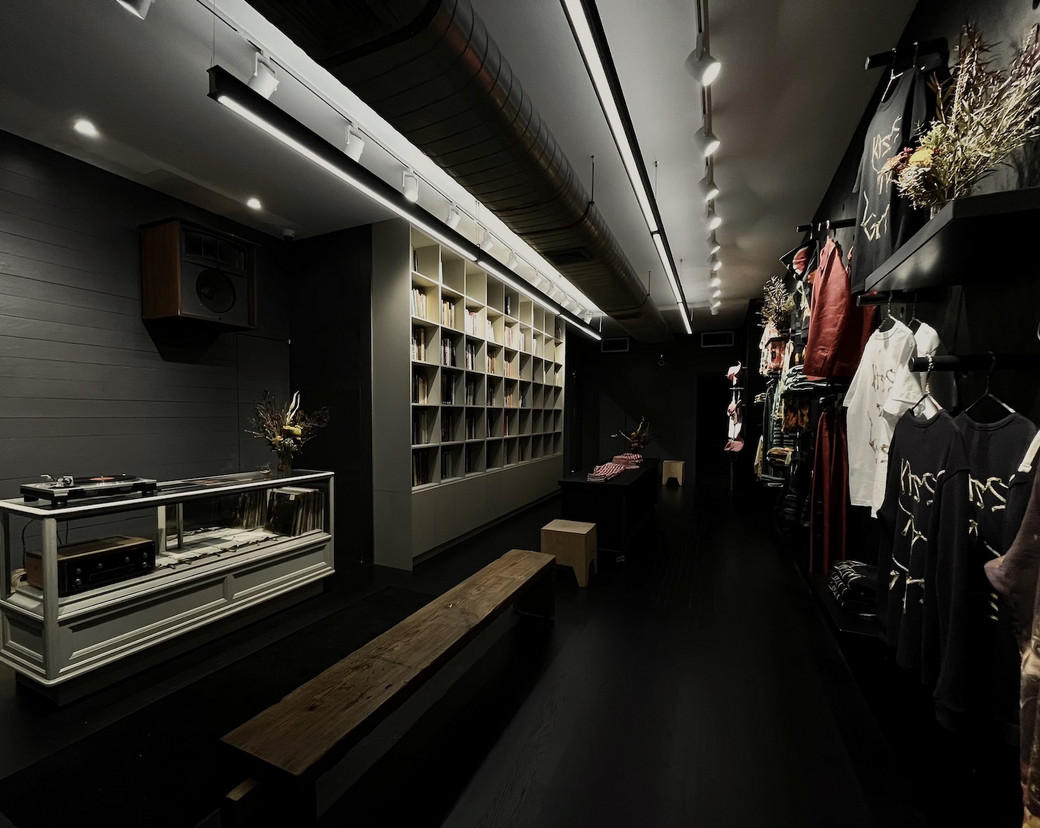
The stranger investment is inside African Diaspora Goods, the SoHo flagship opened in March 2024. Designed with artist Theaster Gates, it doubles as a public research library. Lee and Whitney Kaplan of Arcana curated more than 1,500 books, catalogues and periodicals. A visitor can encounter the brand’s interests without first buying a sweatshirt. The archive gives the storytelling a physical place to continue.
inside a clothing store’s public research library
04 / Keep the story specific
The current work keeps widening its material. September 2026 brought a SCAD retrospective placing Emory’s practice alongside Black visual artists. The TEARS fragrance story evoked cotton fields in Georgia after rain. October’s Stüssy Tears collection drew on fishing trips with his father, Tracy. A fishing shirt and a museum exhibition can belong to the same company when personal memory supplies the connection.
There is a limit to this approach. A symbol can circulate faster than its explanation. Critics have questioned the commercialization of painful history; Emory treats difficult conversations as part of the work. The practical lesson for another founder is to choose a story that changes actual decisions, then build products people want. Copying the wreath, or adding a worthy paragraph to an ordinary product, supplies neither the research nor the relationship.
Denim Tears makes the connection unusually concrete. Cotton becomes a graphic on cotton. A shop makes room for books. The garment gives the story somewhere to go, and the library gives the curious wearer somewhere to return.