The final draft is an optimistic name for a document. Give it to twelve people, and it can return as twelve competing accounts of what everyone meant. Deepak Massand saw commercial promise in this small administrative comedy. Somewhere between a proposed change and an agreed sentence, expensive time was disappearing. He founded Litera in 2001 to work on problems like that.
His route to the office attachment had included a tea plantation in Assam. Later came executive responsibilities at established companies. By the time he turned to software, he had already spent years around businesses where people had to coordinate decisions. The document was a particularly revealing place to watch that coordination go wrong: a shared task that could leave each participant holding a different version of reality.
A tea planter arrives at the document
Massand was born in Indore, India, in 1951, into a large family. He studied agriculture and was running a tea plantation in Assam at 25. He later immigrated to the United States. The outline is unusual enough without giving it the neatness of a business-school parable. Agriculture did not come with a compulsory module in legal software. His working life simply crossed industries.
His corporate roles included Executive Director at Johnson & Johnson, President and CEO of Merz Pharmaceuticals, and Director at Skila. Those titles preceded Litera. He arrived at entrepreneurship with experience of managing organizations, rather than a career confined to building document tools. That distinction helps explain the business language around his products: time, coordination, cost and a useful return for the customer.
Litera’s original base was McLeansville, North Carolina. The problem it addressed traveled rather farther. A complex document might need attention from executives, advisers and lawyers working in different locations. Massand’s interest lay in making their contributions manageable. The legal profession offered both a market and a steady supply of practical requests. Customers could describe, in considerable detail, what happened when their tools failed them.
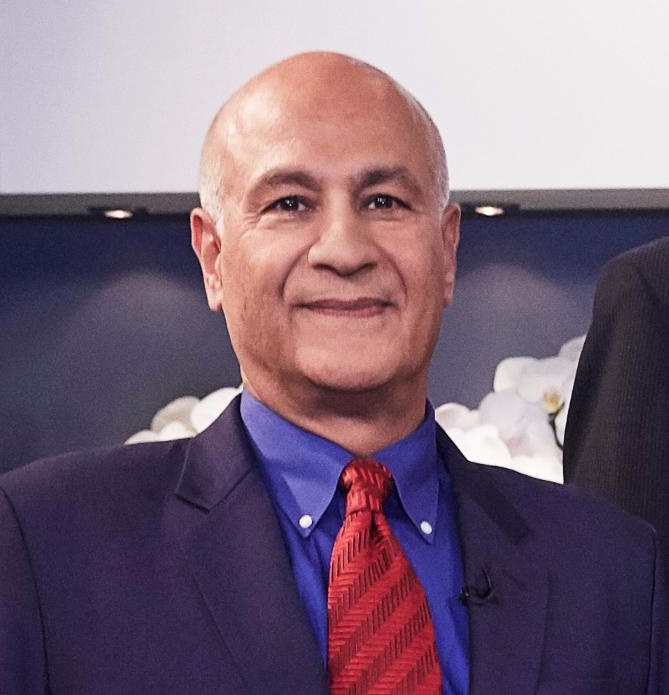
His 2007 explanation of Litera IDS, the Intelligent Document System, began with a familiar mess: comments arriving separately, revisions overlapping, and an author trying to assemble the next version. The proposed arrangement kept reviewer input in a database and brought it alongside the relevant document section. An author could consider contributions together and decide which changes to incorporate. Agreement still required judgment. At least the paperwork could stop multiplying quite so enthusiastically.
There was a commercial complication. Saving a lawyer time could sound like reducing the hours available to bill. When that objection reached Massand, he answered with a fixed-fee example: complete the agreed work faster, improve the effective return on the time spent, and free capacity for another assignment. His response treated efficiency as a question about the way a business earns money.
“Litera is commited to adding whatever compatability and integration a client needs.”
Deepak Massand, 2007
The invisible things a file carries
Massand’s inventions kept returning to a deceptively simple question: what changed? A document can contain several kinds of material. Comparing only its most obvious text leaves other differences out of the picture. His patent for compound-document comparison addressed documents containing different data types, with comparison methods suited to those components. The ambition was to make the comparison follow the contents of the file.
That is easy to underestimate until a document contains something beyond continuous prose. A changed image or embedded table can matter to its reader as much as a revised sentence. Software that treats a file as one uniform substance risks overlooking the distinction. Massand’s patent work approached the file as an assembly whose parts deserved their own treatment.
Tables presented another nuisance. Merge a cell, split another, move the contents around, and a comparison becomes harder than matching one line to the next. His patent on merged and split cells tackled that structural problem. This was a very particular corner of computing to spend time on. Anyone who has tried to inspect a changed table will recognize its appeal.
Spreadsheets added a further layer. Two cells can display a reassuringly similar result while the logic behind them has changed. His work on spreadsheet and database-table comparison included formulas and stored procedures ordinarily hidden from view. The relevant question extended beyond what appeared on screen to the instructions producing it. In a professional document, the machinery behind the number can deserve just as much attention as the number.
Then came the things a sender might prefer to leave behind. Metadata can include details of authorship, editing and a file’s history. An attachment may carry more information than the person sending it realizes. Litera’s server-based cleaning technology addressed that moment of departure. In June 2011, the company licensed the relevant patent to Microsystems, allowing that business to continue developing and selling its own server product.
The licensing arrangement shows another side of Massand’s business. An invention could become part of a negotiated relationship between software providers. The underlying problem remained concrete: organizations wanted a policy for what information should travel with a document. A cleaner file depended on decisions made before it reached the recipient, including which details to remove and which settings users could control.
The software had to behave, too
Useful tools can create their own irritation. In 2010, Litera introduced Launchpad, a desktop toolbar for accessing its document products without the same dependence on third-party add-in integrations. Massand described the aim as improving productivity while avoiding additional complexity for IT teams. The pitch acknowledged an inconvenient truth for a software seller: introducing a new tool can itself become work.
That concern gives his product thinking a practical texture. Deployment, conflicts and upgrades live downstream from the polished demonstration. Someone must keep the office running while the promised improvement arrives. Launchpad’s proposition included reducing those burdens. The person approving a purchase and the person answering the resulting support request both had reasons to care.
His context-recognition patent explored how software could make appropriate functions available in relation to a selected application or content. It belongs to the same everyday territory: helping a user reach an operation without treating every task as a fresh search through tools. An interface has its own geography. Even a short unnecessary journey becomes tiresome when repeated across a working week.
A room full of people, before a deal
Massand also assembled people with experience beyond Litera. In 2011, Norm Thomas joined as Vice President of Business Development after eight years directing Microsoft’s legal and professional-services market development. Massand described the appointment in terms of partnerships and access to global markets. Building the product and building the relationships around it were connected jobs.
There is a smaller, more personal example in his testimonial for IT professional David Winslow. Massand described a working relationship lasting fourteen uninterrupted years and praised Winslow’s network and security expertise. “He has earned my implicit trust and respect,” he wrote. A founder who sold technology to other organizations also depended on people who could make technology dependable inside his own.
In 2014, ILTA recognized Massand with its Vendor Thought Leader Award. The announcement credited him with more than fourteen patents and described a company that had grown from one product to more than a dozen. It said Litera’s software was used by more than half of the Global 200 law firms. These were milestones from his own period of leadership, with dates attached.
The award also drew attention to listening: hearing lawyers and technologists describe their difficulties and turning those accounts into products. His colleague Sherry Kappel received the event’s Innovative Consultant award. The recognition placed invention alongside education, service and the work of helping firms use technology. An office tool must earn its place among people who already have a job to finish.
ILTA’s remembrance supplied a less formal picture. Massand was remembered as quick to make people laugh and welcoming even to people who were not customers. That is a useful detail in a business populated by serious documents. A contract may need exact language; the conversation around a demonstration can benefit from someone who knows when to smile.
What continued after December
Massand died at home in McLeansville on December 28, 2015. Paul Domnick, who was already Litera’s president, continued running the company. Domnick remembered a founder who took care over choosing colleagues and built personal relationships before reaching the business deal. The recollection fits the customer conversations and long professional associations that appear throughout Massand’s working record.
The following year, his daughter Raina wrote about the experience of carrying on without him. Litera’s newsletter paired that remembrance with the company’s plans and activity. There is something moving in the proximity. A founder becomes part of an organization’s past while the organization still has customers to support, products to maintain and another year to plan.
His technical record continued on a different timetable. A patent granted in June 2020 named him as inventor of the spreadsheet and database-table comparison system, from an application filed in January 2009. The later grant belongs to the administrative life of an invention. It also leaves a specific trace of his attention: the hidden formula, the changed cell, the difference a reader might miss.
Look back across the work and the recurring interest is people trying to produce something together. Each version, comment and attachment represents an ordinary act of cooperation with room for misunderstanding. Massand found enough consequential detail there to build a company. The final draft, it turned out, could keep a person occupied for years.