Deb Muller’s first software design was a PowerPoint. Before there was a platform, there were slides: an investigator’s attempt to give a familiar workplace problem a more useful shape. She had seen companies handle complaints without a consistent method, sometimes recording findings in notebooks. PowerPoint, that tireless accomplice to the corporate meeting, had finally been given something consequential to do.
The problem was bigger than untidy paperwork. A workplace incident could be investigated, resolved and put away. Another would arrive. The person handling it might draw on experience, instinct or whatever the previous investigator had left behind. The organization carried on. Its memory was less reliable.
Muller knew that routine from the inside. Before founding HR Acuity, she held HR leadership positions at Honeywell, Citibank and Marsh & McLennan. She later worked as an independent workplace investigator. Investigations were a part of HR she particularly enjoyed: the work of establishing what happened when accounts differed and the consequences mattered.
The notebook problem
Her career had prepared her to look closely at work. She studied Industrial and Labor Relations at Cornell, graduating in the class of 1987, and earned a master’s in Instructional Systems Development at the University of Maryland. The eventual software founder came to technology through the people and processes it would serve.
In her account of why she started HR Acuity, Muller describes handling employee relations issues largely on her own, drawing on personal experience. A conflict, a misunderstanding or an allegation would be addressed, and the next matter would take its place. The work happened repeatedly, with too little consistency connecting one case to another.
That observation gave her a business problem with an unusually human center. When something goes wrong at work, the employee learns how the organization behaves under pressure. The organization, meanwhile, has an opportunity to learn something about itself. A process that loses the details makes both sides work harder the next time.
A business drawn in PowerPoint
HR Acuity began in 2006. Its early work involved investigations consulting and a methodology for conducting investigations. The software followed in 2009, after clients asked for a way to use her practices themselves. The distinction between those dates matters: Muller had a service before she had a software company.
She mocked up screens and had the initial product built. The request came from people already dealing with the problem, which gave the venture a practical starting point. Clients wanted to retain the method between visits from the expert.
“I literally drew it up in PowerPoint and then we built it!”
Deb Muller
Turning expertise into a product requires an awkward kind of precision. An experienced investigator can notice what is missing without having written every rule down. Software needs a place for the information, an order for the work and a way for someone else to follow it. Muller’s first designs made her own working knowledge more explicit.
That background remains central to how she talks about the business. The point of organizing the file is to improve the response: recording what happened, conducting the investigation consistently and keeping information available for the next question. An employee’s account deserves something more dependable than a colleague’s recollection of where the notebook went.
- 2006The investigations business begins
- 2009The software business launches
- 2022Speakfully joins HR Acuity
The patience to grow at her own pace
Muller spent roughly a decade building with customer revenue and some angel backing before bringing in growth equity. Her reflections on that period are refreshingly undecided about the correct entrepreneurial timetable. She has wondered whether earlier funding would have helped, while also questioning whether she or the market would have been ready.
There is room in that answer for the business she actually had. Investment brought the ability to think more deliberately about scaling and hiring. It also arrived after years of learning what customers wanted. Her path left time for the product and its audience to develop together.
In late 2021, HR Acuity received a $47 million minority investment from K1 Investment Management. That was company financing, a distinction worth keeping clear when looking at a founder’s achievements. It provided resources for the business’s next stage.
By August 2026, the company was reporting its fifth consecutive appearance on the Inc. 5000, with 118 percent revenue growth from 2022 through 2025. For Muller, the explanation reached beyond sales: large employers were placing more weight on consistent, documented responses to workplace issues. A problem she had spent years describing had become a more visible business priority.
Making room for the people doing the work
Alongside the product, Muller built places for practitioners to talk. She established the Employee Relations Roundtable in 2015, bringing leaders together to exchange practices and experiences. The company later developed empowER, an online professional community. In August 2026, HR Acuity reported that it had more than 8,000 members.
The relationship between those efforts is easy to understand. Software can organize a process. A conversation with a peer can reveal why that process is struggling. People doing sensitive work also need somewhere to compare approaches without treating every difficult question as a solitary discovery.
Muller’s public manner has room for less solemn subjects, too. In a 2020 interview, she described team calls that included song contests. In a blog post that November, she recalled spending Halloween watching Hocus Pocus with her children. The corporate investigator can evidently tolerate a little theatrical mischief.
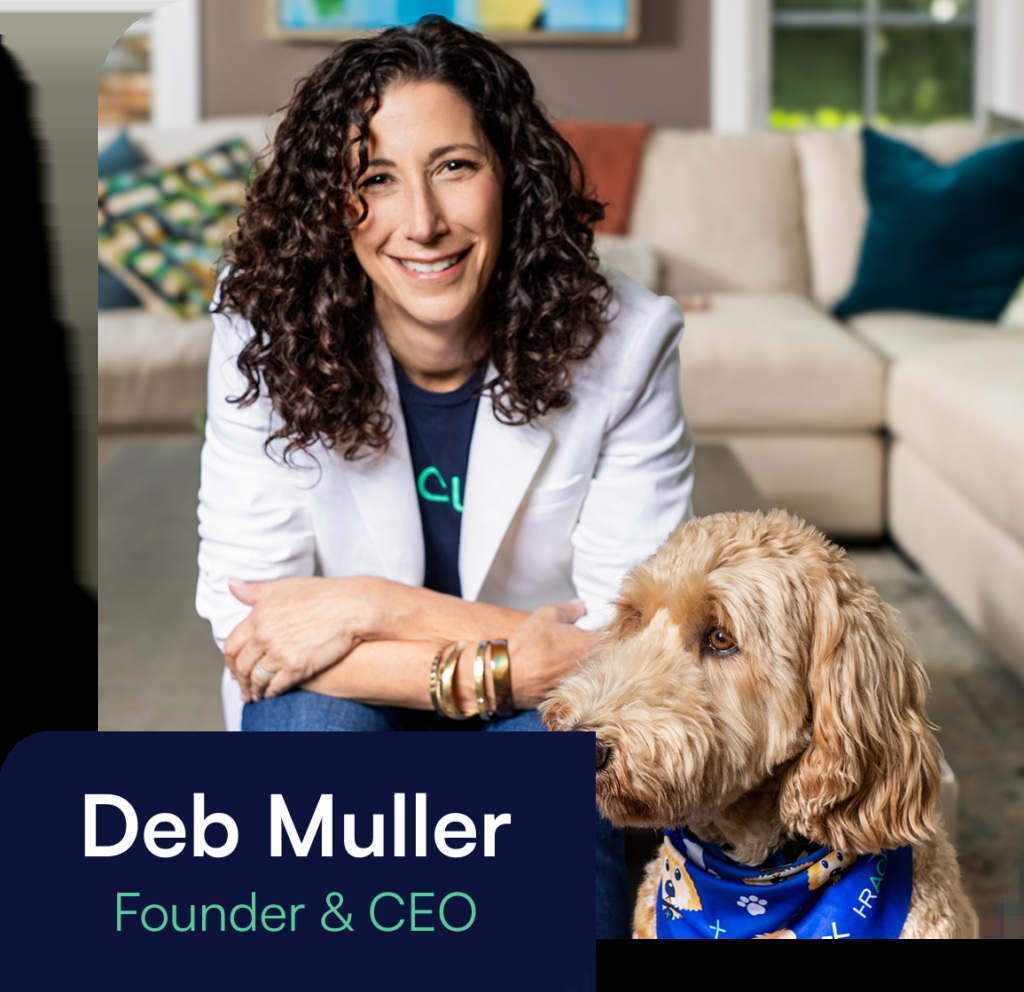
She also makes time for conversations beyond her own company. Her interviews include appearances with HR Happy Hour and the Big Red Podcast, where fellow Cornell alumnus Tony Chen asked about her founder journey. The subject keeps returning to how employee relations can contribute to decisions across the organization.
Before the complaint reaches HR
The product’s expansion followed the places where workplace issues begin. In 2021, HR Acuity launched managER to help people leaders handle and document employee matters. Managers are often the first people to encounter a problem. Their response becomes part of the story long before an investigator opens a case.
In November 2022, HR Acuity acquired Speakfully, the workplace reporting platform founded by Jana Morrin. It gave employees a way to raise concerns anonymously or with their names attached, and to follow updates through a secure portal.
Muller’s explanation for the acquisition was practical: an organization cannot address an issue it never hears about. Reporting and investigation belong in the same picture. A carefully designed investigation process has limited reach if employees cannot find, or do not trust, the route into it.
She has described the scope as extending from an allegation through aftercare. That last stage carries weight. The employee returns to work after the meeting, the interview and the decision. Closing a case does not end their relationship with a manager or their assessment of whether speaking up was worthwhile.
The question behind the numbers
Muller’s interest in data goes beyond counting trouble. In her video discussion of an insight-driven workplace, she asks what the information can reveal about managers who document properly and give useful feedback. The same records that help expose problems may also show where people are doing the work well.
Her formulation joins consistent collection with interpretation. First, gather information in a way that makes comparison possible. Then ask what it means. A dashboard can display a difference between teams. Someone still has to investigate the circumstances behind it.
The annual Employee Relations Benchmark Study gives that discussion a wider frame, allowing practitioners to examine patterns beyond their own organizations. The company has also developed ER/Q, an employee relations maturity model. These tools extend Muller’s original concern about inconsistency into a question about how a whole function develops.
In February 2026, Muller introduced the Trust & Risk Statement, a framework intended to connect employee relations information with executive concerns. It organizes the discussion around cost avoided, risk predicted and trust earned. In May, she and colleague Sara Burkhalter presented a webinar on turning case data into insights for leadership.
The proposal addresses a familiar management difficulty: completed work is easier to count than trouble prevented. Case volume and closure time describe activity. Muller wants employee relations teams to explain what that activity changes, and to identify signals early enough for someone to act.
A person still owns the decision
As HR Acuity has added AI capabilities, Muller has carried her investigator’s concern for context into the discussion. She argues for human oversight, transparency about data use and tools whose outputs can be examined. Her stated position is that AI should assist professionals while people retain responsibility for consequential judgments.
That boundary fits the work. A workplace investigation involves accounts, relationships, history and power. Faster processing can help an investigator organize information. It cannot relieve the organization of answering for the decision it makes.
In 2025, Muller was recognized on Inc.’s Female Founders 500 and Forbes’ 50 Over 50: Innovation list. The latter offered a fitting occasion to reflect on a career in which accumulated experience became the raw material for a product. The years in HR supplied the questions she would later ask of technology.
Her present ambitions still circle the employee’s experience of being heard. In a 2026 video, she points out that an encounter with HR can shape how someone approaches the function at their next employer. Trust travels with the person. An organization earns its portion through clear processes, respectful treatment and follow-through.
It is a demanding destination for an idea first drawn on slides. The file must be usable. The pattern must be examined. Someone must remember what the last case taught them when the next person comes through the door.