The first thing to fail was the spreadsheet. Not with a cinematic crash, but in the ordinary ways that make lawyers nervous: one manager called an allegation “conduct,” another called it “behavior,” an investigator kept notes in a private folder, and nobody could say whether two similar cases had produced similar outcomes. Employee relations was full of judgment and short on memory.
Deb Muller knew the pattern because she had lived inside it. Before founding HR Acuity, she spent more than two decades in human resources, including executive roles at Honeywell and Citibank, and worked as an independent workplace investigator. When something went wrong at work - harassment, retaliation, a policy dispute, a manager who had lost the room - the response was often reactive, inconsistent and marooned in somebody’s inbox.
Her response, founded in 2006, was not another payroll suite. It was a purpose-built record for the uncomfortable stuff: receive the concern, assign the case, follow a repeatable investigation, control who can see sensitive details, document the outcome, follow up with the employee and look across cases for a pattern. HR Acuity now says more than 500 enterprises use its platform. Its customer pages name organizations ranging from Lyft and LinkedIn to Qualcomm, Sun Life, Snowflake and Texas Children’s Hospital.
“You can’t prevent every employee issue, but you can change how you respond.”HR Acuity’s operating premise
The case file becomes a product
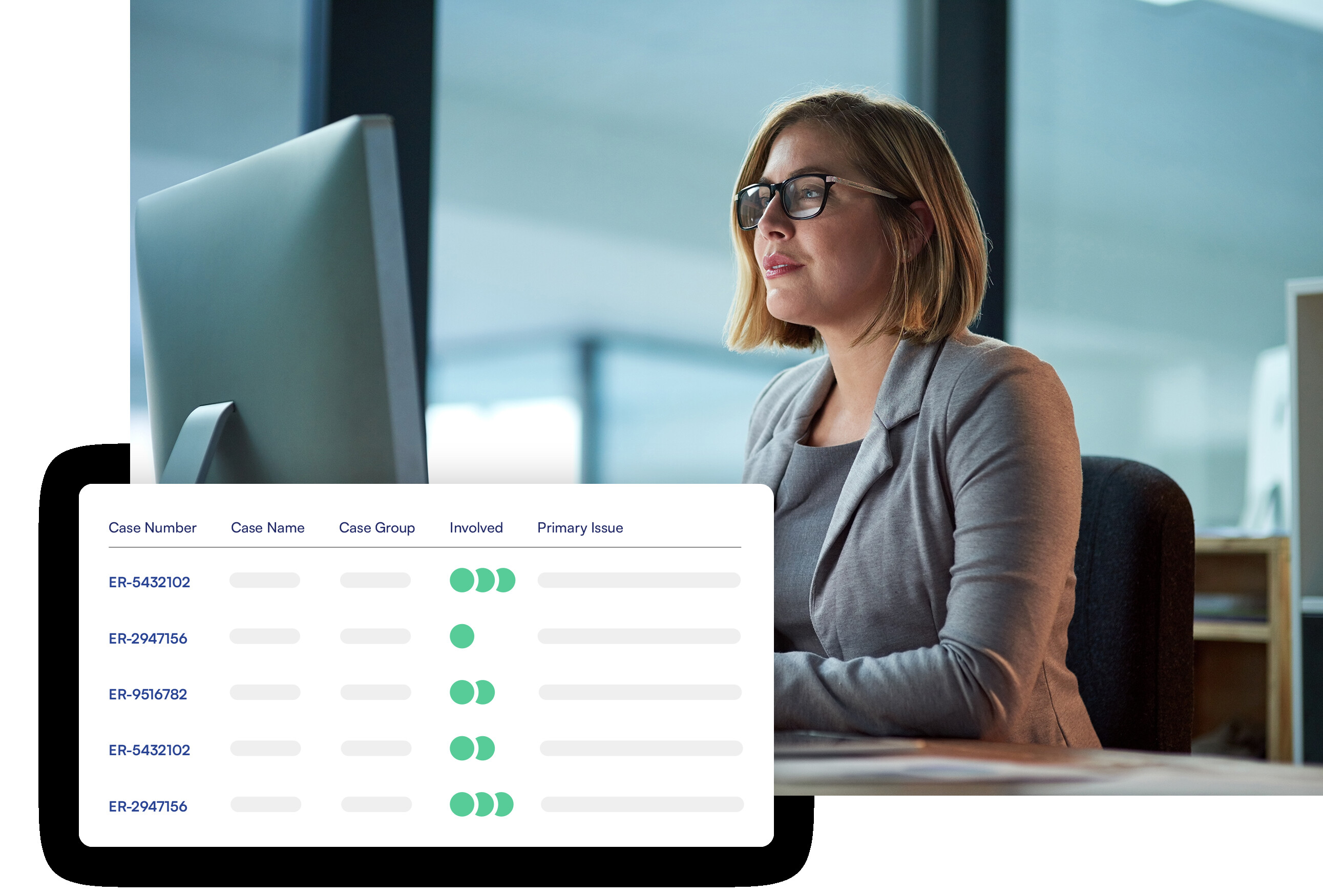
The core product is a secure case-management and investigations platform. An employee-relations team can standardize issue categories, route work, use interview guides, attach evidence, set reminders, generate case reports and view trends across locations or business units. The goal is not to automate the verdict. It is to make the path to a verdict less dependent on who happens to be holding the clipboard.
Around that record, HR Acuity has added the pieces that usually leak into other systems. managER gives people leaders guidance for handling lower-level issues and escalating the serious ones. Speakfully, acquired in 2022, gives employees named or anonymous channels to report concerns and receive updates. A 24/7 AI-enabled hotline adds telephone intake and live-agent support. Analytics and peer benchmarking turn a cabinet of individual cases into a map of recurring risk.
The change of mind
HR Acuity’s origin story is a founder changing her mind about process. Muller had seen experienced professionals do careful work, yet the surrounding machinery still produced inconsistency. Expertise alone was not enough. The method had to live in the product.
Customers reach a similar conclusion when a general-purpose tool exposes its seams. In a published Akamai case study, the company’s previous ServiceNow setup could not timestamp the audit trail or automatically assign cases. Those sound like small product details until a company must reconstruct who knew what, when they knew it and why a file waited. Missing data and manual reporting turned a cheap workaround into expensive uncertainty.
This is also why HR Acuity does not pretend to replace Workday. Its partnership language is unusually crisp: Workday remains the system of record for employee and organizational data; HR Acuity becomes the protected system of record for employee relations and investigations. The two can exchange what they need without exposing every witness note to a broad HR user group. In 2026, HR Acuity joined Workday’s Innovation Partner Program and announced another integration with ELMO Software’s UK business and Rotageek.
The capital arrived in two visible stages. Growth Street Partners made an undisclosed minority investment in 2019, when HR Acuity was still explaining why employee relations deserved its own software category. K1 Investment Management followed with a $47 million minority investment in 2021 to accelerate product development and hiring. The company then used acquisition, community and product expansion to widen the category rather than wander into payroll or recruiting. By August 2026, HR Acuity had reached the Inc. 5000 for a fifth consecutive year, ranking No. 2,705 after reporting 118 percent revenue growth from 2022 through 2025. For a private company selling a deliberately narrow workflow, persistence is the more interesting number.
What it costs, without the sales fog
HR Acuity does not publish list pricing. It sells enterprise contracts through demos and negotiated quotes, which makes a clean per-seat comparison impossible. The most useful public number is older and should be handled carefully: a 2019 Forrester Consulting study, commissioned by HR Acuity, modeled a composite customer spending about $673,000 over three years. Roughly $600,000 in present-value cost was attributed to SaaS fees.
That same model estimated $4.17 million in benefits and a 520 percent return, largely through avoided legal cost, lower turnover and more efficient teams. This was a modeled composite based on five interviewed customers, not a promise and not today’s price card. Still, it reveals the sales motion. HR Acuity is not competing with a $20 monthly app. It is competing with outside counsel, preventable attrition, investigation hours and the ugly cost of a case file that cannot defend itself.
The benchmark is part research, part flywheel
The company’s smartest distribution product may be free. Since 2015, its annual Employee Relations Benchmark Study has given practitioners a shared set of numbers for a function that often lacked them. The tenth edition in 2026 found 61 percent of surveyed organizations using an employee-relations technology platform, while 11 percent still relied on spreadsheets or generic databases.
The study teaches the market how to describe the problem, then places HR Acuity inside the answer. The empowER community does something similar with people. Launched in 2021, it now connects more than 7,000 employee-relations, workplace-investigation, HR and compliance professionals. Add an annual roundtable and a maturity model called ER/Q, and the company starts to look less like a feature vendor and more like the institution trying to define the category.
Its newest move pushes that logic toward the C-suite. The 2026 Trust & Risk Statement proposes standardized metrics organized around cost avoided, risk predicted and trust earned. The pitch is almost mischievously financial: payroll has a report, recruiting has a funnel, finance has statements - why should employee relations defend its budget with anecdotes?

AI enters the witness room carefully
AI is appearing across the platform in hotline intake, risk flags, summaries and analytics. HR Acuity uses the phrase “defensible AI,” an important qualifier in a category where an unexplained suggestion can influence a consequential employment decision. The useful role is assistance: organize information, surface patterns, reduce documentation work. The dangerous role is silent adjudication.
The company won a 2025 Brandon Hall Group award for ethical and responsible AI, but awards do not remove the buyer’s obligation. Organizations still need access controls, retention rules, human review, clear data boundaries and a way to explain how an output influenced a case. A disciplined bad process is still bad. Software makes it repeatable.
Where it wins, and where it does not
The direct field includes Case IQ, NAVEX One and EthicsPoint, AllVoices, Vault, Ethico and Dovetail. ServiceNow, Salesforce, HRIS case modules and a determined spreadsheet owner form the substitute market. HR Acuity’s advantage is specialization: workflows made for employee relations, built-in investigation practices, controlled case access, an integrated reporting channel and benchmarks from the same professional community.
That specialization is also the boundary. A small employer with a handful of annual cases may not need enterprise implementation or advanced analytics. A global compliance office seeking third-party due diligence, policy distribution and broad governance tooling may prefer a wider NAVEX-style suite. And any buyer unwilling to standardize categories, train investigators and secure leadership support will purchase a beautiful database of inconsistent work.
What another team can copy tomorrow
- Define one intake path and one owner for every concern.
- Use the same issue taxonomy across teams and locations.
- Separate sensitive investigation detail from broad HR access.
- Require a documented investigation method, not just a result.
- Track aftercare and retaliation risk after the case closes.
- Measure patterns only after the underlying records are consistent.
The company itself offers a useful lesson in vertical SaaS. Start with the workflow that general systems treat as an edge case. Encode domain expertise. Join the steps before and after the core record. Publish the benchmark that gives buyers language. Build the community that supplies feedback and trust. Only then ask the dashboard to predict something.
The category is not cheerful, and that is precisely the point. HR Acuity exists for allegations, disputes and failures of trust. Its promise is modest but commercially durable: the bad moment may be unavoidable; the sloppy response is not.