Before Dean Mihas helped decide which businesses a private equity firm should buy, he helped run a business that sold food. Delray Farms, the specialty retailer he co-founded and led, sits between McKinsey and GTCR on his résumé. It is an unusually tangible stop on a route into finance. There were customers, products and a company to operate. A spreadsheet can be persuaded to behave. A business has rather more opinions.
Mihas joined GTCR in 2001. Today he shares the chief executive’s job with Collin Roche at the Chicago investment firm. The distance between those two positions is measured in decades, funds and management partnerships. But the earlier role provides a useful way into the later one: before he became an investor choosing executives to back, he had been an executive himself.
That sequence gives his career its interest. Private equity is frequently described through purchase prices and piles of capital. Mihas’s working world also contains a different sort of shopping list: the names of people who might know how to build a business, the industries they understand, and the opportunities worth pursuing together.
The detour with a checkout counter
His education began close to home. Mihas graduated from the University of Illinois Chicago in 1988, having studied finance and economics. He earned his bachelor’s degree with high distinction, then an MBA with distinction at Harvard Business School. Academic honors appear twice in the biography. A specialty food retailer appears once, and supplies the more unexpected turn.
After Harvard came McKinsey & Company, followed by Delray Farms. Consulting, operating and investing ask different things of a person. A consultant examines a company’s choices. A chief executive lives with them. An investor commits money to a view of what someone else can achieve. Mihas has held jobs in all three settings; the operating chapter belongs in the foreground of his story.
He arrived at GTCR with experience founding and leading a company, alongside his formal finance training. The two kinds of experience concern the same business from different positions. Finance asks whether the investment makes sense. Operations asks what has to happen for the business to work. Those questions meet in a management partnership, where an attractive plan still needs people able to carry it out. The Delray Farms chapter gives Mihas’s résumé a direct connection to that responsibility.
- 1988UIC
Finance & economics - NextHarvard MBA
Then McKinsey - Before GTCRDelray Farms
Co-founder & CEO - 2001Joins GTCR
Now co-CEO
Find the leader, then build the business
GTCR calls its approach The Leaders Strategy™. The firm seeks experienced management leaders in industries it knows, then works with them to identify, acquire and build companies. Executive relationships are part of how an investment comes into existence. The person and the business opportunity are considered together.
That order has practical consequences. A capable executive can help judge which assets belong together, which customers a business ought to serve, and where an acquisition might create an operating advantage. The investor supplies capital and support; the management partner supplies experience that has to survive contact with the company’s daily work. Both need a plan they can actually execute.
There is also a distinction between buying a company and building one. Buying produces a transaction date. Building takes longer and involves less photogenic work: hiring, systems, suppliers, products, and decisions about how the acquired businesses fit. The deal announcement gets a headline. Vendor management rarely enjoys such treatment, although it can be quite influential.
The machinery behind those partnerships has expanded. GTCR formed its Portfolio Resources Group in 2022. By November 2023, its work included procurement, technology and digitization, and information security. Travis Krueger and Joseph Rubino were named co-heads. The group gives portfolio management teams access to specialists in functions that often determine whether a growth plan can be carried out.
This is a useful detail in understanding the institution Mihas co-leads. A strategy that depends on executives also needs to give them resources. Recruiting someone with judgment is one task; surrounding that person with useful expertise is another. A larger investment organization has to attend to both.
Build a relationship with an experienced executive.
Identify a business and agree on a growth plan.
Support operations, organic growth and acquisitions.
Two names on the door
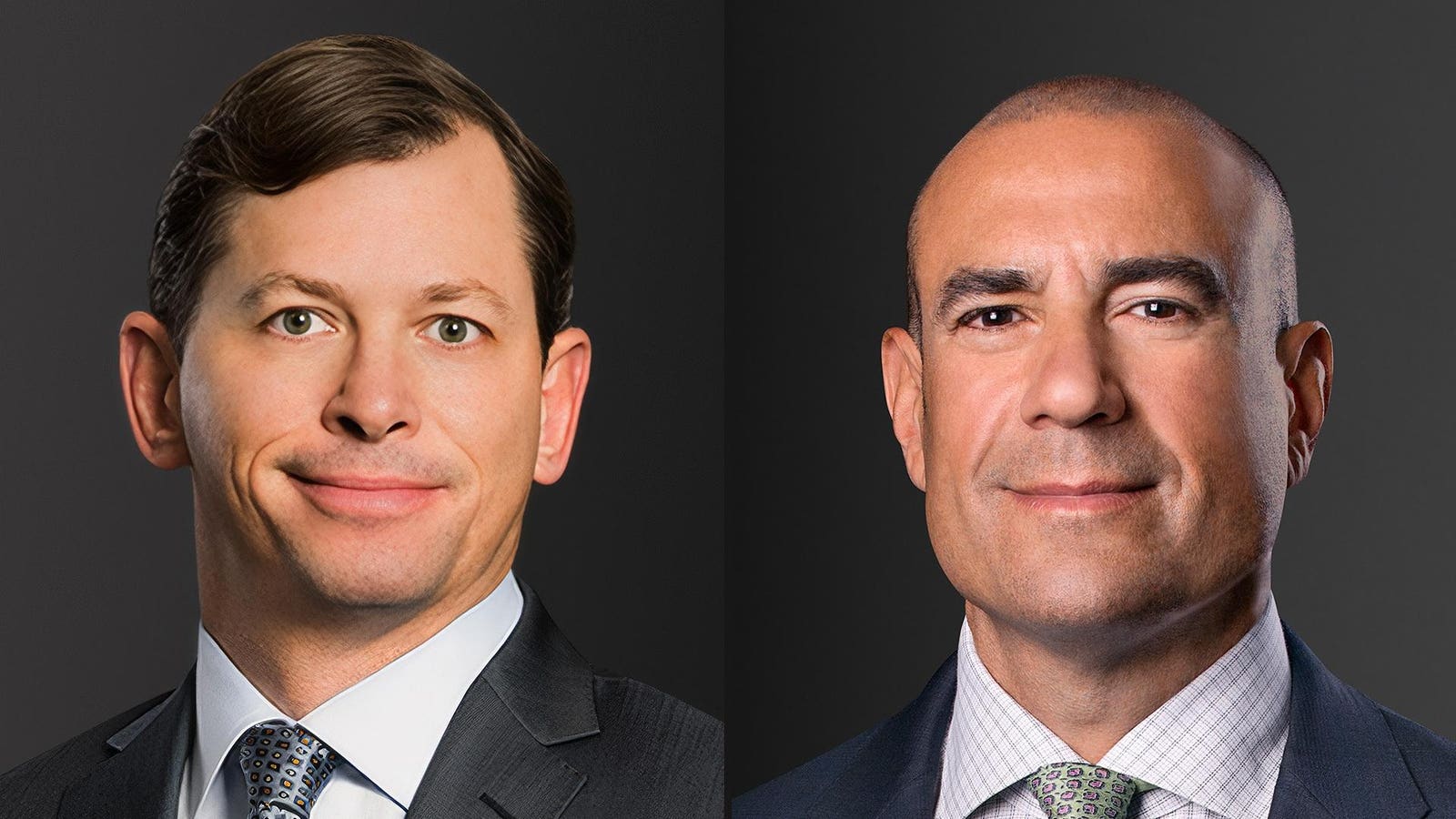
Mihas shares leadership with Roche, who joined GTCR in 1996. Both built careers inside the firm before reaching its top job. GTCR was founded in 1980, so neither is its founder. They belong to a later generation responsible for continuing an established investment approach while managing a larger organization.
The company has grown beyond a single city without moving its center of gravity out of Chicago. In January 2022, it announced offices in New York and West Palm Beach, while keeping Chicago as its headquarters and center of operations. At the time, Chicago was also expected to retain the majority of employees.
Mihas described the additional locations in terms of connections among colleagues and collaboration with portfolio company leaders. That is a revealing choice of emphasis in an announcement about real estate. An office can be measured in square feet, but its usefulness also depends on whom it makes easier to meet.
The shared leadership role puts Mihas inside decisions about the firm itself as well as its investments. Team development, investment resources and the range of opportunities GTCR pursues all belong to that larger picture. His name appears alongside Roche’s in announcements of new funds and senior appointments, the institutional work behind the transactions.
Growing without leaving smaller deals behind
In May 2023, GTCR closed Fund XIV with $11.5 billion in aggregate commitments. Its initial target had been $9.25 billion. The total included $11 billion from limited partners and approximately $500 million from GTCR. Those are fund commitments, the capital backing a program of investments over time.
A growing flagship fund creates a question about the opportunities it can reasonably pursue. Smaller businesses may still offer attractive possibilities even when a firm’s main pool of capital has become much larger. GTCR’s Strategic Growth Fund line preserves a route into that part of the market. Mihas serves as its executive sponsor, overseeing its direction and integration with the broader firm.
The first Strategic Growth Fund closed in 2022. The second reached approximately $3.6 billion in aggregate commitments in February 2025, exceeding a $2.75 billion target. Its expected equity investments ranged from $50 million to $250 million. Those figures describe the anticipated checks, rather than the entire purchase price of each company.
For Mihas, that responsibility connects firm leadership with a specific set of investment choices. GTCR can pursue smaller platforms alongside larger opportunities, applying its management partnership approach at different starting sizes. A business’s first acquisition and its eventual scale need not be the same number.
An investor thinking about the exit
On May 4, 2026, Mihas joined a Milken Institute panel on liquidity challenges in private equity. His contribution turned toward the future buyer. When considering a new investment, he argued, investors need to think about whether there will be a group of buyers for the business they intend to build.
“focusing on companies that you know you can exit”
Dean Mihas · May 2026
That concern ties the beginning of an investment to its end. The acquisition plan has to produce something another owner will want. A buyer’s willingness to pay eventually gives a practical test to the intervening work. In that sense, the exit question belongs at the opening meeting, even if the sale itself is years away.
GTCR added another way to support companies in July 2026, closing its inaugural Capital Solutions Fund and affiliated vehicles with approximately $1.25 billion in commitments. The strategy targets minority structured equity and debt opportunities, primarily in the middle market. Funding can support acquisitions and growth while allowing owners to seek capital without selling control.
In their joint announcement, Mihas and Roche presented it as an extension of the firm’s existing strategy. The ownership arrangement changes; attention to management remains part of the approach. It widens the conversations the firm can have with business owners, including those whose next step calls for financing rather than a full buyout.
The investment back home
One of Mihas’s more personal commitments is much smaller than those funds, and has a different purpose. In May 2025, UIC announced that he and his family had given $1 million to establish an endowed professorship in finance. The gift supports faculty research at the university where he earned his undergraduate degree.
He connected the university to his own upbringing in Chicago and the opportunities it afforded him. He also emphasized access to higher education and the importance of supporting faculty. That makes the gift a concrete return to an institution that helped prepare him for his career, with a benefit intended to extend beyond a single graduating class.
His Chicago involvement includes more than a decade with Chicago Public Media, where he served on the board and chaired the finance committee. The role puts his professional skills to work in a civic institution. A finance committee deals with the resources that allow an organization to keep doing its work. Board service places that responsibility alongside the institution’s purpose. It is another chapter in a career whose public record keeps returning to the same city, and another setting in which the allocation of resources has consequences beyond the numbers themselves.
From Delray Farms to GTCR, Mihas has moved between running a company, backing its leaders, and helping oversee an investment firm. The UIC gift adds an earlier point in the chain: the education of people who may eventually do such work themselves. His career begins to look like a succession of decisions about where capable people can make a difference, and what resources they need once they get there.