The question sounded like common sense. Why would anyone sell a good investment? David Wachter remembers hearing versions of it when W Capital Partners began in 2001. Private equity had a familiar plot: buy a stake, help the company grow, sell when the moment arrived. A shareholder leaving before the final act could look suspicious. Perhaps the business was in trouble. Perhaps somebody knew something. Leaving early was liable to attract more curiosity than arriving late.
Wachter saw room for another explanation. The business and its shareholder might simply need different things. A fund could need to return money while a company still needed time. An owner could want to reduce a position without surrendering confidence in the enterprise. Buying that stake would give the seller an exit and the buyer a continuing investment. The company did not have to stage a grand finale for either to happen.
The question nobody liked
The timing of W Capital’s founding mattered. It opened in the aftermath of the technology bubble, when owning private investments and being able to sell them were painfully different propositions. In 2004, Wachter recalled recognizing substantial demand for liquidity three years earlier, with very few buyers available. His answer was to build a firm dedicated to purchasing direct company investments from existing holders.
That distinction deserves a little space. A direct secondary buyer acquires a stake in the underlying business. A buyer of a limited-partner interest instead acquires an investor’s position in a fund. Both change ownership. They put the buyer at different distances from the companies. Wachter chose the business itself, or a portfolio of businesses, as the object of the transaction.
W Capital’s first fund closed in May 2004 at $250 million. The original target had been $150 million. Institutional investors, pension plans, endowments, foundations and family offices supplied the capital. Wachter was building alongside Stephen Wertheimer and Robert Migliorino. Their proposition had persuaded investors to commit considerably more than the initial fundraising plan required.
“why would anyone ever sell anything good?”The question Wachter recalled in his 2019 interview
A banker chooses the back door
Wachter had spent fifteen years in finance before W Capital. He worked as an investment banker at Lehman Brothers from 1986 to 1990, then as a founding partner and managing director at C.E. Unterberg, Towbin from 1990 to 1999. He moved to Jefferies as a managing director for the two years before starting W Capital. The new business followed an established career rather than a sudden introduction to investing.
His academic preparation was unusually technical for a biography dominated by transactions. At Tufts, he earned an engineering degree with a major in computer science and applied mathematics, graduating magna cum laude. An MBA with distinction from New York University followed. The subjects are documented; any tidy claim that they explain every subsequent investment decision would ask too much of a diploma.
What his career does show is a sustained commitment to one part of private equity. In March 2008, W Capital announced a $700 million second fund, above its $500 million target. Its investors included institutions and family offices from around the world. The firm had spent seven years establishing relationships with investors, counterparties, other owners and company management teams. The larger fund gave it more capital to deploy through those relationships.
In July 2013, the third fund closed at $750 million. W Capital reported that it had invested $1 billion since inception through more than seventy transactions. The third fund had already seen two liquidity events: Berkshire Hathaway’s acquisition of Oriental Trading and Adobe’s acquisition of Neolane. The figures describe a developing investment operation. They are capital commitments and transaction milestones, rather than a scorecard of investor returns.
Selected flagship fund closes. Fundraising commitments, not investment performance. Fund II’s closing announcement was issued in March 2008.
Five percent, then nine more calls
One of Wachter’s clearest explanations came through a kitchen-supplies company. World Kitchen had gone through Chapter 11. A major sponsor’s debt position had become a substantial equity holding. A distressed-debt investment bank called W Capital looking for a buyer for five percent of the equity. Wachter’s firm bought the stake.
Then other minority shareholders called. In his telling, W Capital ultimately acquired ten positions. The first transaction had made further transactions possible. It is a pleasantly unceremonious account of a market forming: one sale, followed by more people discovering that they also had something they wanted to sell.
The case brings the shareholder back into view. A company’s ownership can contain several investors whose needs differ. Buying one position does not require buying every position, although further purchases may follow. W Capital could enter alongside the existing controlling owner. The practical work lay in finding an acceptable price and understanding the investment it would inherit.
Wachter has described his firm’s valuation method as an assessment built from the underlying business, rather than an automatic discount to somebody else’s valuation. In the same interview, he explained how a sponsor could sell a portion of an investment and retain the rest. A shareholder could receive cash while preserving exposure to future gains. A buyer would accept the continuing risks of ownership.
There is an important limit to the appeal of that arrangement. Flexibility does not create a willing buyer at every price. A partial sale still needs a transaction that makes sense for the parties involved. The World Kitchen story shows how Wachter’s firm approached one such opportunity, starting with a specific stake rather than demanding that the entire company change hands.
Conceptual illustration. A secondary share purchase pays the seller; a separate primary investment can provide capital to the company.
The price of being patient
Wachter’s observations about private valuations offer a useful companion to those transaction stories. At the end of 2015, he questioned the expectation that expensive private funding rounds would naturally lead to quick IPOs or acquisitions. If a private valuation had run ahead of public-market comparisons, a company might need several years of growth to catch up.
That was an inconvenient possibility for anyone expecting a quick flip. He also anticipated the difficulty of managing expectations among shareholders, management and employees when financing became more expensive and exits less certain. A business plan depending on another financing round or a public offering within a year or two could need revision. The investment’s timetable mattered as much as the headline valuation.
By 2019, Wachter was warning about another complication: debt layered at the company, fund and secondary-transaction levels. Changes in rates and asset prices could interact with those obligations. His enthusiasm for a larger secondary market came with a reminder that transaction structures carry risks of their own. Giving someone an exit does not relieve the incoming investor of the need to assess what has been bought.
He also wanted a more accessible public exit market. Public companies supplied useful valuation comparisons as well as a route out of investments. A secondary investor can benefit when an IPO becomes possible, even though the availability of secondary purchases gives shareholders alternatives before that day. Wachter’s argument allowed the routes to coexist.
In his 2020 essay, he described private equity’s broader difficulty: assets without a fixed duration, uncertain exit timing and shareholders with different return objectives. A standard fund term could fit poorly with the cash-flow pattern of its investments. Direct secondaries offered ways to manage those differences. The essay gave a formal explanation to the practical problem his firm had been addressing since its founding.
A larger table, the same problem
The idea acquired a larger institutional setting in 2024. AXA Investment Managers announced an agreement to acquire W Capital in April, placing it within AXA IM Prime. AXA also committed $200 million to W Capital’s secondaries strategy. That commitment was investment capital for the strategy, distinct from the price paid for the firm.
At the end of December 2023, W Capital had $1.9 billion in regulatory assets under management. Its strategy included direct share purchases, minority recapitalizations and GP-led transactions arranged through continuation funds or customized vehicles. The acquisition brought that specialist operation into a platform offering several kinds of private-market investment. An SEC filing records completion on April 30, 2024.
Wachter’s stated ambition was to deliver the relationships and structuring expertise developed by his team at greater scale. His public announcement spoke warmly about the opportunity for the firm, its investors and its employees. The proposition involved expanding a business he had spent more than twenty years building.
His connections extended beyond W Capital’s transactions. SLR Investment Corp. records his board service, including its predecessor fund, from February 2007. The National Venture Capital Association announced his appointment to its board in May 2023. His official biography describes him as the first board member representing a secondary fund and records his chairmanship of its Growth Equity Executive Committee. The secondary buyer had a place in an organization associated with financing young companies.
Leaving without closing the shop
In his 2025 essay, Running on Empty, Wachter returned to fund liquidity and the capital needed to support existing investments. He presented direct secondaries as a possible source of cash during a fund’s life, with room to support portfolio growth and investor distributions. The focus was the continuing management of investments, rather than waiting for a single decisive sale.
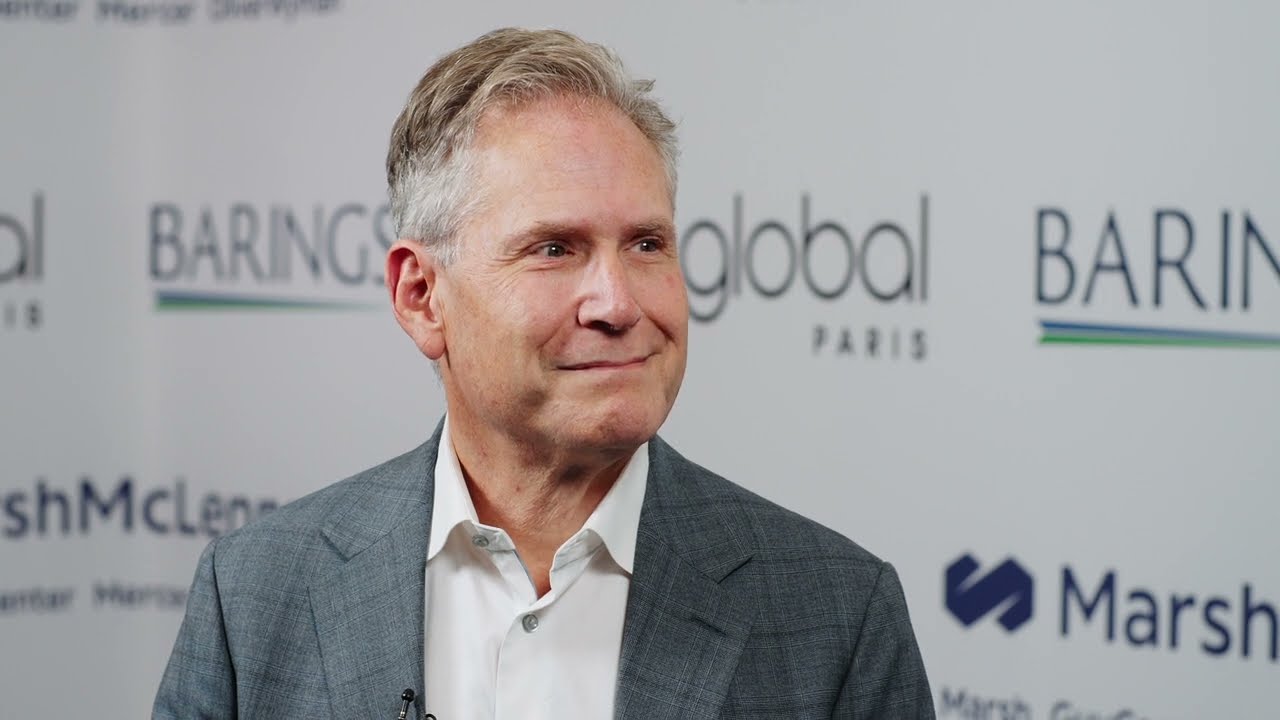
His June 2026 interview with partner Todd Miller carried that argument forward. Wachter described a buildup of private-equity-backed companies and constrained exit capacity. Sponsors, he argued, were using direct secondaries to retain strong assets while generating partial liquidity. Minority recapitalizations could allow distributions without an immediate loss of control. These were his views on how the market was developing, rather than promises about any individual transaction.
W Capital’s own approach also includes work after the purchase. The firm says it underwrites to the operating plans and timeframes of continuing investors and management, and participates on boards in a majority of its investments. It can provide new capital alongside or after a secondary transaction. Buying from a shareholder can therefore begin a continuing relationship with the company.
A quarter-century after W Capital’s founding, Wachter’s career still turns on a small distinction with large consequences. Wanting to sell an investment says something about the owner’s needs. Understanding the business requires its own examination. He has spent those years arranging transactions where another investor is prepared to take the position forward. One shareholder gets to leave. The company can keep the lights on.