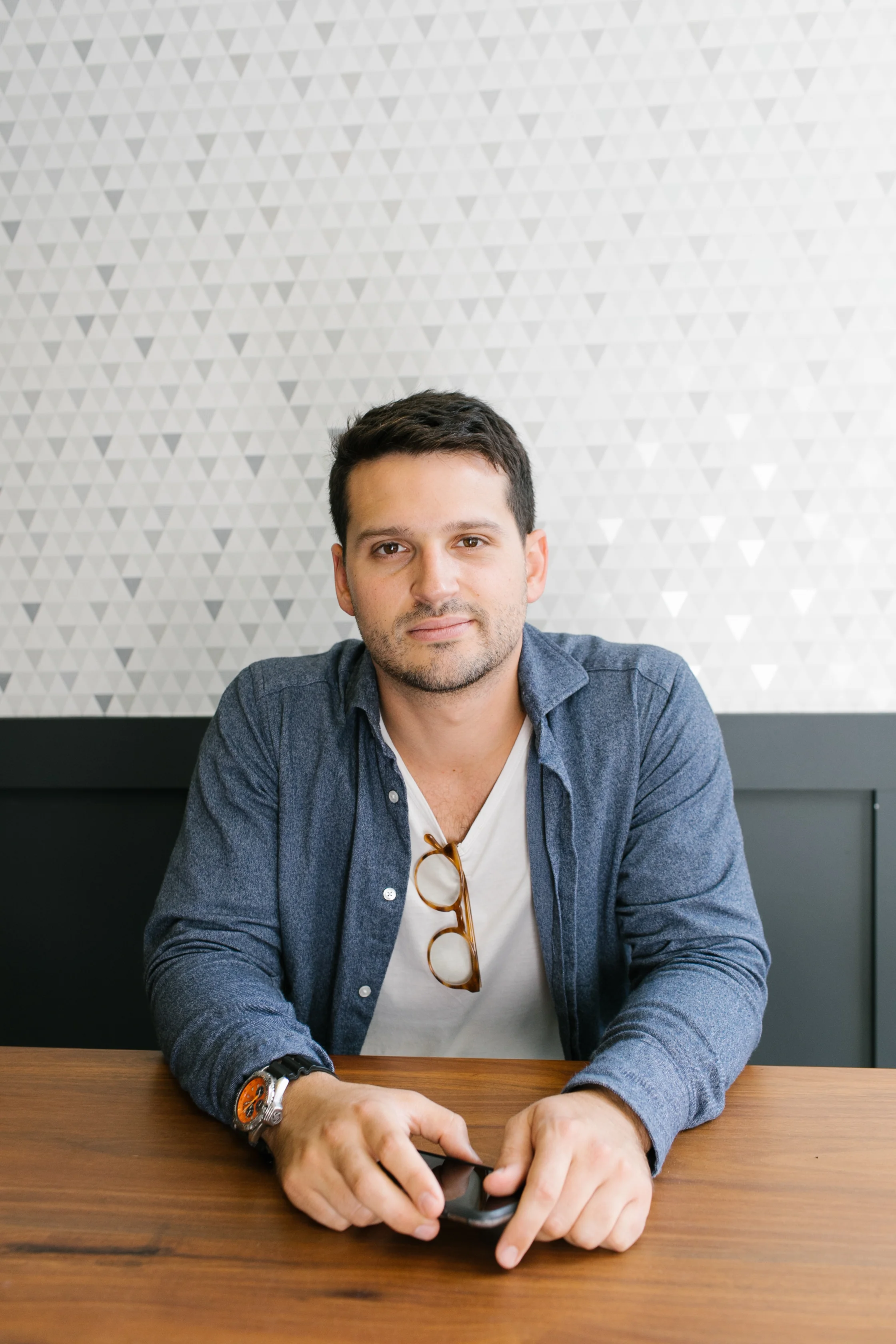
He put blue light glasses in the checkout aisle. Now he is teaching brands to actually look at it.
David Roger - the operator who learned the shelf the hard way, then built a camera for it.
David Roger runs Hetal Retail, a New York company with a deceptively simple pitch: tell brands what is really on the shelf, today, with proof. Not a forecast. Not a quarterly audit that arrives stale. A short video of the actual aisle, read by computer vision, turned into a to-do list a busy team can act on before the weekend.
The product runs on a crowd. Everyday shoppers - the company calls them Hetalites - pull out a phone during a normal grocery run and film a row of products. Hetal's AI does the rest: missing items, wrong prices, a display that never got built, a planogram that exists on paper and nowhere else. It starts at $1.75 per store per month, a number Roger likes to say out loud because the old way of getting this data cost a fortune and still left brands guessing.
He has reason to hold a grudge. Before Hetal, Roger co-founded and ran Felix Gray, the brand that helped drag blue light glasses out of the niche and onto the shelves of Target, CVS and Best Buy. Living on the brand side - paying for thin data, driving to stores to see for himself - is where the idea for his second company was born.
The Felix Gray story starts with a sore pair of eyes. Roger was doing long stretches of financial modeling, screens all day, and his vision rebelled. So did his coworkers'. He asked optometrists why, learned the screens were the culprit, and did the thing founders do - he made the product he wanted to buy.
What followed was a textbook climb from direct-to-consumer brand to national retail. Felix Gray didn't just sell glasses online; it earned shelf space in the country's biggest chains. By the time the company sold in 2023, Roger had spent years learning a lesson most software founders never get to feel in their gut: getting onto a shelf is hard, and knowing what happens to your product once it's there is nearly impossible.
A Cornell ILR graduate who once started a campus newspaper called the Odyssey, Roger describes himself as a generalist who lives where the analytical and the creative overlap. "My life is a poorly designed question," he has said. "I always gravitate towards intuition." It is an unusual sentence for a man who now sells data for a living. It is also the whole point - he wants the data to do the intuiting, so brand teams don't have to.
The current system is broken. The data is expensive and it's unwieldy. - David Roger, on why he built Hetal
A Hetalite records a short video of the aisle during a normal shopping trip.
Computer vision diagnoses gaps, pricing errors and missing displays - with visual proof.
Dispatch coordinates the correction so the right person fixes the right shelf, fast.
The fix is tied back to sales, so brands can see what shelf execution is actually worth.
Roger co-founds the blue light glasses brand after his own screen-strained eyes send him hunting for answers.
Felix Gray earns shelf space in Target, CVS and Best Buy - and Roger learns how blind brands are once their product ships.
Felix Gray is sold. The team scatters, briefly.
Roger reunites with Michael Rostowsky, Bobby Shomrony and Mike Walters to build the data tool they always wished they had.
Investors including nvp capital, Ludlow Ventures, Barrel Ventures, GTM Fund, Nomad Ventures and MXV back the vision.
The company honors Hetal Jogi, a 26-year Chase employee who supported Felix Gray and always picked up the phone. The word also fuses "health" and "retail." Roger had a colleague surprise her with the news. She didn't believe it.
For fun he chases flow state - skiing, biking, cooking, swimming. He recently took a backcountry ski trip to Greenland, which is roughly as far from a retail planogram as a person can get.
His leadership rule: "Everyone at the team needs to work towards the same goal and put the team's goals above their own priorities." Win together or trip together.
The field network has a name - Hetalites. Ordinary people filming ordinary aisles, feeding an AI that turns a grocery run into a data point.
At Cornell he founded a newspaper called the Odyssey. The instinct to start things showed up early.
"Always be a kid, but you know, a responsible one. Life is too short: stay curious and have fun." A surprisingly light motto for a man building serious infrastructure.
We've been on the brand side, so we know how busy everyone is. Providing an issue list is not enough.
// on building for real brand teamsComputer Vision AI can be used to mine the data in the photos to actually generate useful insights.
// on the technical betI can call Hetal, and she's going to pick up the phone. I can text Hetal, and she's going to text back.
// on the banker the company is named forI always gravitate towards intuition and exist at the intersection of being analytical and creative.
// on how he thinksThe ambition is bigger than catching a missing box of cereal. Roger wants to collapse the cost of retail truth - to make shelf data so cheap, fast and provable that fixing an in-store problem stops being a guessing game and becomes a measurable action with a price tag and a payoff. Replace the expensive, unwieldy old system with a phone, a crowd, and a model that never blinks. That is the whole company, and it fits in a sentence: know your shelf, drive more sales.