In November 2008, David Kuhn sent publishers a novel with a conspicuous omission: the author’s name. Anyone interested could ask who had written it. Until then, there was the manuscript, a boy’s perspective, and a small invitation to become curious. Publishing, an industry sustained partly by knowing everyone’s business, had been given a little business it did not know.
The guesses included James Franco. The author turned out to be Joyce Maynard. William Morrow made a preemptive offer, buying the rights before Kuhn’s planned auction. Asked about the anonymity, Kuhn offered a reason with very little management jargon: “the fact that it’s more fun.” His client had written something that might surprise people. He had arranged for them to encounter the surprise.
That episode is a useful introduction to the co-CEO and founding managing partner of Aevitas Creative Management. Kuhn’s career runs through magazine editing, literary representation and, lately, restaurant ownership. The settings change. The recurring problem is how to make people interested enough to come closer. Sometimes that means withholding a name. Sometimes it means giving a book a party.
An editor with a wider definition
Before the book deals, Kuhn worked with a different measure of space: the magazine page. A Harvard College graduate, magna cum laude, he became a senior editor at Vanity Fair, features director at The New Yorker and editor in chief at Brill’s Content. The progression put him among writers whose subjects ranged from public life to private peculiarities, with room for the arts along the way.
At The New Yorker, his responsibilities included editing “The Talk of the Town,” “Shouts & Murmurs” and nonfiction special issues. Those assignments ask for different kinds of judgment. A short comic piece and an extended reported article have different engines. Both require an editor to recognize when something has begun to move, and when it is merely making a noise.
When Kuhn took over Brill’s Content in 2000, he widened its view of the media. Film, fashion photography and technology joined its coverage. A story about The West Wing could belong in a magazine concerned with the press because a television drama also shaped how people understood politics. The choice offered a glimpse of his range: culture and public affairs could share an issue.
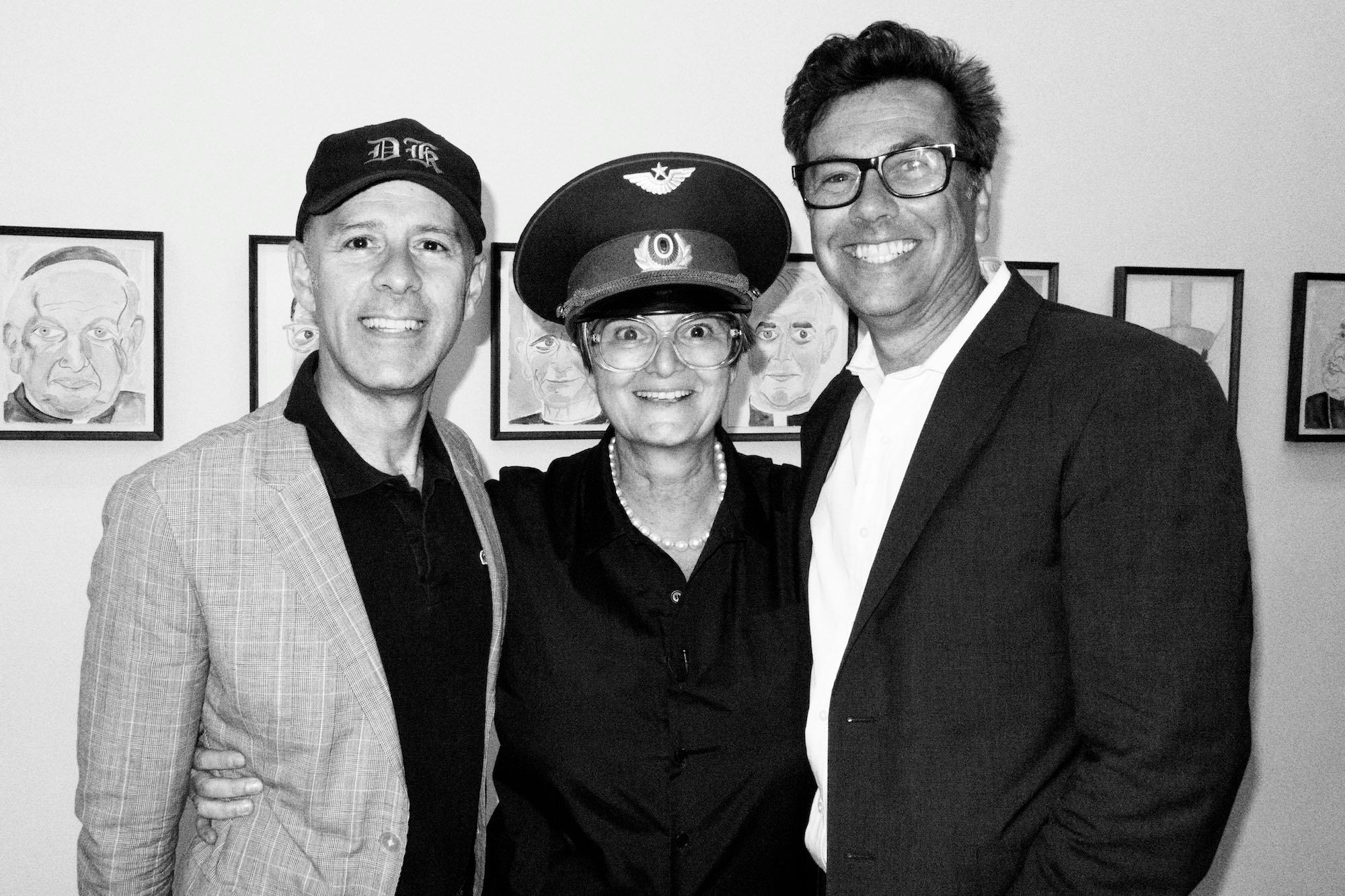
The introductions that became books
Kuhn Projects was established in 2002. Becoming an agent gave Kuhn another way to work with writers, one that involved finding publishers and negotiating a book’s route into the world. A magazine assignment has a defined destination. A proposed book still needs someone to believe in the journey, and someone prepared to pay for the ticket.
One early connection arrived by way of a blog. Dana Vachon was working at JPMorgan when he began blogging in 2003. Elizabeth Spiers linked to his writing from New York magazine’s website. Vachon later recalled that two weeks after that link, he was having drinks with Kuhn. His account makes the distance between banking and fiction sound briefly walkable, provided somebody knows where to turn.
The result was a reported two-book agreement with Riverhead for $650,000. Vachon’s first novel, Mergers & Acquisitions, appeared in 2007. The blog had brought in roughly 250 visits a day, by his estimate. Its value was in reaching a useful reader. In this instance, the path from a modest online audience to a publishing contract passed through an agent with a magazine background.
John Kenney’s route was different, and equally human in scale. Asked how he had found Kuhn, the author of Truth in Advertising credited a recommendation from his editor at The New Yorker. A referral is a small event to record beside a finished novel. For a writer, it can be the hinge between having a manuscript and having someone to take it out.
There was also a book with Kuhn’s own editorial credit attached. With Chris Knutsen, he co-edited Committed: Men Tell Stories of Love, Commitment, and Marriage, an anthology bringing together seventeen authors on lasting relationships. The subject offered another variation on a professional habit: assemble different voices around a question, then let their differences do some of the work. An anthology gives that instinct a visible form. Readers can move from one account to another without requiring everyone to agree. The editor’s company is there on the contents page, ready to be introduced.
Attention has terms and conditions
Then there was Amy Schumer. In 2015, Kuhn handled the sale of the autobiographical essays that became The Girl with the Lower Back Tattoo. Interested editors had to read the confidential proposal privately in his office. The arrangement concentrated attention on the material while controlling how it circulated. A proposal can travel remarkably fast when nobody is supposed to have it.
Gallery Books won the auction. The advance was undisclosed, with contemporary estimates placing it between $8 million and $10 million. That distinction matters: estimates became part of the public excitement, while the signed figure remained private. Schumer’s profile was rising, and the bidding culminated just after her Emmy win. Kuhn’s job included managing the moment in which the book met its market.
His represented work also includes Liaquat Ahamed’s Lords of Finance, which won the Pulitzer Prize, and books by Mary Norris, Henry Louis Gates Jr. and Marina Abramović. Their subjects and voices resist a single shelf label. Reading the list, one encounters the copy desk, historical inquiry and performance art. It resembles an editorial meeting in which the conversation has wandered productively beyond the agenda.
Milestones in Kuhn’s work across publishing and hospitality.
First an office, then an agency
Aevitas began with a practical arrangement. Kuhn Projects and Zachary Shuster Harmsworth had been sharing New York office space for two years when they announced their merger in December 2016. Working alongside one another had made the compatibility of their lists and office cultures apparent. An agency could emerge from the ordinary business of seeing how other people did their work.
The combined firm launched with more than twenty agents and offices in New York, Boston and Washington, D.C. Kuhn, Todd Shuster and Esmond Harmsworth were its managing partners. The announcement included a goal of providing more opportunities for younger colleagues. The enterprise now had to make room for the people representing the writers, as well as for the writers themselves.
On Kuhn’s professional member page, Aevitas describes an ambition to support work that encourages conversation and brings people together. Such promises are easiest to assess through the work that follows them. An agency’s list is one record of its choices: which voices it backs, which subjects it considers worth a book, and which unfamiliar combination it is willing to put before an editor.
A table joins the reading list
In 2025, Kuhn’s interest in company acquired tables and a kitchen. Chez Nous opened inside the Marlton Hotel in Greenwich Village. The partnership brought together Kuhn, production designer Kevin Thompson and hoteliers Sean MacPherson, Ira Drukier and Richard Born. Executive chef Flossie Gilles led the kitchen. Kuhn had joined a business where the audience could tell you what it thought before dessert.
The room has a substantial piece of art to look at while forming an opinion. Cecily Brown’s thirty-foot mural runs along the back wall of the skylit dining room. Thompson and MacPherson’s interiors include mirrored coffered ceilings, brass details and dark wood. Much of the design developed around the finished mural. The painting helped determine the setting rather than arriving as a final accessory.
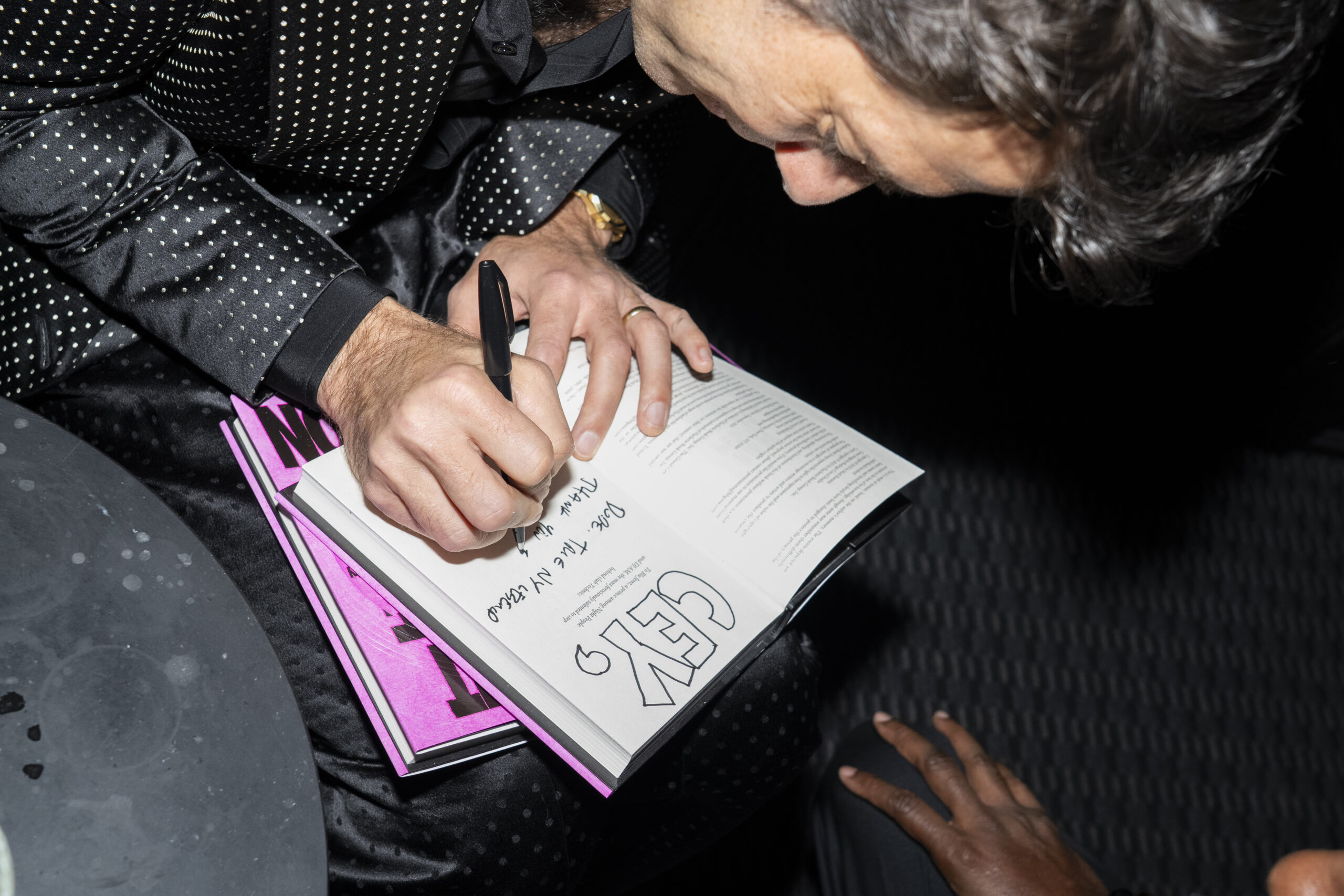
In September 2025, Kuhn hosted Mark Ronson’s celebration for Night People: How to Be a DJ in ’90s New York City there. The book’s DJ sets played in their printed sequence. Friends and collaborators gathered around a memoir that could supply the evening’s music. A publisher might describe that as an extension of the reading experience. A guest could simply enjoy the records.
Leave room for a piano
The restaurant also gives Kuhn’s colleagues a chance to describe his work from another angle. Gilles has credited him with helping the place speak to neighborhood regulars, hotel guests and people arriving specifically to dine there. That is a concrete hospitality problem. These guests may enter through the same door with quite different expectations of what the evening should provide.
In April 2026, Kuhn explained that his agency work and restaurant work drew on related habits: following cultural developments, supporting creative people and getting others interested in their projects. His advice for entering hospitality included drawing energy from company and attending closely to details. One instruction was especially economical: “Be good at small talk.” A conversation needs an opening, too.
“Be good at small talk.”
David Kuhn, on entering hospitality
By then, Chez Nous had an upright Steinway in its main dining room. Kuhn wanted to introduce occasional musical evenings. He named his sister, Broadway performer Judy Kuhn, and accompanist Todd Almond for the first planned performance. After magazine pages, book proposals and restaurant tables, there was another format to consider: a song, delivered to people who had stayed after dinner.
The piano is a fitting place to leave him. A room has been assembled; someone has brought something worth hearing; an audience has a reason to remain. Kuhn’s career contains different businesses and different kinds of responsibility. Yet the invitation keeps recurring, from the unnamed manuscript to the memoir with its own soundtrack. Come in. There is something here you might like.