Nobody starts a bakery because they want to buy insurance. David Embry likes this line because it strips an entire industry down to the customer's actual Tuesday. The baker wants ovens that work, dough that rises and a line at the counter. Insurance is necessary, consequential and somewhere near the bottom of the day's romance. The job, as Embry sees it, is to make the necessary part take less time and produce a sounder decision.
That plain observation sits beneath Mylo, the digital insurance broker Embry founded in Kansas City. The company began as a proposal inside Lockton in 2014 and launched the following year. Its target was a part of the market that traditional brokerage economics did not serve gracefully: individuals and small business owners with relatively modest premiums, plenty of questions and no desire to become amateur underwriters.
The conventional model had an arithmetic problem. A broker could devote hours to a large commercial account because the premium justified the labor. Smaller accounts required many of the same motions but generated less revenue. Embry's wager was that software could change the denominator. Gather information once. Make recommendations consistent. Match customers with carriers whose appetite fit the risk. Let an expert enter where judgment mattered.
Nobody starts a bakery because they want to buy insurance.
David EmbryThis sounds obvious now, in the way successful product ideas acquire retrospective inevitability. In 2014 it was still a pitch. Embry brought it to Lockton's leadership: build a digital agency that could use the broker's carrier knowledge and relationships while giving customers a coherent online experience. The concept became Mylo. The tidy version of the story ends there. The useful version begins with what the team got wrong.
The technology could not remain somebody else's problem
At launch, Embry believed Mylo could own distribution and carrier management while outsourcing product development and the technical build. Then the company met volume. Insurance is a kingdom of edge cases: different businesses, different state rules, different carrier appetites and different ways of asking nearly the same question. A general-purpose layer would not be enough. If Mylo wanted to serve many smaller accounts efficiently, its operating logic had to live inside software the company controlled.
So the team moved the build in-house. The resulting system, the Mind of Mylo, became a patented recommendation engine designed to translate customer details into coverage guidance and carrier matches. The name is jaunty. The work beneath it is less theatrical: organize fragmented information, avoid repetitive questions, apply consistent rules and make a complicated purchase easier to navigate.
Embry did not arrive at that conclusion as a software tourist. He had spent years inside financial services, including a managing director role at J.P. Morgan and the presidency of SelectQuote Benefit Solutions. He studied business and finance at Southwest Baptist University, then completed an MBA in finance at the University of Missouri-Kansas City. His career supplied both halves of Mylo's thesis: an understanding of the financial machinery and a frustration with the experience it created for smaller customers.
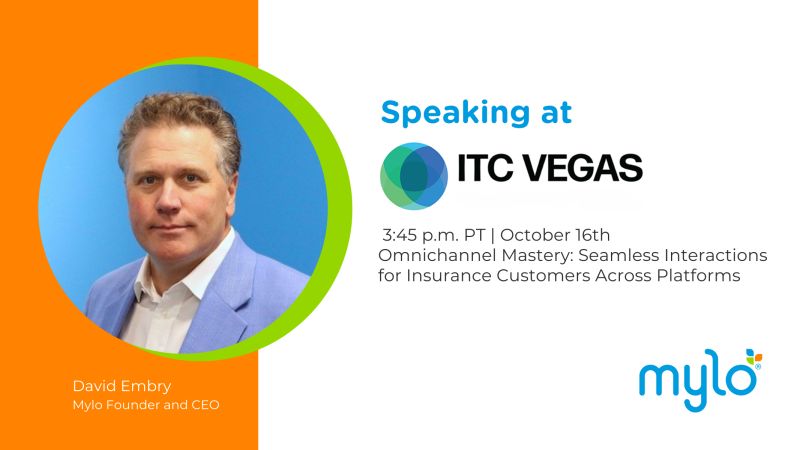
A digital journey still ended in conversation
Mylo carried another early assumption: a meaningful share of customers would complete the purchase online without speaking to anyone. The interface would remove friction, the recommendation engine would narrow the choices, and the customer would bind a policy. In later public remarks, Embry acknowledged that reality landed far below the original expectation. Customers might progress deep into the experience, then call.
That call was not a failure of the interface. It revealed what the product actually included. Insurance is purchased in the present and tested in an unwelcome future. A customer can understand a price immediately; understanding whether the coverage will hold up at the moment of need is harder. The agent supplies context, reassurance and accountability. The software makes that conversation faster and better informed.
Where the useful work lives
An editorial model of Mylo's public product philosophy, not company performance data
This is the less cinematic version of artificial intelligence in insurance. Embry has called the shift evolutionary. He sees AI and machine learning as ways to classify risk, improve recommendations and remove manual steps, not as a theatrical replacement for every licensed professional. It is a position shaped by observed behavior rather than a keynote's appetite for disruption.
The distinction matters well beyond insurance. Many founders treat the absence of a person as proof that a product is modern. Mylo's experience suggests a more exact measure: use a person where the customer values judgment, and use software to keep that person from wasting the conversation on clerical archaeology.
Our goal is to provide the best recommendation in the smallest amount of time.
David EmbryThe storefront became an ingredient
Mylo was also early to a distribution idea that the industry later named embedded insurance. Instead of waiting for every customer to visit a standalone insurance site, the company could place its capability inside a relationship that already existed. A business platform, financial institution or agency could offer Mylo's experience to its own customers. The insurance storefront became an ingredient in someone else's trusted environment.
That strategy expanded in two directions. Channel partners could add coverage to their customer journey, and independent agencies could use Mylo's technology to handle business that once sat at the edge of their economics. By 2025, the company described an ecosystem of more than 60 channel partners and agencies. Embry's role included overall vision, financial performance and the strategic partnerships that make this model work.
- 1990s-2013Embry builds a career across finance and insurance, later holding senior roles at J.P. Morgan and SelectQuote.
- 2014He pitches a technology-enabled digital agency inside Lockton.
- 2015Mylo launches with a focus on individuals and small businesses.
- 2019A $28 million investment from Guggenheim Partners supports the company's next stage.
- 2023Group 1001 becomes the majority investor, with Embry continuing to lead Mylo.
- 2025-2026Embry keeps pressing the case for multichannel distribution, better data and AI that helps agents work more effectively.
Ownership evolved along the way. Guggenheim Partners invested $28 million in 2019. Group 1001 later became Mylo's majority investor in 2023, while Embry remained chief executive. In January 2025, Mylo transferred its small-group employee benefits business to OneDigital and continued concentrating on its technology and broader insurance distribution strategy. The shape changed; the original question survived.
Keep the mission steady and let the method move
Embry's public advice to entrepreneurs is notably free of incense. Things take longer and cost more than expected. Perseverance matters. Teams need refinement. Founders must be honest about what is not working. Supportive investors matter because the line never travels smoothly upward. Each point sounds ordinary until a company has to live it for ten years.
There is a productive tension in that list. Stay in the game, but do not become loyal to a failing method. Mylo preserved its mission while changing the means. It brought technology in-house. It adjusted its expectations for fully digital purchasing. It grew partner and agency distribution. It treated the agent as part of the product instead of a regrettable bridge to a more automated future.
Embry's attachment to Kansas City fits the same temperament. He has spoken proudly about the city's startup scene and the Midwest's capacity to build. His civic work has included board and advisory service with University Health KC and Higher M-Pact, along with chairing Ole Miss BASE. The career is local in its roots and national in its market, a familiar Midwestern arrangement: build the machinery near home, let the distribution travel.
In 2025, he appeared at industry events and on podcasts to discuss AI, small-commercial coverage and embedded distribution. In 2026, Mylo announced a second consecutive appearance on CNBC's World's Top Fintech Companies list. Awards are punctuation, not plot. The plot remains the daily attempt to produce a good recommendation quickly, through whichever doorway the customer happens to enter.
The baker still does not want to buy insurance. That may be the point. A mature product does not demand fascination with its category. It respects the customer's real ambition and returns time to it. Embry's decade at Mylo is an argument for that quieter kind of technology: less interested in erasing people, more interested in making their judgment count.
Follow the thread
Hear Embry explain the work in his own words, or visit the company and profiles connected to his public career.