The number was not supposed to move like that. Dave Zohrob and Harish Agarwal had made Hacker Daily, a short podcast that summarized the day's popular Hacker News posts, while looking for a company to build. One day its audience jumped from roughly 4,000 downloads to 5,000. A thousand new listens had arrived, but the available dashboards could not say why. Celebration would have been reasonable. Zohrob chose irritation.
“Podcasting is a weird market,” he later said, retelling the moment. The medium was distributed across apps, feeds, publishers and business models. Its measurements arrived in pieces. For two engineers trained to make systems legible, a mystery with a number attached was close to an engraved invitation.
They followed it. The side project became Chartable, the analytics and attribution company the pair founded in 2018. By 2020, it said it was tracking one billion podcast downloads and ad impressions each month and working with eight of the world's ten largest podcast publishers. Spotify acquired Chartable in February 2022. A puzzling bump on a dashboard had become part of the machinery of global audio.
The cash-in-an-envelope era
The impulse to put something useful into the world appeared early. Growing up in Farmington Hills, Michigan, Zohrob wrote BASIC programming tutorials in middle school and posted them online. The files included his parents' home address. Readers could send letters there or buy CD-R collections of code. This was the mid-1990s, when e-commerce could still mean a stranger placing cash in an envelope and trusting a teenager to mail back software.
He made a few hundred dollars here and there. More importantly, he found the feedback loop. Years later his best man quoted from the tutorials during a wedding speech, which is one way to discover that Usenet has a longer memory than adolescent dignity. Zohrob remembers the material as “juicy bits of code.” His childhood game Lander placed planets above the surface of the moon. “Don't ask me why,” he wrote on his personal site. “It made sense at the time.”
At the University of Michigan, he studied computer science and served as music director of the college radio station. After graduating in 2003, he joined Microsoft in Redmond and worked on Office. It was an education in how software gets made at enormous scale. He did not stay long.
In 2004, Zohrob moved to San Francisco, spent his Microsoft savings and started Tellall Records with friends. The label put out sound collage, modern composition and other experimental music. Its most popular release sold about 1,500 CDs. There was no tidy software-founder logic to the move. He wanted to play music and be near friends. The city then supplied what cities sometimes do: a new group of people making things.
I get my dopamine hits from making stuff.Dave Zohrob
Finding his people, then the problem
Zohrob “fell into startups” after the label. He worked at HOTorNOT, then started a company in 2007 that made Facebook and early iOS apps in dating and social networking. Projects followed projects. Megatasty and its apps reached millions of users. Lookmark tried to make social news easier to save and share. He also helped modernize Instapaper's back end. The products varied, but they all placed him near the seam between user behavior and software.
At AngelList, which he joined when it was roughly seven people, he helped build the Talent product and worked on infrastructure, onboarding, analytics and growth. His title, Venture Hacker, had the casual swagger of early startup culture, but the work was concrete: make it easier for companies and candidates to find each other. It was also where he worked with Agarwal, the engineer who would become his long-running cofounder.
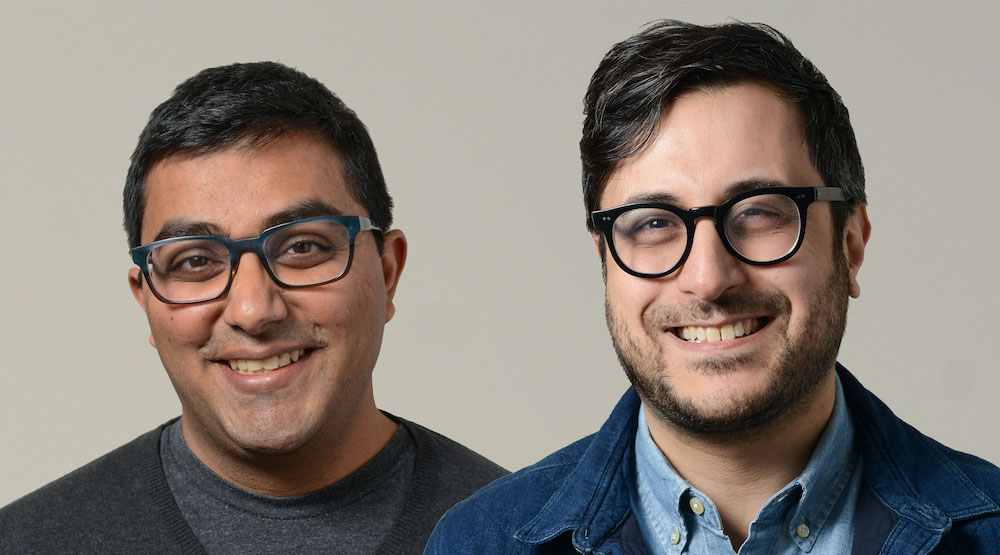
When they left AngelList, the plan was not yet Chartable. They considered bootstrapping something and made Hacker Daily as an experiment. It took off. The same people who had spent years building internet products now found themselves in a medium with surprisingly blunt instruments. Creators could see that an audience existed but struggled to see how it arrived. Advertisers faced a related question about what a campaign actually caused.
Chartable turned those questions into products: SmartLinks to follow marketing activity, SmartPromos to measure cross-podcast promotion, and analytics that combined fragmented signals. The clever move was not forecasting a grand audio thesis from a whiteboard. It was treating confusion as evidence. The download spike was not merely an anecdote from the origin story. It was a compact description of the market.
BASIC tutorials and code on CD-R
Microsoft, experimental music, HOTorNOT, then mobile apps
AngelList and the builder partnership with Harish Agarwal
Chartable grows from a podcast question to a Spotify acquisition
A return to experiments, voice AI, and Nori
The unusually honest motive
Founder biographies tend to improve their subjects' foresight. Zohrob is more interesting when he refuses the polish. Asked why he started Chartable, he said that, if he was honest, ego was involved. He had tried to build startups for years without producing the thing he could point to and feel deeply proud of. He also knew his brain was wired for making computer products that people use.
That admission does more work than another missionary slogan. Ambition is rarely made from one pure ingredient. It can contain pride, curiosity, craft, responsibility, money, status and delight without becoming counterfeit. Zohrob could see all of those currents and still make the next decision. When Chartable encountered a large opportunity, he and Agarwal chose venture funding over the original possibility of bootstrapping. They understood that they had changed games.
The choice brought speed and pressure. Chartable raised nearly $1.5 million in its first outside round and another $2.25 million in 2020. Initialized Capital led the latter, joined by investors including Naval Ravikant, Greycroft, The Fund, Weekend Fund, Jim Young and Lukas Biewald. The company stayed small. Its narrow focus made it useful to large publishers, while the industry around it kept expanding.
In February 2022, Spotify bought Chartable and paired its insights and promotional tools with Megaphone. Zohrob went from leading an 11-person company to operating inside an organization of thousands. He liked the greater reach and resources. He also named the trade plainly: he was no longer in charge. A startup can turn tightly; a global company can move much more weight. For a while, his job was learning how to connect the two.
Second acts still begin with experiments
Zohrob left Spotify in the summer of 2024, calling the acquisition the highlight of his career and thanking a notably long list of teammates, leaders, investors and collaborators. Then came the sentence that made the rest predictable: he and Agarwal were working on something new.
The answer did not arrive fully assembled. They explored an analytics product for audiobooks, a text-to-speech bookmarking tool called Earmark, and voice AI experiments. In February 2025 they launched Smart Speakers, a podcast where they interviewed builders and investors while sharing their own startup search. The first guest was ChatGPT in advanced voice mode. The episode title reported, with suitable suspicion, that ChatGPT had lied to them.
The explorations eventually led to Nori, the New York consumer AI company Zohrob now leads as cofounder and CEO. Agarwal is beside him again. Nori joined Y Combinator's Fall 2025 batch, making it the pair's second substantial company together and another attempt to simplify a field crowded with disconnected information. The particulars changed. The attraction did not.
There is a second loop inside the product loop: relationships. Agarwal first appears as an AngelList colleague, then as the partner puzzling over podcast downloads, then as the cofounder walking into Spotify, and now as the person testing another category beside him. Zohrob's farewell from Spotify reads less like an executive announcement than the credits after a film. He names engineers, operators, audio leaders, early backers and the people who kept Chartable's work moving. The list suggests a practical view of ambition. Products may begin with an individual's itch, but companies are ensembles. The former college radio music director seems to know that a good signal needs more than one instrument.
That continuity matters in a career full of category changes. Software, recruiting, mobile apps, podcasts and AI can look like restless hopping from a distance. Up close, the cast and the questions recur. How do people find the thing? What did they do next? Which part is still hidden? Who is worth building with again? The industries rotate around a stable set of curiosities.
Zohrob once said he was unlikely to spend five years relaxing on a beach when the work at Spotify was done. Even if building again seemed irrational, he expected to do it: make something, watch people use it, improve it, try to sell it and learn. “That's my loop,” he said. “I'm addicted to it.”
The most useful thing to steal from that loop is not compulsion. It is attention. The teenage tutorial author noticed that strangers valued organized code. The app maker noticed behavior at scale. The podcast host noticed a thousand unexplained downloads. The second-time founder allowed several ideas to remain experiments until one earned more commitment. Each chapter begins with reality doing something slightly odd.
There is a comic modesty to the method. A planet floating above the moon makes sense until it does not. A podcast number moves for reasons nobody can see. A new technology sounds magical until the guest starts inventing facts. Zohrob keeps meeting these glitches with the same response: look closer, build an instrument, invite people in. Then follow what happens.