At 13, Daphne Koller had a complaint familiar to any parent of a restless teenager: school was boring. Her proposed remedy was less familiar. She wanted to go to university. Her father was reluctant, then spoke with faculty members, and she began university studies at 13 and a half while continuing high school. Adolescence had acquired a second timetable.
She has described being the child among university students, something of a mascot. The arrangement was enjoyable, but it also meant carrying two sets of obligations. She finished high school at 16 and university at 17. Before most students had packed for their first term, Koller had already completed her undergraduate education.
The tempting version of this story is a tale of precocity with a satisfying row of certificates. Koller’s own account adds a more useful complication. In her 2012 TED talk, she introduced herself as someone fortunate: a third-generation PhD, the daughter of two academics, a child who played in her father’s university laboratory. Education was woven into family life.
That distinction matters. Being able to move faster through an institution is one kind of opportunity. Growing up close enough to understand its rules, know its possibilities, and ask for an exception is another. Her later work in education would concern people who had neither advantage. The teenager asking for a different classroom eventually became a founder asking how many people a classroom could accommodate.
Two suitcases, then a life in uncertainty
Koller earned her bachelor’s degree at the Hebrew University of Jerusalem in 1985 and her master’s in 1986. On July 4, 1989, she arrived in the United States to begin a computer science PhD at Stanford. In a public reflection posted on the United States’ 250th anniversary, she recalled arriving with two suitcases and intending to return home after the degree. The intended temporary stay became a career.
She completed the PhD in 1993, spent two years as a postdoctoral researcher at Berkeley, and joined Stanford’s computer science department in September 1995. Her work concerned a problem much less tidy than a university timetable: how to reason when information is incomplete and certainty is unavailable.
Traditional logical rules are useful when their premises hold. Probabilities make room for ambiguity. Koller helped connect the two, developing ways for computers to represent relationships while also handling uncertainty. Her research made that combination practical enough to apply to complicated systems, rather than leave it as a pleasing idea on a blackboard.
The MacArthur Foundation awarded her a fellowship in 2004. Its account of her work emphasized computational methods spanning logic, probability, uncertainty, and judgment. The vocabulary sounds abstract until one considers how often ordinary decisions involve missing facts. A system that can only operate when everything is known has chosen a rather comfortable working environment.
In 2008, she received the inaugural ACM-Infosys Foundation Award, now called the ACM Prize in Computing, for the 2007 award year. The distinction recognized her combination of relational logic and probability. The date needs both numbers because prizes, like academic calendars, occasionally insist on making a simple thing complicated.
- 1995Joins Stanford’s faculty
- 2012Co-founds Coursera
- 2016Joins Calico
- 2018Founds insitro
- 2020Co-founds Engageli
A book with room for 1,272 pages
Koller’s career also contains an object that rewards patience: Probabilistic Graphical Models: Principles and Techniques, written with Nir Friedman and published by MIT Press in 2009. It runs to 1,272 pages. Anyone looking for a brisk airport read has been given fair warning.
The book brings together representation, inference, and learning. Put plainly, those are questions about how to describe a system, what conclusions to draw from it, and how to improve the description using data. Graphical models use relationships among variables to make complex problems more manageable. The graph is a way of organizing reasoning, rather than decorative evidence that mathematics has occurred.
There is a connection between writing a substantial textbook and designing a course. Both require an expert to decide what another person needs first, what can wait, and where understanding is likely to break down. The reader cannot borrow the author’s familiarity with the subject. The instructor has to build a route through it.
Koller’s Stanford work included that second craft. Her university biography records undergraduate teaching recognition alongside research honors. On the same old website, the entry for her Presidential Early Career Award includes an enthusiastic aside about visiting the White House, complete with a smiley. Formal distinction and the pleasure of a school trip can apparently coexist.
The lecture that stopped talking
By 2011, Koller was experimenting with how her Stanford students used class time. She delivered online lectures with interactive questions and held a weekly optional classroom meeting for clarification, exercises, and case studies. Students could watch at their own pace, then use the room for work that benefited from being together.
The small but consequential feature was a pause. A video would stop when a question appeared. A student who did not understand could rewind. In a lecture hall, the lecturer might ask a question while much of the audience was still copying the previous point. Online, the question could insist on being noticed.
This is a useful corrective to the idea that teaching improves simply because a camera arrives. A recording can reproduce a lecture’s inconveniences with remarkable fidelity. Koller was changing the sequence of activities: explanation, a question, a chance to reconsider, then discussion. The technology gave the student some control over the pace.
Her interest in the student at the back of the room also helps explain the continuity between her later ventures. Access concerns who can enter. Participation concerns what happens once they do. A person can be enrolled, logged in, and entirely lost. Counting the first two states is much easier than improving the third.
“If they don’t know the answer, they can go back and rewind and watch the last segment again.”
Daphne Koller, on her Stanford teaching experiment, 2011
The arithmetic of an open door
In 2012, Koller and her Stanford colleague Andrew Ng co-founded Coursera. Ng’s online machine learning class had drawn 100,000 registrations. His Stanford version enrolled about 400 students per offering. Reaching the online total through those campus classes would require 250 offerings. The scale was startling; the teaching problem was still waiting on the other side of it.
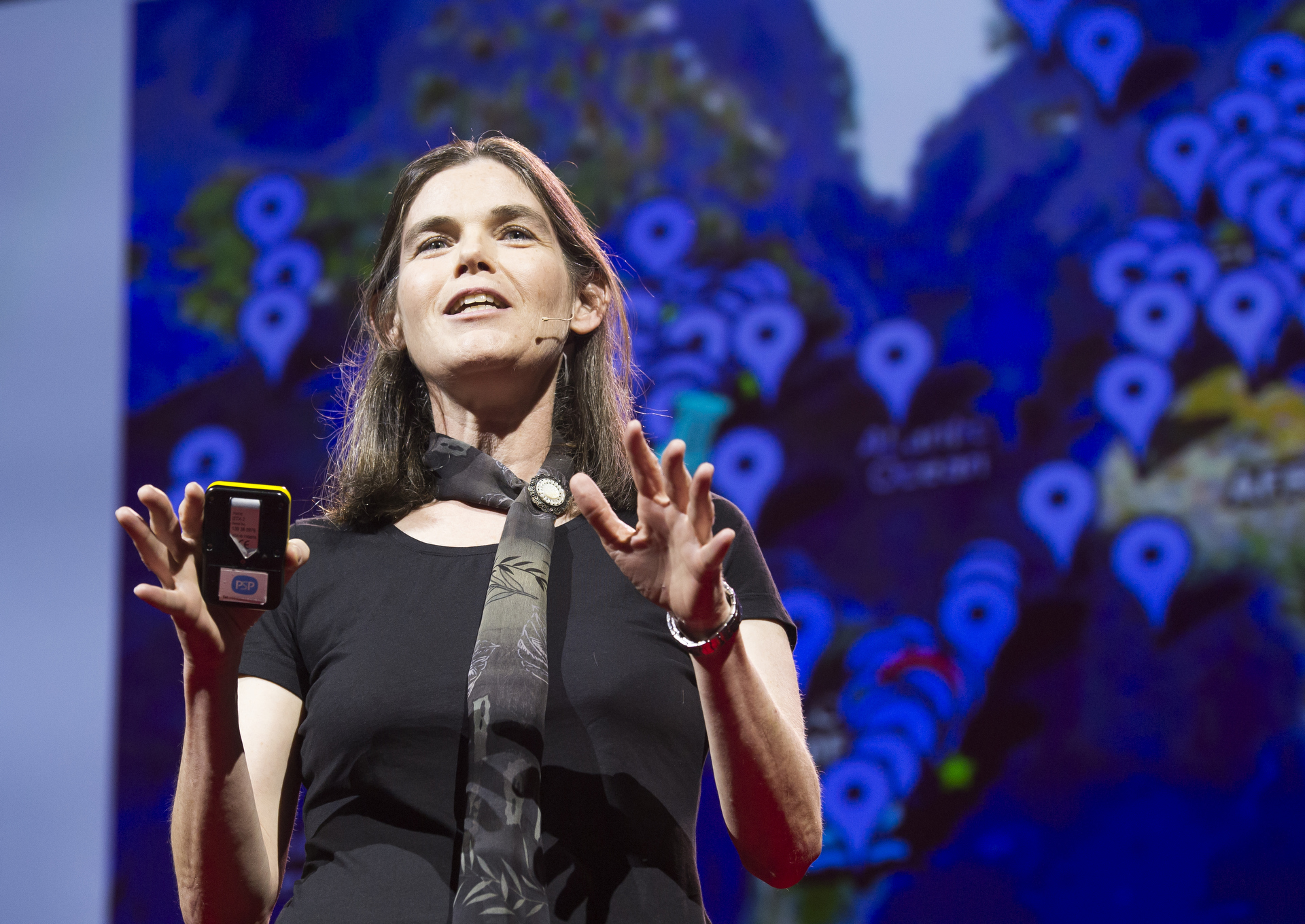
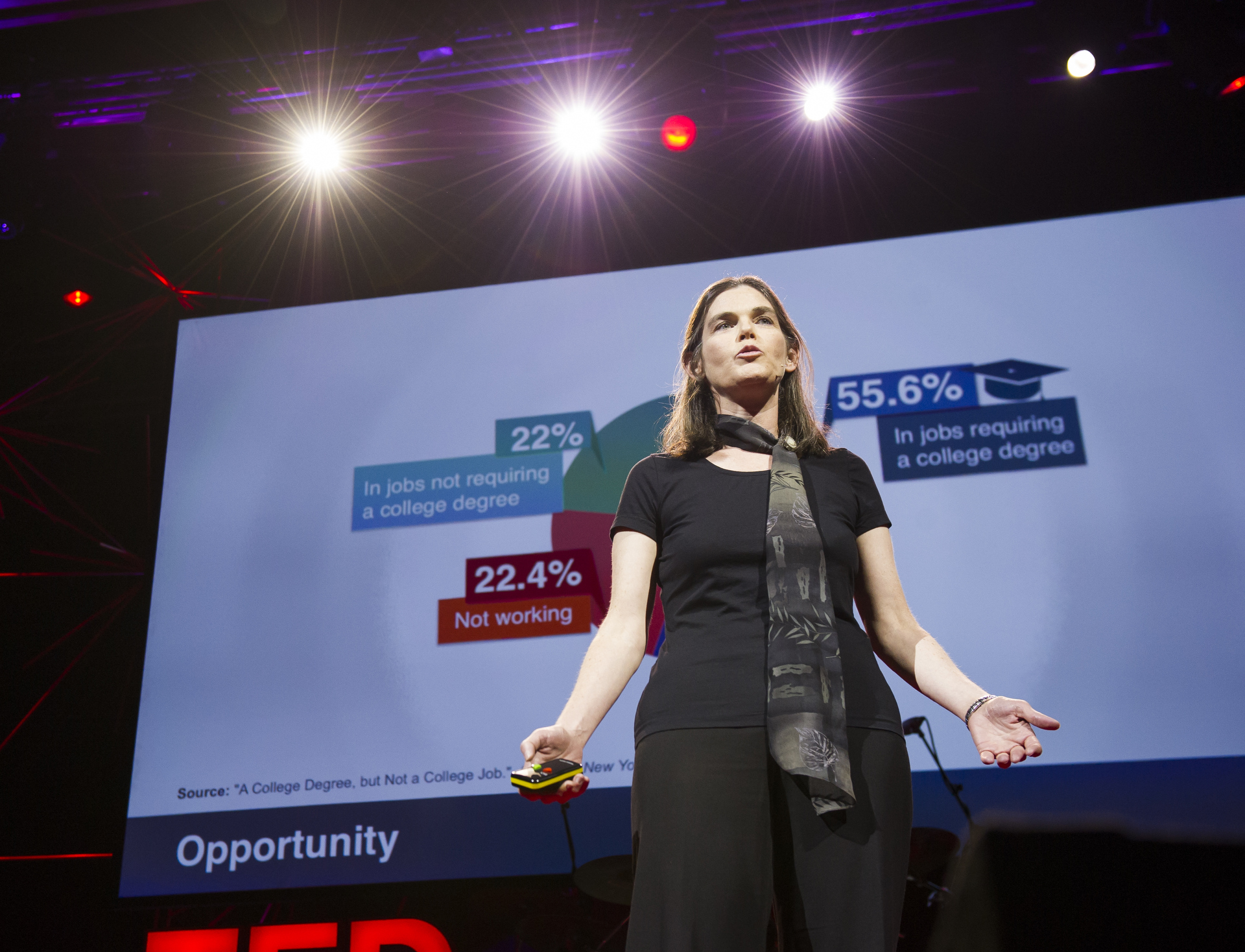
Koller’s TED presentation that June described the young platform reaching 640,000 students in 190 countries. Those were early figures, a snapshot of the launch period. They made a forceful case for demand, while also posing practical questions about assessment, attention, and the relationship between a course and its audience.
How do you grade work at that size? Automated assessment could handle some exercises, including programming and mathematical answers. Peer assessment offered a route for assignments requiring a different kind of judgment. The design had to include practice and feedback, because watching someone explain a subject is only one part of learning it.
The ambition had a personal edge. Koller had grown up with university access almost taken for granted. Coursera asked what happened when the material could travel farther than the institution’s admissions system. A learner could encounter a course without moving countries, arranging a campus visit, or first becoming the sort of person a university already knew how to admit.
The numbers deserve their proper limits. A registration is a beginning, and completion is a separate question. Yet the experiment changed the size of the invitation. The lecture hall’s walls had been doing two jobs: containing the students and excluding everyone else. Putting the course online exposed just how much of the audience had been outside.
One course. A different audience.
A second attempt at the classroom
Koller served as Coursera’s co-CEO and later president before leaving in 2016. She became chief computing officer at Calico, then founded insitro in 2018. Today she is its founder and CEO and remains affiliated with Stanford as an adjunct professor. The sequence is a reminder that the professorship did not become the settled destination its early promise might suggest.
Education remained unfinished business. In 2020, she co-founded Engageli with Dan Avida, Serge Plotkin, and Jamie Nacht Farrell. The company’s account of its origin begins at home: Avida and Koller watched their daughters take classes through video meetings and found the experience dispiriting. A platform for meetings was being asked to perform the work of a classroom.
Engageli introduced table groups, polls, quizzes, and tools for interaction between students and teachers. The details fit Koller’s earlier concern about participation. A group has to be able to exchange ideas, work through a problem, and notice one another. A screen full of faces supplies attendance evidence; conversation requires more thought.
At launch, Koller described human connection, interaction, and inclusion as critical ingredients of learning. The company made those concerns part of the product design. The person who helped expand the audience for university courses was still occupied with a smaller unit: a student, a question, and someone willing to work through it.
The room is still being rearranged
Koller’s current leadership language returns to learning in company form. insitro’s published values include “Create Together” and “Engage with Respect.” Its people page describes intellectual honesty, acknowledging mistakes, and learning from diverse perspectives. These are statements of intent, and the interesting question for any organization is how they survive contact with a difficult decision.
In February 2026, the company appointed Joe Hand as chief people officer, responsible for talent, organizational development, and culture. That same month, Forbes included Koller in its inaugural list of 250 American innovators. In her public response, she emphasized humility, the possibility of failure, and respect for colleagues with different expertise.
The idea carries an echo of the classroom. An expert who cannot make room for someone else’s knowledge can waste a meeting as effectively as an instructor can waste a lecture. Koller’s career offers repeated examples of changing the setting in which people work and learn: a teenager’s schedule, a course’s delivery, an online classroom’s conversation, a company’s mix of disciplines.
There are also less institutional pleasures. Her personal Stanford page describes reading, music, hiking, and family travel. Its list of destinations ranges from New Zealand to Norway, with sailing and scuba diving among the activities. This is a historical personal page, but its appetite for going somewhere unfamiliar is an agreeable companion to the professional record.
The childhood achievement remains striking. It would also be a cramped ending for this story. Finishing university at 17 tells us how quickly one person moved through a system. The rest of Koller’s career asks what that system might become when more people can enter, pause, ask a question, and find someone at the next table. The room, it seems, is still available for rearrangement.
Keep a seat at the table
Watch Koller’s education talk, explore her academic work, or follow her public writing.
- Watch: What we’re learning from online education ↗TED, 2012 · 20 minutes
- Koller’s Stanford website ↗Research, publications, and academic biography
- Daphne Koller on LinkedIn ↗
- Daphne Koller on X ↗
- Her current role at insitro ↗
- The story behind Engageli ↗
- The textbook with Nir Friedman ↗
- The 2026 Forbes innovators list ↗
- Coursera’s note on the original TED talk ↗