Dan Romero has a practical way of describing his first year at Coinbase: he did not move the needle. He had joined in 2014 as employee No. 20, eager to find uses for Bitcoin. The assignment took him to merchants, including the kind of familiar names that might make a new currency feel ordinary. The merchant idea failed to become the business he had hoped for. But a side effect mattered. To make cryptocurrency work at all, Coinbase needed banks willing to deal with it. Romero estimates he took 50 to 100 meetings around the world to find three or four institutions that would say yes.
It is an instructive beginning for someone now working on a payments network. A pitch about the future of money sounds grand. A calendar full of bank meetings sounds like Tuesday. Romero's career has lived in the space between those two things: an intriguing idea on one side, the awkward work of making it usable on the other.
The English major in the engine room
Romero did not arrive at technology by the tidy route often assigned to a founder. He graduated from Duke University in 2010 with an English degree. Asked by the university what that education contributed to his career, he named clear written and spoken communication. Then came three years in consulting at Bain & Company, a stint in product and business development at Envoy, and the job at Coinbase.
Communication was a useful tool when the thing being explained was Bitcoin in 2014. The company needed to persuade financial institutions to work with a business many were still trying to understand. Romero moved across partnerships, customer support, operations, consumer products and international expansion as Coinbase grew. The job titles changed because the problems did. In a young company, the person who understands why the machine works is often asked to fix whatever part has just made a noise.
By his own account, that arrangement had a limit. During 2017 he had six or seven functions reporting to him, although he lacked deep management experience in several of them. Coinbase needed seasoned executives. Romero has recalled a conversation with co-founder Brian Armstrong about bringing in people who could run those functions properly. He gave up responsibility, and the company gained specialists. It is an unshowy form of ambition: wanting the enterprise to outgrow your personal span of control.
The lesson traveled. Romero advises early employees to build strong relationships with colleagues rather than cling to a title. A fast-growing company can be a career accelerator, he argues, but only if the people inside it make themselves useful to the whole effort. One of those colleagues, Varun Srinivasan, would later become his co-founder.
A question from the old web
Romero left Coinbase in 2019, after five years and a climb from a roughly 20-person team to more than 700 employees. He traveled and returned to an idea that sounded charmingly out of time: could RSS compete with Twitter? RSS lets readers follow material published across sites without making one company the owner of every relationship. Romero and Srinivasan began exploring a project called RSS+. Several iterations later, it became Farcaster.
The idea made sense to someone who had watched social sites arrive almost as soon as they were invented. In high school, Romero played with Movable Type, the blogging software that made ordinary people learn about server directories. In the summer before college, his new .edu email address let him join Facebook while the service still required one. He met a future college roommate there. What could look like a trivial detail - making a friend before arriving on campus - was evidence that online relationships could acquire real weight.
Farcaster's proposal was to separate that weight from any single app. A person's identity would live onchain while posts and social activity could be handled by specialized servers. Developers would be free to make different clients for the same underlying network. Romero explained the ambition in plain terms: combine the protocol habits of the early web with the ease people had come to expect from modern apps.
There was a strategic choice inside that architecture. Farcaster did not ask everyone to understand a new technical system before using it. Romero wanted the first app to feel familiar, with a recognizable social feed. He also knew that developers would need room to build things that the original team had not imagined. Early growth was deliberate. He spoke of bringing in creators, attracting developers, then widening the network as useful products appeared. It was a more patient script than the usual demand for explosive sign-ups.
When the feed learned to do things
In January 2024, Farcaster introduced Frames. A post could now contain an interactive experience: a game, a purchase, an NFT mint, all within the feed. Developers began experimenting, and activity rose sharply. Romero admitted that the team had expected interest but had not expected quite that much. It was a small glimpse of what an open social network could offer: the feed as a place to act, not merely to scroll.
The company behind Farcaster, Merkle Manufactory, had announced a $30 million investment led by a16z crypto in 2022. In 2024 it raised a further $150 million round led by Paradigm. Those sums bought time and talent; they did not solve the oldest problem in social media. People must find a reason to return, and then find another reason tomorrow. Romero later acknowledged that a social-first approach had not produced the sustained growth the team wanted. For all the technology underneath, that judgment was about ordinary habits.
His own habits remained revealing. In a Farcaster conversation, Romero recalled claiming the three-letter handle @dwr on Twitter early enough to make it possible. He cared enough about that identity to wait until Farcaster allowed three-letter names there too. The detail is mildly comic, but it fits the project. A name, an audience, a collection of conversations: online identity is made of little things people expect to carry with them.
An ending that kept the network alive
In January 2026, Neynar announced that it was acquiring Farcaster from Merkle. Neynar had long supplied infrastructure for apps on the network; it would now maintain the protocol, run the client and operate Clanker. Romero and Srinivasan stepped away from day-to-day leadership. Romero described the decision as difficult. Farcaster and the people building on it mattered to him, he said, but the project needed a new approach and new leadership to reach further.
There is a rhyme with his Coinbase years. Romero had once helped replace his own collection of responsibilities with experienced executives. Now he was passing a protocol to a team already close to its workings. Founders are expected to perform certainty, especially after a large financing round. A handoff asks for a less theatrical skill: to decide that a project may do better in other hands.
The people who had come to Farcaster for its open architecture did not vanish with the founders' departure. Neynar said it would keep the network running and make it easier for builders to turn ideas into products. Romero's personal chapter with the company closed; the protocol was meant to remain available for someone else's next experiment. That is one way to test whether an open network really is open.
A new problem, older than the internet
The following month, Romero and Srinivasan joined Tempo. Incubated by Stripe and Paradigm, Tempo is building a blockchain for stablecoin payments. Romero's public description of the goal was direct: a global payments network that is fast, inexpensive and transparent. His personal site now says simply that he works on Tempo and previously co-founded Farcaster.
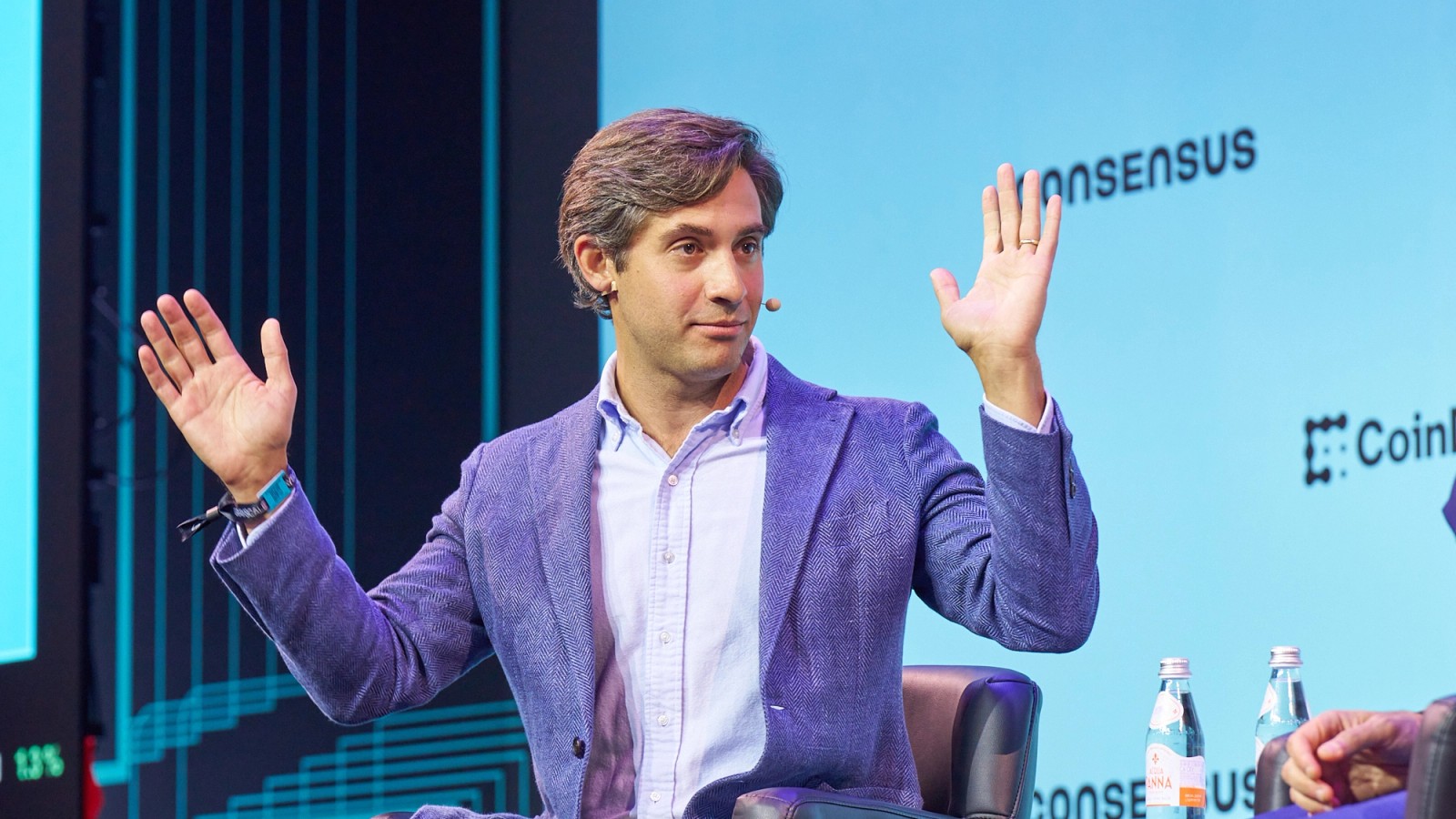
The move takes him from social feeds to the movement of money, but it brings him near the bank conversations where his crypto career began. In May 2026, speaking at Consensus in Miami, Romero described an industry increasingly shaped by two uses that people actually adopt: speculation and stablecoin payments. The first is familiar. The second needs systems that can move value across borders reliably enough for businesses and customers to use without a seminar.
Romero also invests in startups. His public list runs from Linear and Substack to Uniswap, Bridge, Privy, WorkOS and Varda. On his site he asks people to reach him by direct message, and says he makes few new angel investments these days. The list suggests a wide curiosity about software and infrastructure; the note supplies the modest correction that a person's attention has limits.
There is a funny symmetry in the path from English student to payment operator. Every chapter required a translation. At Coinbase, it was translating an unfamiliar asset into a workable relationship with banks. At Farcaster, it was translating a protocol into a social app people could enjoy. At Tempo, the problem is to make a new payment rail ordinary enough that its mechanics recede from view. Perhaps that is what a useful technology finally does: it lets people stop talking about the technology and get on with whatever they came to do.